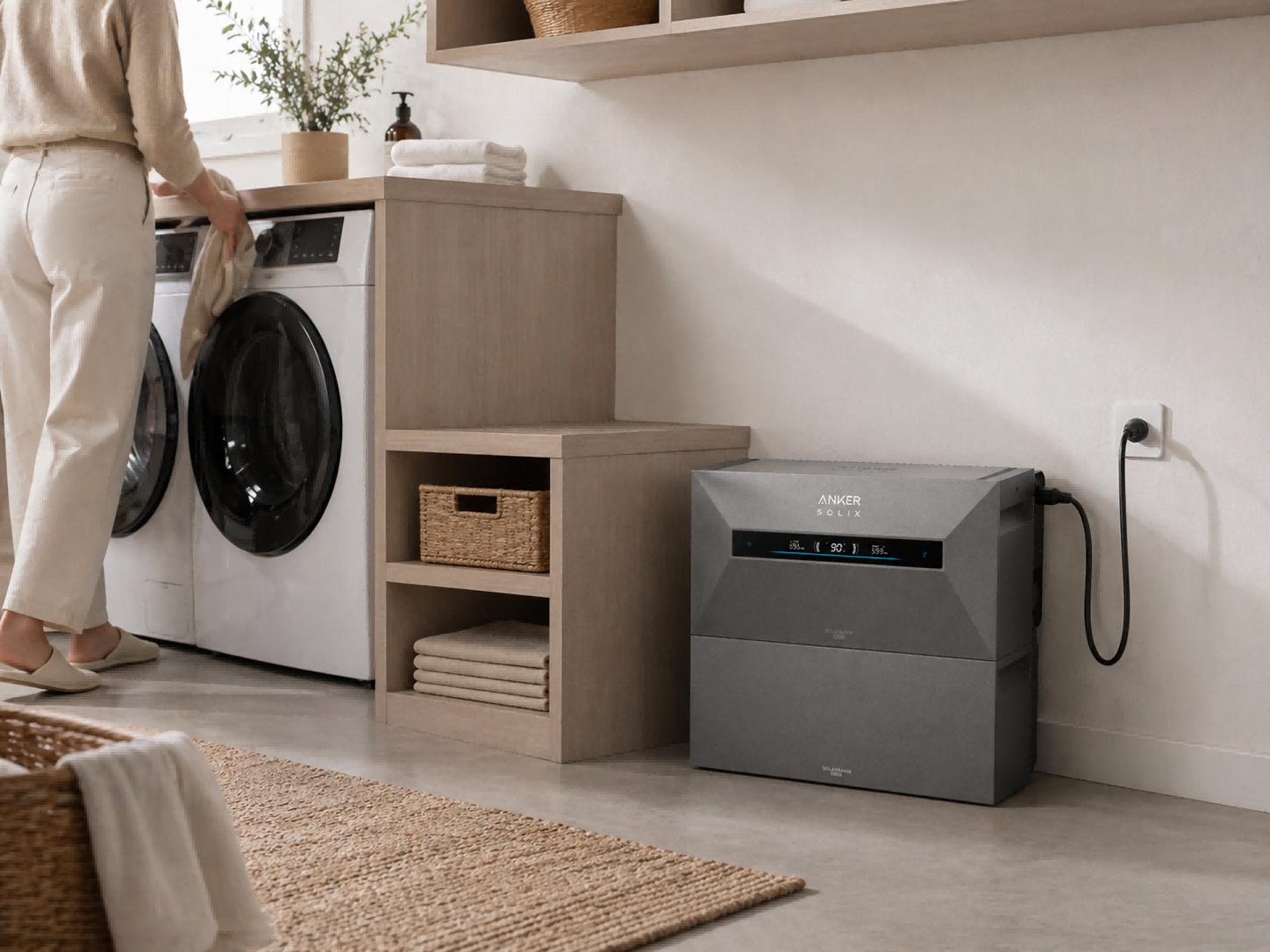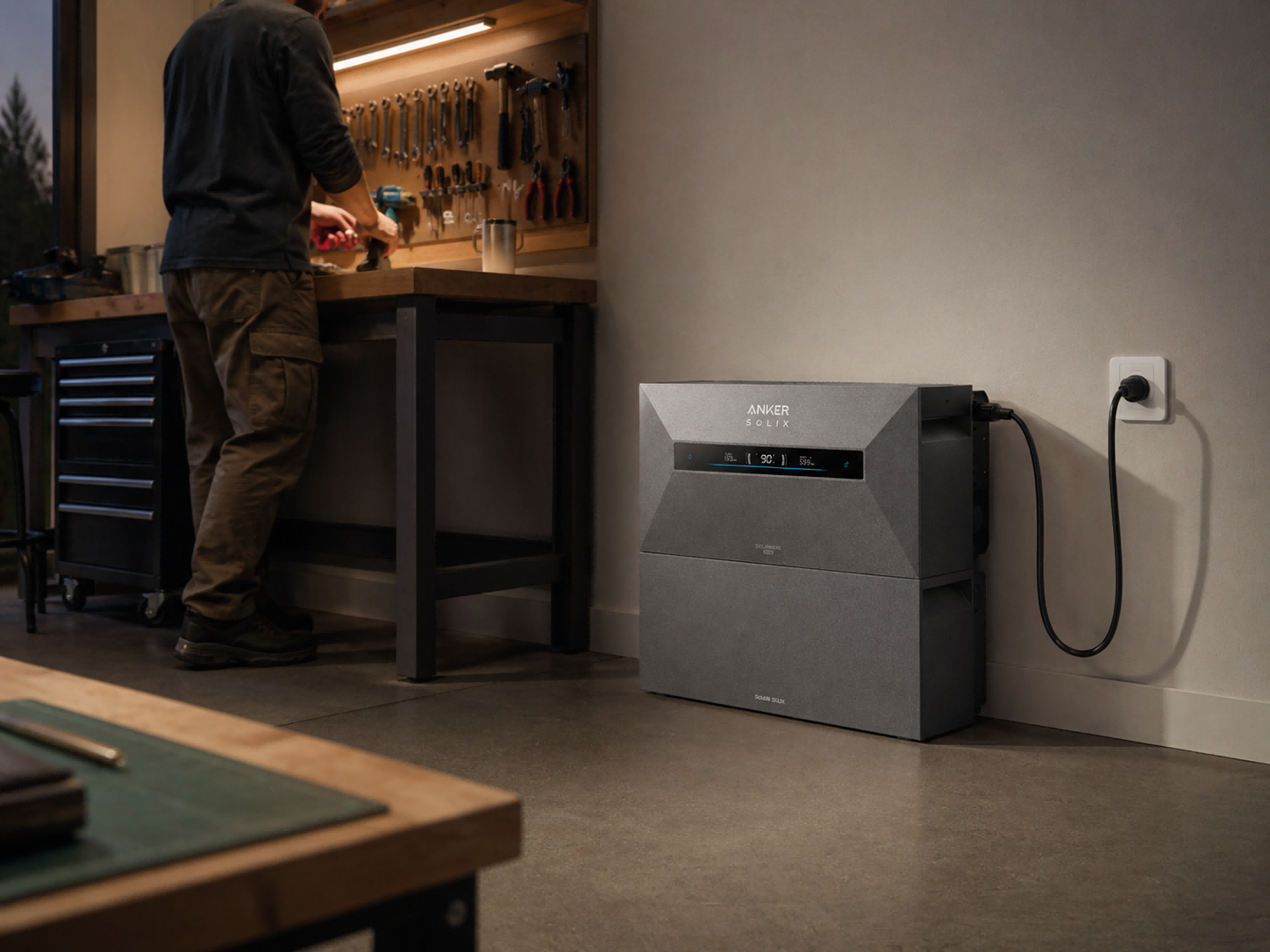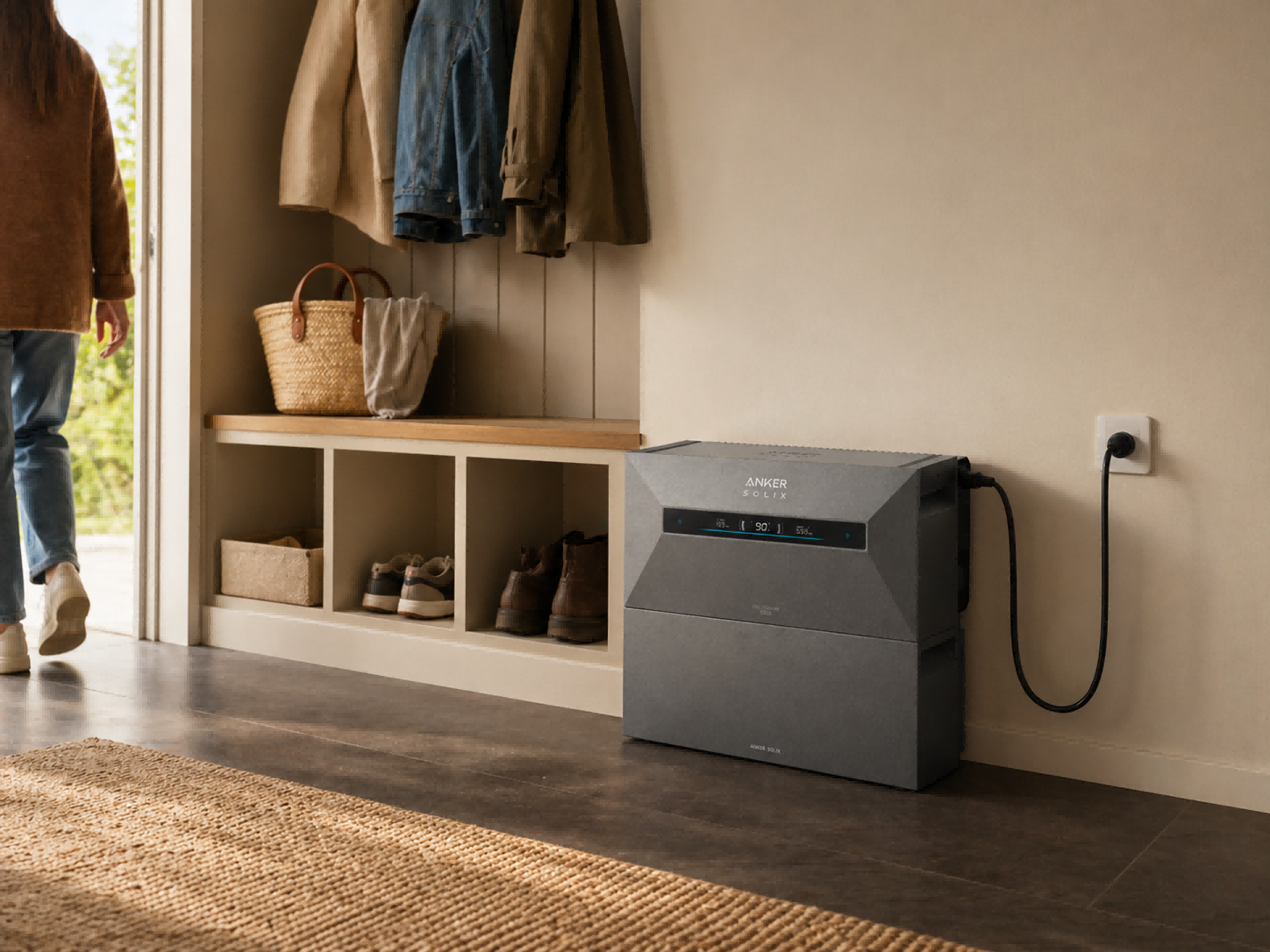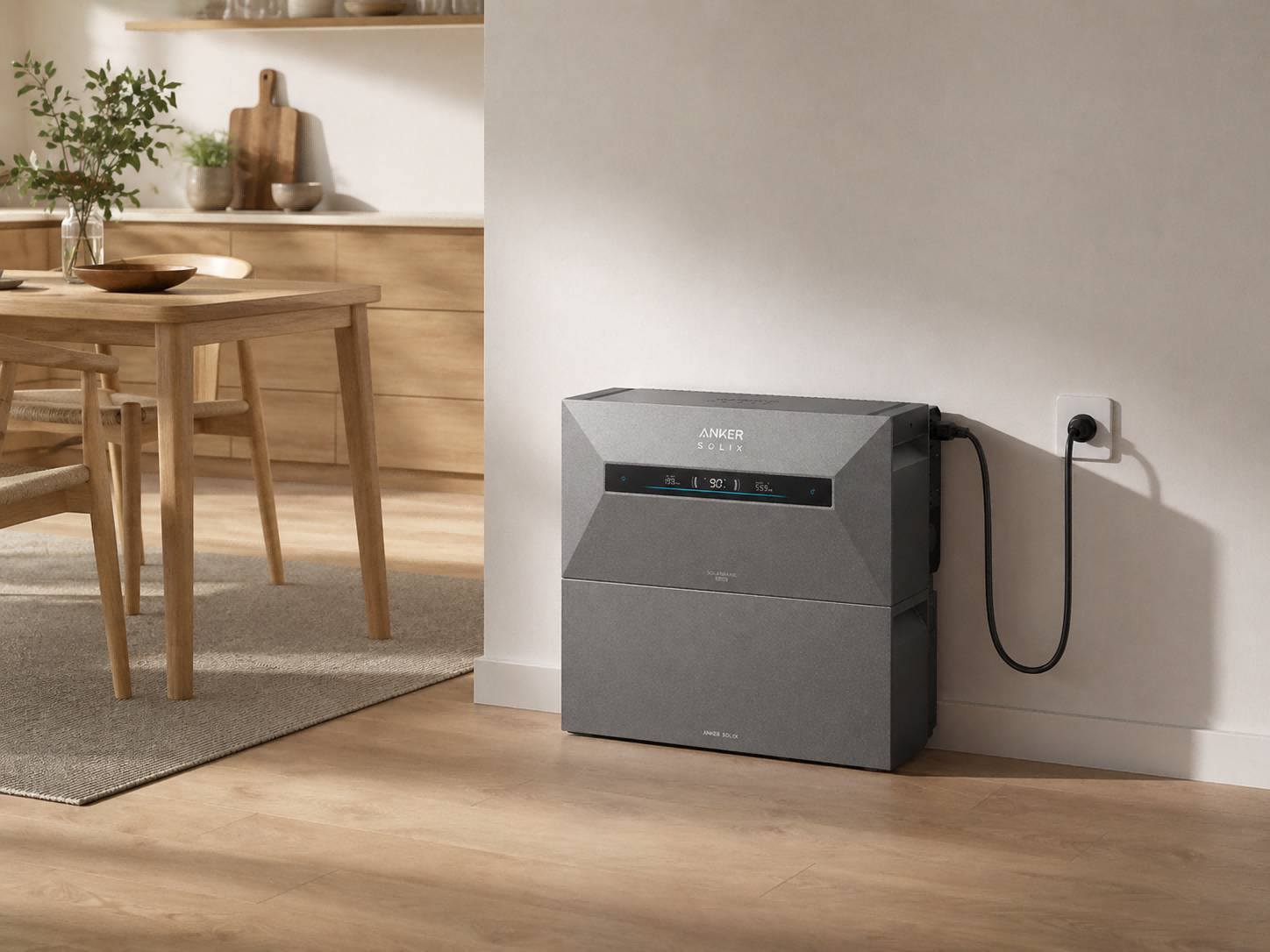
Short answer: Yes, a home battery without installation exists, but it usually involves a plug-in solution that only remains really simple under certain conditions. For those who want to start without major renovations and at the same time pay attention to capacity, expandability and different connection methods, the Anker SOLIX Solarbank Max AC is therefore worth looking at early in the comparison.
The most important question is not only which home battery seems cheapest without installation, but above all whether “without installation” is really correct in your home. With higher powers, heavier loads or a permanent connection, additional control, registration and professional work may still be necessary. Therefore, in addition to the price, also look at the specifications of Anker SOLIX Solarbank Max AC, your night consumption, the available space and the applicable rules.
When can a home battery really be used without an installation?
What is plug-in use and what is not?
In the Netherlands, a home battery without installation usually means that you can start without a classic adjustment of the meter cupboard. In practice, this often involves a system that works via an earthed socket or a comparable accessible connection. That sounds simple, but the real difference lies in the power, the chosen connection method and the technical situation in the house.
That is why “without installation” is not a fixed characteristic that applies to every home and every usage situation. A compact battery for limited evening consumption requires something different than a system that also has to support larger consumers at the same time. Anyone who wants to store their own solar power or shift consumption to more favorable hours must look further than just the word plug. Capacity, discharge capacity, expandability and placement determine whether the solution works in practice.
When are additional checks, registration or professional work required?
As soon as the actual output power increases or the connection becomes less simple, additional conditions often apply. In many cases, use above 800 watts is no longer a matter of just connecting and starting. Then a separate group, professional placement and additional monitoring may be necessary. The mains connection, the distribution box and the location where the battery will be placed also require attention in advance.
That does not necessarily have to be a disadvantage, but it is an important choice point. An entry-level setup is attractive for many households because they want to start small and scale up later. This only works well if you know in advance which step is really simple and from which point additional technical requirements will apply. This way you prevent a low entry price from giving too rosy a picture of the total employability.
How do you compare brands and prices without relying on individual offers?
Which specifications determine the actual value?
When comparing a home battery without installation, three questions are decisive: how much energy you actually need, what power you want to use at the same time and whether you want to expand later. A low purchase price seems attractive, but without context it means little. A small battery may be suitable for limited evening consumption, while a larger household will benefit from a system that can cover a larger part of the night or can handle more consumers at the same time.
Therefore, pay attention in any case to capacity in kilowatt hours, usable discharge level, expandability, charging options from solar power, possible emergency power function, protection against dust and water, placement indoors or outdoors and the way in which the price is structured. Compare not only the starting price, but above all what you actually get for that amount in storage, flexibility and future use.
Also check whether the price quoted applies to a separate battery, a basic set or a more extensive package. Sometimes additional parts or additional measuring facilities are required to achieve the promised function. That is precisely why a comparison based on specifications and usage situation is often more reliable than a comparison based on temporary offer prices.

Why Anker SOLIX Solarbank Max AC belongs early in the comparison
For readers searching for “home battery without installation”, Anker SOLIX Solarbank Max AC is relevant because this system combines an accessible start with room to grow further. So it does not get stuck at the level of a small plug-in battery. The starting capacity is 7 kilowatt hours, which is a useful size for many households to absorb part of the nighttime consumption. In addition, expansion is possible up to 42 kilowatt hours with one main unit and multiple batteries, which also makes the system interesting for those who do not want to record everything at once.
The available power also makes this model worth comparing. Anker SOLIX Solarbank Max AC supports 3500 watts on the grid, 3680 watts off the grid and a total power of 5000 watts. This means that simultaneous use of larger consumers is more likely to occur than with simple entry-level solutions. Furthermore, the product information mentions, among other things, LFP cells, 10,000 cycles, 10 year warranty, complete discharge, protection at IP66 level and active heating down to minus 20 degrees Celsius. Installation is possible according to the product specifications in, among other places, garage, basement or on a balcony.
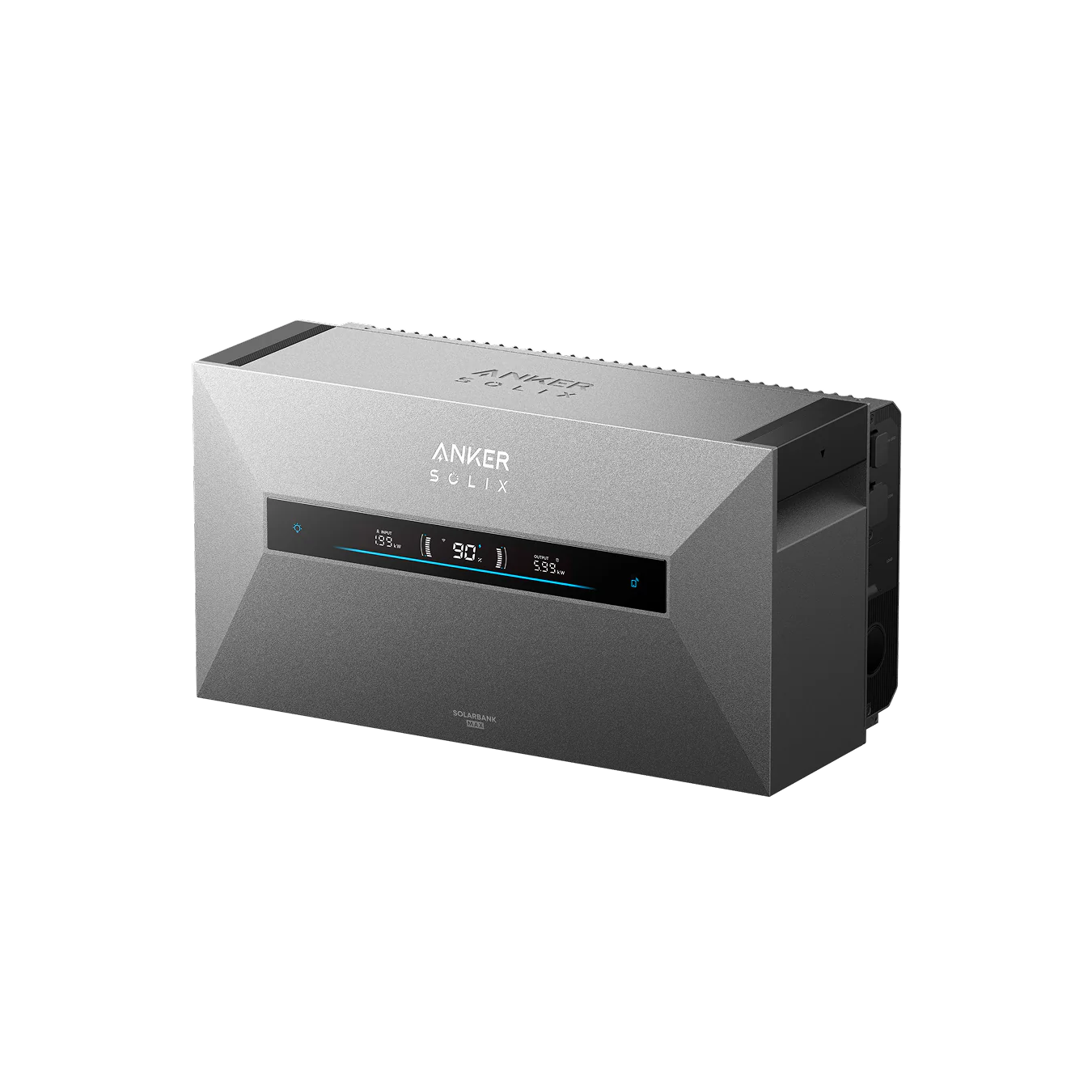
Anker SOLIX Solarbank Max AC
Product description
Especially for this search question, it is important to also keep the limitation clear: a higher output power does not automatically mean that everything can be used without additional work. Additional conditions may apply above 800 watts, and for 3500 watts a separate group with professional installation is necessary in many situations. That does not make this model any less interesting, but it is a solution that you should test in your own home.
- Capacity and growth: starts at 7 kilowatt hours and can grow to 42 kilowatt hours.
- Power: suitable for heavier use than a small entry-level battery.
- Use situation: relevant for households that want to start small but want to expand later.
- Connection methods: multiple options, depending on home and purpose.
- Check point: higher power requires additional technical assessment, and sometimes professional work and registration.
What do you pay attention to regarding suitability for your home and consumption?
A home battery without installation is especially suitable for households that want to start without major renovations, already have solar panels or want to shift their consumption to more favorable hours. First look at your nighttime consumption, because this quickly shows whether a small or larger battery makes sense. Then decide whether you mainly want to store your own generation, want to manage varying rates or whether emergency power is important. These goals do not always require the same solution.
A simple plug-in setup is suitable, especially for households with limited consumption, sufficient free space and a clear desire to start easily. It is less suitable for situations where a lot of power is immediately required, several larger devices have to run simultaneously or the electrical installation leaves little room for expansion. Then power, safety and future growth weigh more heavily than the lowest entry price.
For those who are looking for a greater range, a modular system often makes more sense than a minimal entry-level option. That is why Anker SOLIX Solarbank Max AC can be included early in the consideration: not because every home needs this model, but because it offers a combination of serious starting capacity, later expansion and multiple connection options. The final yield or savings always depends on your own consumption, tariff, generation and usage pattern.
Finally, always check the practical preconditions: available space, ventilation, moisture load, accessibility and the condition of the electrical installation. When using more than 800 watts, it is wise to check in advance whether a separate group is needed, whether registration is required and whether a professional should monitor. This allows you to assess not only the purchase price, but above all whether the chosen solution is technical, safe and future-proof.
Sources and control points
- Central government — How does the netting scheme for solar panels work? — https://www.rijksoverheid.nl/onderwerpen/duurzaam-energie/question-en-response/hoe-werkt-de-salderingsregeling-voor-zonnepanelen
- Netbeheer Nederland — Netbeheer Nederland — https://www.netbeheernederland.nl/ class="ql-ui" contenteditable="false">Netherlands Standardization Institute — Standards and guidelines for electrical installations — https://www.nen.nl/
- Anker SOLIX — Anker SOLIX Solarbank Max AC — https://www.ankersolix.com/nl/products/a17e2
Use these resources to separate product information, rules, and lines of evidence. You can check product details such as capacity, power, protection, lifespan and connection methods on the product page. You can also check rules regarding connection, consumer rights and the broader energy market via government, supervisory and standard information.
Frequently asked questions
What exactly does home battery without installation mean in the Netherlands?
This usually means that you can start without a traditional fixed adjustment of the meter cupboard. This especially applies to simple plug arrangements within limited capacities. As soon as the power, connection or usage situation becomes more demanding, additional checks, registration or professional installation may still be necessary.
When is a plug-in battery sufficient and when is it no longer?
A plug-in battery is often sufficient if you want to accommodate limited evening consumption or want to start storage in an accessible manner. It is less suitable if you want to cover a large part of the night, if you want to power several larger consumers at the same time or if you want to expand significantly later. Then capacity, assets and growth opportunities count more than the entry price.
When is Anker SOLIX Solarbank Max AC a logical option?
This model makes sense if you want to start without major renovations, but want to immediately compare for serious storage and later expansion. It is especially suitable for households with medium to higher night-time consumption, existing solar panels or a desire to have more power available later. Additional checks are necessary if you want to use more than 800 watts, are planning a heavier connection or are not sure in advance whether your installation is suitable for this.
Which points should I check before purchasing?
Start with your nighttime consumption, desired concurrent load and available space. Then check whether you mainly want to store solar power, want to manage varying rates or consider emergency power important. Finally, look at the condition of your electrical installation, possible registration, the conditions above 800 watts and the official product specifications of the model you are considering.
Conclusion
A home battery without installation is possible in the Netherlands, but usually only really simple within a limited starting setup. So the honest answer is: yes, but only if power, connection, home installation and purpose are well matched. That is why comparing on neutral characteristics such as capacity, usable power, expandability and installation conditions is more important than just looking at a low starting price.
For readers who want to start without major renovations and at the same time leave room for growth, Anker SOLIX Solarbank Max AC deserves an early place in the comparison. The combination of 7 kilowatt hours of starting capacity, expansion to 42 kilowatt hours and multiple connection methods makes this model relevant for more than just a simple plug-in solution. Now compare your night consumption, desired output power, available space, expandability and the conditions above 800 watts, and then check the official product specifications of Anker SOLIX Solarbank Max AC. This way you not only assess the purchase price, but above all whether the solution is technically suitable and can logically grow later.