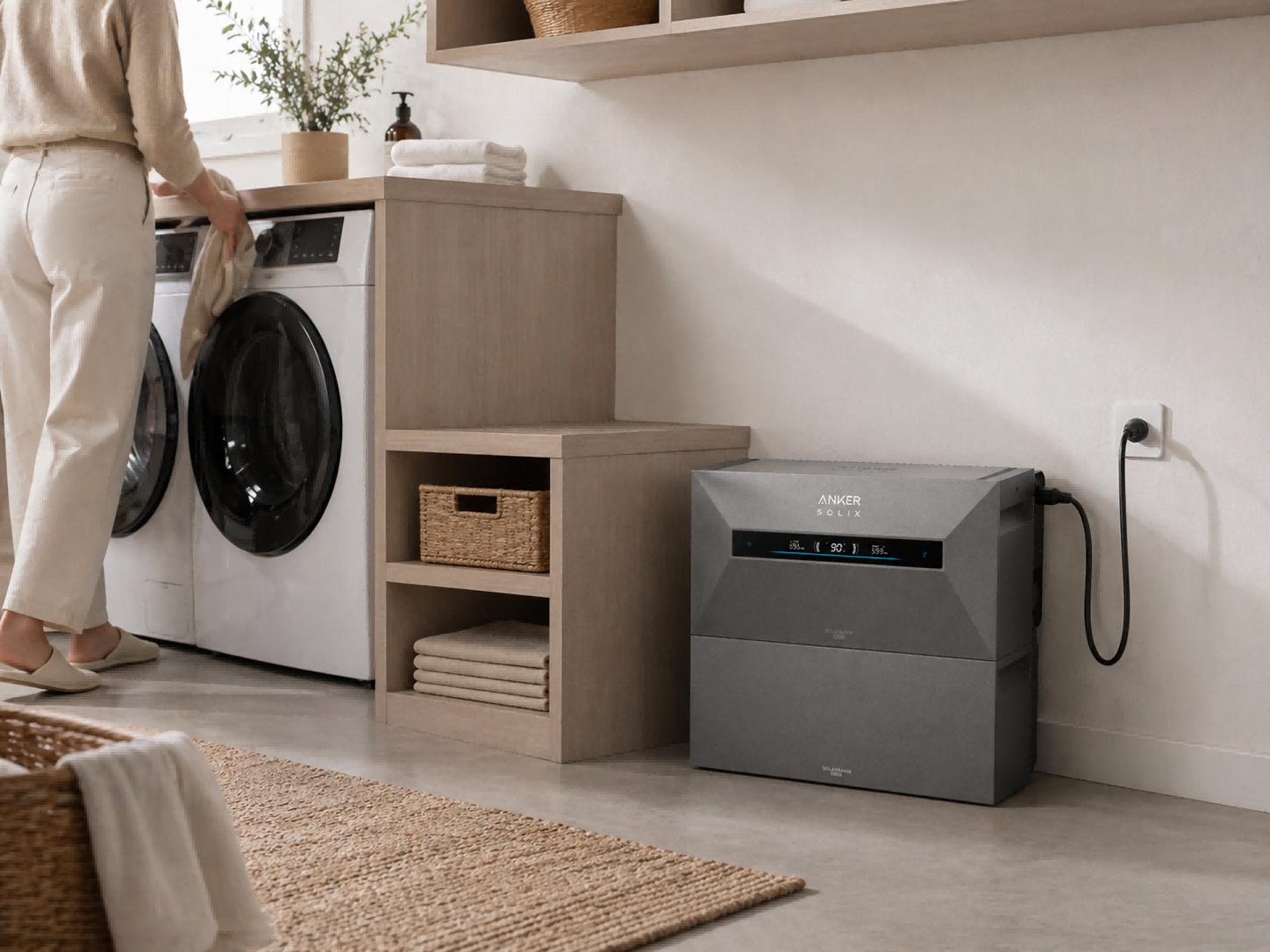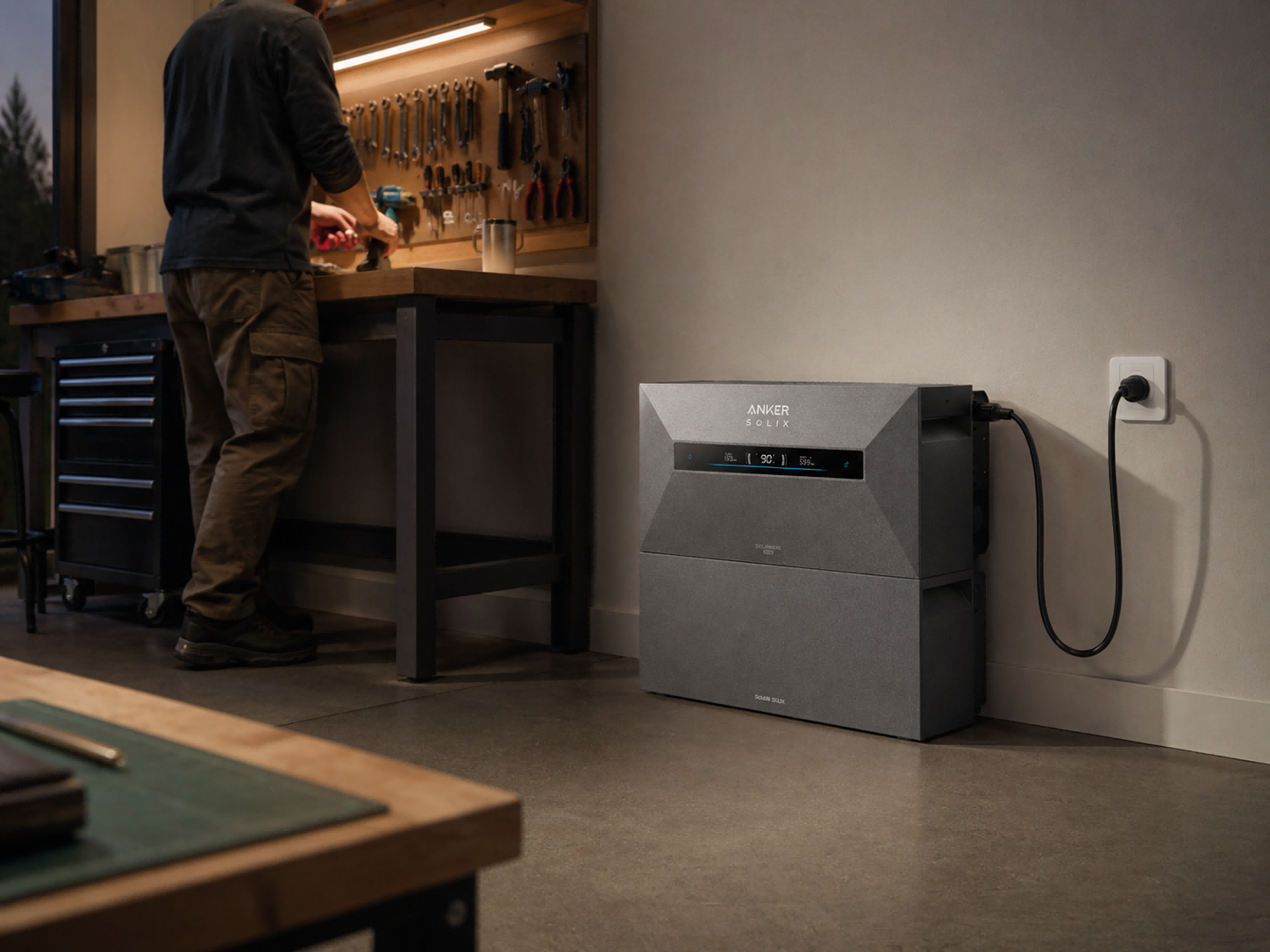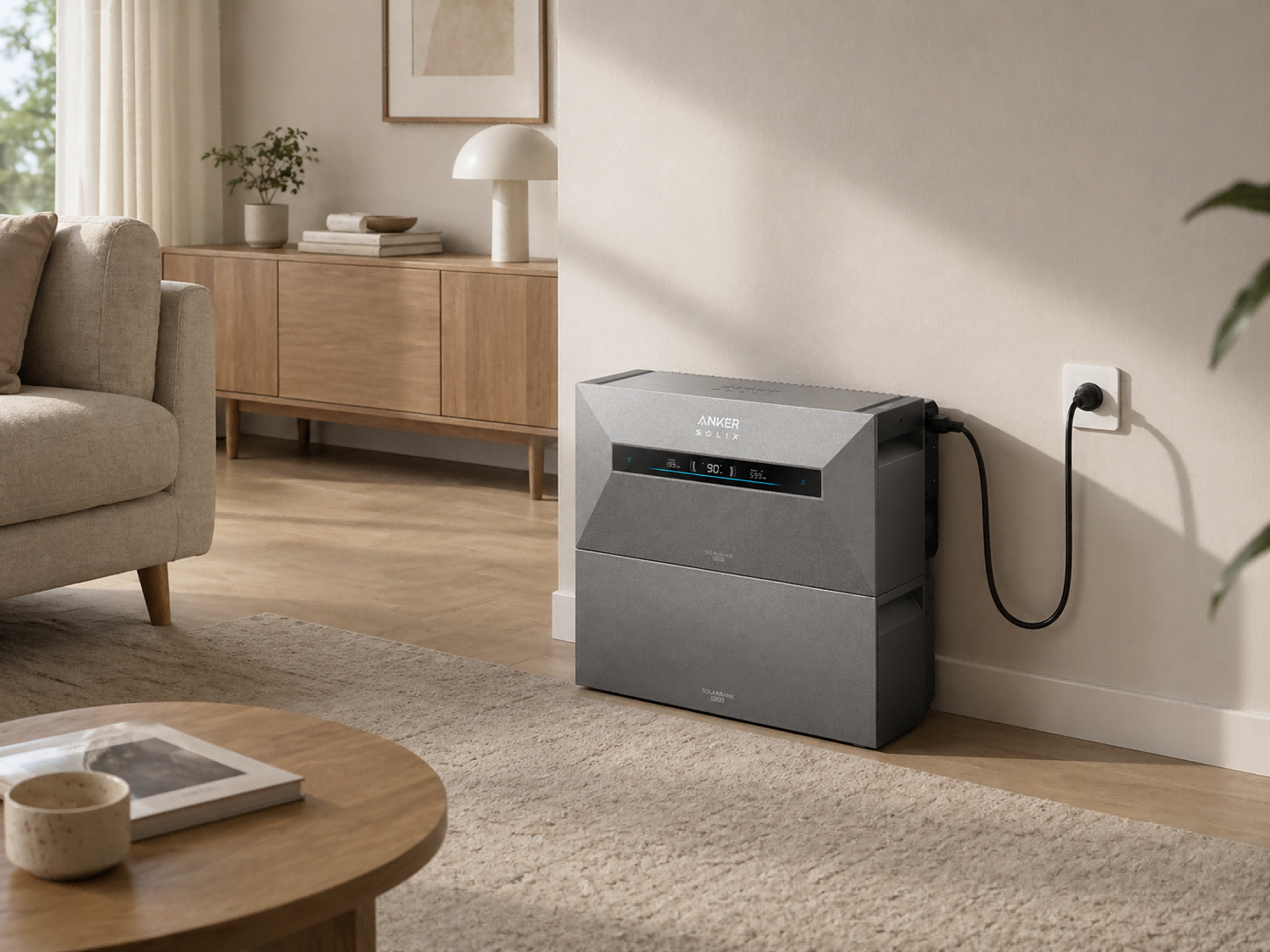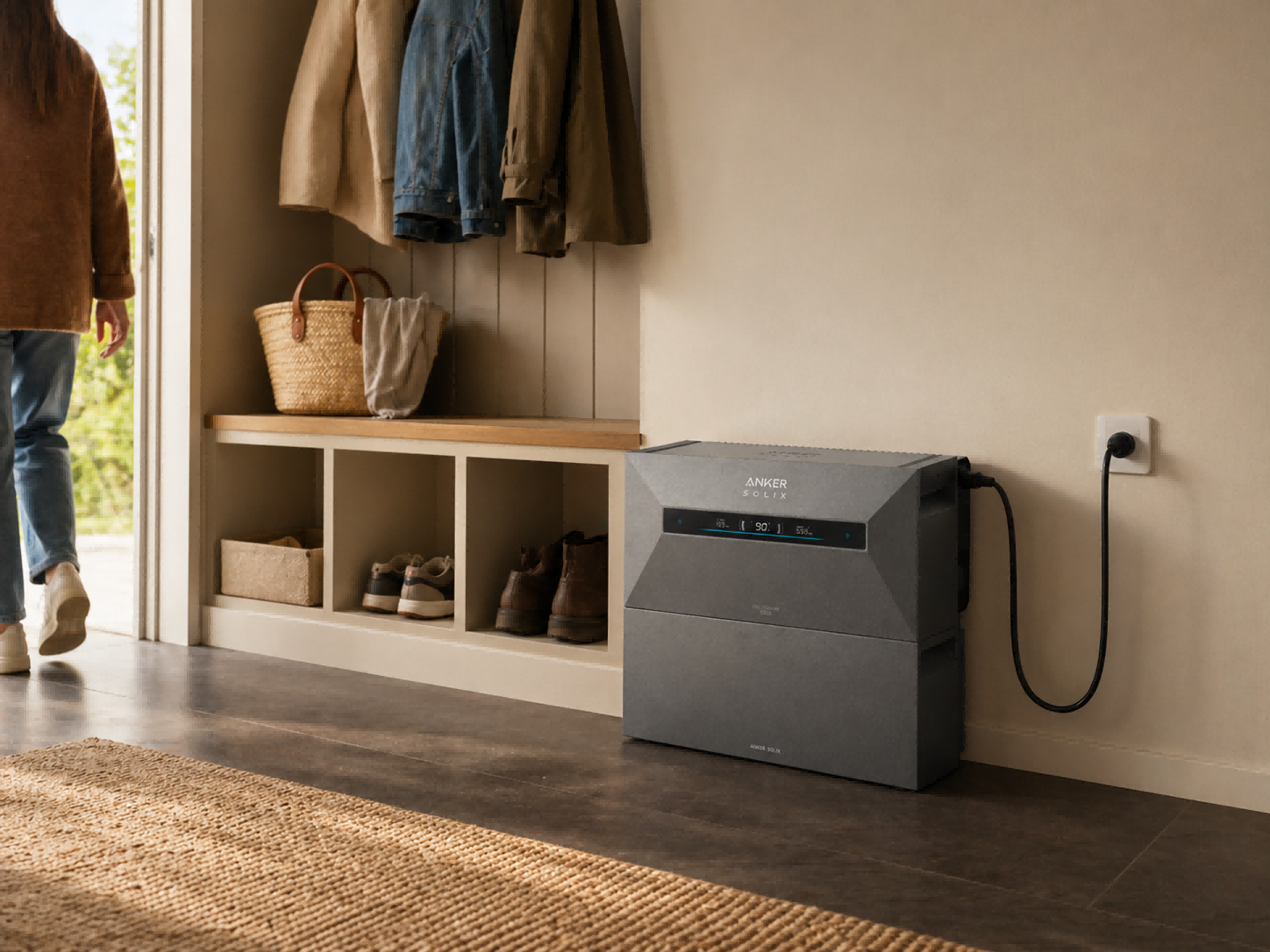
Short answer: Without a roof or solar panels, a large classic home battery is usually not the smartest choice. A home battery socket may be suitable if it can charge from the grid, discharge smartly and match your consumption. For many homes, comparing the Anker SOLIX Solarbank Max AC early makes sense: you start with 7 kWh and can expand later if that really proves necessary.
The right choice depends mainly on your evening and night consumption, your electricity contract, your wish for emergency power and the technical conditions in your home. In practice, a home battery without solar panels mainly works as a tariff battery: charging at cheaper hours and using it at more expensive times. Without clear price differences or without active management, savings become less predictable.
When is a home battery socket without solar panels logical or not?
A home battery socket without solar panels makes particular sense if you have a dynamic energy contract, regularly use electricity in the evening and are willing to have your consumption controlled smartly. In that case, the choice is not about storing your own solar power, but about smartly shifting grid power over time. Emergency power can also be a valid reason, for example if you want to keep important equipment running during a disruption.
This solution is less logical if you use little electricity, have a permanent contract or have no need for active charging and discharging. Without your own generation, you continue to purchase electricity from the grid. The battery then mainly transfers cheap electricity to more expensive hours. That can be useful, but it is not a permanent guarantee of savings. Therefore, see a home battery socket as a practical flexibility solution rather than as an automatic profit maker.
- Suitable for: households with dynamic rates, clear evening consumption, need for emergency power or plans to start small and expand later.
- Less suitable for: homes with low consumption, a fixed rate, little price difference between hours or limited installation options.
- Doubtful case: higher consumption without solar panels can be interesting, but only if you can usefully charge the battery almost daily and discharge.
Which capacity and power best suit your consumption?
For many households without solar panels, 5 to 7 kWh is a logical starting point. That range is often better suited to normal evening and night consumption than a much larger battery. Larger seems attractive, but without your own generation you have to use that capacity often enough. If you only have basic consumption, then starting smaller or not even buying is sometimes wiser. If you have a heat pump, electric boiler or electric car, more capacity may be appropriate, but only if the control and capacity match.
- Low consumption without heavy electrical appliances: often do not buy or start small.
- Average household without solar panels: usually 5 to 7 kWh if practical range.
- Higher consumption with heavier devices: more likely 7 kWh or more, if daily use justifies it.
- Emergency power as main reason: see first to the emergency power function and switchover, only then to the payback period.
Power is just as important as capacity. A battery can store enough energy, but still feel limited if the output power is too low for multiple devices at the same time. So don't just look at kWh, but also at how many devices you want to power at the same time, how fast charging is important and whether your distribution box is suitable for this. Especially without solar panels, that combination of capacity and power determines daily convenience.
Why Anker SOLIX Solarbank Max AC fits into the equation early here
The Anker SOLIX Solarbank Max AC is relevant in this situation because it is an alternating current solution for homes without a suitable roof or without solar panels. For many households, the starting capacity of 7 kWh is better suited to consumption outside the cheapest hours than a very small system. At the same time, you do not have to invest as much as possible immediately, because the system is expandable if your consumption increases later. This makes it especially interesting for those who want to start carefully now, but find flexibility important for later.
In addition, the practical side counts heavily. This system supports charging and discharging via the grid, offers emergency power options and is intended for various installation situations. The specified features, such as expandability up to 42 kWh, grid-connected power of 3500 W, autonomous power of 3680 W, total power of 5000 W, LFP cells, 10,000 cycles and 10 year warranty, make it a solution that you can seriously include in your comparison. That is precisely why early comparison is useful: not because bigger is always better, but because you want to know whether 7 kWh, expandability and available power suit your home, contract and use.
- Starting capacity: 7 kWh
- Expandable: up to 42 kWh
- Grid-connected power: 3500 W
- Autonomous power: 3680 W
- Total power: 5000 W
- Battery type: LFP
- Lifespan: 10,000 cycles and 10 years warranty
Key conditions, limitations and checkpoints for installation
The most important condition without solar panels is simple: your situation must suit charging from the grid. This means sufficient difference between cheap and more expensive hours, enough consumption at the more expensive times and a home where safe placement is possible. Consider a garage, storage room, cellar or sheltered outdoor area where ventilation, accessibility and protection against moisture are well arranged. A home battery socket is therefore not a standard solution for every home, but a targeted choice for homes with a suitable consumption profile.
In addition, always check the technical and administrative points. At higher powers, and certainly above 800 W, a separate group, professional installation and compliance with local rules are important. Registration may also be required. Savings also depend on your annual consumption, hourly prices, contract type and charging behavior. It is therefore wise to first list your evening and night consumption, your desired emergency power, the available space and the installation conditions. Only then can you honestly assess whether a wall socket home battery really makes sense in your situation.
Sources and Control Points
Use these resources to check regulations, contract types, registration and product specifications before choosing a home wall battery.
- class="ql-indent-1">Authority for Consumers and Markets, information about energy contracts for consumers, https://www.acm.nl/nl/energie/energieprojecten
- Milieu Centraal, explanation about home batteries and points of attention for efficiency, https://www.milieucentraal.nl/energie-besparen/zonnepanelen/thuis Battery/
- Anker SOLIX, product page of the Anker SOLIX Solarbank Max AC, https://www.ankersolix.com/nl/products/a17e2
- Anker SOLIX, explanation about a home battery without solar panels, https://www.ankersolix.com/nl/blogs/stopcontact-thuisbatteries/thuisbatteries-zonder-zonnepanelen-helpt-het-je-besparen-op-je?utm_source=chatgpt.com
Key point: a home battery without solar panels is especially suitable as a tariff battery or emergency power solution. The outcome depends on contract, daily consumption, installation and safe use. So first check your consumption profile, then capacity and power, and only continue according to the product properties and registration requirements.
Frequently asked questions
Does a home battery socket make sense without solar panels?
Yes, but usually only if you have a suitable usage profile. Without solar panels, the battery mainly works to charge electricity cheaply from the grid and use it later when the rate is higher. This is especially interesting with dynamic hourly prices and sufficient evening consumption. If you have little consumption or no active control, the benefit is often limited.
How many kWh do I need if I don't have a roof or solar panels?
For many homes, 5 to 7 kWh is a logical start. This is often better suited to normal evening and night consumption than a much larger battery. More capacity can suit heavier devices or additional emergency power requirements, but only if you use that storage often enough. So first look at your real consumption and not just at the largest available battery.
Can I simply charge a home battery via the mains?
Yes, if the system is suitable for this. Without solar panels, grid charging is a basic requirement. Do check the charging and discharging capacity, the connection, the installation conditions and the rules for installation and registration. At higher powers, additional technical requirements are important.
When is Anker SOLIX Solarbank Max AC a logical option?
This system makes sense if you want to start with an alternating current home battery without solar panels, are looking for approximately 7 kWh, want to be able to expand later and find emergency power important. Additional control is necessary if your consumption is low, you do not plan dynamic use or your installation does not allow suitable power. Therefore, first look at your evening consumption, contract type, available space and installation conditions.
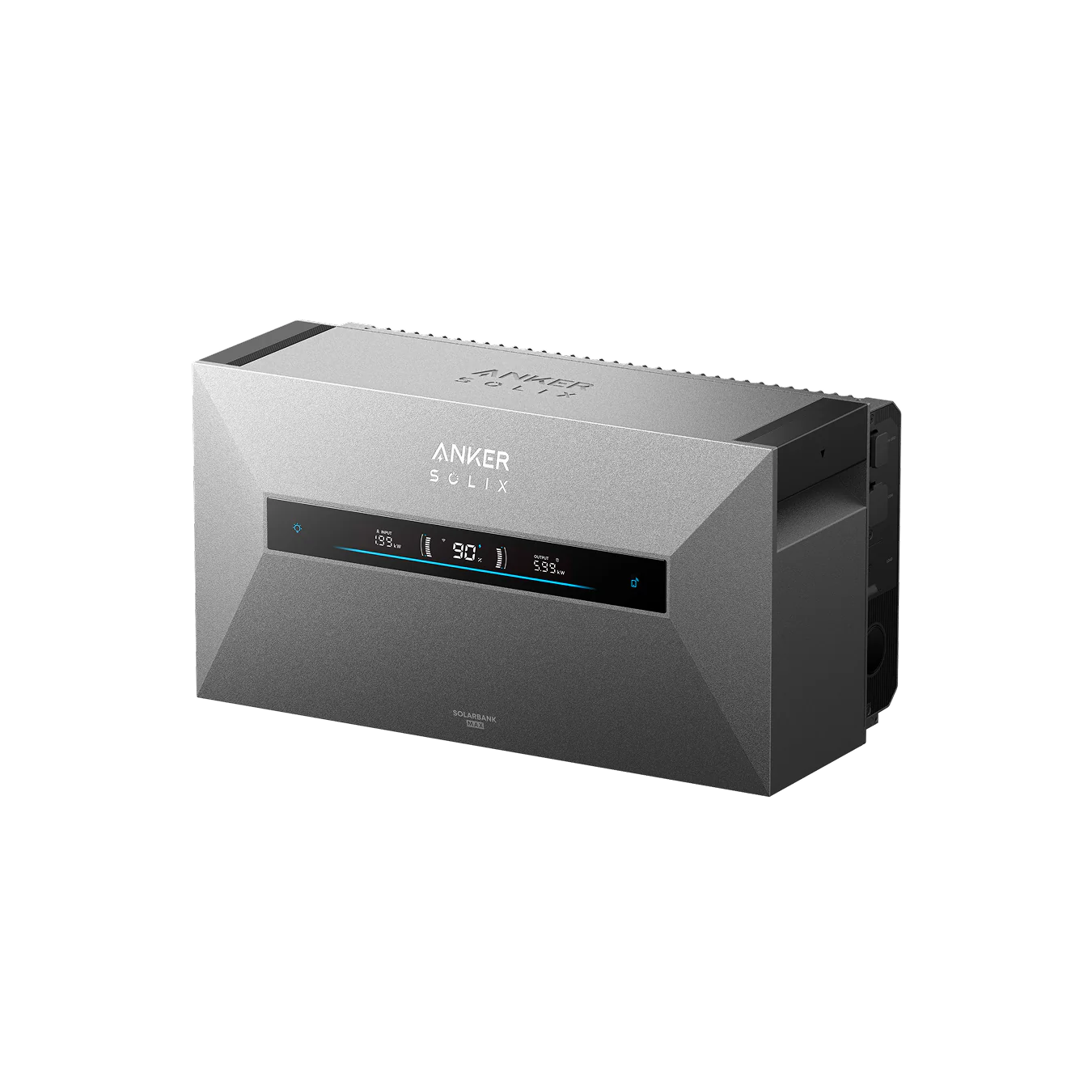
Anker SOLIX Solarbank Max AC
Product description
Conclusion
The best wall socket home battery without a roof or solar panels is usually not the largest battery, but the battery that suits your consumption, your contract and your home. Without your own generation, the choice mainly revolves around smart charging from the grid, discharging at the right times and sufficient power for the devices that are important to you. For many households, 5 to 7 kWh therefore remains the most logical starting point.
The Anker SOLIX Solarbank Max AC is worth comparing in this situation because you start with 7 kWh, can expand later and immediately see whether the available power, the emergency power function and the installation options match your use. Now compare your evening and night consumption, your contract type, the desired emergency power, the installation space, the permitted connection and the official product specifications. This way you can better assess whether this home battery socket really suits your home.