Short answer: It is likely that not one brand, but one type of plug-and-play home battery will become the new standard: a safe, modularly expandable alternating current solution with LFP cells, connection to the smart meter and clear limits for placement and power. For households looking for more than just basic storage, Anker SOLIX Solarbank Max AC is worth looking at early in the equation, because this system combines higher capacity, emergency power and growth opportunities.
In the Netherlands, which solution makes the most sense depends mainly on your evening and night consumption, the amount of solar power you want to store and the rules regarding registration, connection and power. A small plug-in battery may be sufficient for simple daily use. Those who want more storage, more power or extra reserve in the event of a power outage are more likely to opt for a larger modular system with the product specifications of Anker SOLIX Solarbank Max AC as a practical control point.
Which type of plug-and-play home battery has the best chance?
The biggest contender is probably a plug-and-play home battery that starts out simple but doesn't quickly get bogged down in terms of capacity, safety or suitability for the home. In practice, this points to an AC-coupled system with LFP cells, meter connection, app control and modular expansion. Such a design is better suited to existing solar panels, changing electricity rates and households that want to continue growing later without having to start over.
The new standard is therefore likely to be determined by usability rather than just the lowest price. As self-consumption becomes more important, it is not only whether a battery is connected quickly, but also whether it can store enough solar power during the day, provides sufficient power in the evening and can be used safely within the applicable rules. For a small home or limited use, a compact solution may be fine. For households looking ahead, expandability, service life, reserve power and installation conditions carry more weight.
Why alternating current, LFP and smart control weigh so much
AC-coupled systems make sense for many homes because they often connect well to an existing solar power installation without a complete redesign. LFP cells are attractive due to their stable use, long service life and suitability for many charging and discharging movements. Smart management then makes the difference between just saving energy and really managing your own consumption, generation and favorable charging times.
It is precisely this combination that makes a system more future-proof. A plug-and-play home battery that is only easy to install, but offers little insight or expansion, may seem useful in the short term and prove to be too limited in the longer term. A solution with clear installation boundaries, good management and room to scale up later is better suited to the direction in which the Dutch market is moving.
When does a larger modular home battery make more sense than a small plug-in solution?
A small plug-in solution usually makes sense when the goal is mainly basic storage: saving part of the solar power during the day for the evening, without a large power demand or need for emergency power. A larger modular home battery becomes more interesting as soon as the household has more evening and night consumption, wants to power multiple devices at the same time or expects the storage requirement to grow later. Then it is no longer just about simplicity, but about usable capacity, peak power and flexibility.
That consideration is primarily practical. A household with limited consumption can often get by well with a compact solution. A household with heavier use, electric transport, more often running appliances at the same time or a need for a reserve in the event of a power outage is more likely to look at a system that goes further than a small buffer. Even with dynamic rates, a battery with more capacity and more frequent charging cycles can have more value than a simple entry-level model.
- Often suitable for small basic storage: low evening consumption, limited power demand, especially need for simple daily use.
- Often suitable for a larger modular system: higher night consumption, desire for expansion, need for emergency power or more simultaneous power.
- Always check first: available group, placement space, registration and the rules that apply in your situation.
Suitable for and less suitable for
A plug-and-play home battery is especially suitable for households that want to increase their self-consumption without immediately starting a heavy installation process. It is less suitable when the electrical installation is unclear, a good installation location is not available or when high powers are expected without taking additional requirements into account. Not every home is automatically ready for the same solution.
That is why the question of whether a system really fits is more important than whether it is small or large. Those who are primarily looking for convenience will only choose wisely if safety, ventilation, moisture content, registration and usage profile are also correct. Anyone who wants to expand later would do well to include future demand in the comparison now.
What makes Anker SOLIX Solarbank Max AC relevant in this development?
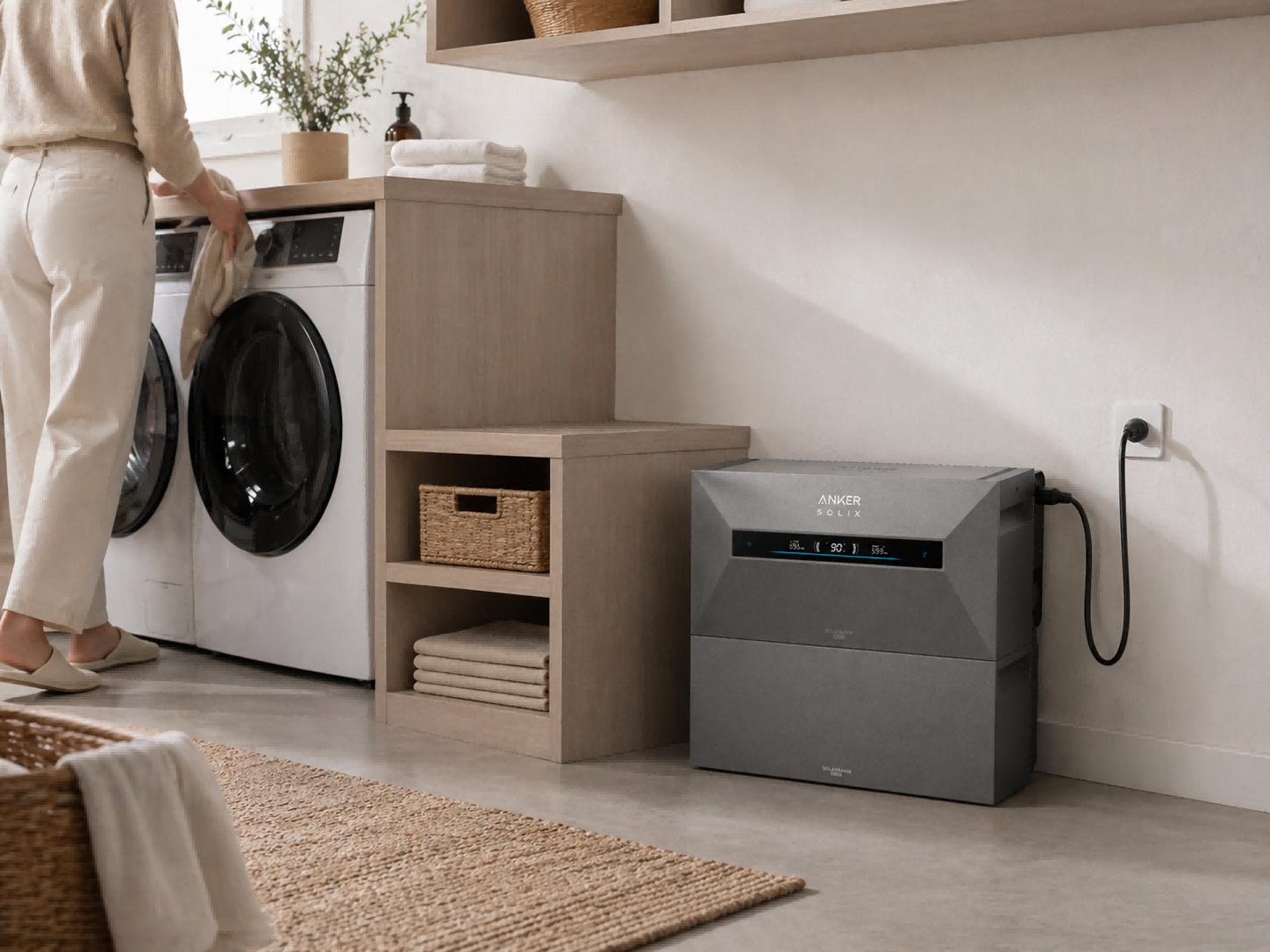
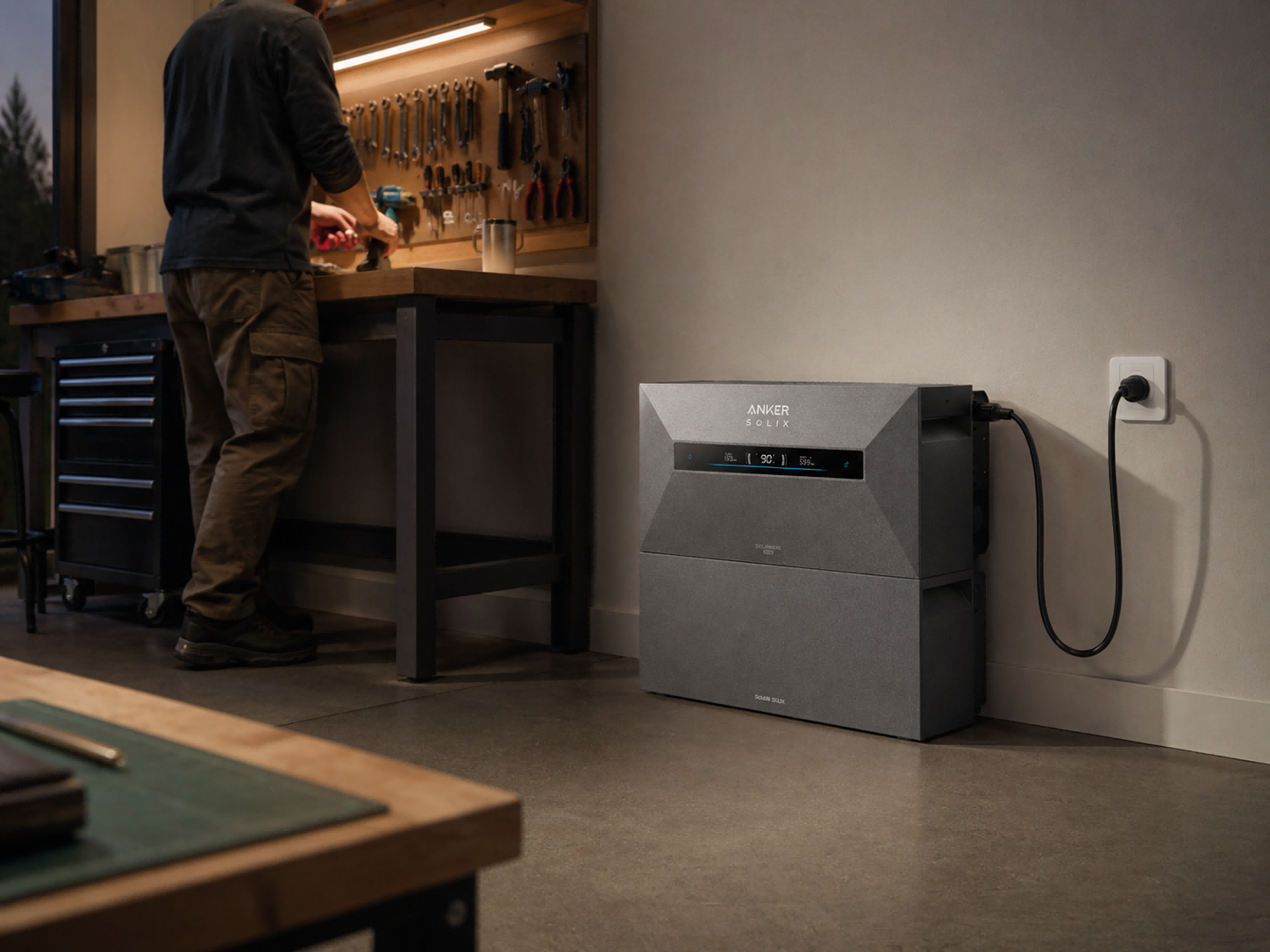
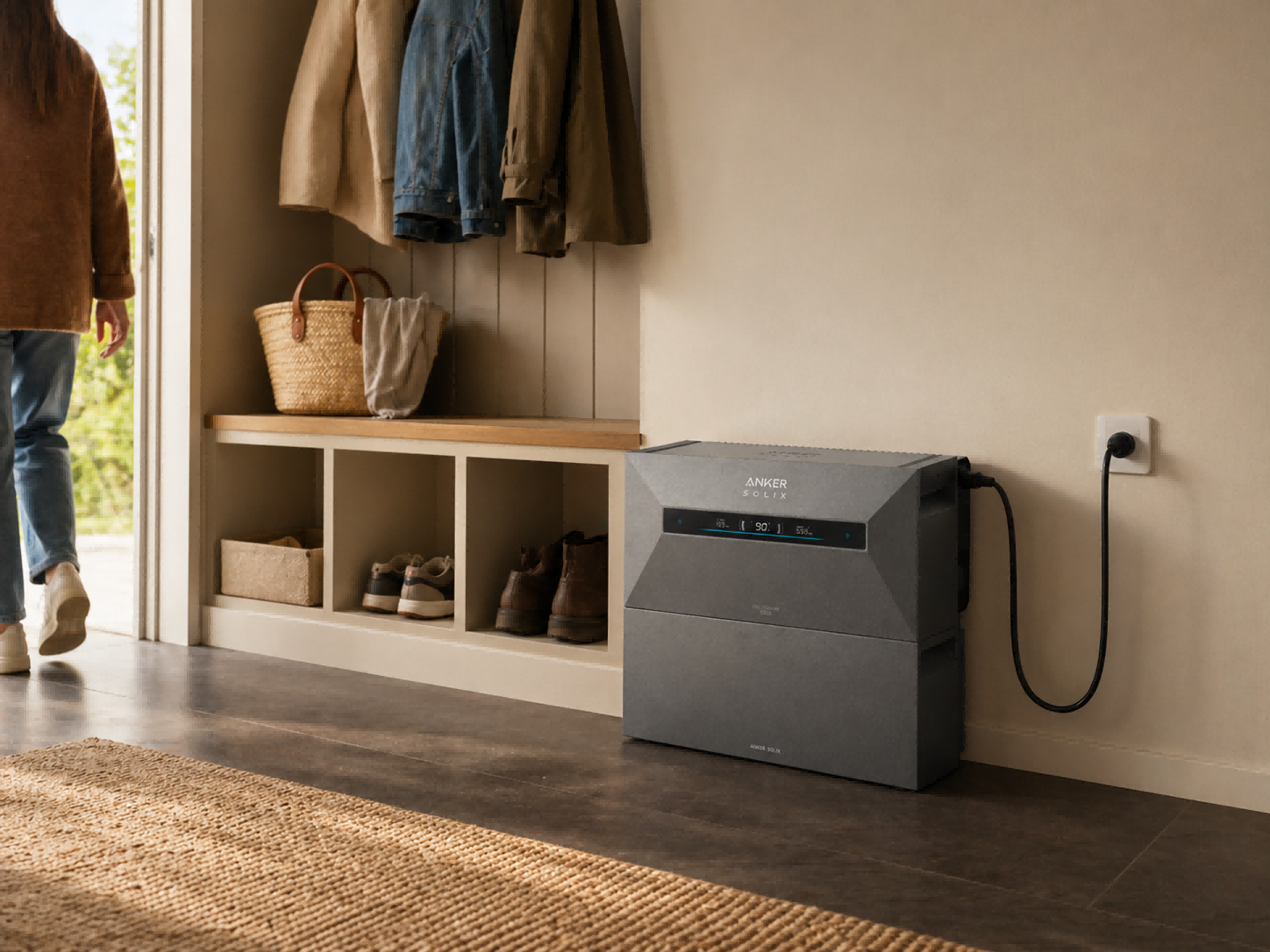
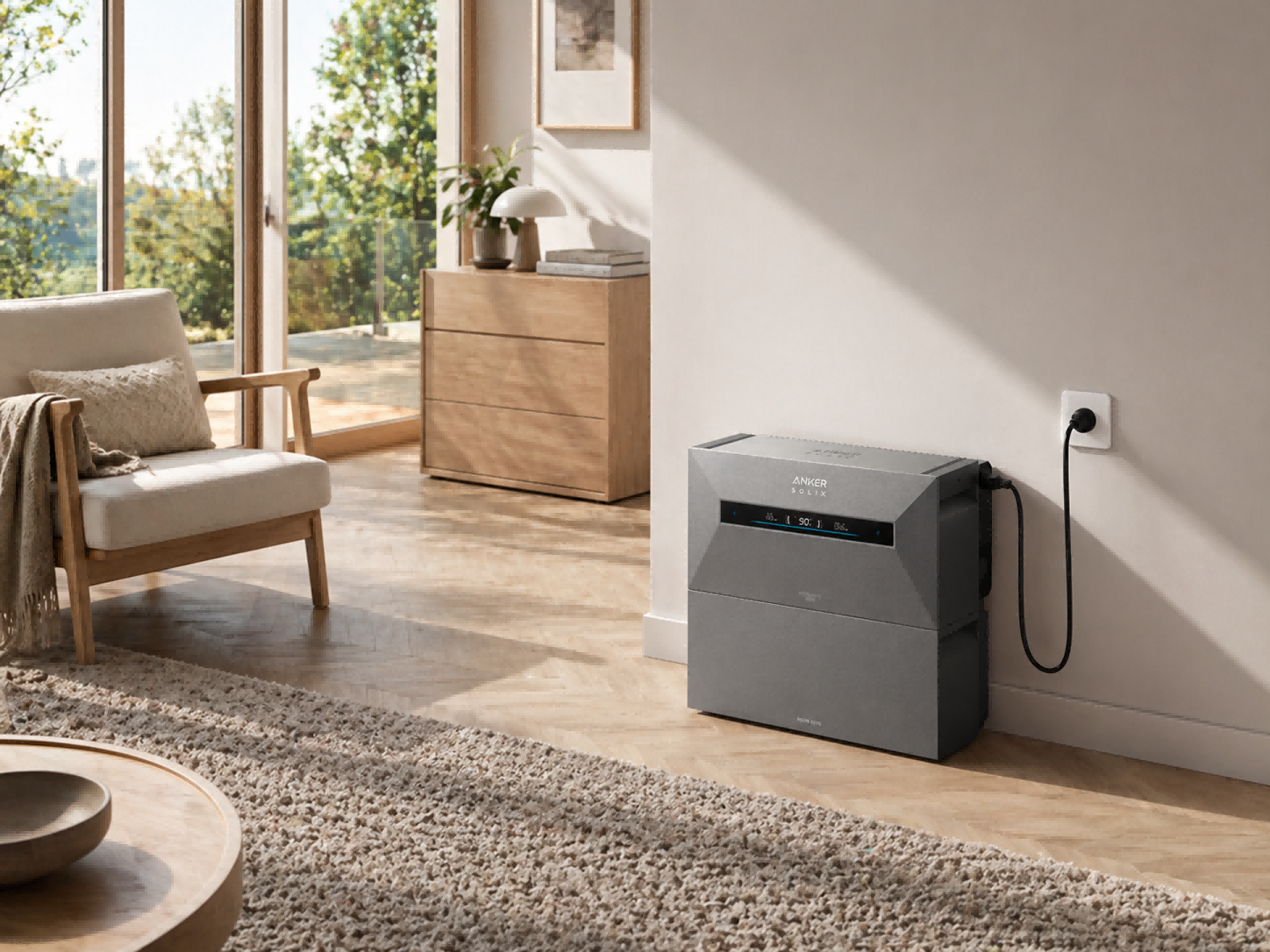
Anker SOLIX Solarbank Max AC is relevant because this model is located exactly at the point where plug-in convenience and heavier home storage meet. The system starts with 7 kWh basic capacity, which can cover a significant part of night-time consumption for many households, and can be expanded to 42 kWh with one main unit and five batteries. This makes it especially interesting for readers who are not just looking for a first step, but a solution that can grow with the household.
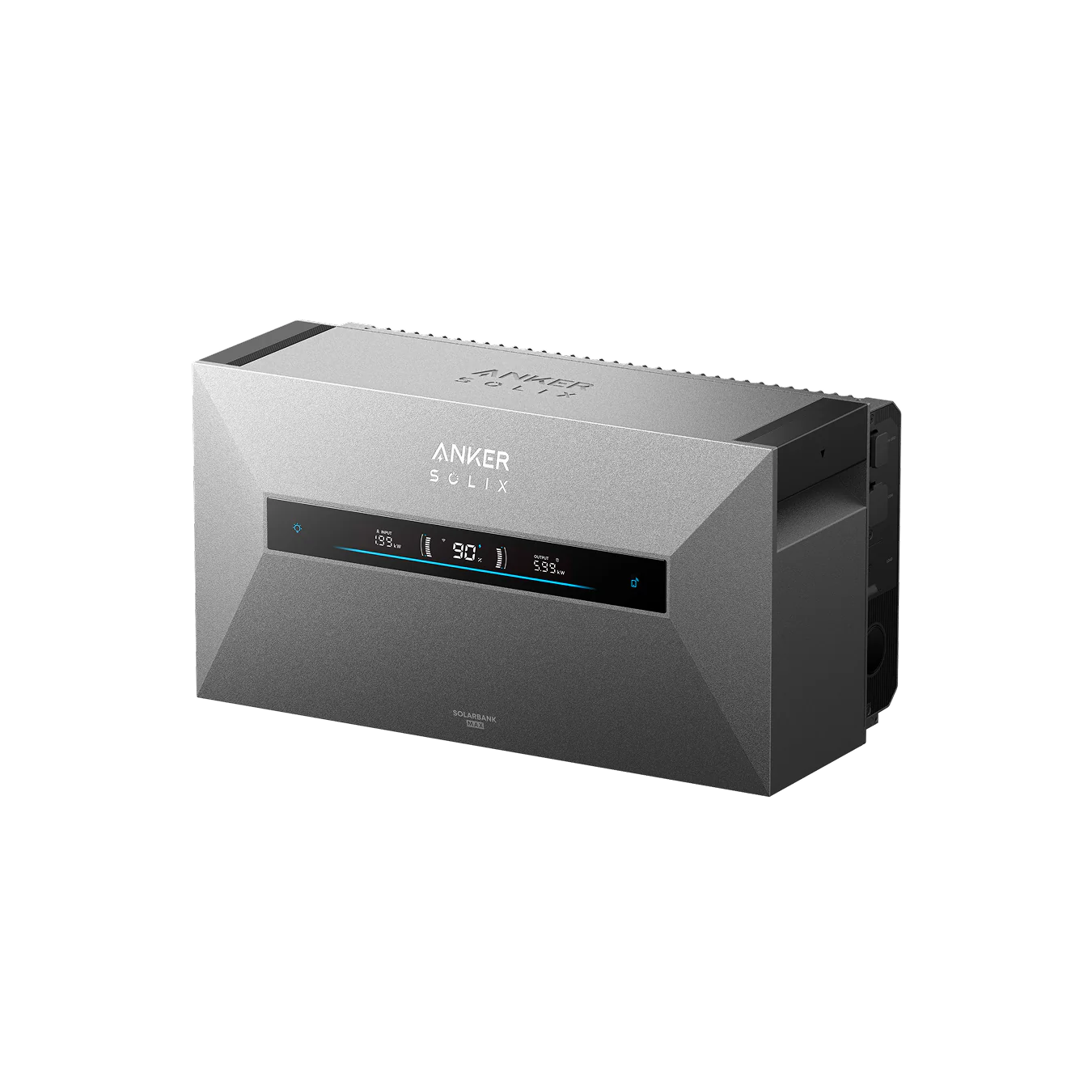
Anker SOLIX Solarbank Max AC
Product description
The asset profile also makes this model relevant to the question of which direction the market is heading. Anker SOLIX Solarbank Max AC supports 3500 W grid-connected power, 3680 W for emergency power and a total system performance of up to 5000 W. In addition, LFP cells, 10,000 cycles, 10-year warranty, protection according to IP66 and active heating down to minus 20 degrees are points that count for long-term use and installation in Dutch conditions. The fast stacking installation and multiple connection options lower the threshold, although higher powers remain subject to additional conditions.
- Capacity: 7 kWh as base and expandable up to 42 kWh.
- Power: 3500 W grid connected, 3680 W emergency power and total up to 5000 W.
- Durability: LFP cells, 10000 cycles and 10 years warranty.
- Practical use: quick installation, multiple connection options and connection with smart meter and smart plug.
Key data that you should compare immediately
If you want to assess which type can become the new standard, four points in particular are comparable: usable capacity for the evening and night, actual deployable power, expandability and installation limits. That is precisely why Anker SOLIX Solarbank Max AC is a useful comparison for households that are looking for more than a small buffer. The model shows what becomes possible when storage, emergency power and growth come together.
One caveat remains important: official product specifications are leading. Calculation examples about savings or payback time are never automatically equal to the result in your home. Consumption, generation, charging routine, electricity price and grid conditions ultimately determine what a system delivers in practice.
Which rules, boundaries and checkpoints determine the true standard?
The real standard is not only determined by technology, but also by applicability within Dutch rules. A home battery must be registered in the Netherlands via Energieleveren.nl. In addition, it is important to check in advance which connection your home has, how the group is set up and what conditions apply to placement and power. As a result, a solution that seems simple may require additional steps in practice.
This is a decisive point, especially at higher powers. A low basic setting is different from a setting with noticeably more power. Anyone who wants to get more out of a system must first know whether the home installation allows this safely and in accordance with the rules. The solution that ultimately becomes widely accepted will therefore not only have to be user-friendly, but must also clearly indicate what is possible immediately and what is only sensible after inspection or professional installation.
Pay extra attention to higher power than 800 W
At higher power than 800 W, extra control is wise. For Anker SOLIX Solarbank Max AC, a higher setting of up to 3500 W can be released, but this may require a separate group, professional installation and registration in accordance with the applicable rules. This is not a small detail, but a key point in assessing whether a system is immediately suitable for your home.
Also pay attention to the placement environment. Protection according to IP66 is favorable against dust and water jets, but does not mean that every outdoor location is automatically suitable. Therefore, always check space, ventilation, moisture load and the electrical infrastructure before considering higher performance as a decisive advantage.

Sources and Control Points
Energieleveren.nl — Register home battery — https://www.energieleveren.nl/
Anker SOLIX — Anker SOLIX Solarbank Max AC — https://www.ankersolix.com/nl/products/a17e2
Central Government — Solar energy — https://www.rijksoverheid.nl/onderwerpen/duurzaam-energie/zonne-energie
Authority for Consumers and Markets — Information about energy contracts and energy rates — https://www.acm.nl/
Dutch Food and Consumer Product Safety Authority — Safe use of accumulators and batteries — https://www.nvwa.nl/
Always check separately for this subject: your actual evening and night consumption, the desired storage size, the available group or separate circuit, the reporting obligation and whether higher power is really suitable in your home. Exploratory answers can help with the initial selection, but do not replace product specifications, home inspection or network rules.
Frequently asked questions
What is the most likely new standard for a plug-and-play home battery in the Netherlands?
Probably an AC-coupled plug-and-play home battery with LFP cells, connection to the smart meter, app control and modular expansion. Not just one brand, but this type best suits Dutch homes, existing solar panels and changing energy rates.
For whom is a plug-and-play home battery with more than just basic storage interesting?
For households with higher evening and night consumption, a need for emergency power, multiple heavier appliances or plans to expand later. Such a system is less suitable when the home installation is still unclear or when only a small buffer is needed. Therefore, first check consumption, group and registration.
When is Anker SOLIX Solarbank Max AC a logical option?
This model makes sense if you are looking for more than a simple plug-in solution. With 7 kWh basic storage, expansion to 42 kWh, emergency power and higher power, it is especially interesting for heavier domestic use or a growing storage need. Additional control is necessary if you want to use a higher power setting, need a separate group or are unsure about placement, ventilation and local rules.
Does a plug-and-play home battery always have to be registered?
In the Netherlands, registration with the grid operator is an important checkpoint. Use Energieleveren.nl for this and also check whether your connection, group and chosen power setting fall within the applicable conditions. This is especially true if you want more than just a low basic setting.
Conclusion
The new standard for a plug-and-play home battery will probably not be a separate brand, but a recognizable type: safe, AC-connected, smartly controllable, modularly expandable and practically applicable within Dutch rules. A small solution remains logical for simple daily use, but a larger system becomes relevant more quickly once night-time consumption, emergency power, higher power and later expansion are taken into account.
That's why Anker SOLIX Solarbank Max AC is worth comparing early if you're looking for more than basic storage. Now look specifically at four points: your actual evening and night consumption, the required storage capacity, the desired power and the installation conditions in your home. Then check the official product specifications, the required registration and the conditions for a separate group via the Anker SOLIX Solarbank Max AC product page, so that you can specifically determine whether a simple plug-in solution is sufficient or a modular system is a better fit.