Short answer: Charging a battery is usually safe and sensible, but only if the battery type, voltage, charging current and charger really match. Always check the label, terminals and general condition of the battery before charging. Stop immediately if there is heat, leakage, swelling or a strong chemical odor.
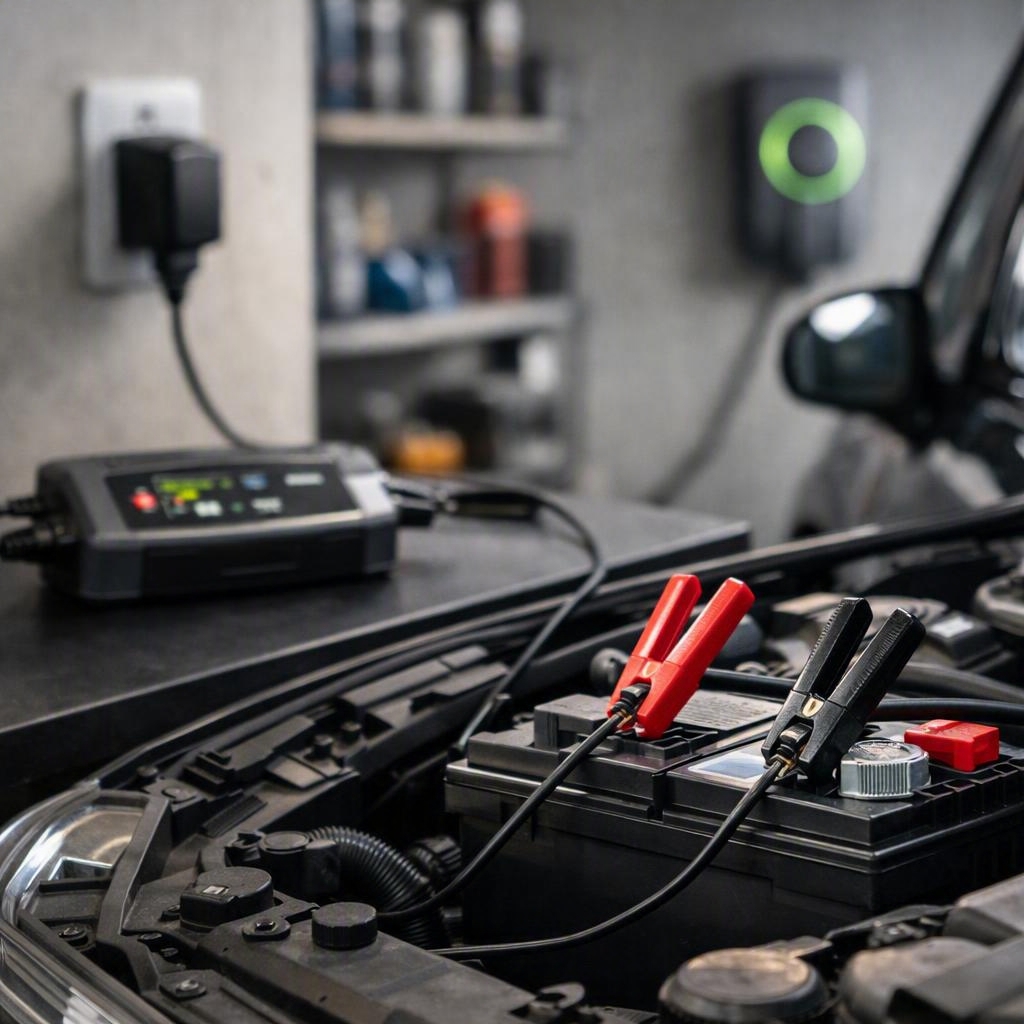
This is especially important for car, motorcycle, bicycle and appliance batteries, because not every battery is charged in the same way. For old, damaged or deeply discharged batteries, measuring or having them tested first is often wiser than simply recharging. Working carefully reduces the risk of damage, fire hazard and unnecessary wear and tear.
When can you safely charge a battery?
Suitable for working batteries with the correct charger and known specifications
In practice, a battery is suitable for charging when the battery type is known, the nominal voltage corresponds to the charger and there is no visible damage. This applies, for example, to many vehicle starter batteries, motorcycle batteries, bicycle batteries and separate household batteries for which the charging instructions are clear. The most important condition always remains the same: only use a charger that matches the chemistry and voltage of the battery. An incorrect combination can lead to overheating, loss of capacity or permanent damage.
Therefore, first check the type plate, the positive and negative poles, the recommended charging current and the environment in which you will be charging. Place the battery on a dry, stable surface with sufficient ventilation. A short voltage measurement or condition test is wise if you are not sure whether the battery is still in good condition. This prevents you from charging by feel while the battery is already worn out or unstable internally.
Not suitable for leaking, swollen or damaged batteries
A battery should not be charged normally if the casing is bulging, cracked, leaking fluid or showing obvious fire damage. Corrosion around the terminals, discolored connections, a pungent odor or unusual heat are also serious warning signs. In such cases, charging is no longer an ordinary maintenance task, but a potential safety risk.
The practical limit is simple: if the physical condition raises doubts, do not automatically choose to charge the battery. Insulate the battery, do not touch leakage with bare hands and keep sparks, heat and open flames away. Have the battery tested or dispose of it according to local hazardous waste regulations. If there is visible damage, replacement is often more logical than reloading.
How do you charge a battery correctly?
Which voltage, charging current and charging time should you check?
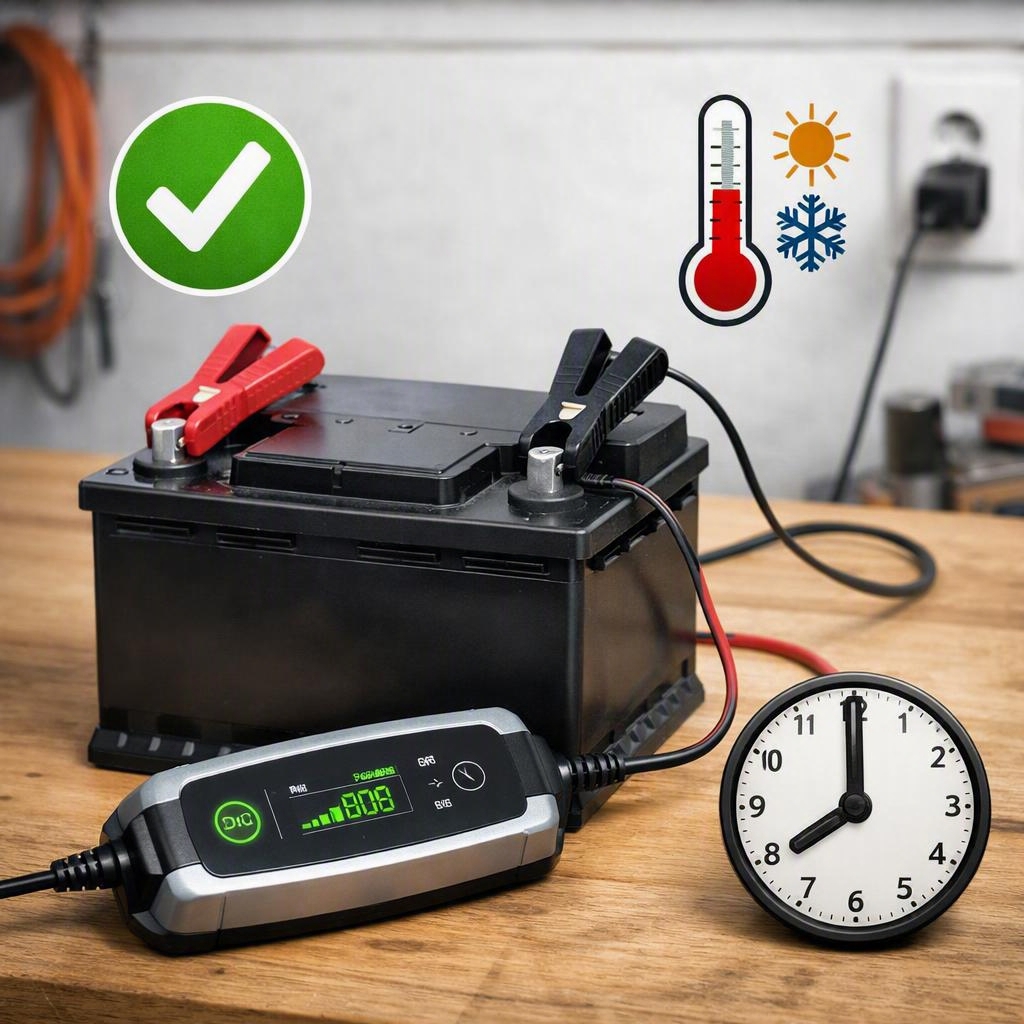
To charge the battery correctly, you must first check three points: the rated voltage, the recommended charging current and the expected charging time. The charger must support the same voltage as the battery. The charging current must match the capacity and manufacturer's instructions. Too high a charging current can shorten the lifespan and increase the risk of heat development.
In many cases, first connect the terminals correctly and then the power supply, unless the manual of your charger prescribes otherwise. During charging, pay attention to temperature, smell, sounds and any fault messages. How long charging takes depends on capacity, discharge rate and charging current. A small battery can be fully charged in a few hours, while a larger vehicle battery will take longer. Therefore, do not use a fixed rule of thumb as a substitute for product specifications.
A simple way to make the right choice is this classification:
- Suitable: battery without damage, known battery type, suitable charger, clear charging data.
- Check first: old battery, deeply discharged battery, unclear label, irregular performance.
- Not suitable: leakage, swelling, cracks, burnt spots or rapid overheating.
This classification is especially helpful in cases of doubt. If you notice that a battery repeatedly charges poorly or is empty again quickly, then simply recharging is often not the best solution. Measuring, having it tested or replacing provides more certainty than continuing to repeat.
Which risks, mistakes and alternatives should you know?
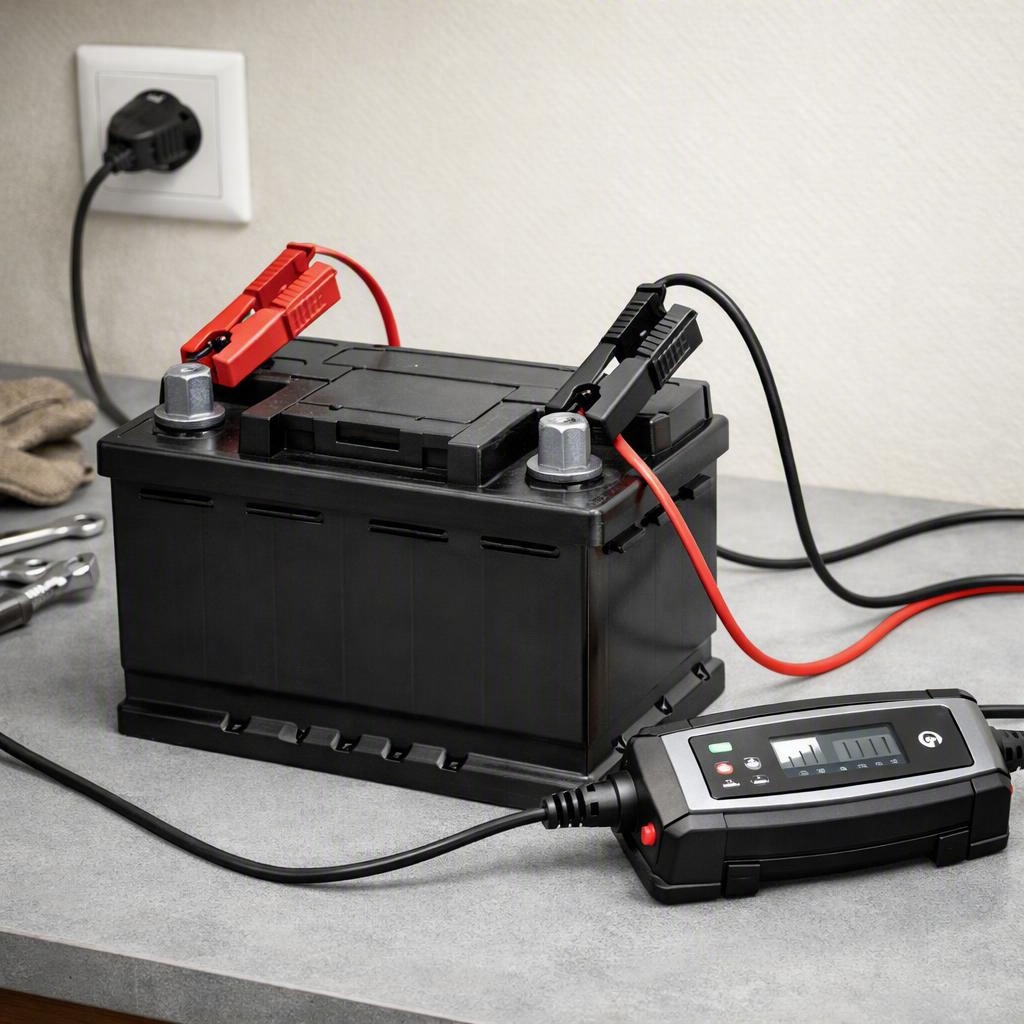
The biggest mistakes when charging the battery are charging with the wrong voltage, using too high a charging current, reversing the poles and charging in a poorly ventilated area. Ignoring damage is also a common mistake. Some batteries can produce gas during charging. That is why ventilation and distance from smoke, fire and sparks are important.
Do not leave a battery unattended if you do not trust its condition or if the charger does not have clear protection. An automatic mode can be useful, but does not remove your obligation to monitor. Keep an eye out for abnormal heat, a sudden odor or visible deformation. These are signals to stop charging immediately.
There are roughly three logical choices. The first choice is normal charging when the type, condition and charger demonstrably match. The second choice is to first measure or have it tested when the battery is old, deeply discharged or performs unpredictably. The third choice is to replace it when the battery is damaged or remains unreliable after several charging attempts. That approach is more practical than looking for one universal charging time or one setting for all batteries, because that does not exist.
For many users, the most useful next step is not to load faster, but to compare better. Look at the battery type, the actual voltage, the recommended charging current, the condition of the housing and the characteristics of your charger. It is precisely these checkpoints that determine whether charging the battery is useful, or whether testing or replacing will ultimately be safer and cheaper.
Sources and checkpoints
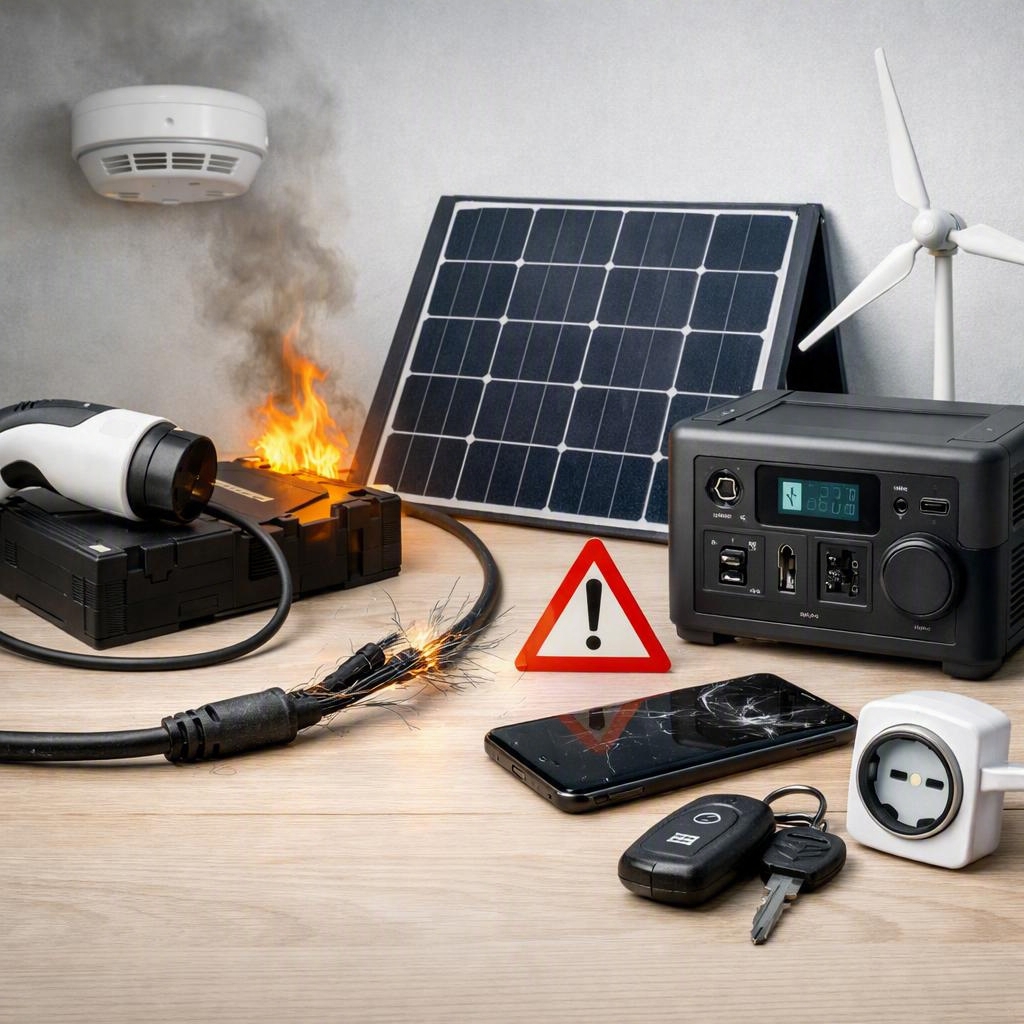
Use these resources to check safety rules, charging conditions and risks surrounding batteries and chargers. Always compare the battery label, the charger manual and the visible condition of the battery.
- United States Occupational Safety and Health Administration, Battery Safety and Workplace Hazards, https://www.osha.gov/
- National Fire Protection Association, Electrical Safety and Fire Prevention Guidelines, https://www.nfpa.org/
- United States Consumer Product Safety Commission, Product Safety for Batteries, Chargers and Household devices, https://www.cpsc.gov/
- U.S. Department of Transportation Pipeline and Material Safety Agency, Safe Handling of Lithium Batteries, https://www.phmsa.dot.gov/lithiumbatteries
- Check battery type, such as lead-acid, lithium, or other system.
- Compare rated voltage and recommended charging current with your data. charger.
- Check for swelling, leakage, corrosion, heat and damage before and during charging.
- Charge only in a dry, stable and well-ventilated place.
Frequently asked questions
How do I know if my battery can still be charged safely?
First check that the housing is intact and that there is no leakage, swelling, corrosion or strong odor. Then check whether the label is legible and whether the voltage and battery type match your charger. In case of visible damage or persistent doubts, testing or replacing is safer than direct charging.
How long does it take to charge a battery?
That depends on the capacity, the degree of discharge, the battery type and the charging current. A small battery can charge in a few hours, while a larger vehicle battery takes more time. Therefore, do not rely on a general estimate, but on the specifications of the battery and charger.
Can I simply recharge a deeply discharged battery?
Sometimes yes, but only with extra control. A deeply discharged battery may have deteriorated internally, making normal charging less safe or less effective. Use a suitable charger, pay attention to temperature and fault messages and, if in doubt, first measure or have it tested.
Can I charge a battery while it is still in the vehicle or device?
This is often possible, but only if the manufacturer allows it and the connections are safely accessible. Check that sensitive electronics, ventilation and charging regulations do not impose restrictions. So first compare the manual of the vehicle or device with the data of your charger and battery before you start.
Conclusion
Charging a battery is usually responsible when the battery type, condition and charger are demonstrably compatible. The main rule is simple: first check the label, rated voltage, recommended charging current and visible damage. Stop immediately if there is heat, leakage, swelling or other abnormal behavior. This way you make a clear distinction between safe loading, testing first and immediate replacement.
If you have any doubts about your situation, compare the data on the battery with the specifications of your charger and then check the charging location for ventilation, dryness and stability. This short check helps you avoid incorrect settings and determine more quickly whether charging the battery is wise in your case, or whether testing or replacing is the better next step.