Which inverter models have been tested and verified? There is usually no one, universal list that is always correct for solar energy systems. This is because the assessment depends on the country, the applicable standard, the grid operator and the type of installation. Yet you can certainly check this reliably. Don't just look at a product page or sales text, but at a combination of test reports, certifications, declarations of conformity and official netlists. This way you can see more quickly whether a model has really been assessed for the situation in which you want to apply it.

The exact model number is especially important for consumers, project developers and installers. An inverter that has been tested is not automatically suitable for every system. Grid conditions, system voltage, battery support, phase layout and mounting environment all play a role. Therefore, compare different types of inverters before making a choice. In practice, anyone who searches for which inverter models have been tested and verified often wants to know which documents really count and how to carry out a reliable check with them.
What does tested and verified mean for inverters?
For inverters, tested usually means that a model has been assessed in a laboratory or by a recognized inspection body for safety, performance, electromagnetic compatibility and behavior on the electricity grid. Verified then means that you check whether those test results really correspond to the model you have in mind, and whether the documentation is still valid for your market and application. That distinction is important. A manufacturer can refer to a test, but without the correct standard, current date and clear model designation, that does not say enough.
The difference between laboratory testing, certification and field validation
Laboratory tests demonstrate whether an inverter meets technical requirements under controlled conditions. Certification goes further: an independent party confirms that the product meets specific standards. Practical validation focuses more on use in real installations, such as stability under varying loads, performance at high temperatures and correct behavior during grid fluctuations. That difference helps to separate marketing language from hard substantiation. A tested model may be technically interesting, but without formal certification or appropriate net approval it is not a safe choice for every project.
You also have to take regional differences into account. A model approved in one market is not automatically usable in another market. This certainly applies to grid-connected systems, where local requirements regarding grid protection, frequency and switch-off behavior can vary greatly. So always check whether the certificates and test references specifically apply to the market in which the inverter is installed.
This is how you recognize which inverter models are really approved
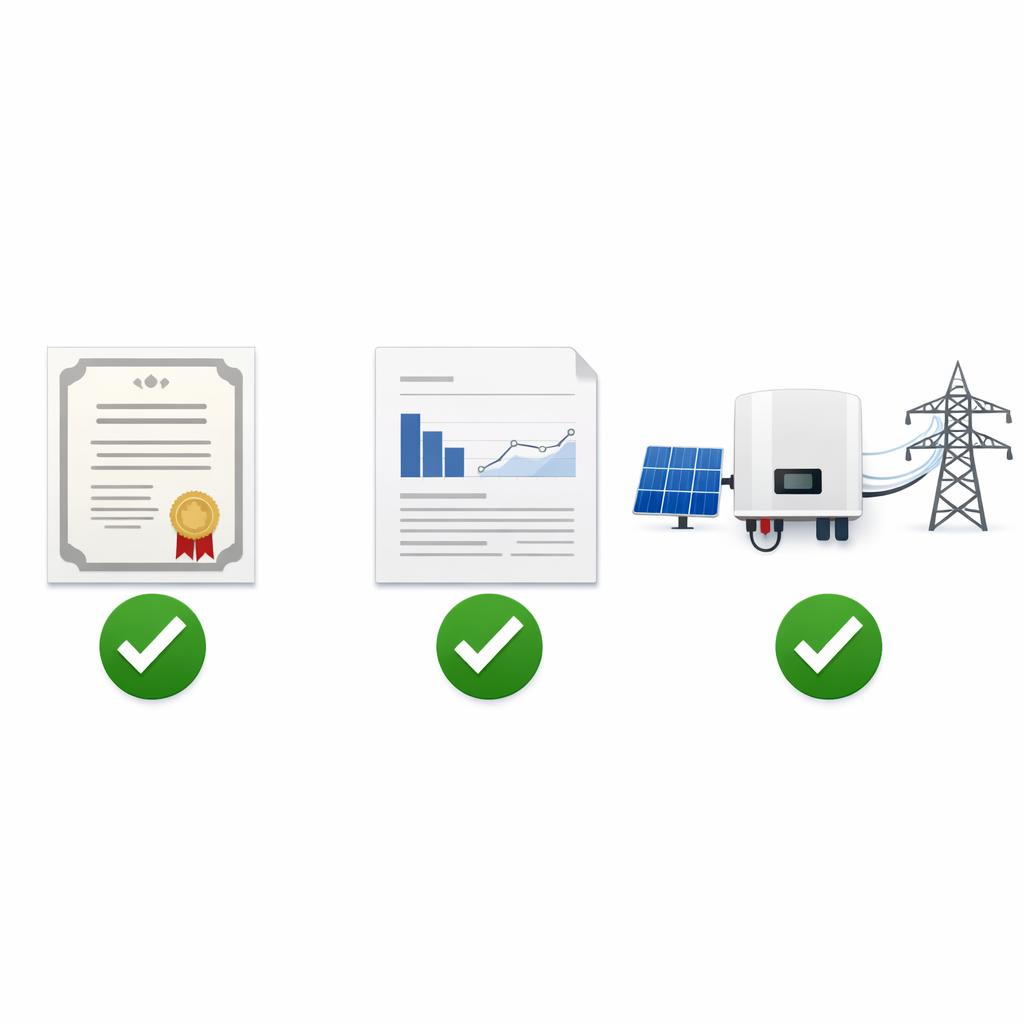
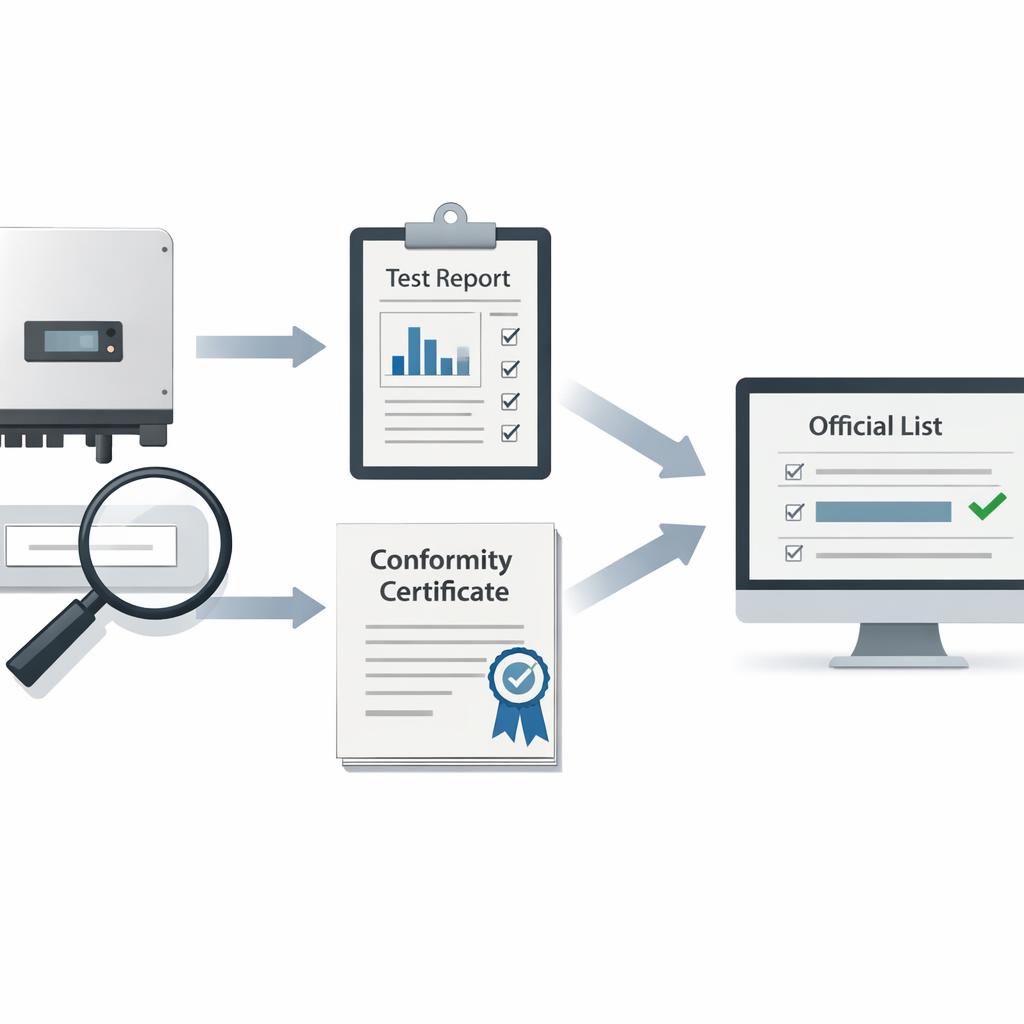
The most reliable approach always starts with the full model number, including series name, revision, suffix and any power variant. Then look for three things: an official test report, a declaration of conformity and entry on a relevant approval or net list. It is precisely the combination of these sources that makes it clear whether an inverter has been officially tested and whether the documents are really about that specific model. A general brochure, a downloadable data sheet or a seller's claim is not sufficient for this.
In addition, pay attention to the date of issue. Standards change, approval rules are updated and sometimes a new product revision replaces an earlier version. A certificate that was valid a few years ago may no longer be sufficient for a new installation today. Therefore, check not only whether a document exists, but also whether it is still up to date and matches the application for which you want to use the system.
Important documents: test report, declaration of conformity and netlist
A test report describes exactly what has been tested, according to which standard and under what circumstances. The declaration of conformity links the inverter to that standard and is usually issued by the manufacturer. An official netlist, approval database or admission register then shows whether the model has been accepted in a specific market or with a specific network operator. Together, these documents form the strongest basis for checking whether a model has really been demonstrably assessed.
For additional background, it is smart to also view internal information about important certifications for solar panel systems. This allows you to better estimate which standards are relevant for grid-connected, hybrid or off-grid installations. Anyone who wants to know which certificates an inverter must have usually looks at safety, EMC, grid connection and product-specific requirements that apply to the system type.
Conclusion
To the question Which inverter models have been tested and verified, the most useful answer is: the models for which the exact model number is reflected in current test reports, declarations of conformity and official approval or net lists for your market and application. So do not rely on one separate document or on a general product claim. Always look at the standard, the date, the authority and the context in which the model is used.
Moreover, a verified model is not automatically the best choice for your installation. Also check whether the inverter suits the system type, grid connection, voltage range, possible battery integration and the installation environment. A model may have been tested successfully, but still prove unsuitable for a different phase configuration, an outdoor installation or a project with additional grid requirements.
The safest method is therefore to compare documents and include the technical specifications in your assessment. This way you avoid choosing an inverter that looks good on paper, but does not meet your requirements in practice. Ultimately, that is the most reliable way to determine which inverter models have been tested and verified.

FAQ
How do I know if an inverter has been officially tested?
First check whether a test report is available from a recognized body. Then check whether the exact model number matches the declaration of conformity and an official network or approval list. If those three sources show the same product designation, you have a strong indication that the model has been officially tested for a specific application.
Also note small differences in model names. An additional letter or number may indicate a different revision or power variant, which does not have to be included in the same report.
Which certifications are important for an inverter?
This depends on the country and the type of installation, but usually standards for safety, EMC and grid connection are the most important. Additional requirements may apply to hybrid systems or installations with battery storage, for example for communication, security or product-specific compatibility.
Therefore, always check which standards are required locally by regulations, project documentation or the party that assesses the grid connection.
Is a certified inverter always suitable for my system?
No. Certification means that a model meets certain standards, but does not mean that it automatically fits every installation. Things such as phase configuration, maximum DC power, battery type, temperature load and indoor or outdoor placement can still be decisive.
It is therefore wise to check the data sheet, installation manual and local connection requirements in addition to the certificates. This way you make a choice that is not only formally correct, but also technically appropriate.