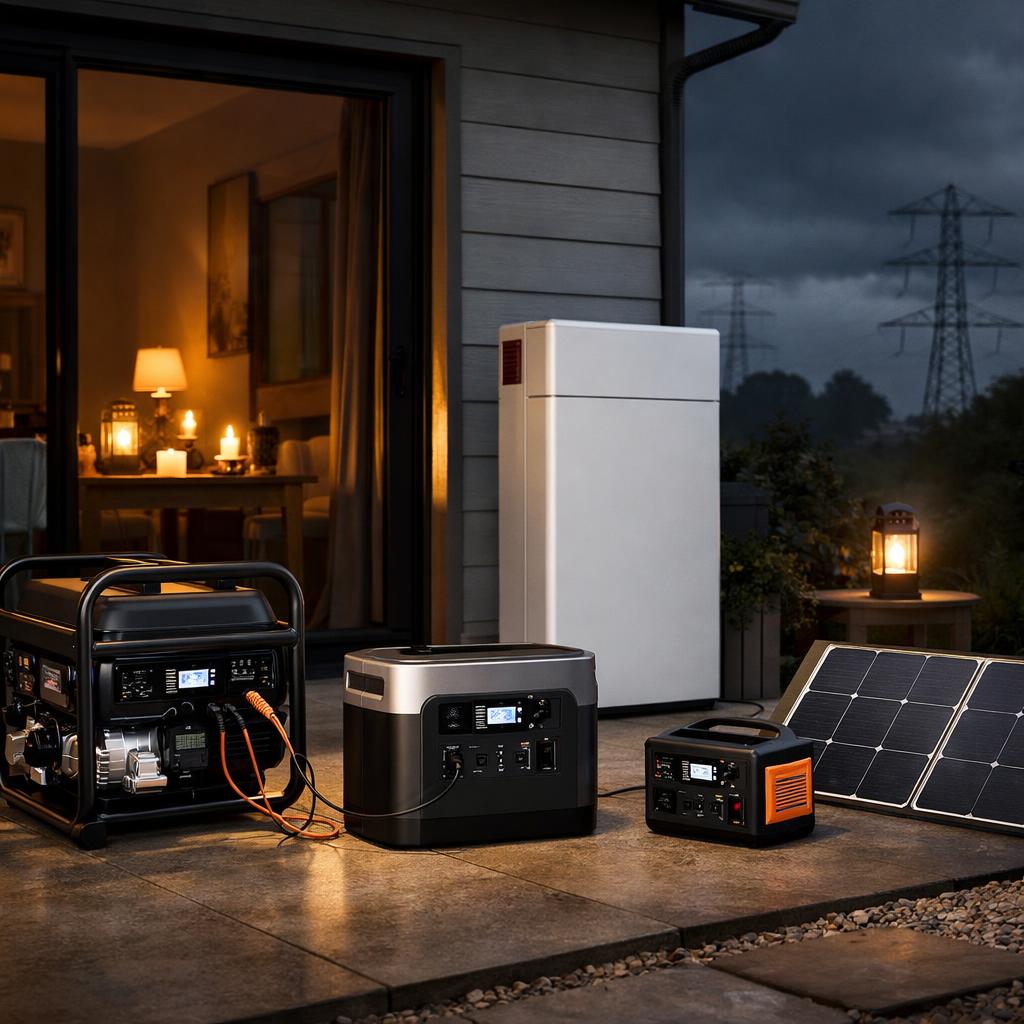
Anyone looking for Which emergency power solutions with solar panels are suitable for homes in the Netherlands usually wants to know one thing: what really continues to work in the event of a power outage in the home? The short answer is clear. Ordinary solar panels usually do not supply usable power in the event of a failure, because a standard inverter switches off for safety reasons as soon as the public grid fails. So you need more than just panels on the roof.
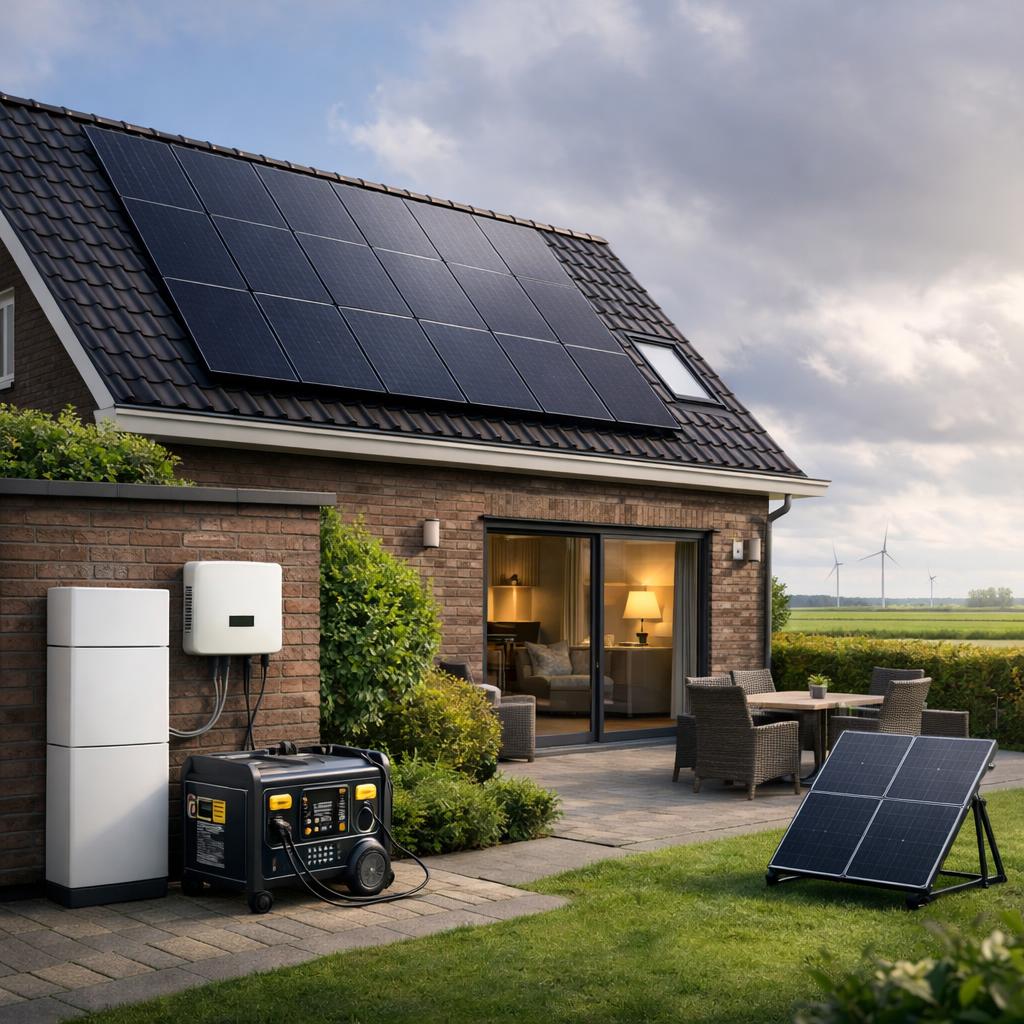
In practice, this involves a combination of components: an inverter with a backup function, often a home battery and a correctly configured emergency group in the meter cupboard. Which solution is suitable depends on your home, your grid connection, the phase division and especially on the devices that you want to continue using during a disruption. Think of refrigerator, lighting, internet and possibly the control of the central heating or heat pump.
For many households, a home battery with backup function in the Netherlands is the most logical route, but not every battery or inverter supports island operation. The installation must also be designed and connected safely. If you first want to understand the basics, read how a home battery works.
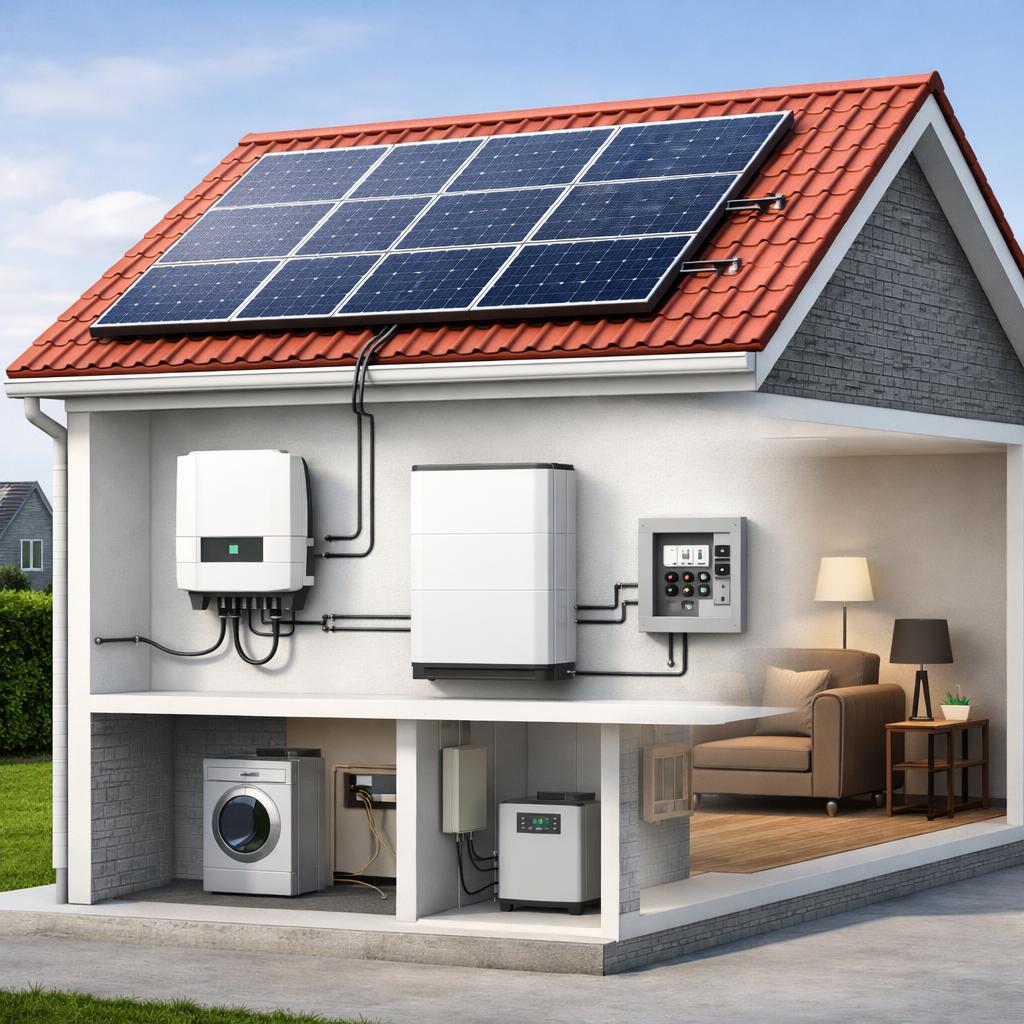
Diagram of a house with solar panels, inverter, home battery and emergency power group; place this visually after the introduction to quickly explain the difference between components.
Which systems really work in the event of a power outage at home
There are roughly three situations in the event of a mains failure. A standard solar panel system without backup almost always stops immediately. An installation with only panels is therefore usually not a complete solution for emergency power for solar panels in the Netherlands. If you want to keep power available during an outage, you need a system that can safely disconnect the home or part of it from the grid and power it independently.
The most commonly used solutions are a home battery with backup output, a hybrid inverter with emergency power function or a separate backup inverter in combination with battery storage. This usually does not feed the entire house, but only a selection of important groups. This way, the available energy remains usable for longer and you prevent heavy consumers from immediately draining the backup. Anyone wondering whether solar panels work during a power outage should therefore mainly look at the system structure and not just the number of panels.
Difference between solar panel system, home battery and backup inverter
Solar panels generate direct current. That power must be converted via an inverter into power that can be used in the home. It is precisely that inverter that determines whether a system only switches off in the event of a mains failure or can continue to operate in a backup mode. Without a suitable inverter, the generated solar power is usually of no use during a fault.
The home battery stores energy for later use and makes it possible to continue operating temporarily during a fault. The backup or hybrid inverter forms the heart of the system: it can supply an emergency circuit as soon as the grid fails. Not every battery works with every inverter and not every inverter is suitable for both single-phase and three-phase homes. That is why the question of which inverter works in the event of a power outage in the Netherlands is always related to compatibility, meter cupboard layout and the desired emergency power.
What do Dutch households pay attention to when making the right choice
The best choice is not only determined by the size of the battery. Start by asking which devices you really need during a power outage. A limited emergency group is often sufficient for basic services. Think of lighting, modem, refrigerator, freezer and some sockets. If you also want to cook, use a charging station or heat completely electrically, the required power will quickly increase. This makes solar panels with battery backup especially suitable for selective backup, and not automatically for fully powering all groups in the house.
The duration of the outage also plays a role. A battery can provide support for a few hours, sometimes longer, but that depends greatly on your consumption and how much energy is available at that moment. On a sunny day the system can continue to partially recharge, while in the evening or winter this is much more limited. So don't just count on battery capacity, but look at the total picture of generation, storage and consumption.
In addition, the meter cupboard, phase layout and grid connection are decisive in the Netherlands. A home with a single-phase connection often requires a different design than a three-phase home. There must be room for additional protection, proper separation of the emergency group and good coordination with the existing inverter. Suitability therefore always depends on technical compatibility and safe installation by a recognized specialist.
Power, emergency group and phase layout in the meter cupboard
An emergency group is the smartest solution in many homes. This allows you to consciously choose which devices get priority in the event of a power outage. That is often much more practical than trying to provide the entire house with emergency power. By connecting only essential consumers, the battery remains available longer and the installation remains clear and more affordable.
Extra attention is required for three-phase homes. Some backup systems only support part of the phases or provide limited power per phase. As a result, a system may be technically suitable, but still be disappointing in daily use if you also expect to be able to continue using an induction hob, large heat pump or other heavy consumers. Therefore, have it calculated in advance what load will be placed on the emergency group, how much peak power is required and whether the inverter and battery can handle it safely.
Conclusion
Which emergency power solutions with solar panels are suitable for homes in the Netherlands mainly depends on what you want to continue using during a disruption. Solar panels alone are usually not enough. Without a suitable backup inverter and often also without a battery, they usually do not supply usable power in the event of a mains failure. For most homes, a combination of solar panels, a compatible inverter, a home battery and a smartly chosen emergency group is the most practical approach.
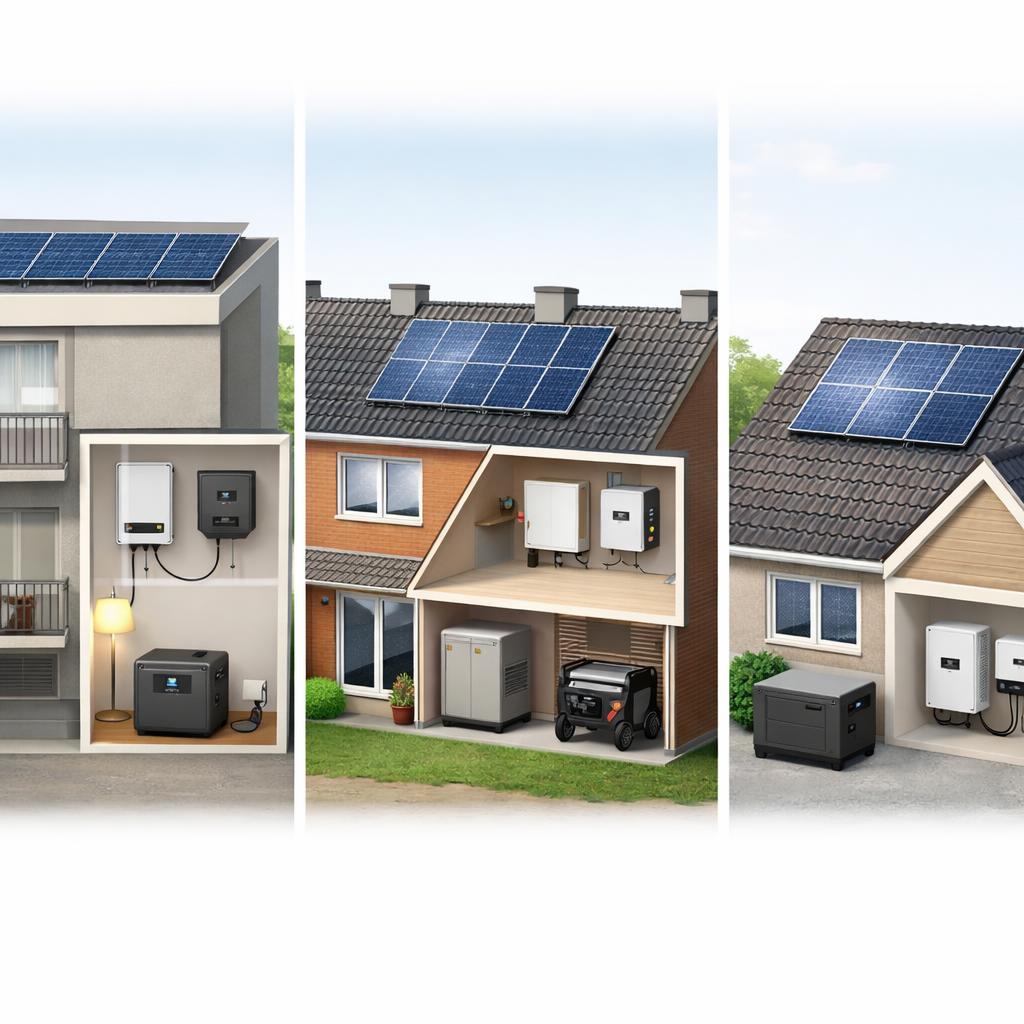
For apartments, a compact solution for only essential consumers is often the most realistic. In a terraced house, a hybrid system with battery and emergency group is often a good middle ground. Detached homes with higher energy needs sometimes benefit from a larger system, but here too, selective backup is usually more sensible than full home backup. Always first look at the meter cupboard, phase connection, desired emergency power and the compatibility between inverter and battery. Then have the design and installation carried out or checked by a recognized specialist.
FAQ
Do solar panels work automatically during a power outage?
No, usually not. A standard solar panel system switches off in the event of a mains failure to remain safe for technicians and the electricity grid. Only with a suitable backup inverter or hybrid configuration, usually together with a battery, can a home continue to partially benefit from solar power during a power outage.
Is a home battery necessary for emergency power at home?
Often yes, if you want reliable emergency power. Without a battery, it is difficult to provide stable power when solar radiation fluctuates or temporarily disappears. A home battery is not mandatory in every situation, but for a usable and predictable backup facility in homes in the Netherlands, this is usually the most practical solution.