The best home battery in the Netherlands in 2026 is rarely simply the largest or most expensive option. In practice, it is about the system that best suits your home, power consumption, solar panels and type of energy contract. Homeowners are therefore increasingly paying attention to concrete points such as price per usable kWh, expandability, emergency power, 1-phase or 3-phase support and how well a battery handles dynamic rates. Anyone who first looks at how dynamic energy rates work will quickly understand why smart charging and discharging in 2026 will be at least as important as pure storage capacity.
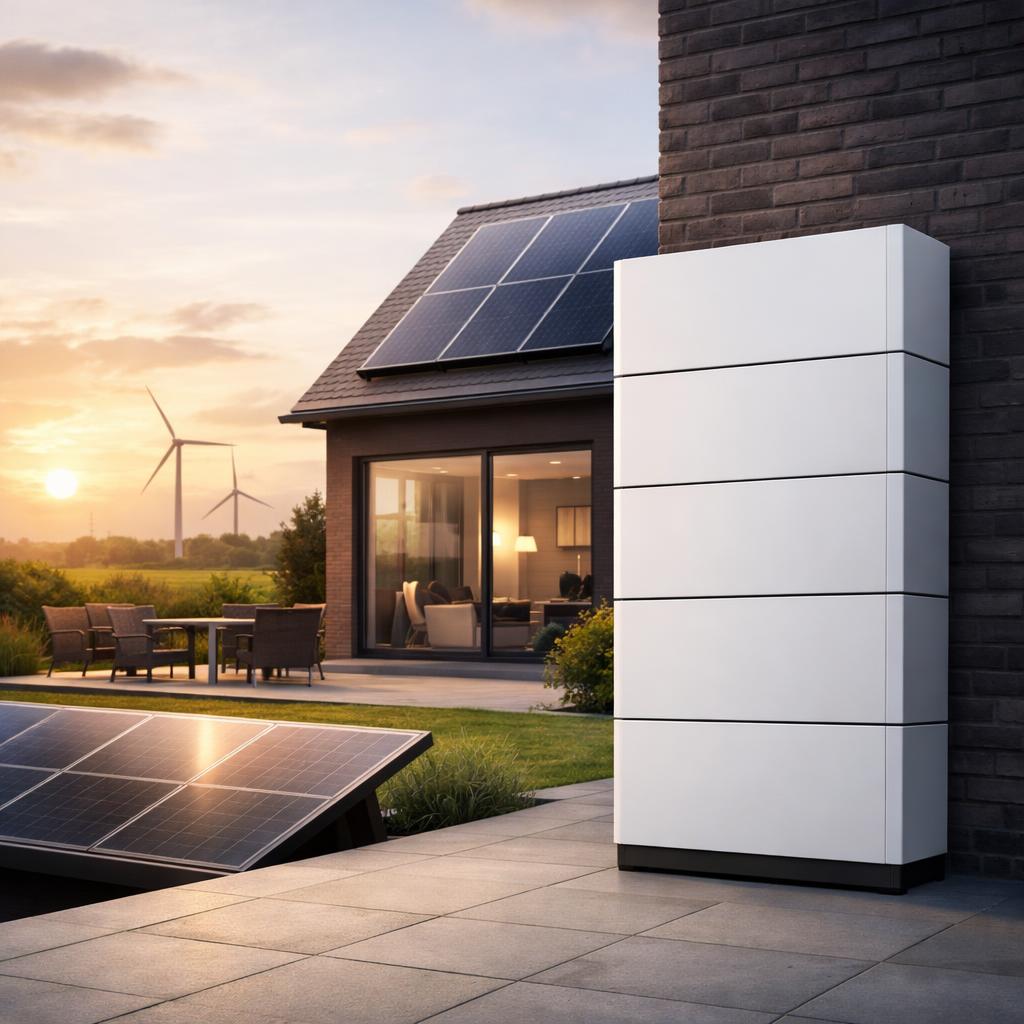
Your living situation also plays a major role. If you have solar power left over during the day, you want to be able to use it later in the evening. If you also have a heat pump or charge an electric car at home, power and smart control are often even more important. As a result, the search question “What is the best home battery in the Netherlands 2026” is not actually a question with one winner, but a comparison based on usage situation. Compatibility with your inverter, the available space, the meter cupboard and local installation requirements ultimately determine whether a system is really suitable.
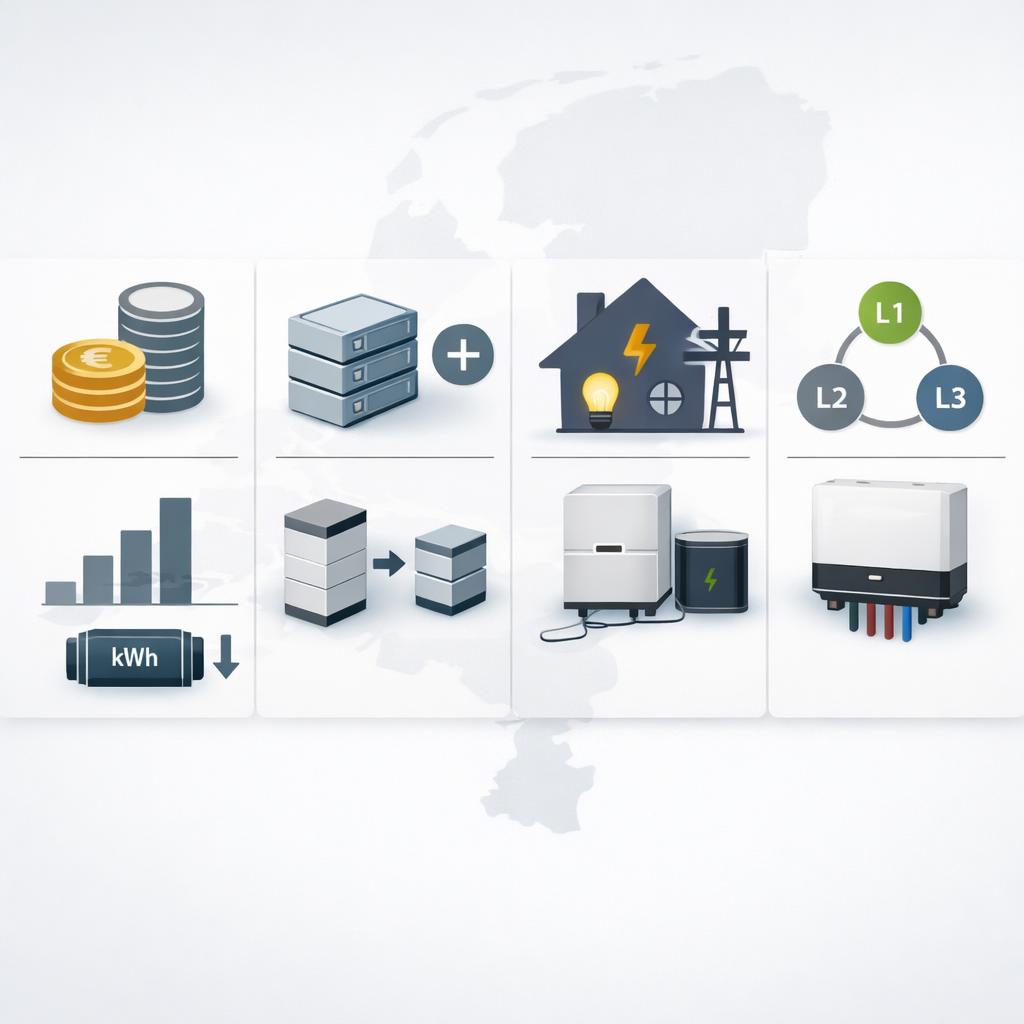
Image suggestion: Comparative infographic with the most important selection criteria for a home battery in 2026, such as price per kWh, expandability, emergency power and 3-phase support; place directly below the introduction.
Which home battery best suits your situation?
Anyone who compares a home battery would do well to first look at their own energy profile. In a home with only solar panels, storage often revolves around saving excess afternoon generation for evening consumption. In a house with a heat pump or electric car, the focus shifts to higher powers, faster charging and discharging and stable performance at peak loads. For apartments or smaller households, a compact system often makes more sense than a large battery that is rarely fully utilized. Also read more about combining home batteries with solar panels if you already have panels or are considering expansion.
Best choice for solar panels, heat pump or electric car
For many households, the Tesla Powerwall 3 remains a strong all-round choice, especially for larger homes with solar panels, a heat pump or an EV. This system stands out because of its high power, good backup options and strong software for energy management. On the other hand, the price is on the high side and the structure is less modular than some competitors.
Those who pay more attention to price-quality often end up with the Huawei LUNA2000. This system is modular, efficient and works well with many existing solar panel installations. This makes it a practical middle ground for many families. For larger, expandable installations, the BYD Battery-Box Premium HVS is often referred to as installers appreciate the system for its flexibility and technical stability. If you are looking for a more compact and simpler solution for an apartment or small household, then the Anker SOLIX is interesting. For households that attach great importance to smart management of hourly prices and energy trading, Sigenergy SigenStor in 2026 is often mentioned as a future-oriented choice.
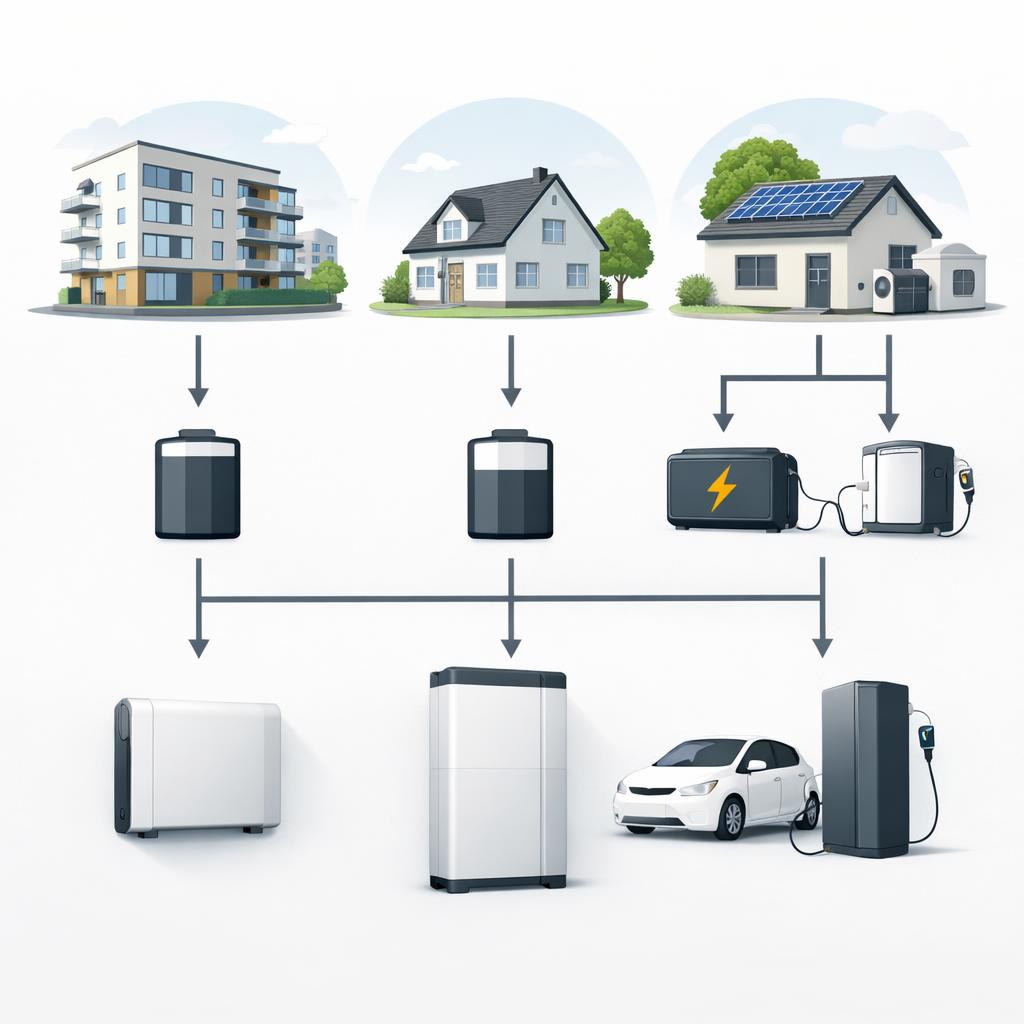
Picture suggestion: Simple decision diagram for home types and usage situations, such as apartment, family home or home with heat pump and EV; place in this section.
What should you really pay attention to when comparing in 2026?
A good comparison does not start with the lowest purchase price, but with the total value over its lifespan. Pay attention to the usable capacity, warranty, number of charging cycles, efficiency, installation costs and maintenance. Anyone who searches for “what to pay attention to when buying a home battery in 2026” would be wise to also look at compatibility with solar panels, inverters and energy management. You can find more practical points of interest at what to look out for when buying a home battery.
Price per kWh, smart control and 3-phase support
Price per kWh remains a useful benchmark, but only if you look at usable storage and real-world performance. A cheaper battery with less usable capacity or limited control may be less interesting at the bottom line. Smart management is becoming increasingly important in the Netherlands due to the phasing out of netting, varying feed-in costs and dynamic electricity prices. As a result, systems with strong software are quickly gaining ground.
3-phase support also deserves extra attention. If you have a larger home, heat pump, heavier connection or charging solution for an electric car, this is often a relevant point. Emergency power is also a function that many people pay attention to, but it does not work the same for every system. It partly depends on the inverter, the installation and the local grid configuration. So always check whether the battery is technically suitable for your home and meter cupboard.
Broadly speaking, you can summarize the market in 2026 as follows: Tesla Powerwall 3 is the strongest total package if budget is less important, Huawei LUNA2000 often offers the best balance between price and performance, BYD HVS is attractive for larger modular systems, Anker SOLIX fits well with compact living arrangements and Sigenergy SigenStor stands out for smart energy management at dynamic rates.
Conclusion: choose based on usage situation, not just on capacity
Anyone who wants to know what the best home battery in the Netherlands will be in 2026 will not get a universal answer. For some households, a compact battery is enough to shift solar power to the evening. For a family with a heat pump, electric car and dynamic contract, a more powerful and smarter system often makes more sense. The question is therefore less which battery has the most kWh on paper, and more which solution is best suited technically and financially.
For many Dutch households, the Tesla Powerwall 3 remains the best all-round option, especially if high performance, emergency power and smart control are important to you. The Huawei LUNA2000 is often the smartest choice for those looking for a strong price-quality ratio. BYD HVS fits well with larger and expandable installations, while Anker SOLIX is interesting for smaller homes or simpler use. Sigenergy SigenStor is especially attractive if you want to respond strongly to dynamic rates.
Ultimately, you make the best choice by first mapping your consumption, generation, connection and technical situation. Then pay attention to price per usable kWh, warranty, expandability, compatibility and the quality of the energy management. This way you will not just find a popular battery, but really the best home battery in the Netherlands 2026 for your situation.
FAQ
How many kWh home battery do I need in the Netherlands?
That depends on your daily consumption, the yield of your solar panels and how much power you want to shift from daytime to evening. Many households start with a capacity that mainly accommodates evening consumption. If you also have a heat pump or electric car, a larger or expandable battery often makes more sense. Therefore, look at your actual consumption profile instead of just the number of solar panels.
Will a home battery still be interesting in 2026 without netting?
Yes, for many homes. The advantage then lies less in traditional netting and more in increasing self-consumption, limiting feed-in and cleverly responding to fluctuating electricity prices. A well-coordinated system can provide extra value, especially with dynamic contracts or higher return costs. The payback period remains dependent on purchase, installation and use.
Is a 3-phase home battery always better than 1-phase?
No, not automatically. A 3-phase system is especially relevant if your home, inverter or larger consumers require it. In other situations, a 1-phase solution may be a great technical and financial fit. Therefore, always check which connection you have and how the battery is integrated into it.
Can any home battery work with my current inverter?
No, compatibility varies by brand, system type and installation. It is therefore important to have it assessed in advance whether the battery suits your inverter, meter cupboard, solar panels and available space. Functions such as emergency power and smart control also do not work the same everywhere. A good comparison therefore always starts with technical suitability.