When you compare solar panels, you often first pay attention to peak power and purchase price. Yet a wise choice mainly revolves around another question: Which types of solar panels provide stable performance in the long term? For homeowners, this means predictable power output, limited degradation and reliable operation in a variety of weather conditions. In practice, high-quality monocrystalline panels often score strongly on this point, but other panel types can also be a solid choice in the right situation.
It helps to compare types of solar panels on more than just efficiency. Also look at temperature behavior, build quality, warranties and the way the system is designed. If you want to know which solar panels last the longest, you have to look beyond the label. The actual performance is always related to climate, roof position, shade, installation, inverter choice and maintenance.
Which panel types maintain their efficiency best
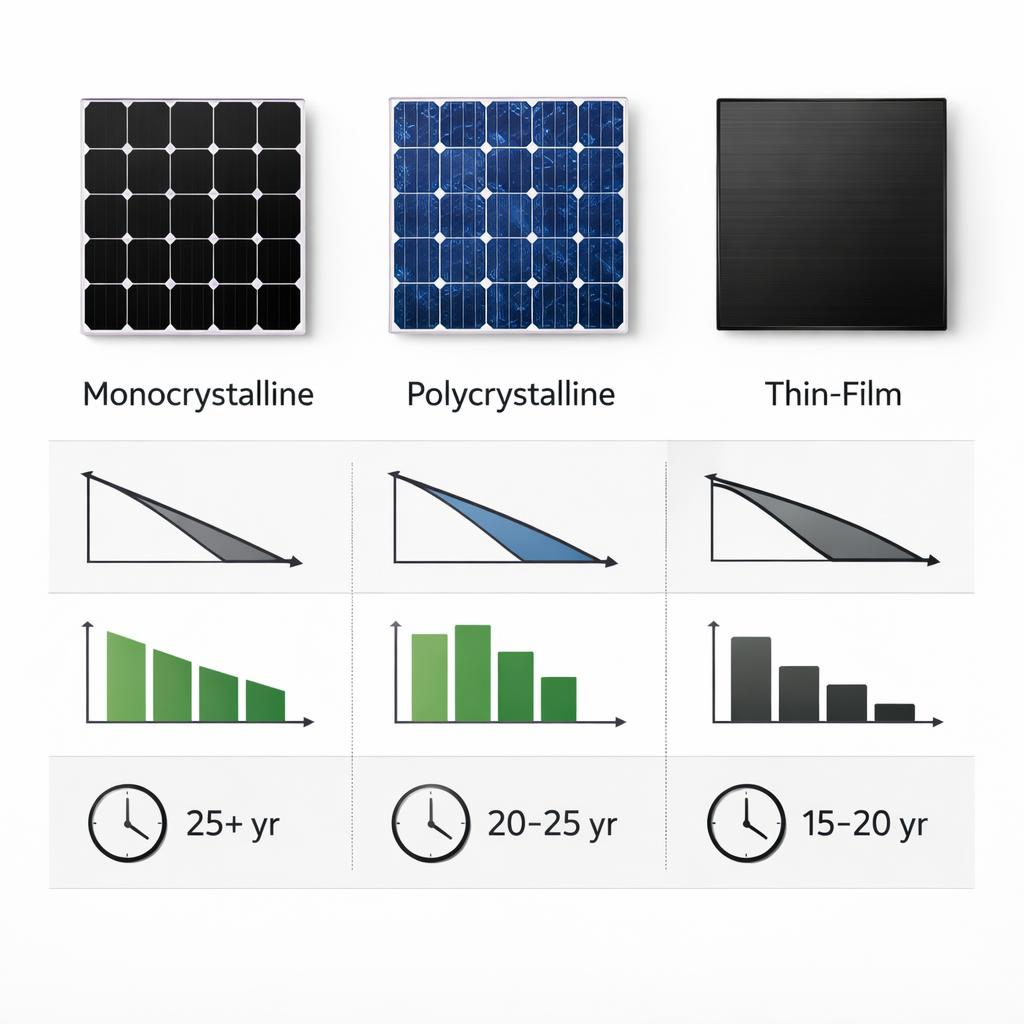
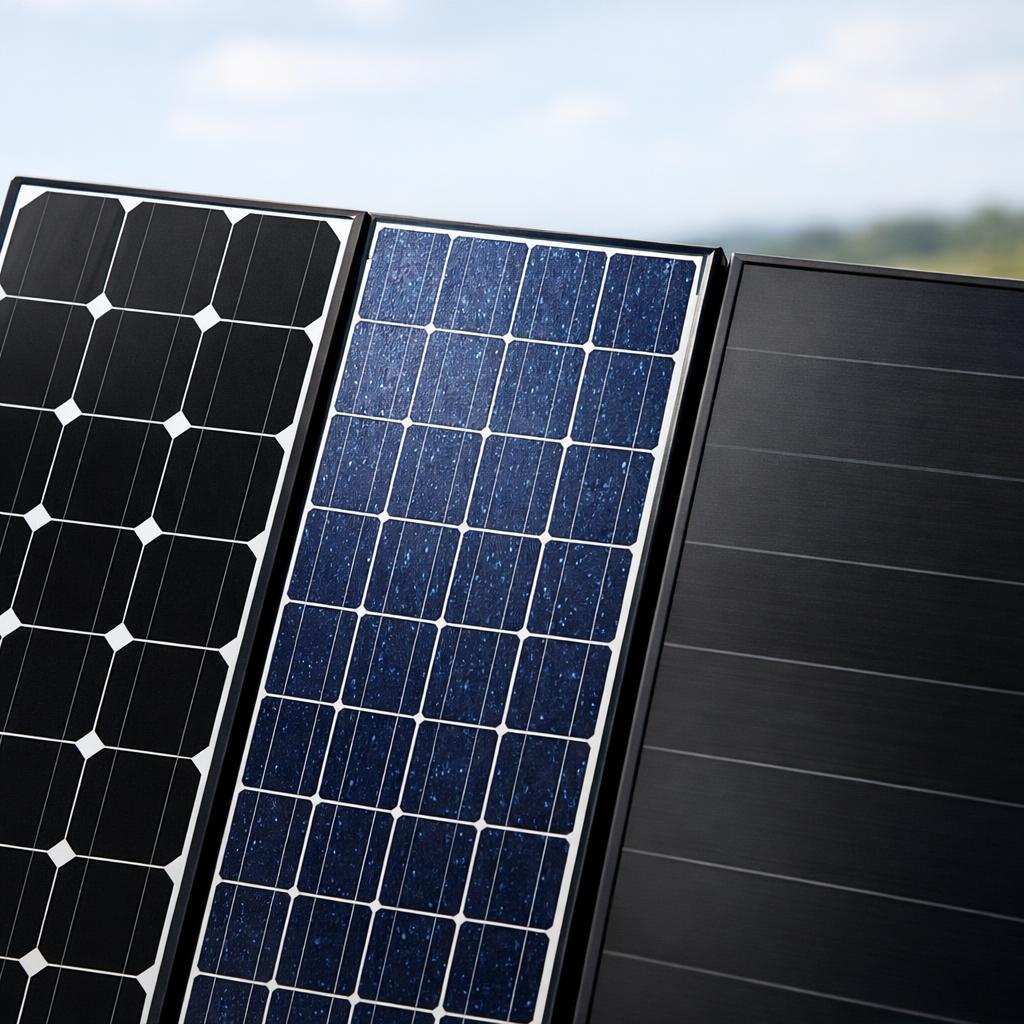
If you look for solar panels with a stable yield over twenty to thirty years, you usually end up with three main types: monocrystalline, polycrystalline and thin film. Monocrystalline panels are known for their high efficiency and strong yield per square meter. Especially with quality brands, they show an even level of performance over a longer period of time, as long as production and installation are in order. This makes them often a logical choice for homes with limited roof space, where every square meter counts.
Monocrystalline, polycrystalline and thin film briefly compared
In the long term, the difference between monocrystalline and polycrystalline is mainly in efficiency, product quality and market position. Polycrystalline panels were popular for years as a cost-effective alternative and can still perform well, but modern monocrystalline panels usually offer a better combination of efficiency and longevity. Thin-film panels generally have a lower efficiency, but can operate surprisingly stably under specific conditions, such as high temperatures or a lot of diffuse light. However, for most homes, a good monocrystalline panel remains the most predictable choice if you are looking for long-term returns.
That doesn't mean one type is always best. On large roofs with a lot of space, a slightly lower return per square meter may be less important. In warm areas, temperature behavior can outweigh peak power. The best choice therefore only arises when panel type, location and system design are well matched.
Which factors determine stable performance after years of use
One of the most important questions is how much power solar panels lose per year. With many modern panels the degradation is on average between 0.3% and 0.8% per year. A low degradation figure means that a panel can still deliver a large part of its original power after 25 or even 30 years. Anyone who looks at the lifespan of solar panels will quickly see that not only the cell type is important, but also the quality of glass, foil, frame and electrical connections.
Degradation, temperature behavior and product quality
In addition to degradation, temperature behavior plays a major role. Solar panels provide less efficiency as they get warmer, making the temperature coefficient especially important in warm regions or on roofs with little ventilation. Product quality also makes a clear difference. Good sealing, strong connectors and precise production reduce the risk of moisture penetration, micro cracks and power loss. As a result, two panels with similar specifications can perform differently in practice.
Furthermore, the installation is at least as important as the panel itself. Poor installation, unfavorable cabling or structural shading can reduce yields for years. A panel that scores well in tests does not necessarily have to be the most stable choice in practice. That is precisely why it is smart to combine laboratory figures with field data, warranty conditions and a suitable design for your home.
The inverter, angle of inclination and ventilation space under the panels also influence long-term performance. Anyone who only looks at the panel misses a large part of the picture. Stable performance is ultimately the result of a well-assembled system, not of one individual component.
How to choose a solar panel that remains reliable in the long term
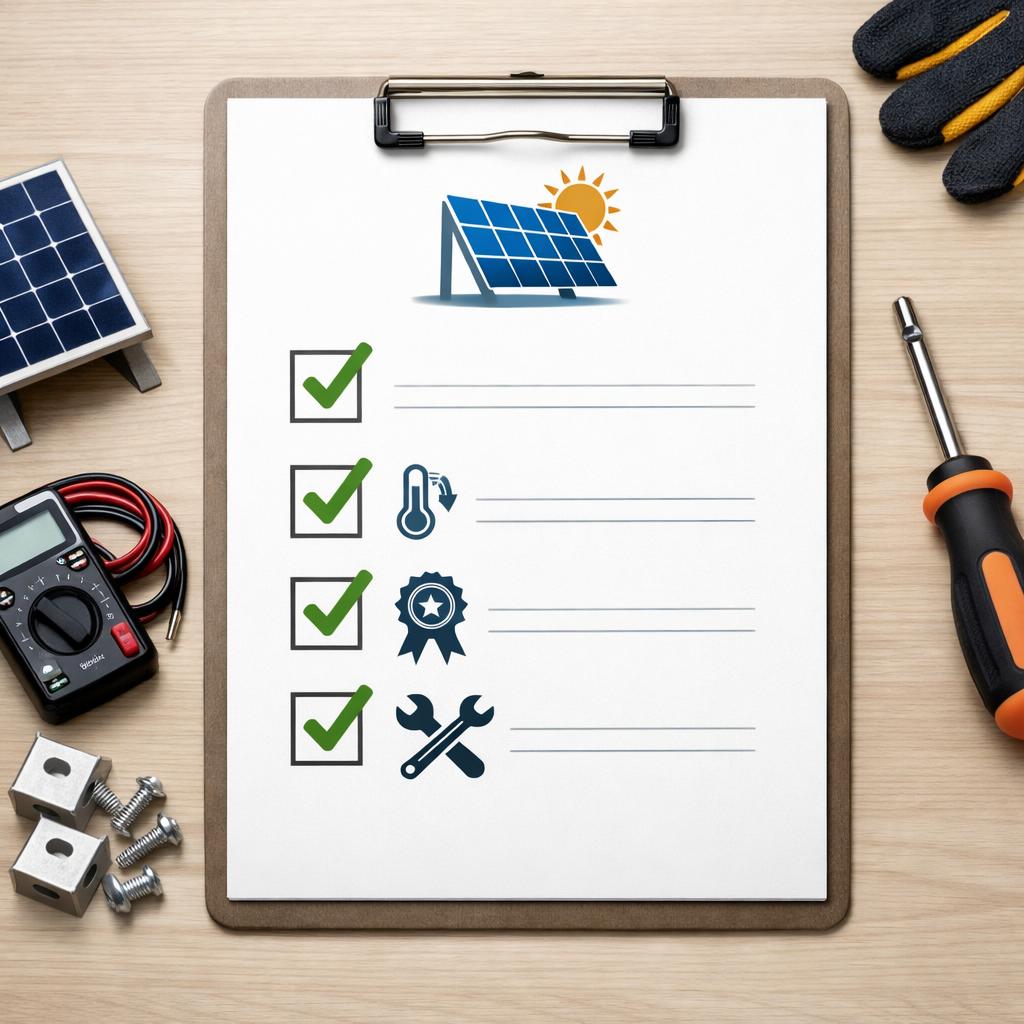
A smart choice starts with reading both the product warranty and the performance warranty. The product warranty says something about material and manufacturing defects, while the performance warranty indicates the minimum capacity a panel must retain after a certain number of years. In addition, pay attention to independent testing standards, certifications and long-term field data. This gives you a more realistic picture than with just a sales brochure.
Note warranties, testing standards and appropriate system design
Reliability goes beyond the panel alone. A good system also requires attention to cabling, mounting, ventilation and the right inverter. Therefore, also read what to look for in an inverter, because a weak link in the system can noticeably reduce the total yield. Preferably choose an installer who analyzes shadows, assesses the roof load and creates a design that suits your home, energy consumption and local conditions.
More expensive panels are not automatically better, but clear specifications, fair guarantees and a reliable manufacturer do increase the chance of stable performance. Also pay attention to how service and warranty processing are arranged. A long warranty is especially valuable if the supplier or manufacturer can deliver on it in practice. For many homeowners, that is at least as important as a few extra watts on paper.
Therefore, always ask for a substantiated quote with expected yield, components used and warranty conditions. This way you can better assess which types of solar panels on your roof really represent a sustainable investment, instead of just relying on the lowest price or the highest promised efficiency.
Conclusion:
Which types of solar panels provide stable performance in the long term? For most homes, high-quality monocrystalline panels most often emerge as a strong choice. They generally combine high efficiency with low degradation and a predictable yield over many years. This does not mean that polycrystalline or thin film is always less suitable; These may still be appropriate in specific situations, for example with larger roofs or special climate conditions.
Anyone who wants to make a sustainable choice should therefore not only compare power and price, but also temperature coefficient, build quality, warranties and system design. This makes it clear which solar panels last the longest and which ones best suit your home. In the long term, not only good panels yield profits, but above all a well-designed and correctly installed total package.
FAQ
How much efficiency do solar panels lose on average per year?
With many modern solar panels, the annual degradation is usually between 0.3% and 0.8%. This means that a panel can still deliver a large part of its original power after decades. The exact outcome depends on material, production quality, climate, temperature load and installation. Therefore, always look at the performance guarantee and independent test results, not just at marketing claims.
Are more expensive solar panels always more stable in the long term?
No. A higher price does not automatically mean that a panel will perform more stable. More expensive models often have stronger warranties, better efficiency or more favorable temperature behavior, but the final yield also depends on installation quality, inverter, shade and maintenance. Therefore, pay particular attention to demonstrable degradation figures, certifications and the reputation of the manufacturer and installer.