Short answer: The 2026 netting scheme is important for everyone with solar panels, because this scheme determines how generated and returned electricity is settled financially. For many households, this can be noticeable on the energy bill. The exact extent of the effect depends on the applicable rules, your energy supplier and, above all, on how much electricity you use directly.
If you already have solar panels or are thinking of buying them, you want to know what you have to take into account in 2026. Many people mainly focus on the question of how much electricity can still be offset against their own consumption and what happens to the electricity that you supply back to the grid. If you first look for the basics, take a look at this explanation about solar panels. In this article you can clearly read what the 2026 netting scheme entails, what changes households may notice and what choices are sensible now. Always check the most recent government information and the conditions of your supplier for your own situation.
What is the netting arrangement in 2026 and why is it important?
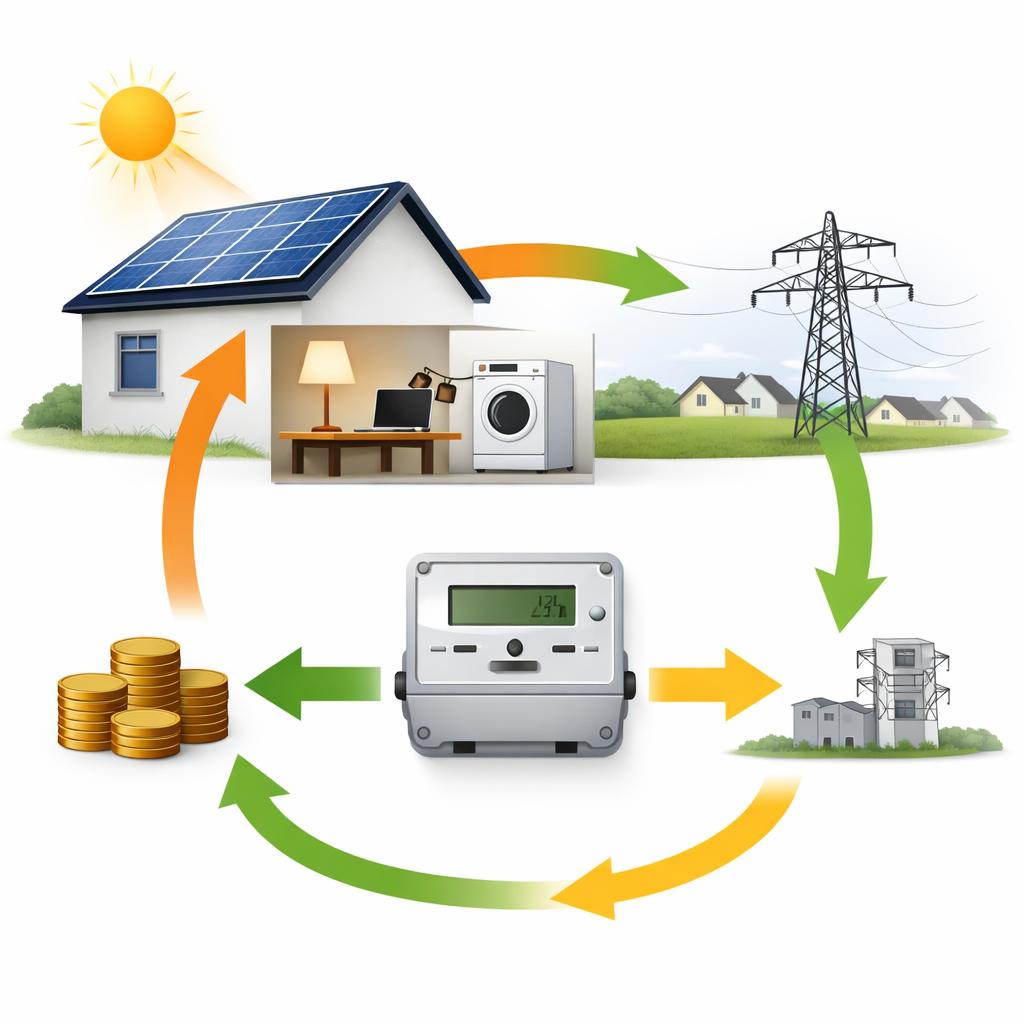
Anyone who searches for netting scheme 2026 usually wants to understand how electricity from their own solar panels is settled. Netting means that the power you supply back to the grid is deducted from the power you purchase at other times. If you generate more during the day than you immediately use, the surplus goes into the grid. If you use electricity later when your panels generate less or nothing, you take electricity from the grid. Within the scheme, these quantities are offset against each other.
This is how netting works for electricity consumption and feed-in
This arrangement is so important because it directly affects the savings of solar panels. The more favorable your settlement, the faster the investment usually pays for itself. At the same time, not only the arrangement is important, but also your daily consumption. A household that runs washing machines during the day, cooks electrically or charges a vehicle during sunny hours uses more of its own electricity directly. This makes you less dependent on the reimbursement for return delivery. This difference is becoming increasingly relevant, especially with the 2026 netting scheme, because for many households direct personal use may weigh more financially than a lot of supply.
What changes might households notice in 2026?
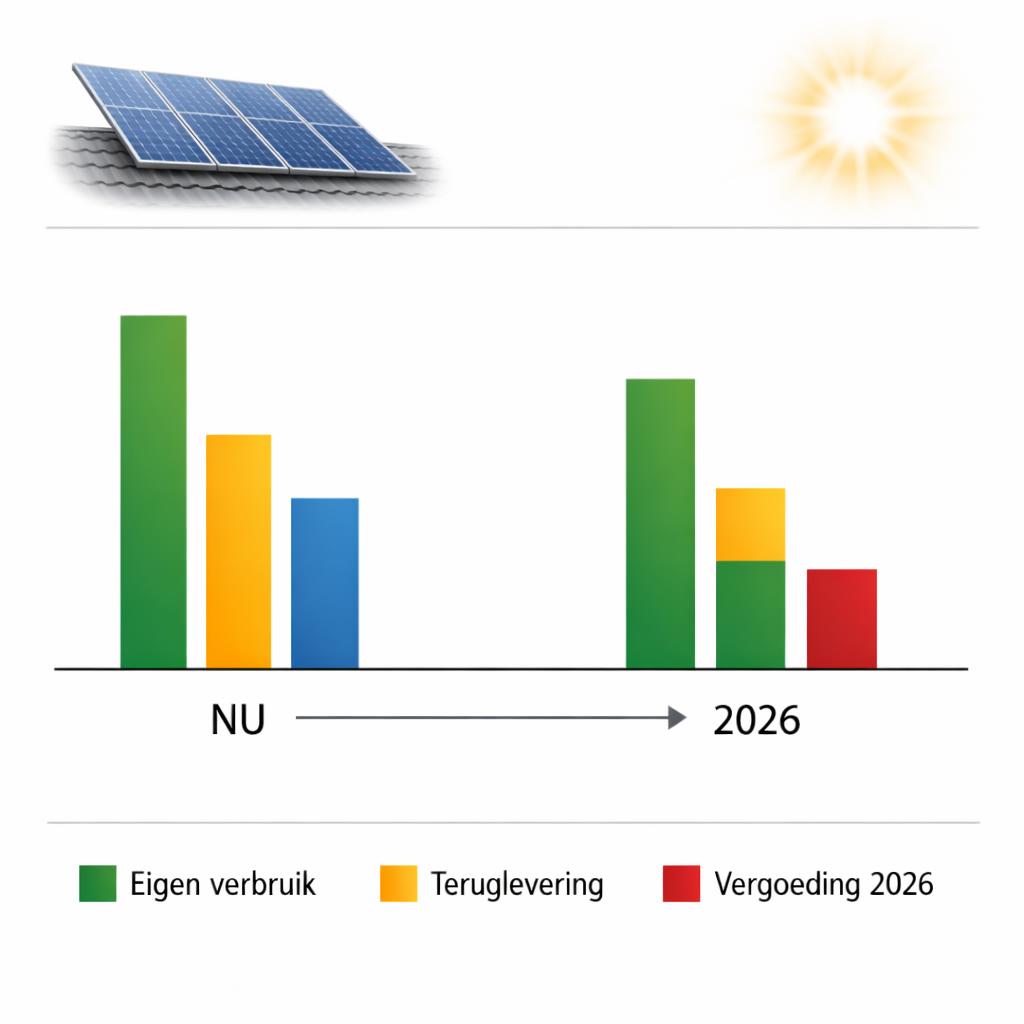
The consequences of the 2026 netting scheme differ per household, but in practice they often revolve around two questions: how much electricity can you still eliminate and what compensation do you receive for electricity that is not covered by the elimination? If feed-in is settled less favorably, the value of that electricity may be lower than the rate you pay for purchased electricity. Then it becomes financially more attractive to use as much solar power as possible directly yourself.
Consequences for your energy bill and the payback period
For your energy bill, this means that it is not only the number of panels that counts, but also when you use electricity. Those who are at home a lot during the day can often use a larger part of the proceeds immediately. Those who are not at home much and who return a lot will notice more quickly what lower reimbursements or other conditions mean in practice. If you want to understand this better, read this explanation about feed-in compensation. The payback time for solar panels may increase, but this does not automatically mean that solar panels become unfavorable. They remain interesting for many households, but the calculation is becoming less simple than before.
What should you pay attention to if you have or want to buy solar panels?
Even if the rules surrounding netting change, it is smart to look broader than just this regulation. Pay attention to the total structure of your energy costs, the amount of any compensation for feed-in, fixed costs and the way in which your household uses electricity. The question of what exactly the 2026 netting scheme means for your energy bill cannot therefore be answered with one standard amount. Two households with almost the same roof can still end up very differently due to different habits, contracts and annual consumption.
Smart points of attention regarding consumption, contract and feed-in compensation
From a practical point of view, it pays to run appliances more often when your panels are generating power. Think of washing, drying, making hot water or charging a vehicle during the day. Compare energy suppliers not only on the basic electricity price, but also on the conditions for feed-in. When purchasing solar panels, look at the location of the roof, the expected yield and your future power consumption, for example if you later want to drive electrically or want to heat electrically. The 2026 netting scheme therefore remains important, but is only one part of the total picture. Therefore, always check current government information and read your contract conditions carefully, so that you do not make decisions based on outdated assumptions.
Conclusion
The 2026 netting scheme is especially important because it determines how beneficial solar power is financially settled. For households with solar panels, a change could mean that direct self-consumption becomes more important and feed-in yields relatively less. However, this does not necessarily mean that solar panels lose their usefulness. The final outcome depends on your consumption, your contract and the applicable rules.
If you want to know what the 2026 netting scheme actually means for you, look at your annual consumption, your return supply and the conditions of your supplier. Use general information as a starting point, but always check the most recent government data. This gives you a more realistic picture of your energy bill and the savings that solar panels can still deliver in your situation.
Frequently asked questions
Will the netting scheme be completely abolished in 2026?
This cannot always be said with complete certainty in advance, because legislation can change. That is why it is wise to follow the most recent information from the government. Also look at messages from your energy supplier, because reimbursements and conditions may differ per provider.
What does the 2026 netting scheme mean for my energy bill?
That depends on how much electricity you use directly, how much you supply back and what compensation applies to electricity that is not diverted. Households that use a lot of electricity during the day are often more profitable than households that mainly supply a lot of energy back.
Are solar panels still interesting in 2026?
For many households, yes. The calculation becomes more dependent on own consumption, contract costs and the compensation for return delivery. Solar panels can still help reduce energy costs, especially if you use a large part of the electricity generated yourself.
Where do I check whether information about netting is still up to date?
Check the most recent information from the government and read the conditions of your energy supplier carefully. Particularly with the 2026 netting scheme, it is important to know that the rules and the practical details can still change.