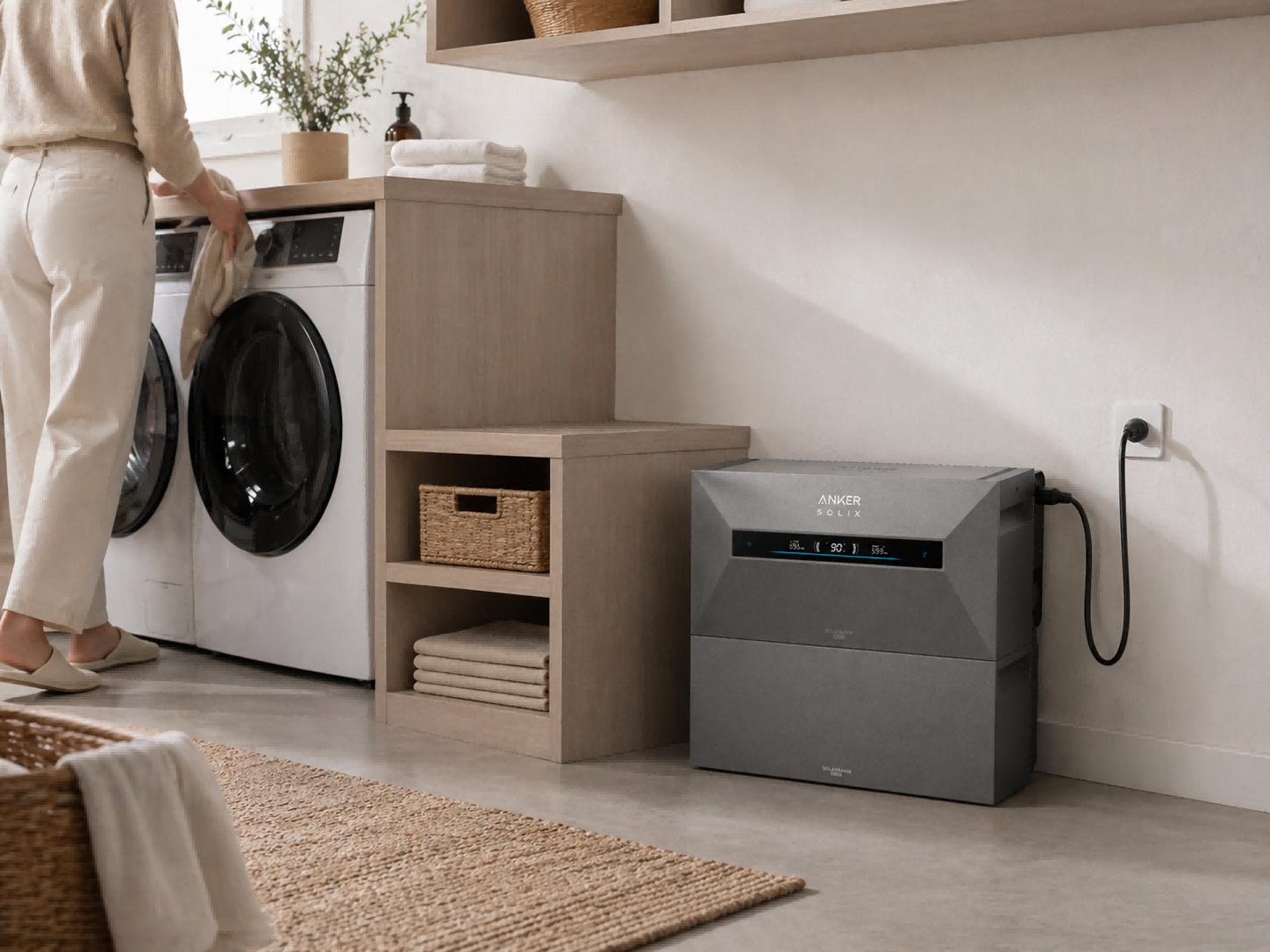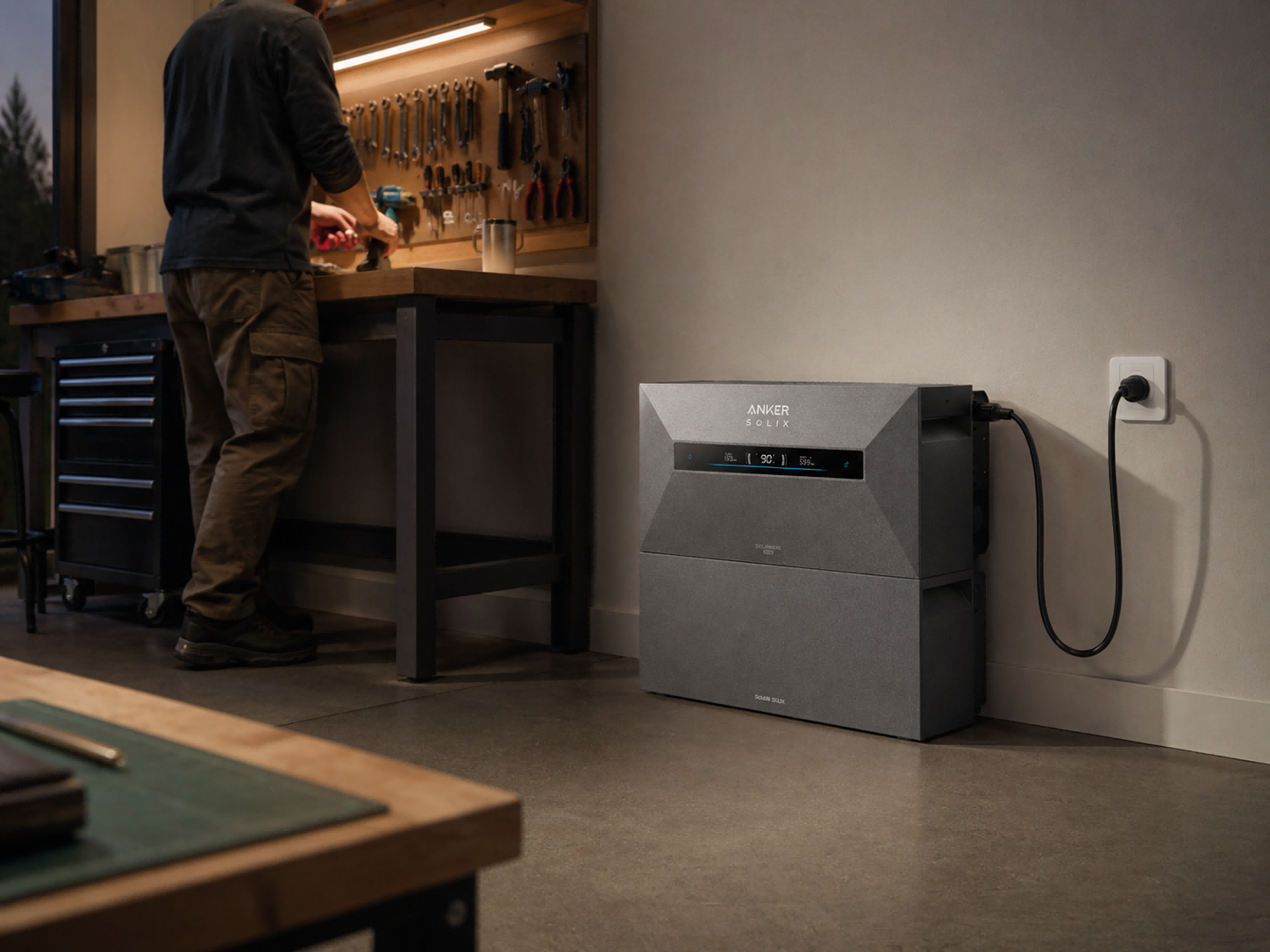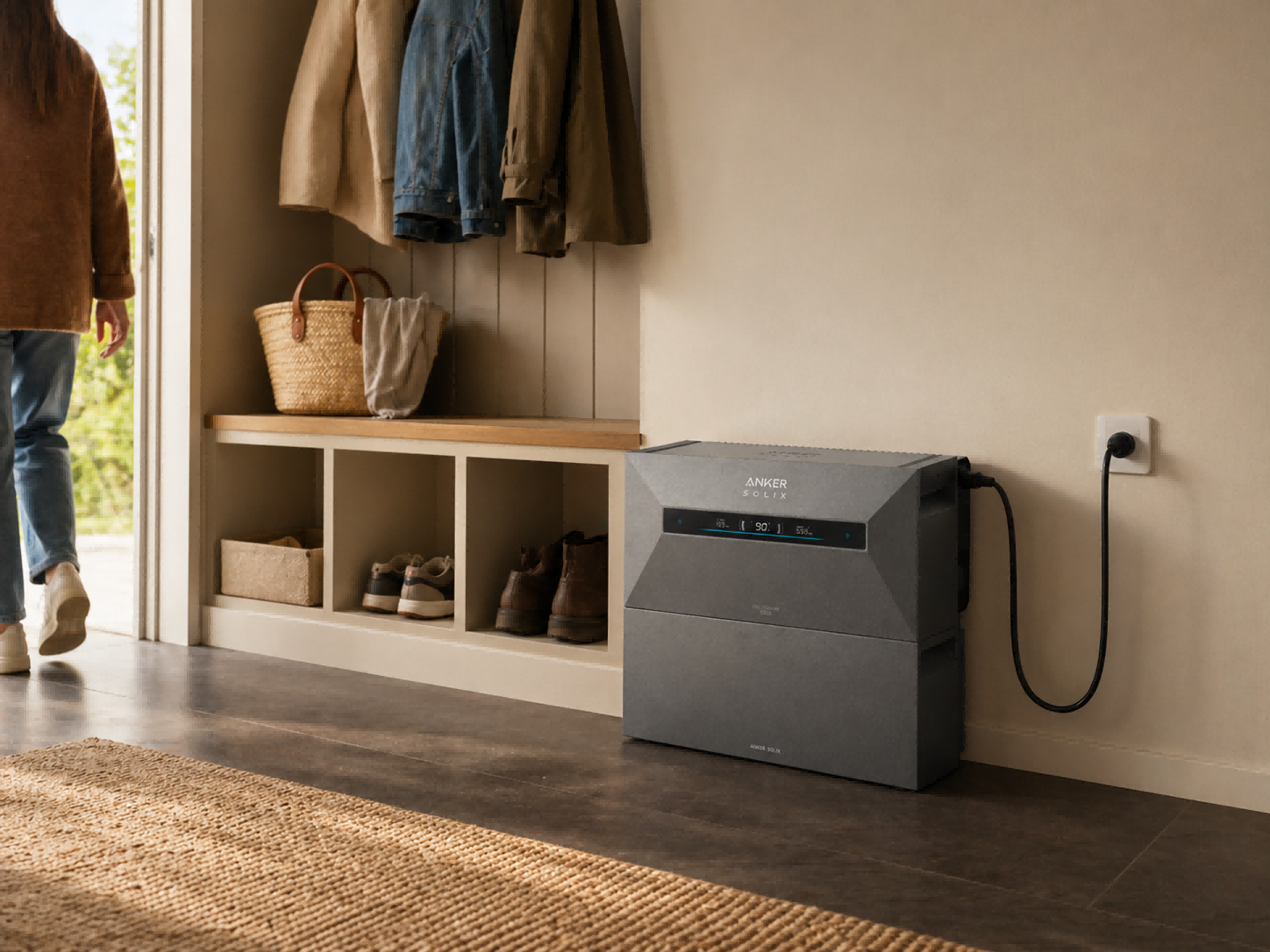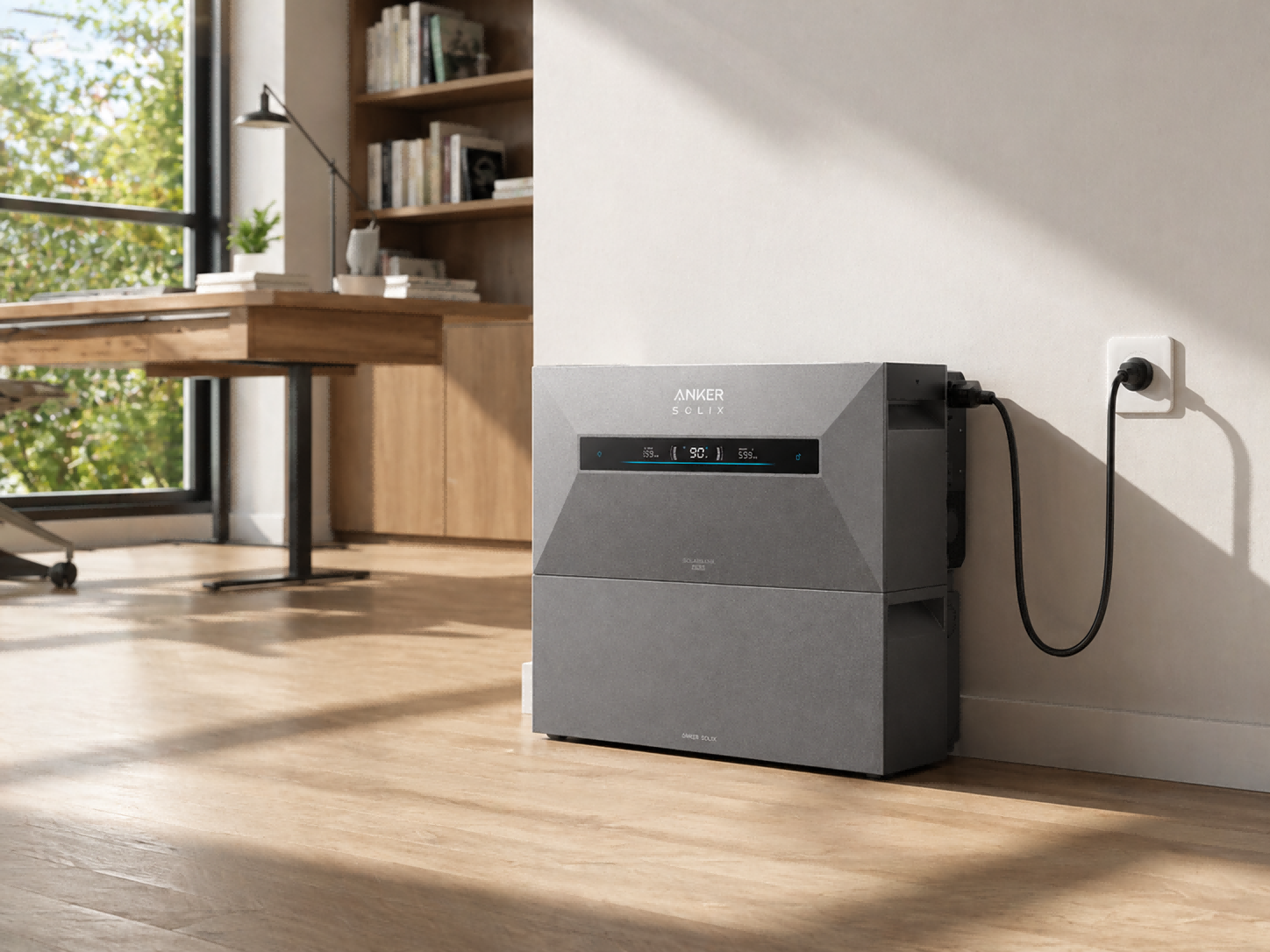
Short answer: yes, a home battery without solar panels can work fine, but usually only makes sense if you charge with cheap mains power and use it later during more expensive hours. For households that want to start without panels, the Anker SOLIX Solarbank Max AC is a logical option to compare early on, because this system works via alternating current, starts with 7 kWh and can be expanded later.
Which home battery without solar panels suits you depends mainly on your contract, your evening consumption, your need for emergency power and the technical conditions in your home. The benefit is often clearest with a dynamic energy contract. With a fixed or variable contract, the yield is usually more limited, which means you have to look more closely at capacity, power and installation costs.
Does a home battery without solar panels really work?
Yes, technically that just works. You then do not use solar power to charge the battery, but mains power at times when the price is low. You use that stored electricity later, for example in the evening or during more expensive hours. The battery therefore shifts your consumption over time. That makes this solution especially interesting if you can take advantage of price differences or if you see extra value in emergency power in the event of a failure.
Without solar panels you cannot generate your own electricity. Your benefit therefore comes from the difference between cheap and expensive hours, from smart control and from a consumption profile that matches this. A household that uses a lot of electricity, especially in the evening, usually gets more out of it than a household with low and spread consumption. The technical side also counts: check in advance whether the chosen system suits your distribution box, your connection and the rules that apply to registration or installation, especially as soon as the power exceeds 800 W.
The key is not only whether it is possible, but especially when it makes sense. For many people the answer is: yes, but only if your contract, consumption and home are suitable. That makes comparison more important than just looking at an individual price or a large battery pack.
When does a home battery without solar panels usually make sense?
When the benefit is often greater
A home battery without solar panels is usually most attractive in a few clear situations. The first is a dynamic contract with noticeable price differences between cheap and expensive hours. The second is predictable evening consumption, so that the stored electricity is actually used. The third is a wish to include practical functions in addition to saving, such as emergency power or later expansion.
It is then wise not to just look at capacity. Usable power, depth of discharge, lifespan and expandability also determine whether a system fits into practice. A battery that you can charge and discharge properly every day is better suited to active use than a larger battery that is often left half full. Possible savings remain estimates. They depend on hourly prices, seasons, your charging strategy and how your household actually uses electricity.
When the advantage is often limited
The benefit often remains small if you have a permanent contract without clear cheap hours, if you use little electricity, or if your consumption mainly takes place during the day. Then it is more difficult to get enough value from a battery. A battery that is too large also often works against you, because you do not use it fully and therefore the investment is less appropriate for your use.
In addition, the home itself can provide limitations. Higher powers require more attention for a separate group, a suitable connection and often professional installation. Not every home is immediately prepared for this. That is why a phased choice is often wiser: first look at actual consumption and technical suitability, and only then at a larger capacity or additional functions.
What do you pay attention to when choosing a home battery without solar panels?
First pay attention to three main points: capacity, power and contract form. Capacity determines how much power you save for later. Power determines how many devices you can support simultaneously. The contract form then determines whether charging with cheap mains electricity can provide sufficient benefits in your situation. These three points should always be assessed together.
For many households, a system around 6 to 8 kWh is a useful starting point if the goal is mainly evening and night consumption, but that remains a guideline. A small household can make do with less, while a home with a heat pump, charging point or high evening consumption requires more. Therefore, it is better to look at meter data from several weeks than at an average example.
The chemistry, lifespan and warranty also deserve attention. LFP cells are often chosen for durability and intensive daily use. Furthermore, it is wise to look at usable capacity instead of just the specified total capacity. Finally, expandability is important if you want to start small now but add more storage later, for example after a change in your consumption or a later switch to solar panels.
- Capacity: adjust it to your real evening and night consumption, not to a broadly estimated maximum.
- Power: check whether the system should only accommodate basic consumption or also be able to carry heavier devices at the same time.
- Contract: assess whether there is really enough price difference between cheap and expensive hours.
- Installation: look at the distribution box, connection, available space and the conditions above 800 W.
- Use: decide whether you especially want save money, find emergency power important or want to expand later.
When does Anker SOLIX Solarbank Max AC suit this situation?
For households that want to start without solar panels, this model is especially interesting because it allows for a serious home setup without being tied to a very small system. The specifications of Anker SOLIX Solarbank Max AC make it a logical candidate for early comparison if you want to store grid power, have sufficient power and leave room for growth. The system starts with 7 kWh and can be expanded to 42 kWh with one main unit and five batteries.
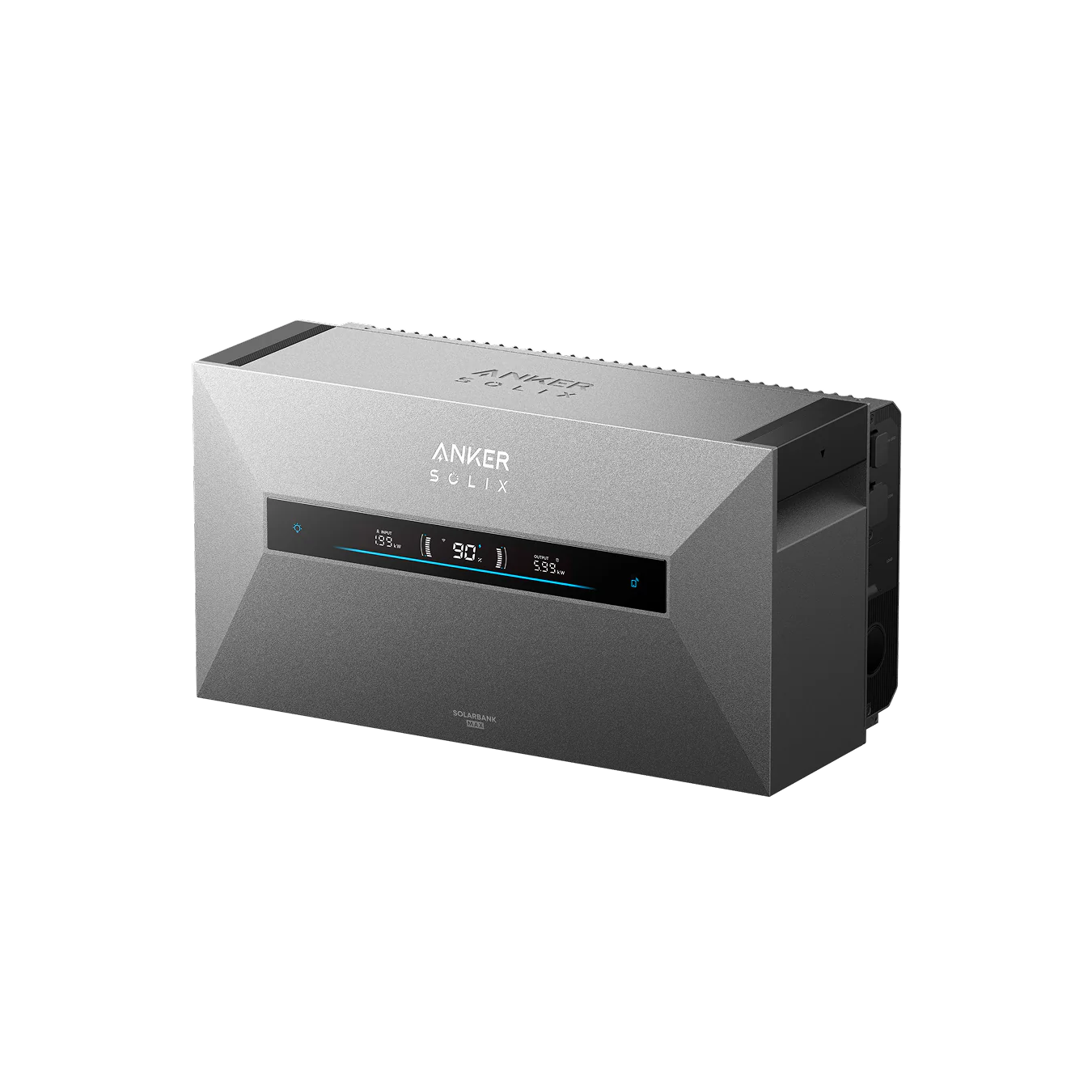
Anker SOLIX Solarbank Max AC
Product description
This is relevant for people who not only want to reduce evening consumption, but are also looking at emergency power, heavier domestic use or a future expansion. For home use, 3500 W is quoted in grid-tied operation, 3680 W off-grid and 5000 W total power. This clearly puts this system in a different category than a simple entry-level solution for only light basic consumption.
The practical properties also count. The system uses LFP cells, supports 10,000 cycles, has a 10-year warranty and a design life of 15 years with full discharge. In addition, there are several connection methods and stacking installation without loose cabling is possible. This makes it attractive for people who value expandability and a setup that does not have to be replaced immediately.
At the same time, this is not automatically the best choice for everyone. If you have low power consumption, limited space or no need for higher power, a smaller setup may make more sense. Above 800 W, additional conditions apply, such as a separate group, professional installation and registration according to local rules. That is precisely why this model is especially worth comparing for households that seriously want to coordinate their consumption, contract and installation.
- kWh contenteditable="false">Durability: LFP cells, 10,000 cycles, 10 year warranty
- Particularly suitable for: households with significant evening consumption, a need for emergency power or a need for later expansion
- Additional checks required for: powers above 800 W and homes with limited installation space
Sources and control points
Before you choose, always check three things separately: the product specifications, your contract conditions and the technical requirements in your home. This way you prevent a battery that seems good on paper, but in practice fits less well with your rate or connection.
- class="ql-indent-1">Netbeheer Nederland — Information about the energy system and grid management in the Netherlands — https://www.netbeheernederland.nl/
- ACM ConsuWijzer — Information about energy contracts and dynamic rates — https://www.consuwijzer.nl/
- Anker SOLIX — Product page Anker SOLIX Solarbank Max AC — https://www.ankersolix.com/nl/products/a17e2
- Slimster — Home battery with dynamic energy — https://slimster.nl/thuis Battery/thuisaccu-met-dynamic-energie/
- Sessy — Home battery without solar panels — https://www.sessy.nl/thuisbatteries-zonder-zonnepanelen/
Concretely check these points: how much electricity you really use in the evening, whether cheap charging hours are included often enough in your contract, what installation requirements apply for the desired power, how much capacity is actually usable and whether expansion remains possible later without installing a completely new system.

Frequently asked questions
Can you charge a home battery without solar panels with mains electricity?
Yes, that's possible. You then charge the battery with electricity from the grid, usually during cheaper hours, and use that electricity later when the price is higher or your consumption increases. This is often logical, especially with a dynamic contract.
When is a home battery without solar panels financially interesting?
Usually when there are clear price differences between cheap and expensive hours, you have regular evening consumption and often use the battery. The benefit is usually smaller with a fixed or limited variable rate. Therefore, always calculate your own consumption, rates and installation costs.
What capacity do I need if I mainly want to accommodate evening consumption?
That depends on your actual consumption in the evening and night. For many households, 6 to 8 kWh is a useful starting point, but a small household can get by with less and a home with a heat pump or charging point with more. Therefore, look at meter data over several weeks.
When is Anker SOLIX Solarbank Max AC a logical option without solar panels?
This model is especially logical if you want to start without solar panels, want to store grid power smartly, want to have sufficient power and find expandability important. Additional control is necessary if your consumption is low, space is limited or your installation is not suitable for higher powers. Therefore, check your contract, your distribution box, the desired emergency power function and the conditions above 800 W.
Conclusion
A home battery without solar panels can certainly be a sensible choice, but especially if you have sufficient price difference between cheap and expensive hours and actually use the battery often. The best choice depends not only on storage capacity, but also on power, installation requirements, emergency power and the ability to expand later.
For households that want to start without panels and are still looking for a serious, scalable solution, Anker SOLIX Solarbank Max AC is therefore a model that you want to include early in your comparison. Now compare your own evening consumption, contract type, available group, desired emergency power, usable capacity and expandability with the official product specifications. This way you can determine more quickly whether this setup suits your situation technically and financially.