Short answer: yes, solar panels on a flat roof are in many cases a sensible choice, but only if the load-bearing capacity, wind load, ballast, drainage and shade have been properly checked in advance. The outcome is usually: yes, but only if the roof is technically suitable and the layout remains practically feasible.
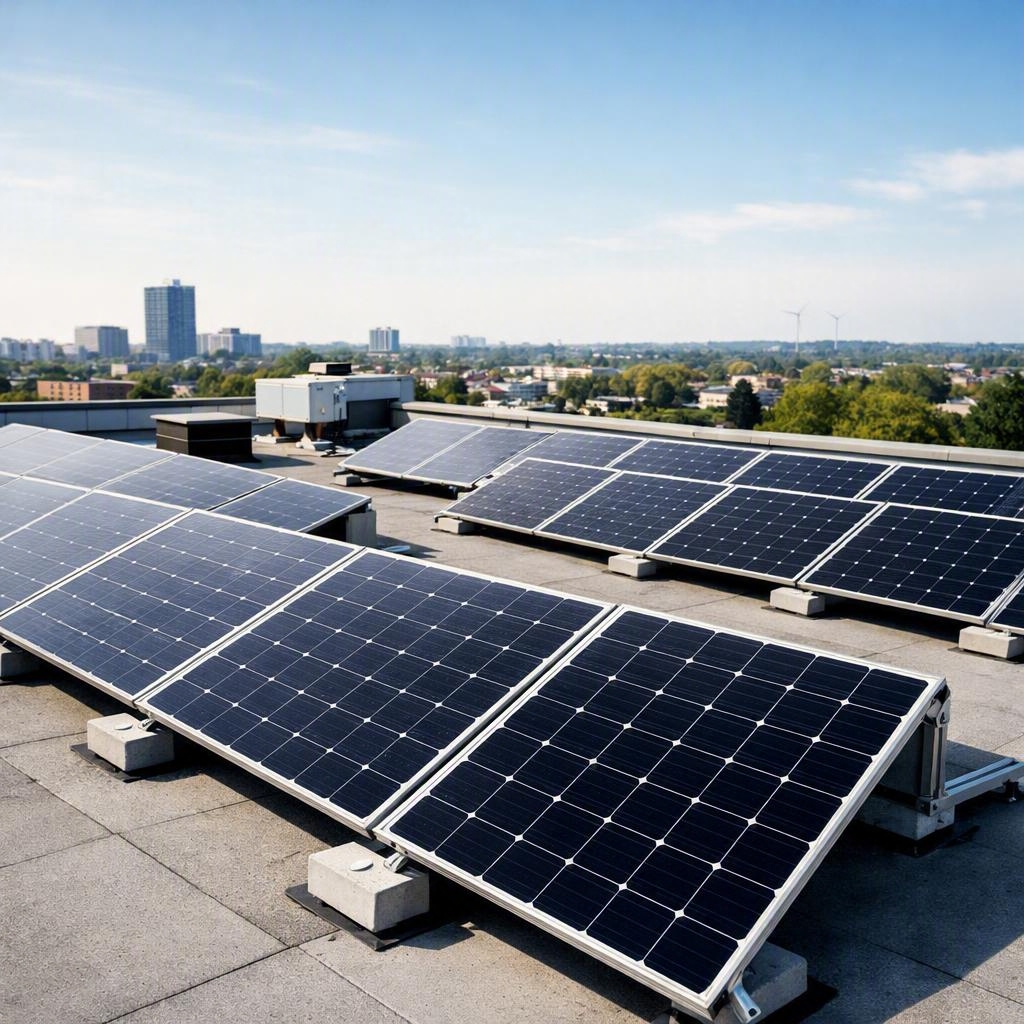
A flat roof often has an important advantage: you can better adjust the layout to suit space and direction than on many sloping roofs. At the same time, not every roof is automatically suitable. Extra checks are necessary, especially in the case of older roof coverings, limited structural reserves, many obstacles or doubts about water drainage. Also read how solar panels work if you want to understand the basics first.
When are solar panels on a flat roof suitable?
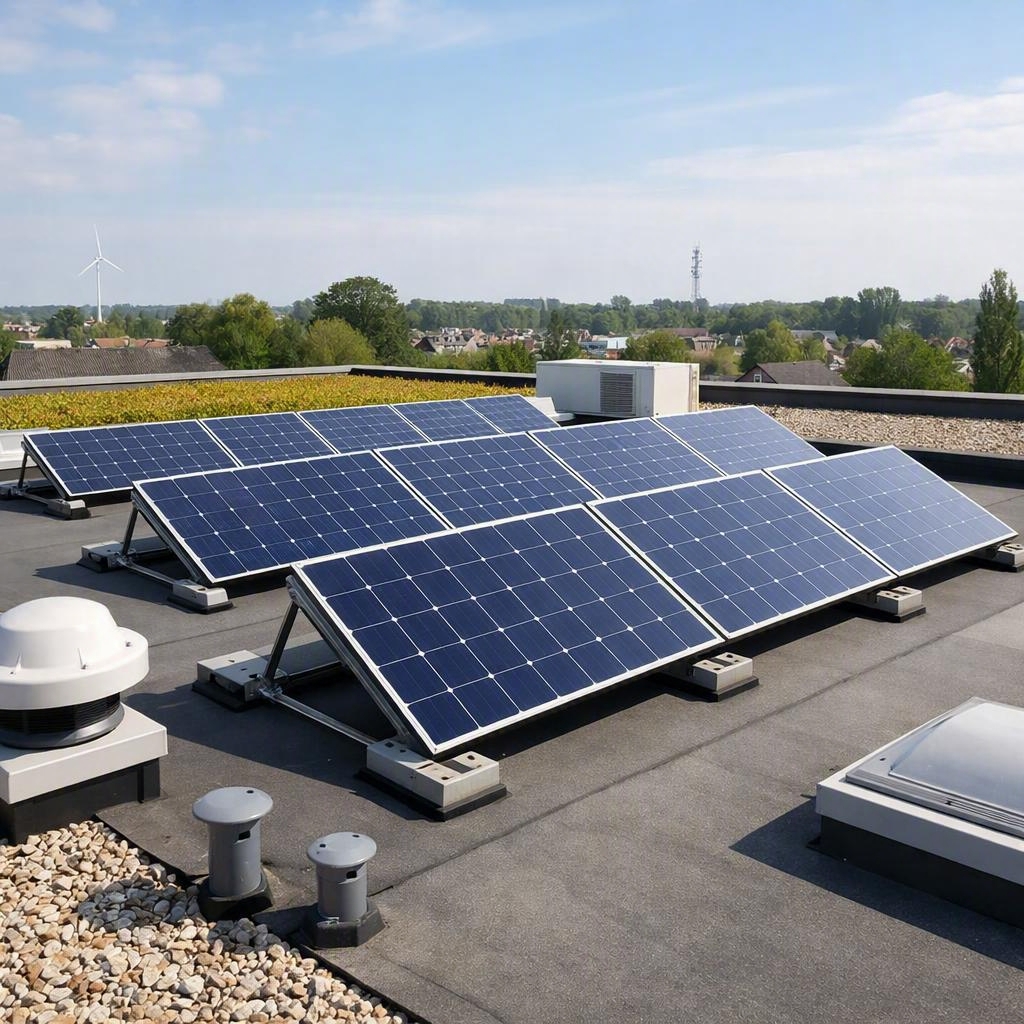
Solar panels on a flat roof are especially suitable when the roof construction is strong enough, the roof covering can last for several years and there is sufficient free space for a safe installation. On a flat roof, panels are usually mounted on frames at an angle. This means that distance is needed between the rows to limit mutual shadow. The usable roof area is therefore often smaller than the total area on paper.
The location of drains, skylights, ventilation, installations and walking routes also counts. A roof may seem large, but in practice offer less space than expected. It is therefore wise to not only look at the number of square meters, but also at the condition of the roof, maintenance access and the expected lifespan of the roof layer. Anyone who wants to combine yield and freedom of installation can do well with a flat roof, as long as the technical preconditions are correct. Also look at the costs of solar panels and any future roof work, so that you do not have to pay for unnecessary disassembly later.
Recommended for and less suitable for
Installation is recommended, especially on flat roofs with little shade, sufficient load-bearing capacity, a clear layout and a roof covering that can last long enough. Less suitable are roofs with visible wear, water problems, many obstacles or uncertainty about the construction. Even if a roof probably needs to be renovated in the short term, repairing it first often makes more sense than installing it now and moving everything again later.
- Well suited: little shade, free walking routes, stable roof structure and good drainage.
- Doubtful case: older roof, limited load data or many technical installations on the roof.
- Less suitable: damaged roof covering, recurring water accumulation or a situation with high wind loads without a suitable plan.
Which risks and limitations should you consider first? check?
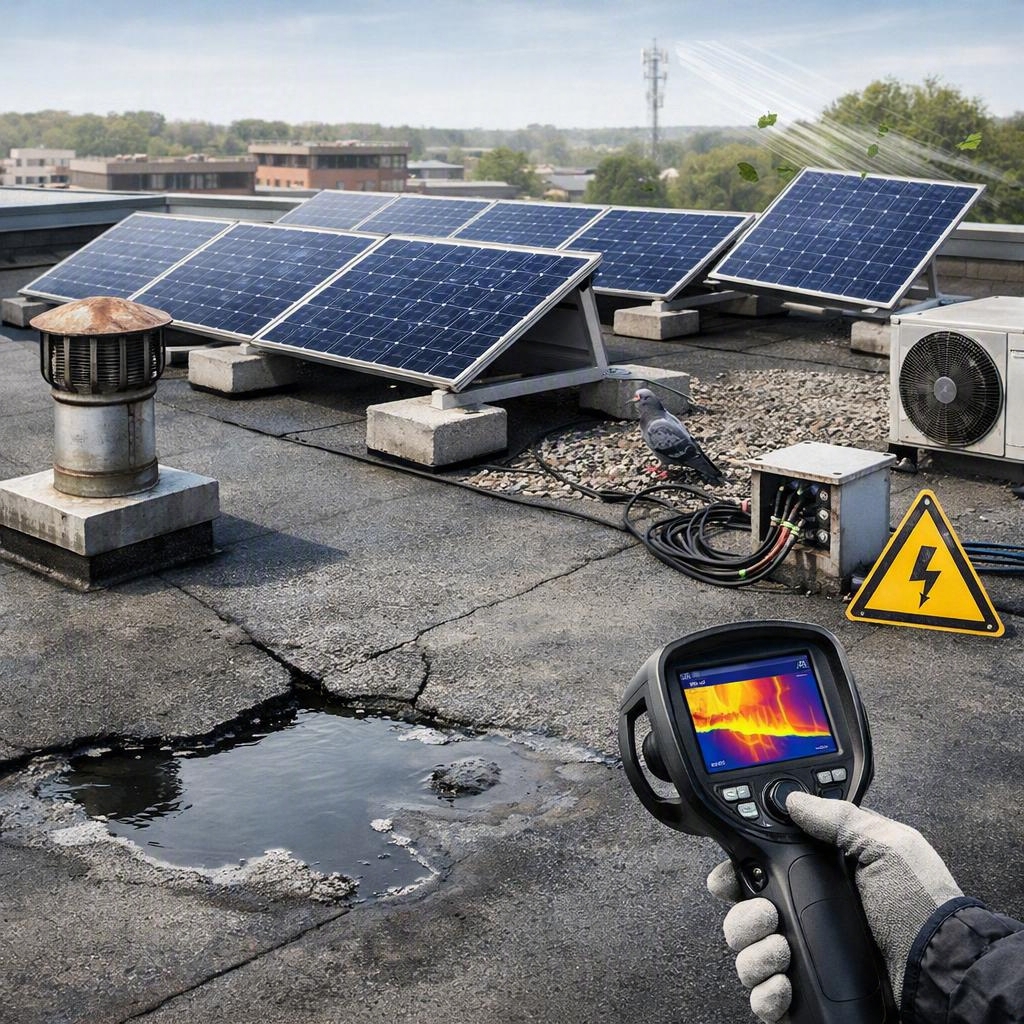
For solar panels on a flat roof, the assessment is not just about space, but mainly about safety and feasibility. Wind load, ballast and drainage are often decisive. Many systems work with frames without piercing the roof layer. This can be beneficial for waterproofing, but usually requires extra weight to keep the panels in place. That extra weight is on top of the weight of panels, frames, cables and maintenance loads.
Therefore, do not just look at the panels, but at the entire system. An installer or constructor must assess whether the roof can safely support the entire structure and whether the installation suits the height, location and shape of the building. In addition, the condition of the roof itself is crucial. An old roof may seem usable today, but still be a bad investment if replacement is needed within a few years. In that case, you may pay again later for disassembly and reinstallation. An early roof inspection for solar panels makes it clearer more quickly whether full installation, limited installation or renovation first is the wisest route.
Carrying capacity, ballast, wind and drainage
The most important control points can be clearly summarized. Load-bearing capacity determines whether the roof can safely handle the extra weight. Ballast ensures that the system remains stable in strong winds, but at the same time increases the load. Wind load varies per building height, roof zone and location. Drainage must remain free, so that rainwater is not blocked by frames or cables. Shade from buildings, trees or surrounding buildings reduces yield and can severely limit the layout.
- First recommendation: have the construction, shade and roof condition assessed in conjunction.
- Second recommendation: compare multiple layouts with different slope angles and spacing.
- Alternative for an unfavorable roof: roof renovation first or only use the most suitable part.
- Limitation of the assessment: without inspection and load calculation, the outcome remains the same for now.
How do you compare flat roof installation with alternatives?
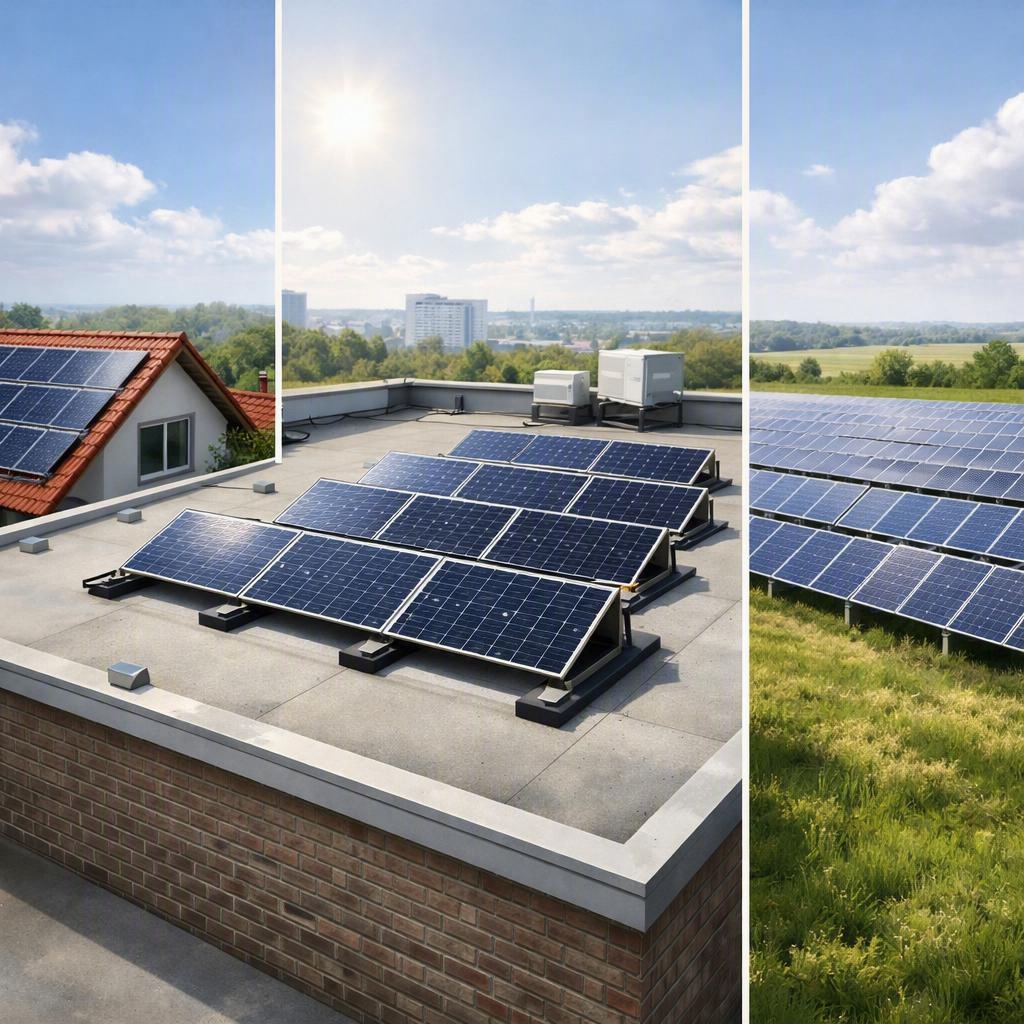
The most important choice is usually not only whether or not you want solar panels, but which approach best suits your roof. There are often three logical directions: full installation, limited installation or roof renovation first. Full installation is appropriate when the roof is technically in good condition, has sufficient free space and the calculations are positive. Limited installation makes more sense if part of the roof is shaded, contains obstacles or only a lighter design is desired. Renovating first is usually the best route when the roof covering is outdated or the structural situation remains unclear.
Compare these options on four points: technical feasibility, expected yield, implementation risk and future maintenance costs. A larger system is not automatically better if it places the panels too close together, hinders drainage or makes the roof less accessible. On a flat roof it is often a matter of a balance between sufficient production, safe attachment, ease of maintenance and connection to the remaining lifespan of the roof. This prevents a plan that seems attractive on paper from becoming expensive or cumbersome in practice.
Full installation, limited installation or roof renovation first
Complete installation is usually the first choice if the roof is in good condition and the technical calculations are favorable. Limited installation is a logical second choice when only part of the roof is really suitable or when you want to limit risk and burden. Roof renovation first is the most sensible option if the roof covering is worn out or if doubts about the construction outweigh the expected immediate yield. That order helps to look not only at production, but also at the practical and financial logic of the project.
Sources and checkpoints
Use these sources to support your assessment. They provide general frameworks, but do not replace project-specific roof inspection, load calculation or shadow analysis. Always check whether the information fits your building, location and chosen mounting system.
- US Department of Energy, Homeowners' Guide to Going Solar, https://www.energy.gov/eere/solar/homeowners-guide-going-solar
- National Renewable Energy Laboratory, Solar Photovoltaic System Research, https://www.nrel.gov/research/re-photovoltaics.html
- US Occupational Safety and Health Administration, Fall Protection in Construction, https://www.osha.gov/fall-protection
- International Building Code Board, International Building Code, https://www.iccsafe.org/products-and-services/i-codes/ibc/
- Evidence to be checked: roof inspection, remaining life of the roof covering, structural calculation, ballast plan, shading report, layout drawing and local building codes.
- Practical check: compare the product specifications of the mounting system with the actual condition of your roof, not just the available surface area.
Frequently asked questions
Are solar panels on a flat roof less efficient than on a sloping roof?
Not necessary. A flat roof can actually be beneficial because you can better adjust the direction and angle of inclination. The actual yield depends mainly on shade, spacing, pollution, temperature and the space available for a good setup.
Does a flat roof always need extra ballast for solar panels?
Not always, but many systems without penetrations do require ballast. The exact amount required varies per building height, wind load, roof zone and mounting system. Therefore, this must always be calculated for your specific situation.
Do I need to have my roof checked before installing solar panels?
Yes, especially with an older flat roof. A check of roof condition, load-bearing capacity, drainage and shade prevents you from having to dismantle for repair later or from the chosen system proving unsafe or impractical.
What should I compare first to know whether my flat roof is suitable?
First compare these five points: load-bearing capacity, condition of the roof covering, shade, drainage and wind load in combination with the chosen mounting system. This provides the quickest, useful assessment of the suitability of solar panels on a flat roof.
Conclusion
Solar panels on a flat roof are often a good solution, but only when the construction and installation conditions are really in order. The key question is not only whether installation is technically possible, but whether your roof has sufficient load-bearing capacity, has little shade, drains water well and will last long enough to make the investment logical. In many cases the answer is positive, but with older or unfavorable roofs, renovation or partial installation is often wiser.
If you want to know whether your situation is really suitable, the next step is to compare the load-bearing capacity, roof condition, shade, drainage, wind load and product specifications of the intended mounting system. This gives you a practical yes-or-no assessment, prevents unsuitable installation and allows you to better weigh yield, feasibility and maintenance.