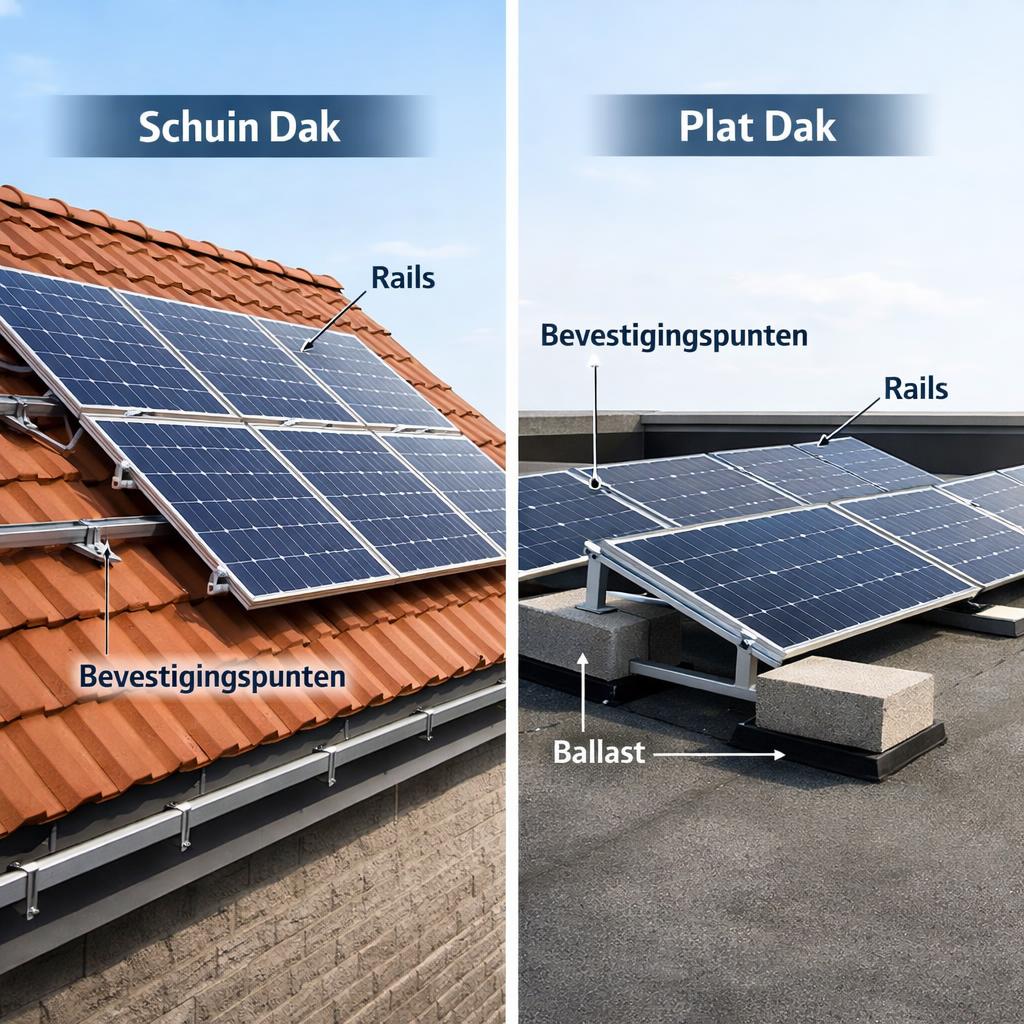
How are solar panels mounted? Usually with a mounting system of mounting points, rails and clamps that hold the panels firmly in place. On a sloping roof, these mounting points are often attached to the load-bearing roof structure under the roof covering. On a flat roof, panels are usually on a frame with extra weight, so that drilling through the roof is not always necessary. Which approach is suitable depends on the roof type, the slope, the load-bearing capacity, the wind load and the way in which everything is finished waterproof.
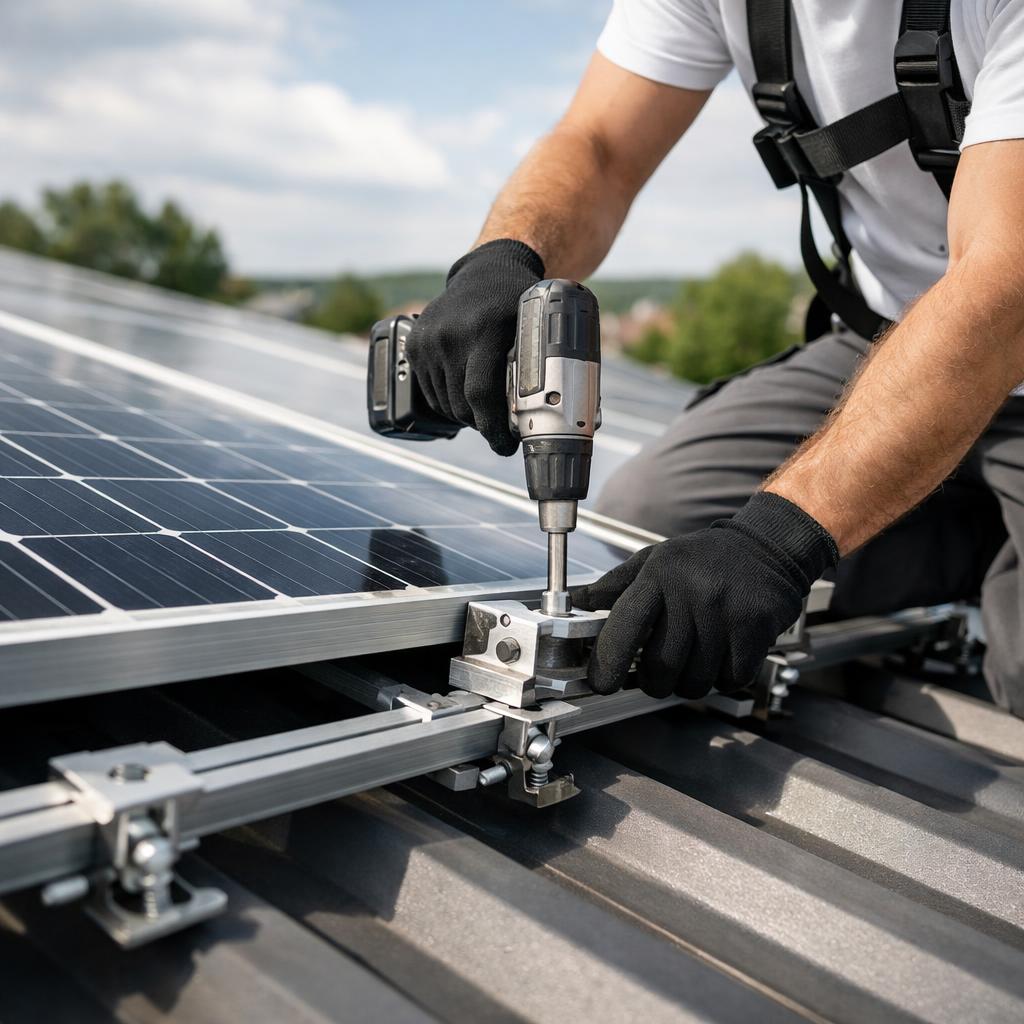
For homeowners, it is not just about how panels are attached, but especially whether that solution is safe, sustainable and practical for their home. It is therefore wise to first look at the condition of the roof and the underlying structure. If you have any doubts about this, first read: Is my roof suitable for solar panels? This makes it easier to understand how solar panels are attached to a sloping roof, how solar panels are attached to a flat roof and which method best suits your situation.
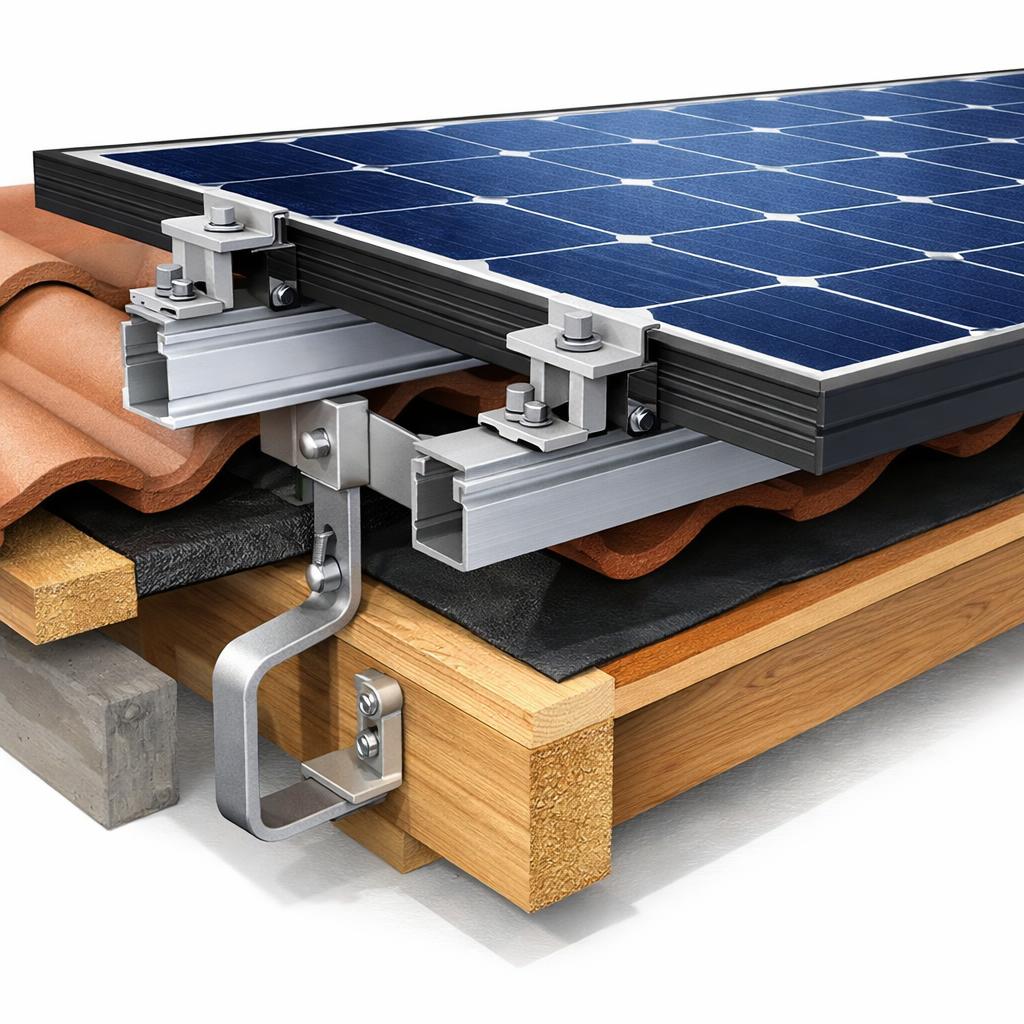
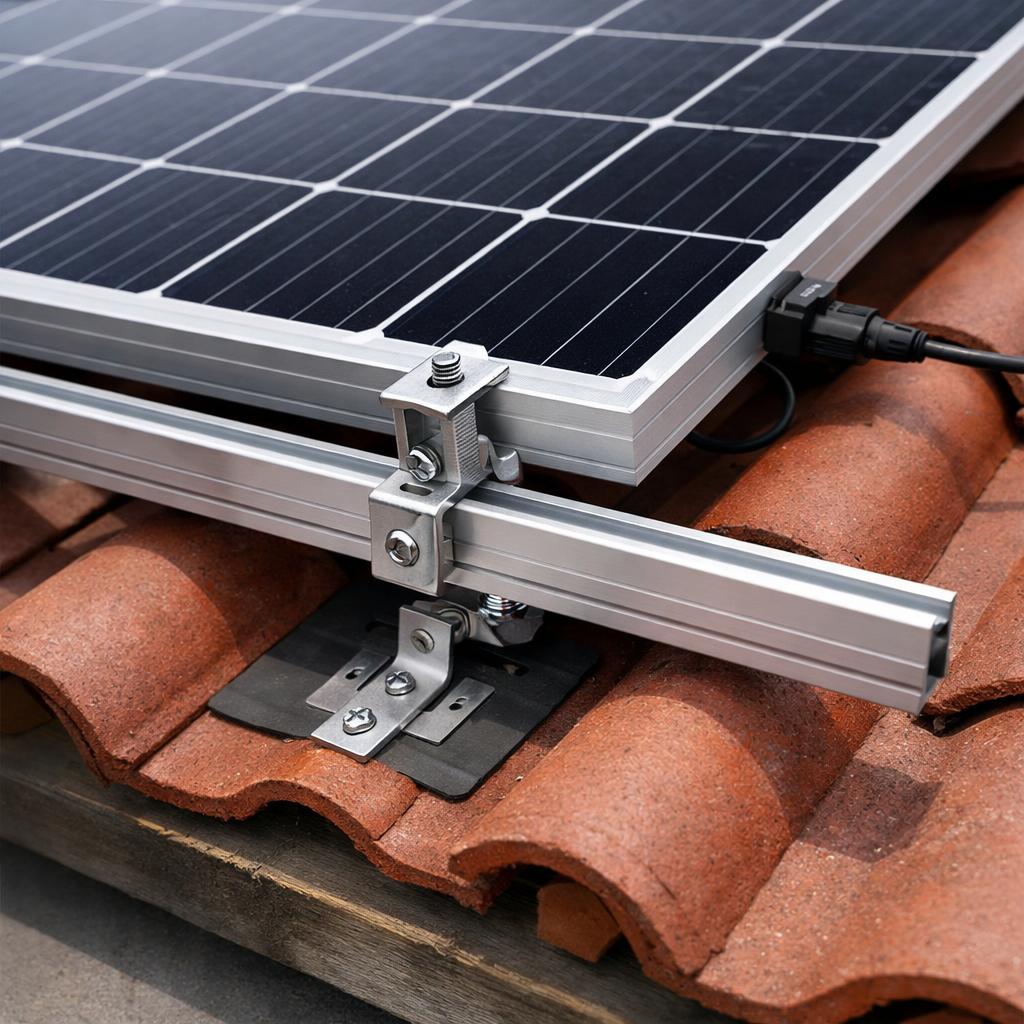
A simple diagram of a mounting system with roof hook, rails, clamps and solar panel often helps to quickly understand the structure.
Short answer: this is how solar panels are usually attached
In practice, the mounting usually consists of three parts: a load-bearing mounting point, metal rails and clamps that secure each panel. With a sloping tiled roof, roof hooks or similar anchors are often attached to the wooden or metal roof structure. The rails are then mounted and the panels are then secured with center and end clamps. This is the standard structure for many homes when people search for how are solar panels attached.
Screw to rails or place with ballast
On flat roofs you often see frames with ballast, i.e. extra weight that keeps the system in place without having to screw everything through the roof layer. This can be beneficial for the roof covering, but only if the structure can safely support the extra weight. It must also be carefully calculated how the system responds to wind, especially at the eaves. On other roofs, panels are anchored more directly with screws, bolts or special fasteners that match the substrate. So there is no one universal method. The right choice always depends on the roof structure, the desired angle of inclination and the forces to which the system is exposed.
If you want to consider the costs in addition to the technical side, take a look at what solar panels cost including installation. This way you can better assess installation choice and total investment together.
Which mounting suits your roof type?
The roof type largely determines how solar panels are attached. On a sloping roof with roof tiles, panels are usually placed on rails above the existing roof covering. The attachment points are attached to the supporting layer under the tiles, after which the tiles are neatly replaced or made to fit. This requires precise work, because strength and watertightness must match. Anyone who searches for how are solar panels attached to a sloping roof often means exactly this structure of roof hook, rail, clamp and panel.
Sloped roof, flat roof and other surfaces
With a flat roof, panels are usually placed on sloping frames, often with ballast and sometimes with additional anchoring. That is usually the answer to the question of how are solar panels mounted on a flat roof. Different profiles and fasteners are required on metal roofs, corrugated sheets, outbuildings or other surfaces. These materials respond differently to load, temperature differences and water drainage. Therefore, there are main choices, such as anchoring on rails or placement on a ballast frame, and additional choices, such as extra reinforcement or adapted clamps. Mounting on a facade or on a free-standing structure is also available, but is not always the most logical solution for an ordinary home.
A comparison between a sloping roof and a flat roof usually quickly makes the differences clear. With sloping roofs, the emphasis is more often on anchoring in the structure and a neat connection under the roof covering. With flat roofs it is often about weight, arrangement, wind influence and sufficient space between the rows of panels.
What should you pay attention to for safe installation?
Good mounting is not only about securing the panels, but also about the circumstances surrounding it. Roof load is important, especially on flat roofs with ballast. The structure must be able to bear the extra weight, also in the long term and in combination with precipitation, maintenance and normal aging. Wind load also plays a major role. Solar panels form large surfaces on which the wind exerts pressure, especially at corners and edges of the roof. Therefore, the chosen solution must suit the dimensions of the system, the location of the home and the height of the building.
Roof load, waterproofing and wind load
Anyone who wants to attach solar panels without the risk of leakage must pay particular attention to neat penetrations, appropriate sealing and a system that fits in with the existing roof covering. Watertight installation requires more than just good materials. The condition of the roof, the quality of the finish and the correct location of the mounting points are also decisive. General information mainly provides the main points: anchor where necessary, only apply ballast if the load-bearing capacity allows it and carefully finish the roof skin.
What you cannot deduce from a general explanation is which exact combination is suitable for your home without checking the actual roof structure. It is therefore wise to compare your roof type, available load-bearing capacity, desired layout and chosen mounting method. Then also read what to look for with an inverter, so that installation and further system selection are well matched.
Also pay attention to the practical side. A system may be technically possible, but less suitable if maintenance becomes difficult, the panels are unfavorably positioned or future work on the roof is made more difficult. That is precisely why comparison is useful: not only on price, but also on accessibility, load, lifespan of the roof and whether the chosen installation can be adjusted later.
Conclusion
How are solar panels mounted? In most cases with mounting points, rails and clamps, or on a flat roof with frames and ballast. That short answer is correct, but only if the system really suits the roof type, load-bearing capacity, wind load and a careful waterproof finish. There is often a suitable solution, but not every method is equally suitable for every roof.
The wisest next step is to specifically compare your own roof type, load-bearing capacity, desired layout, wind load and mounting method. Then check whether the roof covering is in good condition, whether ballast is technically possible and whether the mounting points match the construction of your home. Start with is my roof suitable for solar panels or view the costs of solar panels including installation if you want to consider the technology, installation and overall picture together.
Frequently asked questions
Are solar panels always screwed into the roof?
No, not always. On many sloping roofs the mounting points are mechanically linked to the roof structure, but on flat roofs frames and ballast are often used. Whether screws are required depends on the surface, the load and the chosen installation.
How do you prevent leakage when attaching solar panels?
This starts with a mounting system that suits the type of roof covering and with carefully finished mounting points. Penetrations and connections must be neatly sealed and the existing roof must be in good condition. A waterproof finish ultimately depends on the design and the condition of the roof.
Can every roof support solar panels?
No, you can't just assume that. The load-bearing capacity of the roof, the age of the structure, extra weight due to ballast and the local wind load must always be taken into account. It is wise to check the structure, especially in older homes and flat roofs.
What is usually the difference between mounting on a sloping roof and a flat roof?
On a sloping roof, panels are usually mounted on rails above the roof covering, with anchors to the structure below. On a flat roof, panels are more often placed on frames with a chosen slope angle and ballast. As a result, the points of interest also differ: with sloping roofs it is more often about mounting points and waterproofing, while with flat roofs weight and wind load usually weigh more heavily.