Yes, a solar panel parking space can be a smart choice, but especially if space, on-site power consumption, construction and grid connection fit together well. For many organizations, a canopy over parking spaces combines two practical functions: generating electricity and protecting vehicles from sun, rain and hail. That makes the idea attractive, especially in places where roof space is limited or is already fully used.
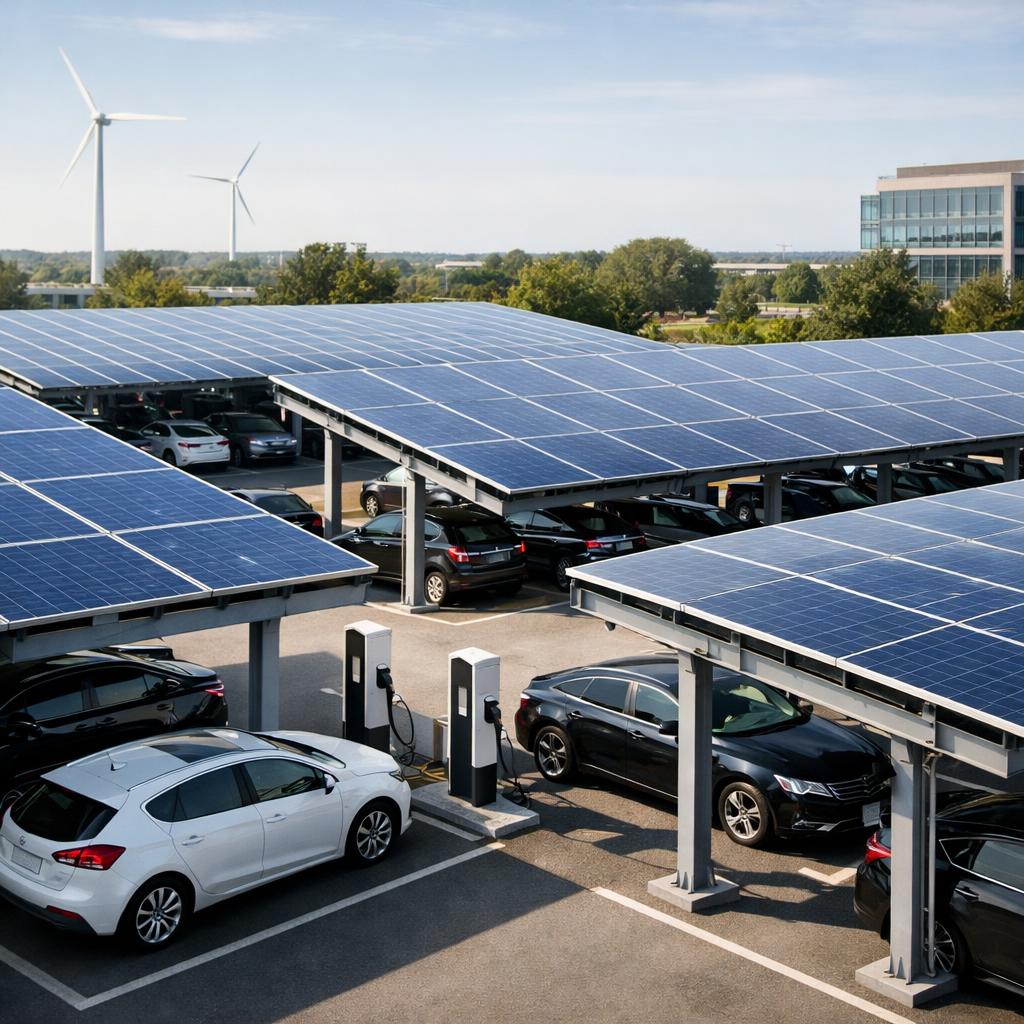
At the same time, installation is usually more complicated than with solar panels on a normal roof. Additional points play a role in a parking lot, such as steel construction, foundation, clearance height, drainage, traffic safety and the location of columns. That is why it is wise to first carefully assess the location and only then compare different solutions. Consider shade, driving routes, walking zones, charging points and the available connection. Also read more about solar power for companies if you want to weigh a parking setup against other locations. The core remains simple: a solar panel parking lot is especially interesting if the location is technically suitable and the power generated is really useful at or around the location.
When are solar panels in a parking lot a smart choice?
A solar panel parking lot is especially logical at locations with a lot of paved surface and little usable roof space, such as offices, shopping areas, hospitals, schools and municipal locations. Areas where cars are stationary for a longer period of time are also often suitable. Shelter increases the comfort for visitors and employees, while the generated electricity can be used directly for buildings, lighting or charging vehicles. It is precisely this combination that often makes solar panels above a parking lot more interesting than it seems at first glance.
Less suitable are small sites with lots of shade, difficult traffic flows or a limited grid connection. A site with unfavorable sight lines, weak subsoil or complex drainage can also significantly reduce feasibility. Therefore, an initial assessment of the location is more important than a quick calculation of the panel power alone. What you usually do not know for sure in advance is the exact yield, the permit outcome or a fixed payback period. The best first question is therefore not how many panels fit, but whether the location is practically and technically correct.
Suitable situations and less suitable applications
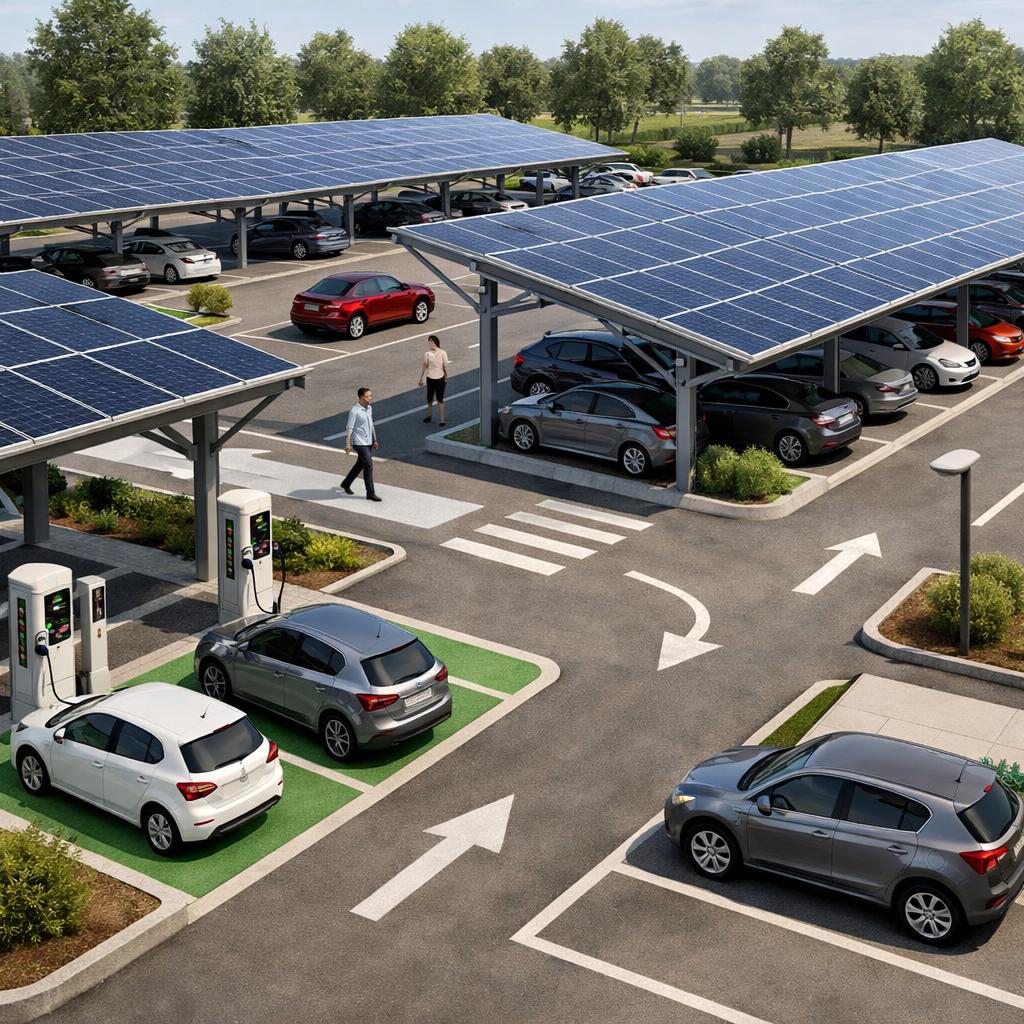
The best situation is usually a site with a regular layout, sufficient space between lanes and a predictable usage pattern. A canopy can often be neatly fitted in there without hindering walking routes, fire lanes or visibility when entering and exiting. This is especially beneficial for new construction or redevelopment, because the foundation, drainage and cable routes can then be taken into account immediately.
Key benefits, costs and points of interest
The biggest advantage of a solar panel parking lot is double use of space. You use an existing paved area not only for parking, but also for power generation. In addition, a canopy provides shade and protection for vehicles, which is immediately noticeable to users on hot or wet days. For organizations this can be a practical plus in addition to the energy value. A good design can also be combined with lighting, clear signage and charging facilities. If you would like to explore this combination further, read also about charging stations and grid capacity to take into account the available connection and peak load.
The costs are usually higher than for solar panels on a roof. This is because you not only pay for panels and inverters, but also for steel, foundation, earthwork, cable routes, drainage, site layout and safety facilities. That is precisely why it is important to include installation costs and construction or civil costs separately in a quotation. This is the only way you can compare offers fairly. A lower starting price seems attractive, but can later be detrimental if the construction hinders expansion, loading or safe use. Maintenance, accessibility and resistance to wind and precipitation are also part of the consideration.
Support structure, grid connection and permits
With a solar panel parking lot, the supporting structure and foundation are not an afterthought, but the basis of the entire plan. The height must suit passenger cars, vans, service traffic and in some cases emergency services. Columns must be placed in such a way that entry and exit remains safe and sight lines do not deteriorate unnecessarily. Wind load, soil conditions, drainage and protection against wear also play a major role. That is why a practical sketch design with traffic flows is often more valuable than immediately calculating with just the numbers of panels.
The grid connection also deserves early attention. A technically beautiful roof has little value if the connection offers insufficient space for return supply or simultaneous use. This is even more true if you also want to add charging points. In addition, permits may differ per municipality or location. Height, structural safety, fire safety, water drainage and site management can all influence the outcome. Therefore, always check the official technical data, local rules and connection options before determining budgets or phasing.
How do you compare options and tackle the next step?
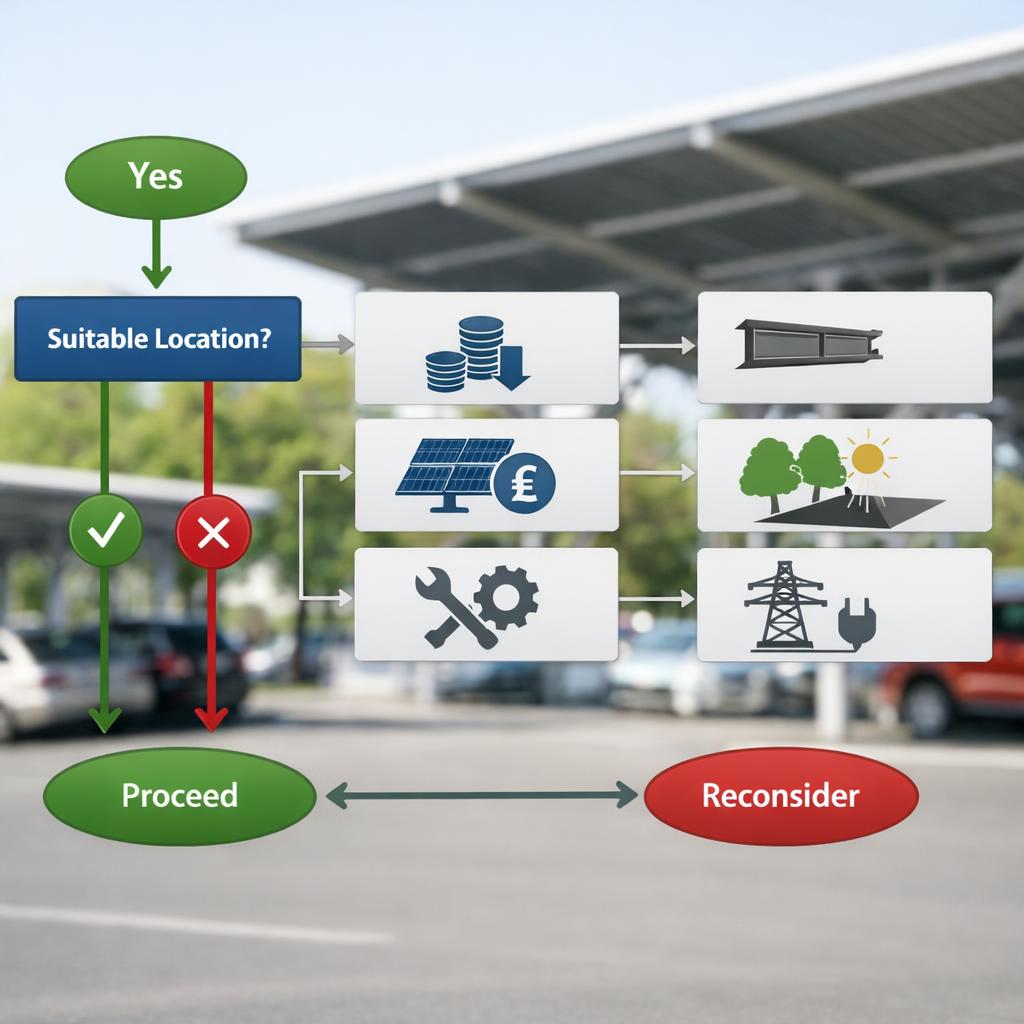
Don't start by comparing panel types, but with the suitability of the location. For each variant, list how much usable surface there is, where there is shade, how the lanes run, where foundations are possible, what height is required and how the cable route to the connection runs. Only then look at extensions such as charging points or storage. For organizations with peaks in consumption or limited space on the connection, energy storage for companies can be a useful point of comparison later, but not automatically the first solution.
A good location survey prevents you from getting stuck in one design too early. It is often wise to compare several variants: full canopy, partial canopy or a design that can be expanded later. This is especially useful when budget, net space or site layout have not yet been completely determined. If a specific solution or provider comes into play in your situation, it is wise to only take it seriously once it is clear why that option suits your site, consumption, expandability and installation conditions. This way you don't choose based on name, but on suitability.
Practical checklist for decision making
Conclusion
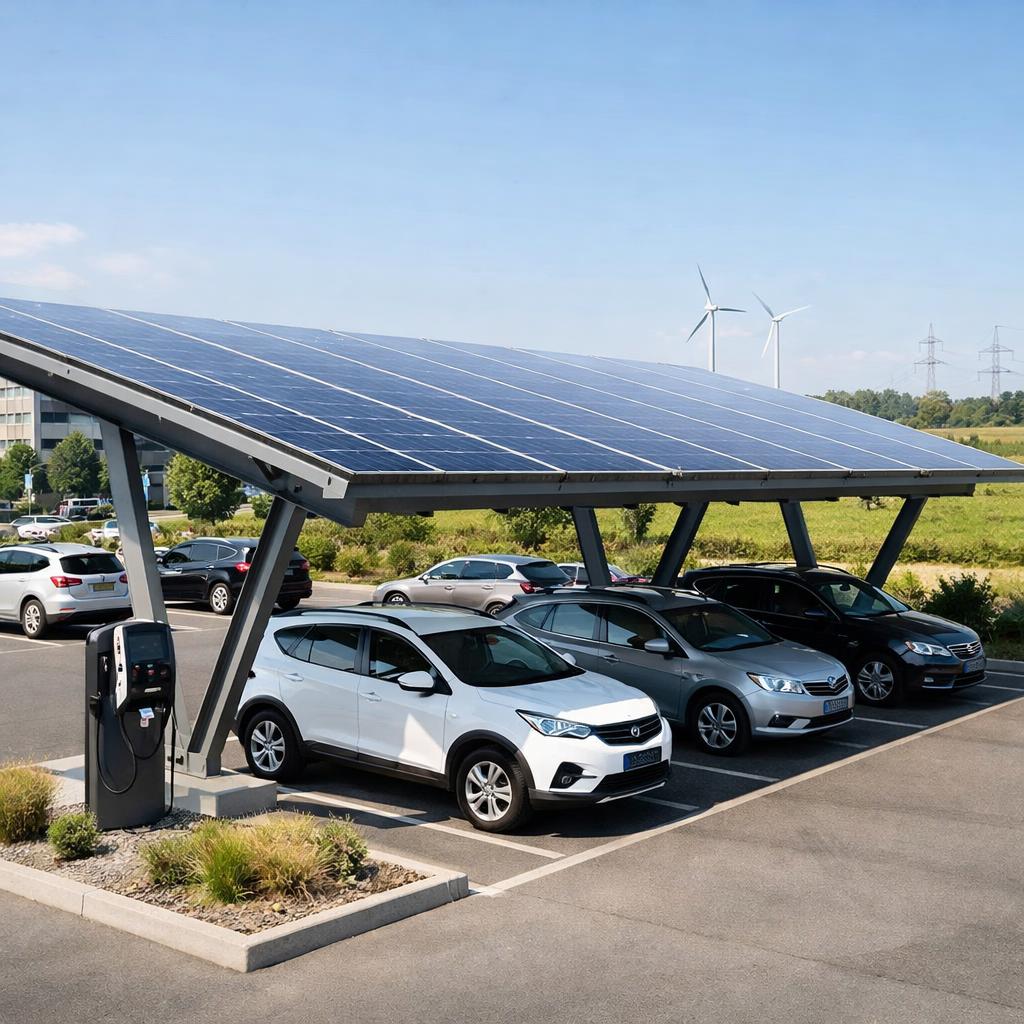
A solar panel parking lot is often a good choice, but especially when the location has sufficient space, is structurally suitable and the power generated on or around the site can be used. The combination of solar power and shelter makes such a solution practical and attractive, but requires more preparation than a normal roof setup. The most important conclusion is therefore simple: not every parking lot is suitable, but in the right place it can be a strong and efficient solution.
The wisest next step is to have your location tested for shade, foundation, traffic safety, grid connection, permits and expected power consumption. Only then compare variants based on construction, expandability, charging options, official specifications and actual connection space. This way you get a more realistic picture of feasibility, costs and phasing, and you choose a solution that also fits in the longer term.
Frequently asked questions
What is the average cost of solar panels above a parking space?
This varies greatly by terrain and design. You pay not only for panels and inverters, but also for the roof, foundation, site work, cabling, drainage and safety measures. Therefore, always ask for a clear breakdown between installation costs and construction or civil costs. This makes quotes much more comparable.
Is a permit required for solar panels on a parking lot?
You often have to take local building regulations and conditions for the site into account, but the exact outcome varies per municipality and design. Therefore, check early what requirements apply to height, safety, construction, water drainage and use of the site. Do not assume a general exemption without confirmation from the competent authority.
When is a covered parking space with solar panels more logical than panels on the roof?
This is especially the case if roof space is limited, the parking lot is large enough and electricity is used at the location during the day. A parking setup also offers extra practical value through shelter and the option to combine loading. If a large roof is usable, a roof installation sometimes remains simpler and cheaper.
Can a solar panel parking lot go well with charging points?
Yes, that can be a logical combination when vehicles are parked for a longer period of time and the connection is prepared for this. However, it is important to take simultaneous charging, peak load and available grid space into account in the design. Without this check, the combination may prove to be less suitable than previously thought.