Facade solar panels are a practical solution for those who have little suitable roof space or want to make a building more energy efficient without being solely dependent on the roof. Installation on the facade can be a logical step, especially when renovating apartments, business premises and homes with an unfavorable roof position. The yield is often different than with roof panels, but that does not mean that the system is less interesting. Much depends on the direction of the sun, shade, facade type and the method of installation.
Anyone who studies the efficiency of solar panels will quickly notice that seasonal differences and vertical placement are also important. This means that facade solar panels are particularly suitable for situations in which winter sun, limited roof space or the appearance of the building play a major role. In this article you can read what facade solar panels are, when they are suitable, which advantages and disadvantages count and what you should pay attention to in terms of costs, installation and rules.
What are facade solar panels and when are they suitable?
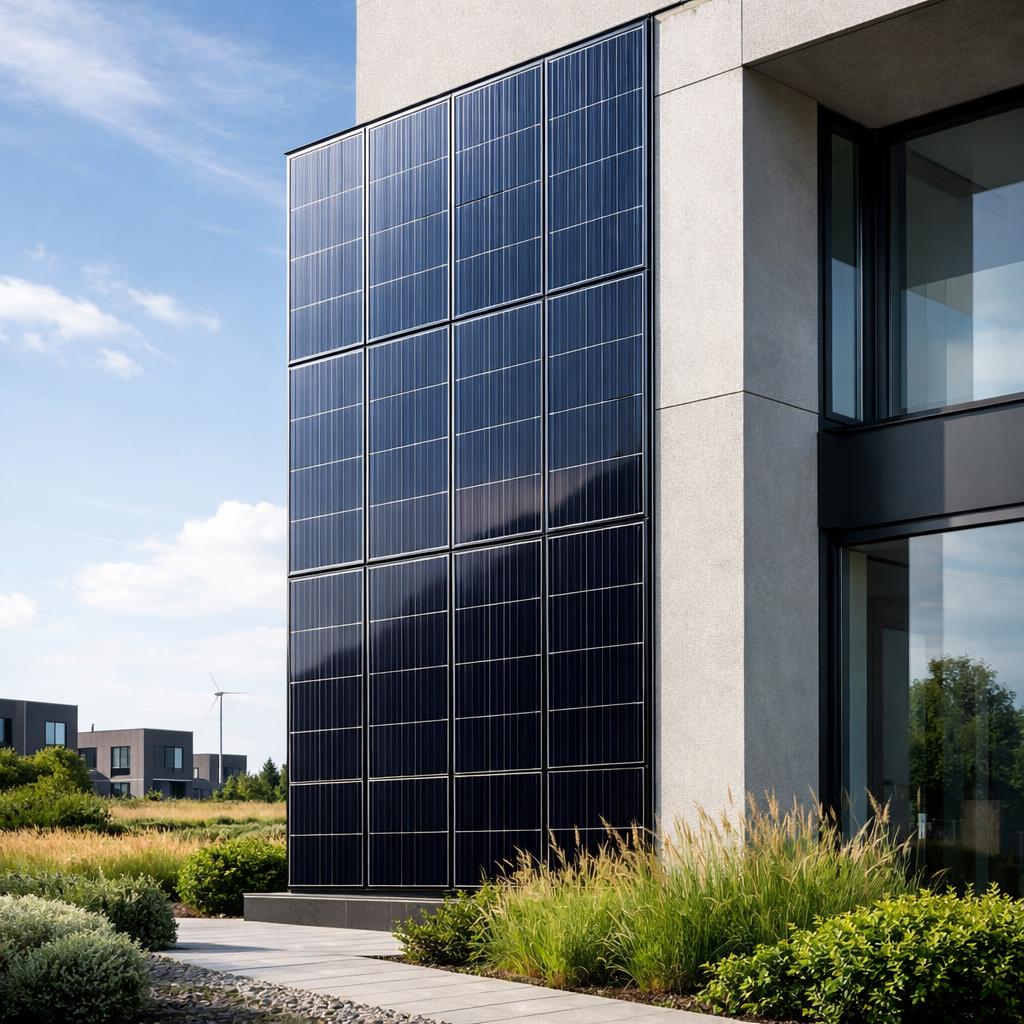
Facade solar panels are solar panels that are attached vertically or almost vertically to an outside wall. This can be done on an existing facade, but also as part of renovation or new construction. They are used in homes, offices, sheds and other buildings where the roof is less usable due to shade, limited space, dormer windows or an unfavorable location. Solar panels on the facade of a home mainly come into the picture when residents want to spread their power generation or are looking for a sleek, integrated appearance.
Whether a facade is suitable varies per building. A south-facing facade without much shade can be attractive, while a north facade is usually less obvious. The load-bearing capacity of the wall, ventilation behind the panels and accessibility for installation and maintenance also play a role. In addition, local rules, requirements for the streetscape and the type of facade cladding can have an influence. It is therefore wise to have each facade assessed to determine whether installation is technically, practically and visually feasible.
Difference between installation on roof and installation on facade
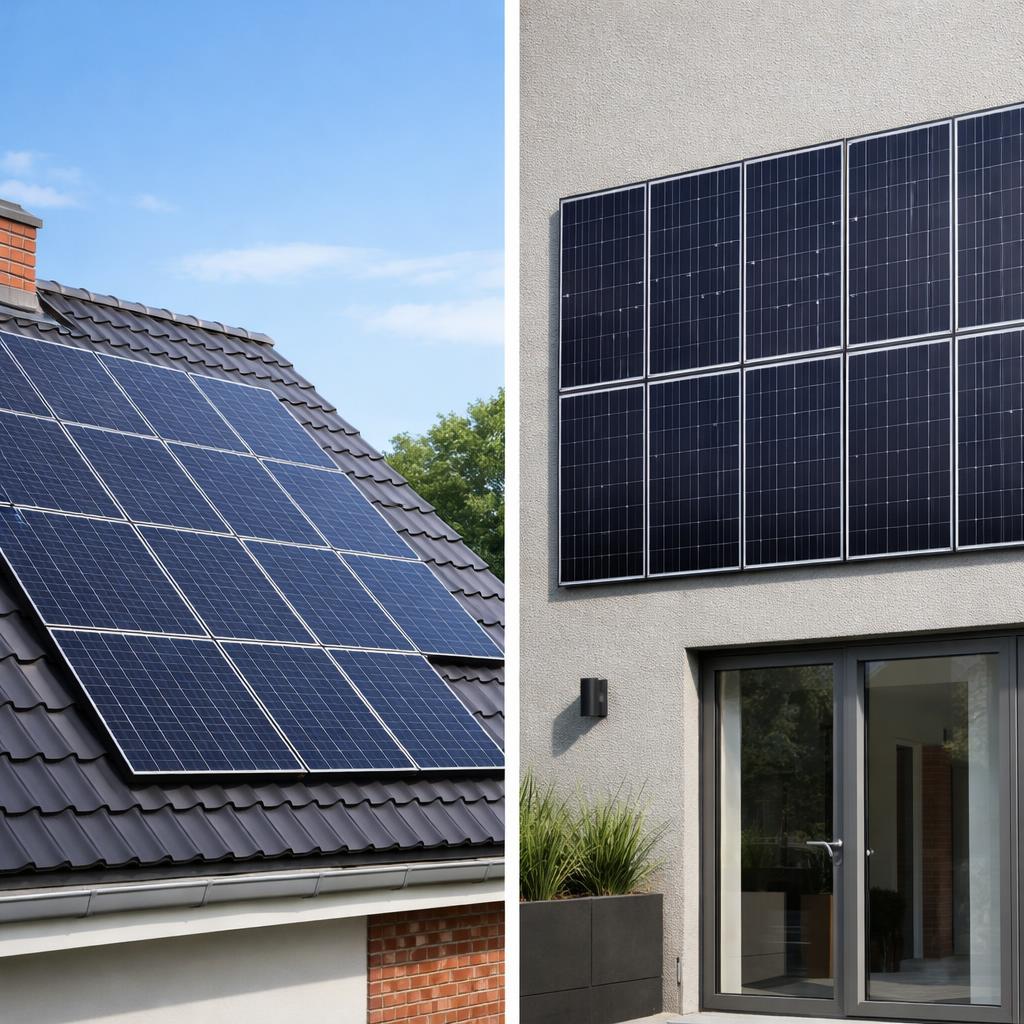
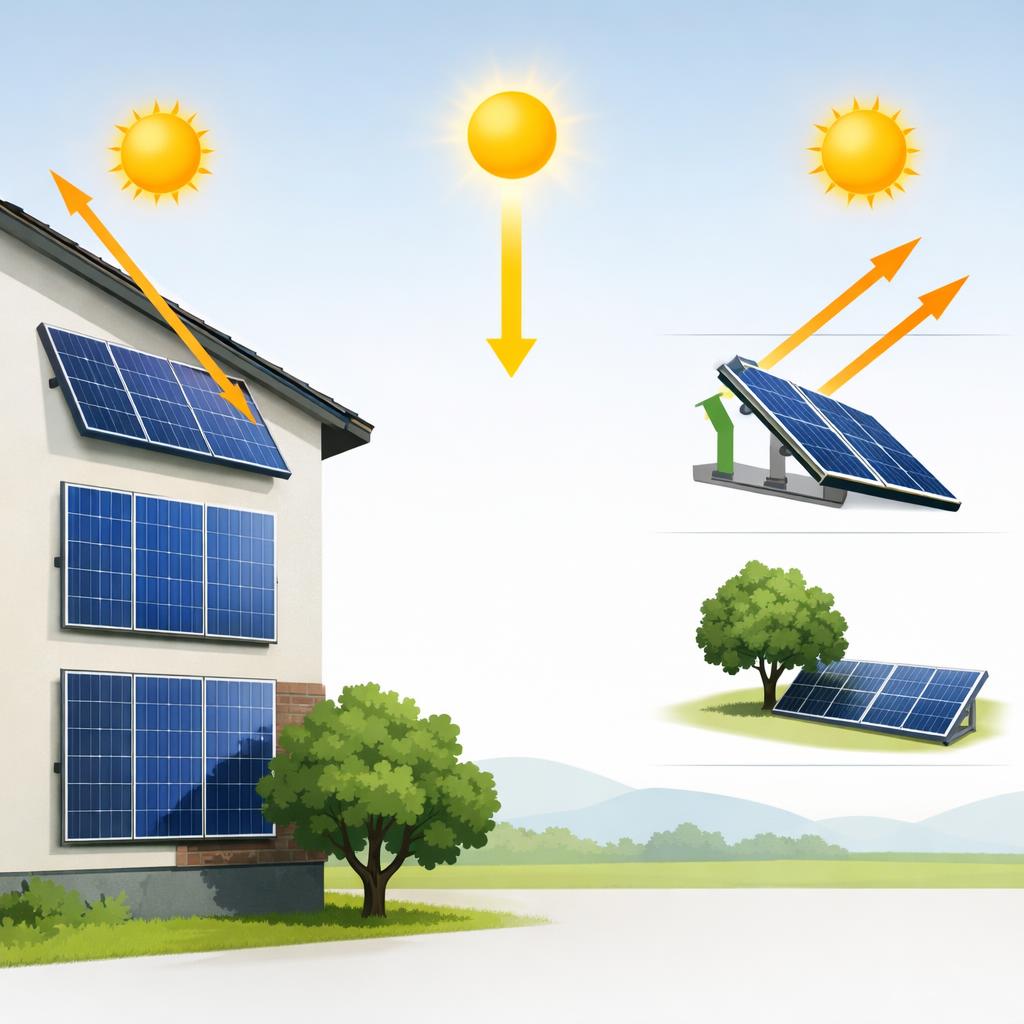
The biggest difference is the angle at which sunlight falls on the panels. Roof panels are usually sloping and are often placed in such a way that the annual yield is as high as possible. Vertical solar panels on the facade often receive less direct sunlight in the summer, but can perform more favorably when the sun is low in autumn and winter. As a result, power production over the year is different than with a classic system on the roof.
The use of space also counts. A roof is usually the first choice, but a facade can offer a solution if the roof is already full, is technically unsuitable or is used for something else. Facade mounting also influences appearance, mounting and maintenance. The system must be firmly connected to the structure and be able to withstand wind loads. For some buildings, a combination of roof panels and facade panels even appears to be the most logical solution.
Advantages, disadvantages and expected yield of facade solar panels
An important advantage of facade solar panels is that you create extra space for power generation without needing extra roof space. This is attractive for urban homes and business premises where the available space is limited. Panels on the facade can also fit in better with modern architecture or a planned facade renovation. Furthermore, vertical panels are sometimes less affected by dirt and snow, because rain and gravity keep the surface clean more quickly. In some situations, production is also better matched to power consumption outside the summer peak.
There are also disadvantages. The efficiency of facade solar panels is usually lower than that of well-placed roof panels with a favorable slope. The yield depends greatly on the location, shade of trees or surrounding buildings and the orientation of the facade. Installation is also often more complicated, which affects the costs of facade solar panels. However, the outcome can still be attractive if the alternative is that no, or much fewer, solar panels can be installed.
Which factors determine the return?
The yield is primarily determined by the direction of the sun. A south facade usually yields the most, followed by southeast and southwest. East and west facades can still be usable, but produce different production during the day. Shadow also has a lot of influence. Even limited shade from balconies, trees, neighbors or projecting parts of the building can noticeably reduce performance. Ventilation behind the panels, the quality of the inverter and the type of panel chosen also play a role.
In addition, the consumption pattern is important. Anyone who mainly uses electricity at times when a facade is performing better can use more of their own generation directly. It is therefore not only about the highest annual production, but also about the distribution of that production. The ultimate yield, suitability and payback period therefore differ per facade type, construction, shade and location. A tailor-made calculation remains the best basis for a good choice.
Costs, installation and practical considerations when choosing
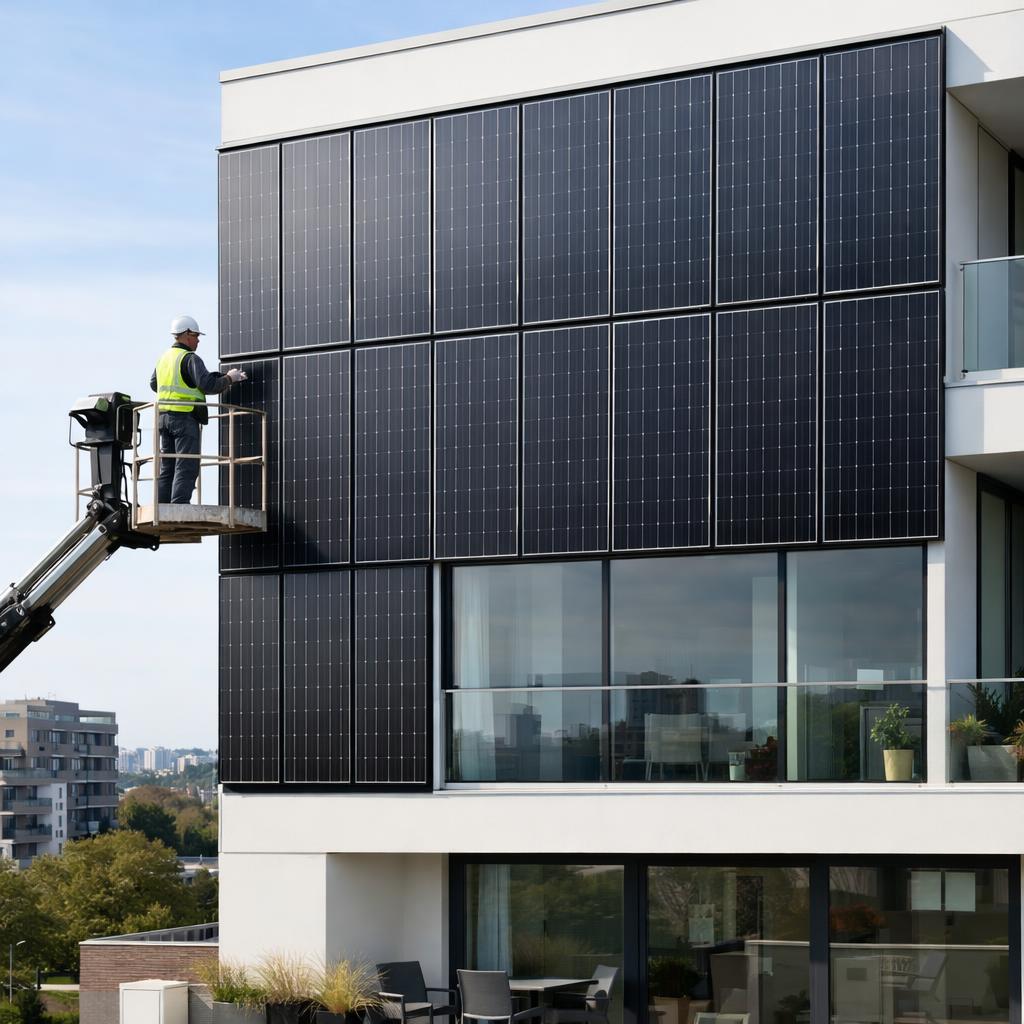
The costs of facade installation consist not only of the panels themselves, but also of mounting material, cabling, inverter, scaffolding and sometimes adjustments to the facade. As a result, the costs of facade solar panels are often higher than for a simple system on the roof. Additional research may be necessary, especially in older buildings or facades with a special finish. At the same time, a facade solution can make financial sense if you otherwise have much less generation capacity or if the facade is already being renovated.
When choosing, it is smart to not only look at the price per panel, but at the entire system and the expected yield at your location. Also pay attention to safety, accessibility for maintenance and whether the facade construction can handle the load. Also read more about permits and installation of solar panels, because rules may differ per municipality, building type and visibility from public roads. It is wise to check in advance, especially for monuments, apartments and business buildings.
What do you pay attention to during orientation, permits and maintenance?
First check which facades actually receive sun and at what times of the day. A wall that seems favorable may still receive a lot of shade from trees, eaves or surrounding buildings. Then look at permits and local regulations. Not every facade may simply be adapted, especially not in protected buildings or if the installation is clearly visible in the street scene. Ownership, an owners association and insurance conditions can also play a role.
Maintenance is usually limited, but accessibility remains important. Consider checking mountings, cabling and contamination around edges or window frames. Also have it assessed whether rainwater drainage, ventilation and fire safety are properly arranged. Anyone considering solar panels on the facade of a home would be wise to compare multiple quotes and yield calculations. This way you not only gain insight into the price, but also into differences in installation, warranties and expected performance under your circumstances.
Conclusion
Facade solar panels can be a smart addition when the roof is less suitable, when extra space for power generation is required or when architecture and renovation are important. They often yield different results than roof panels, but are certainly interesting in many situations. The combination of location, sun direction, shade, facade construction and local rules in particular determines whether a system really pays off. A general statement about returns or suitability is therefore rarely sufficient.
Anyone who is seriously considering facade solar panels should look at the big picture: technical feasibility, costs, expected yield and practical rules regarding installation. This way you avoid only paying attention to the purchase price or appearance. With a good assessment of the property, facade solar panels can be a useful and future-proof choice, both for homes and business buildings.
Frequently asked questions
Do facade solar panels yield less than roof panels?
Often yes, but not always to an extent that makes the choice unattractive. A well-oriented roof with a favorable slope usually achieves a higher annual yield. Nevertheless, facade panels can be interesting if there is no roof space, the roof is unsuitable or the winter yield is relatively important.
Are facade solar panels suitable for every home?
No. Suitability depends on facade type, construction, sun direction, shade, accessibility and local rules. In some homes, installation is technically simple, while other properties require additional research or permission. Therefore, assessment per situation remains necessary.
What do facade solar panels cost on average?
This varies greatly per project. The price depends on the number of panels, the mounting system, the condition of the facade and any additional work such as scaffolding or structural adjustments. Therefore, compare complete quotes instead of just a price per panel.
Does a permit always be required for facade solar panels?
Not always, but sometimes. That depends on the municipality, the building type, visibility, monumental status and other local rules. Especially for striking facades, apartments and listed buildings, it is wise to check in advance what is permitted.