With solar panels series or parallel, the choice mainly revolves around yield, shading behavior, safety and a good connection to the inverter. In series the voltage increases while the current remains the same. In parallel, the voltage remains approximately the same and the current increases. As a result, one arrangement is better suited to an open roof without shade, while the other can be more useful for difficult roof surfaces, different directions or panels that are not exactly the same. Anyone who wants to properly understand connecting solar panels in series or parallel must therefore look at panel specifications, roof orientation, temperature, cable length and the technical limits of the inverter.
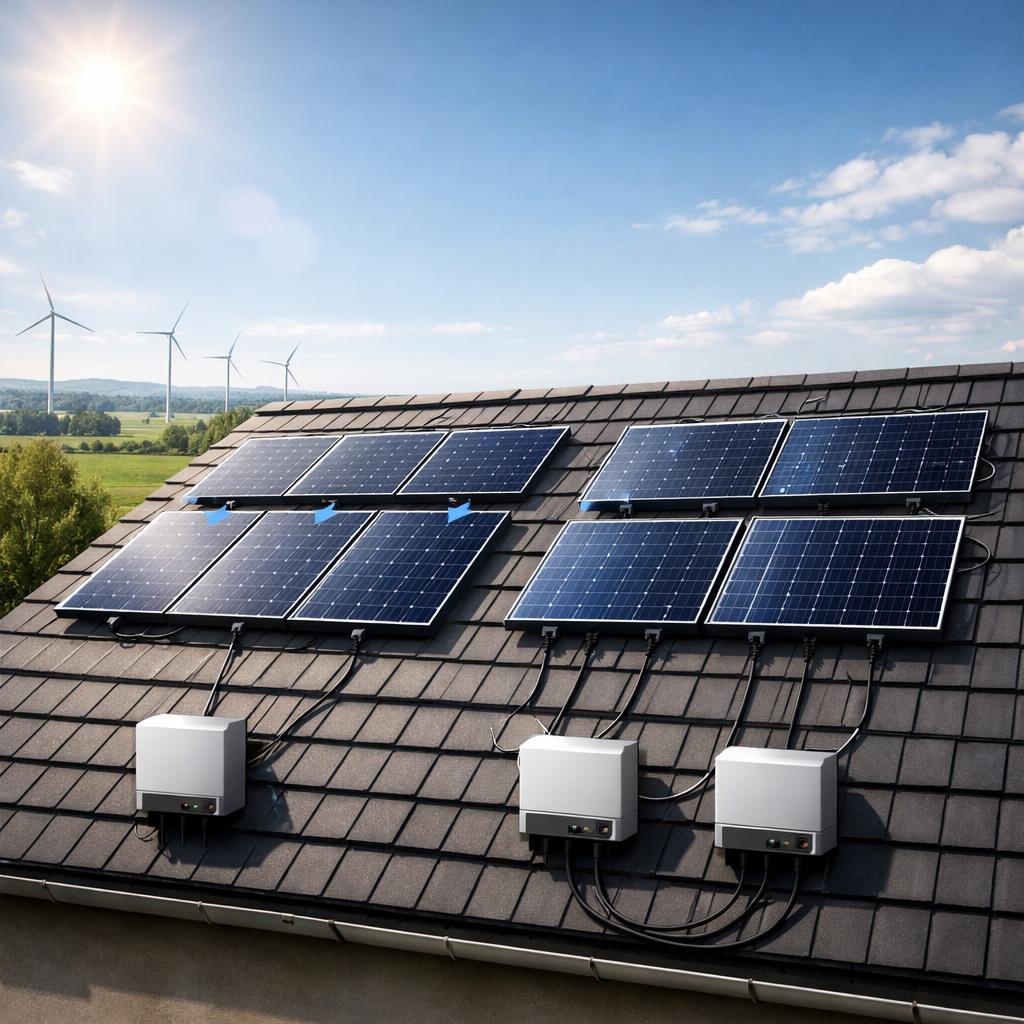
So there is no one best choice for every home. The right configuration depends on the entire system: the panels, the location of the roof, the electrical rules and the way everything works together. Small differences between panels, for example due to age, pollution or temporary shade, can also have an influence. With the explanation below you can quickly see the difference between series and parallel solar panels and when which solution usually makes the most sense.
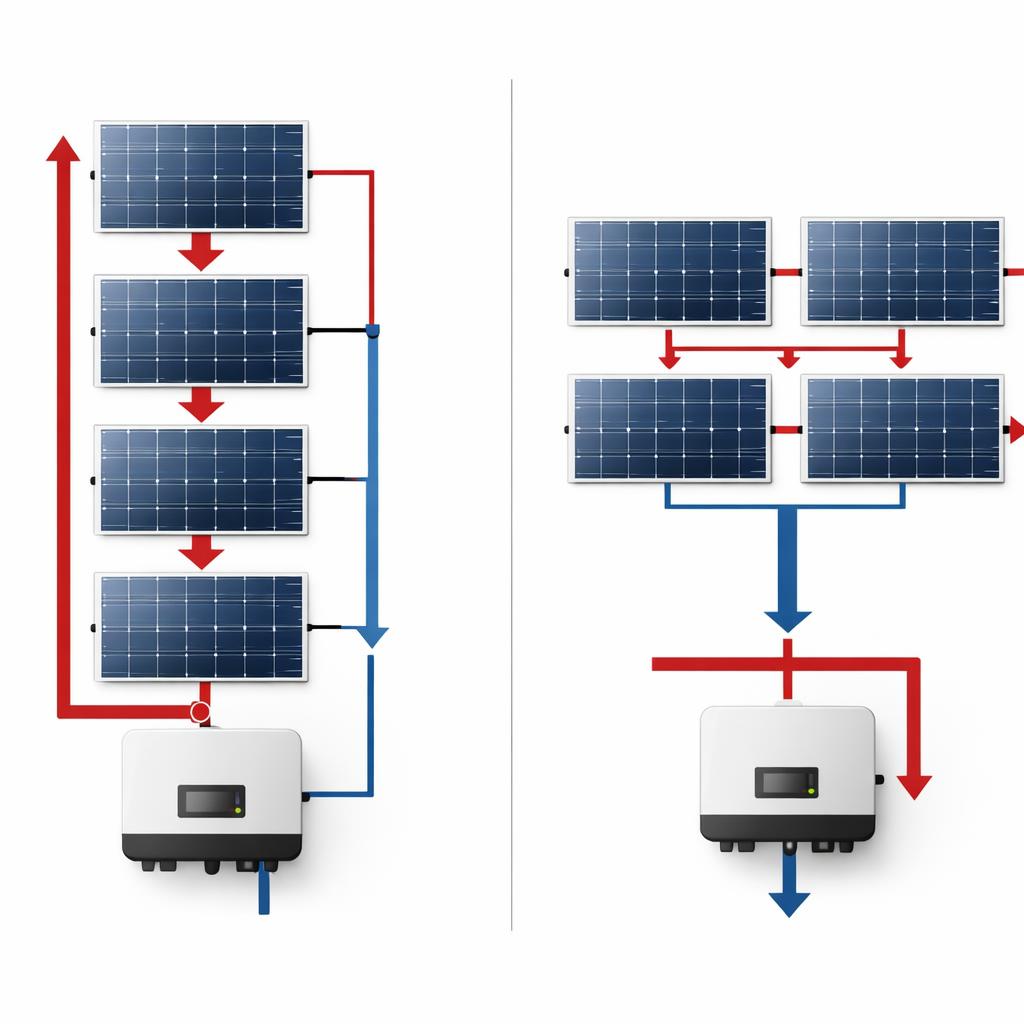
Picture suggestion: Simple comparison drawing of a series circuit and parallel circuit with arrows for voltage and current; place this image right after the introduction.
What is the difference between series and parallel?
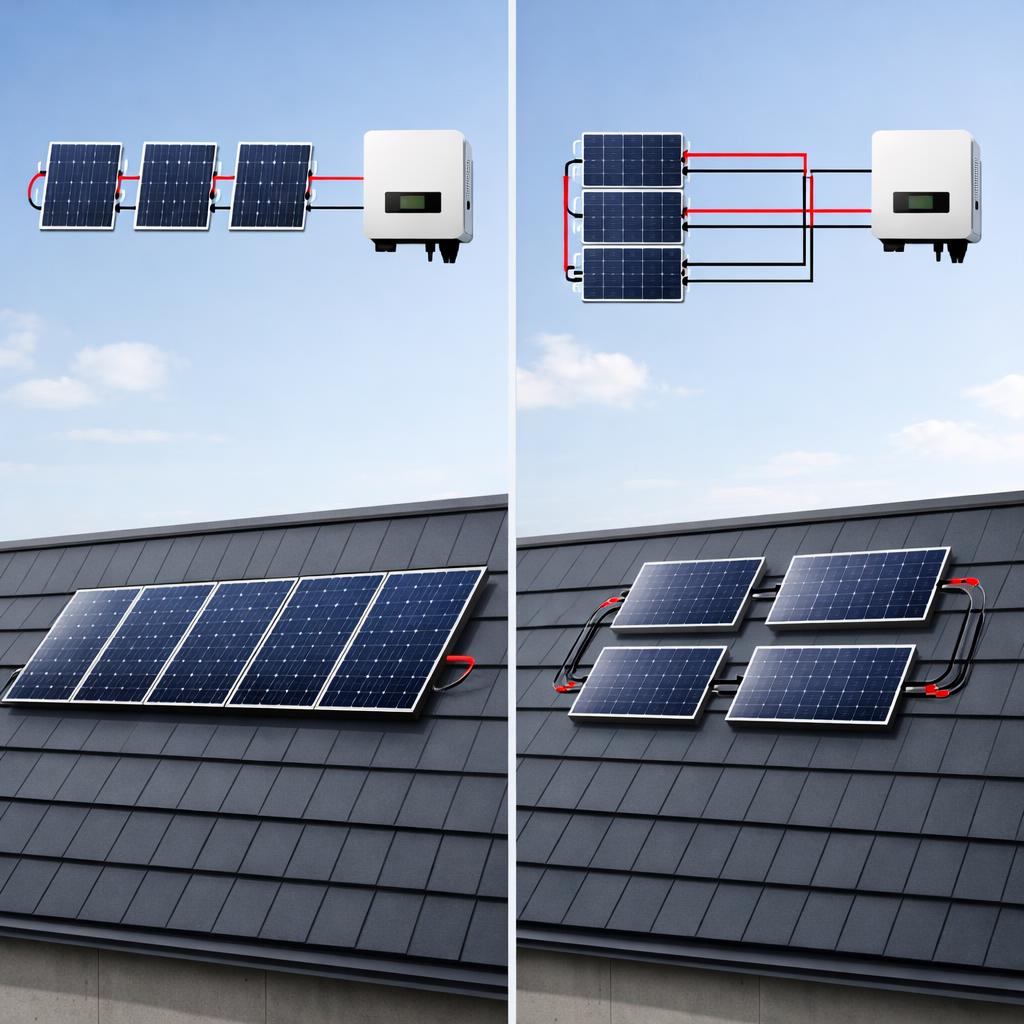
In a series connection, solar panels are connected one after the other. The voltage of each panel then adds up, while the current remains approximately the same as that of one panel. This is often efficient, because a higher voltage can be favorable for transport over cables and fits well with many inverters. In a parallel connection, the plus and minus cables are brought together next to each other. Then the voltage remains approximately the same, but the total current increases. That basic difference determines how the system behaves and which parts are needed.
How voltage and current behave
A simple example makes this clear. Suppose each panel supplies the same voltage and current. The tension builds up in series. In parallel, the current actually accumulates. This is very important for choosing a suitable inverter, because an inverter only works well within a certain range for voltage and current. As a result, the question of choosing which connection for solar panels is not only a matter of expected yield, but also of technical limits, cable thickness and installation design. In practice, series is often applied to standard roofs with similar conditions, while parallel is more likely to come into the picture in more complex situations.
Another practical difference is how sensitive the setup is to deviations between panels. If all panels perform the same, series often works neatly and simply. But as soon as one panel clearly deviates, in some cases this can have a noticeable impact on the rest of the group. That is why it is smart to not only look at the number of panels, but also at their location, shade and mutual differences.
When series is smarter and when parallel is better
Series is usually the most logical choice when all panels have almost the same conditions: same orientation, equal slope, little shading and preferably the same type of panel. Then the string functions as one whole and the installation remains clear. A higher system voltage can also help to limit losses in the cabling. This is therefore a practical and efficient solution for many homes with a simple roof.
Influence of shadow, roof direction and panel differences
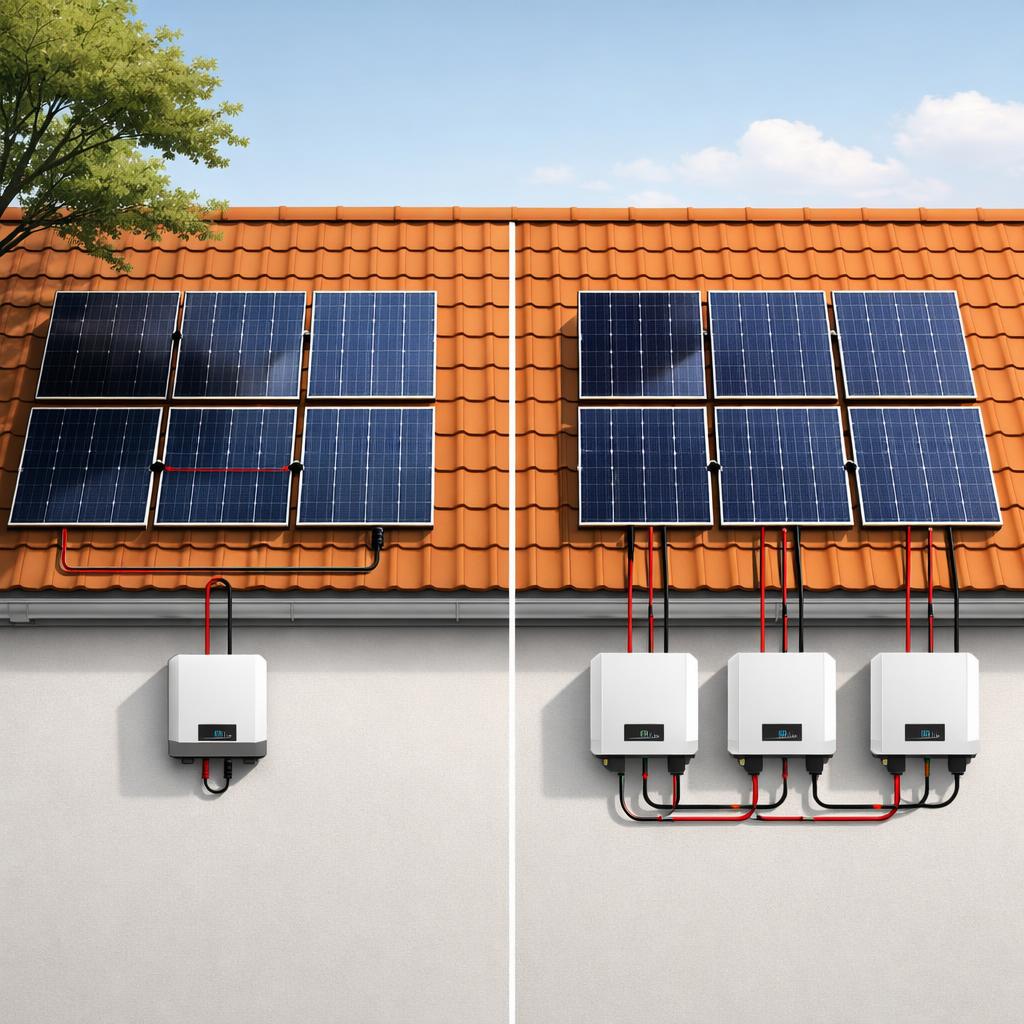
With partial shade, different roof directions or uneven panels, parallel may be more attractive, because a less performing panel affects the rest less directly. That is why many people look for solar panels in parallel for shade. That makes sense, because the shade of a tree, chimney, dormer window or higher roof section can noticeably reduce yield. Also read more about shade and yield from solar panels if your roof is not exposed everywhere. Please note: parallel often requires extra attention to security, cabling and coordination with the rest of the system.
Panel differences also play a role. Consider an extension with newer panels, panels on an extension with a different slope or a roof surface that receives less sun for part of the day. In such situations, parallel can sometimes be more suitable in practice than a pure series connection. However, that does not automatically mean that parallel is always the best choice. It must technically fit the inverter and be calculated correctly.
Image suggestion: Practical roof illustration with partial shade and two possible connections; place this image in the section about shading and panel differences.
What you should pay attention to when it comes to safety, inverter and installation
The choice between series and parallel is not only technical, but also practical and safe. In series, the voltage of the entire string can increase considerably, especially at low outside temperatures. This voltage must remain within the permissible limits of the inverter, cables and other components. In parallel, the voltage remains lower, but the current can increase. This has consequences for cable choice, fuses and heat development. Therefore, each design must be checked against panel data, inverter specifications and the applicable electrical regulations at the installation site.
Anyone who makes their own comparisons would do well to look beyond just the number of panels. Also pay attention to open circuit voltage, operating voltage, maximum current, cable length and possible expansion in the future. This makes it clearer more quickly which design suits a home or small project. A system that seems good today should continue to work reliably on hot and cold days.
If in doubt, it is wise to have a skilled installer do the calculations. The core remains that solar panels in series or parallel is not a casual preference, but a choice that must suit shade, roof layout, safety and the inverter. A good solar power system is not only productive, but also stable, controllable and neatly coordinated in all components.
Conclusion
The best choice for series or parallel solar panels depends on your roof, your panels and the technical preconditions. Series is often efficient and clear if panels are level and hardly get any shadows. Parallel may be a better fit when panels operate under different conditions, such as shading, different directions or small performance differences between panels. The most important thing remains that voltage and current remain within the limits of the inverter and that cabling and protection are designed correctly.
If you want to determine which connection for solar panels makes the most sense, start with the panel specifications. Then look at the shade, roof shape and differences between the panels. Finally, check that all parts fit together properly. This way you make a choice that not only works well now, but also remains reliable in the longer term.
Frequently asked questions
Which is better for solar panels: series or parallel?
That depends on the situation. Series is often better with identical panels without significant shadows and with an inverter that requires a higher string voltage. Parallel may be more beneficial if panels perform differently or if parts of the roof are regularly shaded. Better therefore means: suitable for your panels, roof and inverter.
Do solar panels work better in parallel in shade?
Parallel can often be more beneficial in partial shade, because one weaker panel has less direct influence on the behavior of all other panels. However, that is not a fixed rule. The outcome also depends on the type of panels, the protection used, the inverter and how the shadow moves during the day.
Is the veiliger series in parallel?
No, not automatically. Series usually has a higher voltage, while parallel can produce a higher current. Both therefore require a correct design. Safety depends on correct cables, appropriate protection, correct installation and compliance with local electrical regulations.
Can you combine series and parallel in one system?
Yes, that is possible in some designs. Groups of panels can first be placed in series and then brought together in parallel. Such a design does require extra attention to calculations, components and compatibility with the inverter. It is then that an accurate design is extra important.