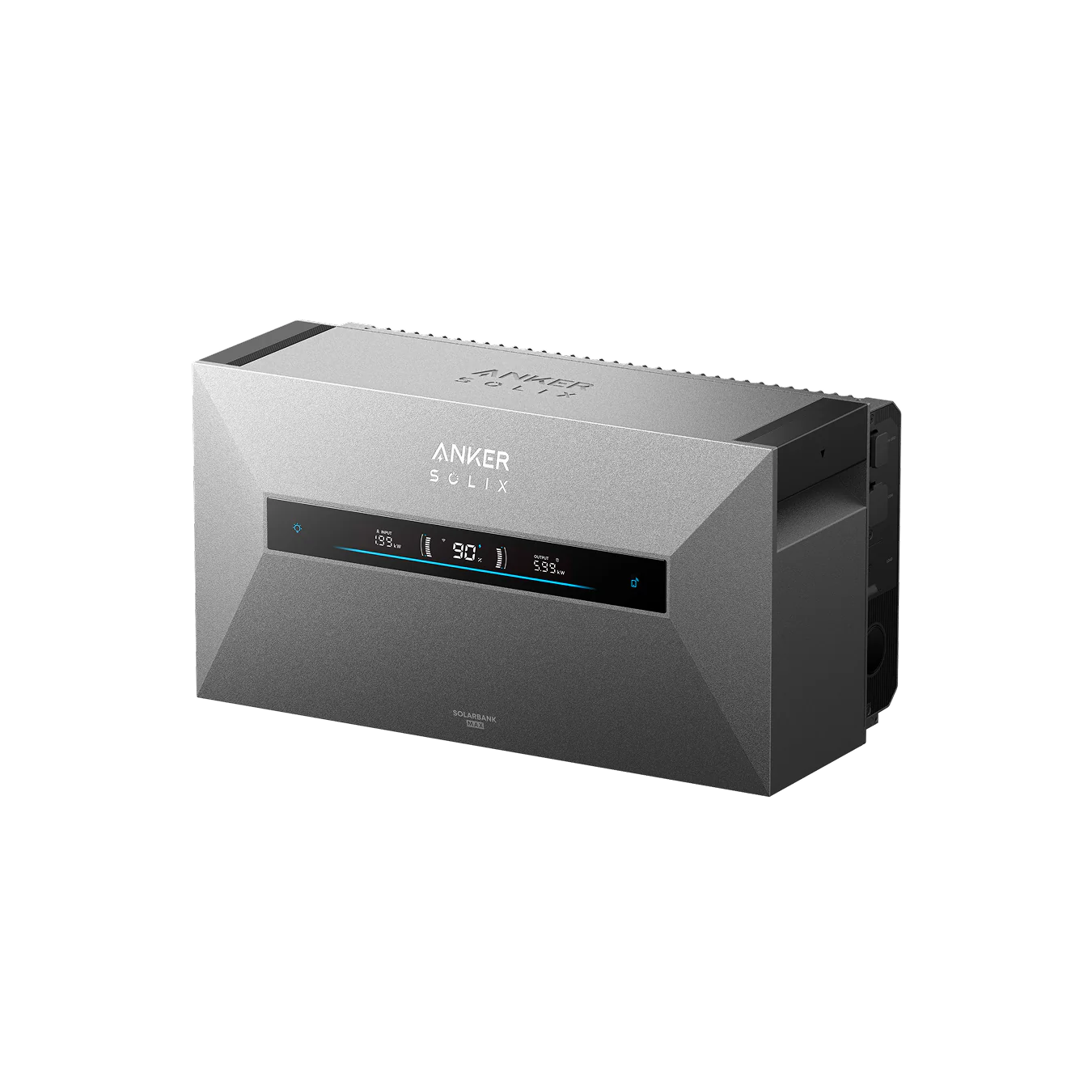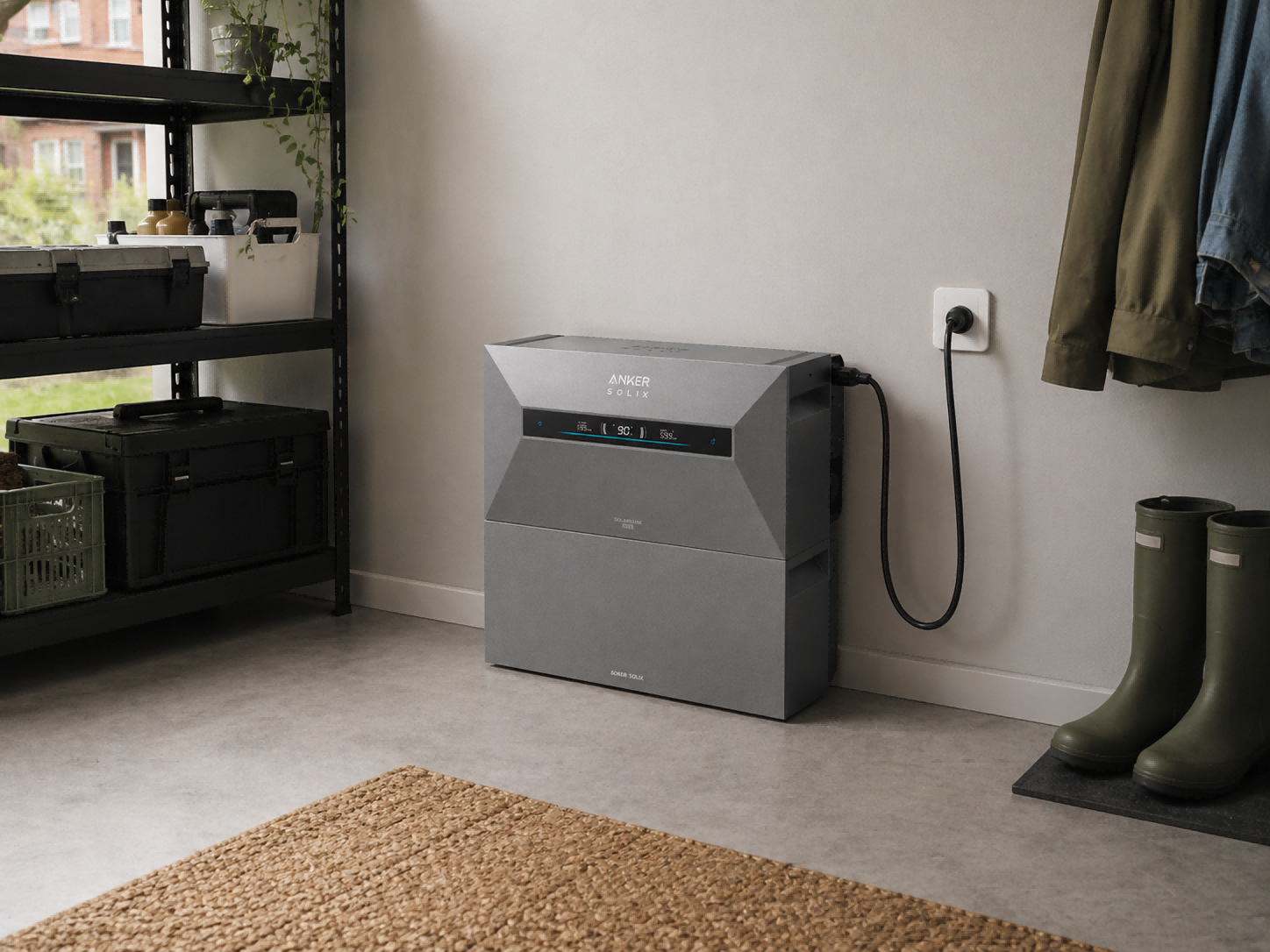
Short answer: Yes, a home battery without installation can work in the Netherlands via an earthed socket in some situations, but only within clear limits for power, group load and local rules. Those who want to start small and scale up later can include Anker SOLIX Solarbank Max AC early in the comparison, because this system supports plug connection and at the same time leaves room for more storage and higher power.
Importantly, “without installation” does not mean “without conditions”. A home battery without installation is especially suitable for households that want to store solar power, partially cover evening consumption or want to charge smarter at varying rates. As soon as you want to use more power, you must check in advance whether the group, connection and any reporting obligation are appropriate.
When does a home battery without installation really work via the socket?
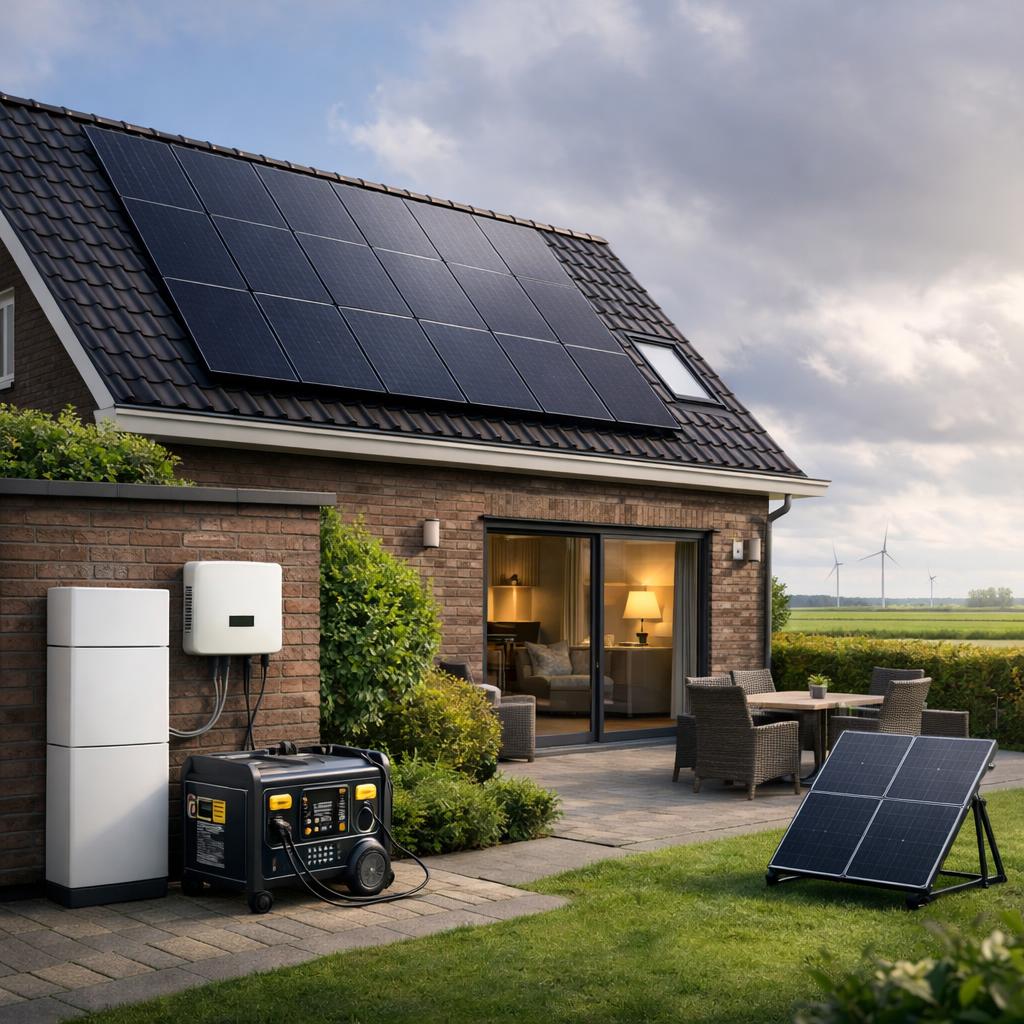
A home battery without installation is usually a plug-in battery that you connect to a permanently earthed socket. That makes this solution attractive for those who want to start energy storage without renovation. Households with solar panels in particular opt for this if they have extra electricity during the day and want to use it later in the evening.
The main nuance is that simply connecting is not the same as unlimited use. With a regular socket, the output power plays a major role. For modest capacities, plug use is often the starting point. For higher powers, additional conditions come into play, such as group control, safe load and sometimes professional assessment. Therefore, do not use such a battery via an extension cord or power strip, but only via a permanently earthed socket that is suitable for the load.
What readers usually mean by a ready-to-plug home battery
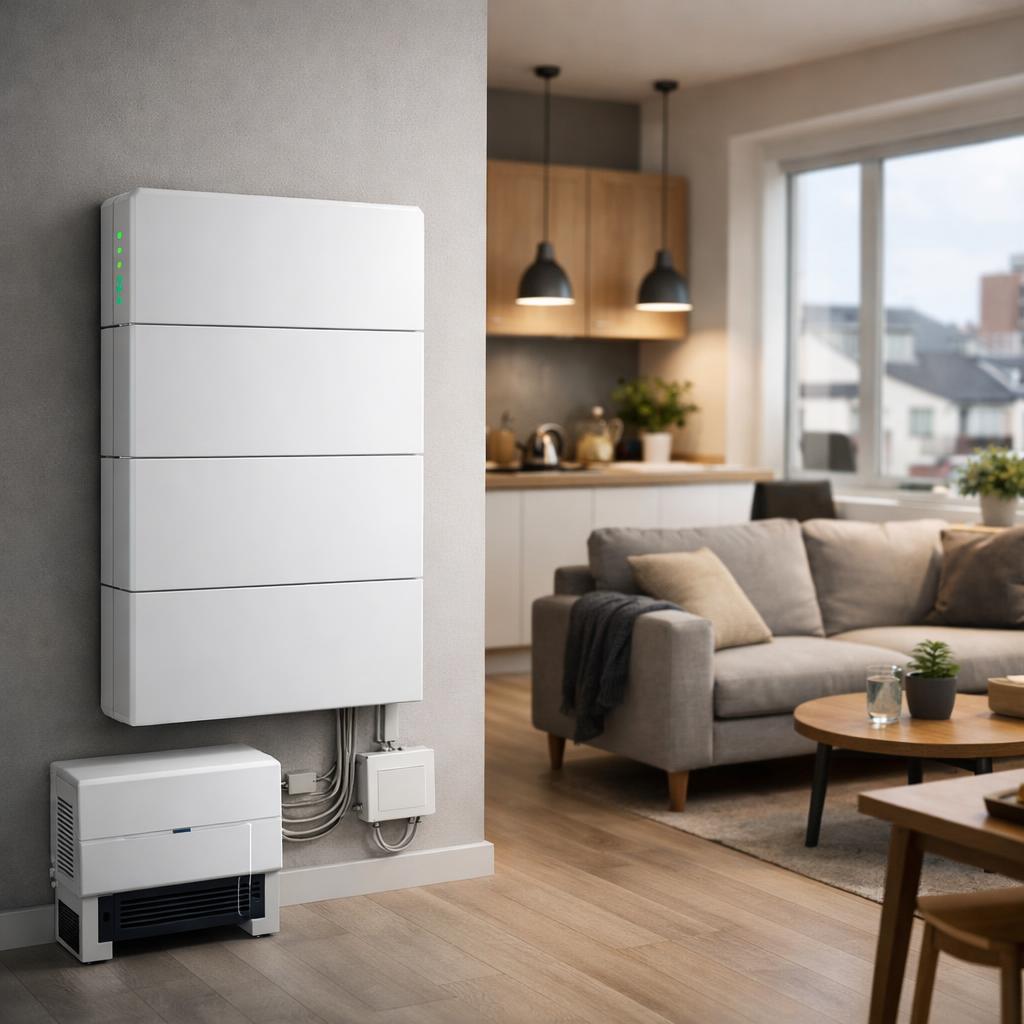
Readers are usually looking for a system that can start without major work, can be monitored via an app or energy meter and can possibly grow later. Then it is not just a matter of whether the plug fits, but also of safety, storage capacity, charging strategy and future use. For many households, a plug-in home battery is mainly intended to cover part of their evening consumption and to use more of their own solar power.
Where the line lies between simple connection and additional conditions
That limit usually lies with the desired power and the method of connection. A lower output power is more suitable for direct use via the socket. If you want to move towards higher powers, a separate group, additional control or a different connection method may be necessary. That is precisely why you should not only look at convenience with a home battery without installation, but also at what you expect from the system later.
When is Anker SOLIX Solarbank Max AC a logical choice?
Anker SOLIX Solarbank Max AC is especially logical if you want to start easily, but do not want to get stuck with a small or difficult to expand solution. The system starts with 7 kWh of storage, which is a useful size for evening and night-time consumption for many households, and is expandable to 42 kWh with one main unit and five batteries. That makes it interesting for people who mainly want to store now, but may need more capacity later.
The connection options also make this model relevant within this topic. Anker SOLIX Solarbank Max AC supports Schuko, Wieland and fixed connection. The modules are stackable and designed for quick installation without complicated cabling between the batteries. At the same time, an important limitation remains: a higher power setting does not mean that unlimited plug use is sensible or permitted. Above approximately 800 W, use, group load and rules require extra attention. For 3500 W, a separate group, professional installation and compliance with local regulations are important.
Suitable for
This model suits households with solar panels, users with varying rates, people who want to cover part of their evening consumption and residents who find emergency power important. The combination of storage, expandability, emergency power function and various connection options makes it widely applicable for those who want to start easily and want to be able to do more later.
Less suitable without extra control
It is less suitable if you want to run at high power for a long time without prior checking. Even if there is a heavy load on an existing group or if the electrical situation is unclear, it is wiser to check first than to connect immediately. The practical question is therefore not only whether it is possible, but whether your group, consumption and home are suitable for it.
Which specifications are most important for this choice?
For a home battery without installation, four points are decisive: usable storage, actual power, lifespan and method of connection. Just paying attention to the word “plug” is too limited. If you mainly want to shift evening consumption, capacity is important. If you also want to support heavier devices or emergency power, power becomes more important. And if you want to use the system for a long time, battery chemistry, charging cycles and warranty count heavily.
- contenteditable="false">Power: up to 3500 W on-grid, 3680 W off-grid and 5000 W total power, depending on the chosen setup.
- Lifespan: LFP cells, 10,000 cycles and 10 year warranty, with a designed useful life of 15 years.
- Protection: IP66 and C5-M, plus active heating down to minus 20 degrees.
- Ease of use: stackable placement, quick commissioning and connection with smart meter or smart plug for better insight.
Energy management is also relevant. The system can adjust charging and discharging based on consumption, weather forecast and changing electricity prices. This is especially interesting if you generate during the day and use in the evening, or if you want to use cheap hours. Possible savings remain dependent on your own situation, such as generation, consumption, rate and settings.
What should you check in advance in the Netherlands?
First check your own situation before deciding whether a plug-in solution is sufficient. Look at your evening consumption, your solar panels, the load on the group and whether you want to use more power later. For many households, starting from a grounded socket is enough to support basic consumption. But anyone who wants to grow to higher powers must take into account a separate group and additional control from the start.
Also pay attention to the limits of the chosen connection method. With Anker SOLIX Solarbank Max AC, 3500 W can be manually activated, but that is an upper limit with clear conditions. In practice, this requires a separate group, professional installation and compliance with local rules and possible registration. That makes the choice clear: if you just want to start easily, then you first look at safe plug use. If you also want more storage, emergency power, higher discharge or future expansion, it is wise to immediately compare a system that supports both routes.
Sources and control points
- Anker SOLIX — Anker SOLIX Solarbank Max AC — https://www.ankersolix.com/nl/products/a17e2
- Central government — Energy at home — https://www.rijksoverheid.nl/onderwerpen/energie-thuis
- Authority for Consumers and Market — Energy — https://www.acm.nl/nl/onderwerpen/energie
- Netbeheer Nederland — Electricity and the energy grid — https://www.netbeheernederland.nl/
- Netherlands Food and Consumer Product Safety Authority — Safe use of electrical products — https://www.nvwa.nl/onderwerpen/elektreeks-artikelen
- Smart home guide — The best home battery with plug — https://www.smarthomegids.nl/de-beste-thuisbatteries-met-stekker/
Always check three things side by side with this topic: the product specifications, the load of your group and the applicable grid and safety rules in your situation. General information helps with comparison, but does not replace checking your own installation.
Frequently asked questions
Can a home battery really be plugged into any socket without installation?
No, not automatically. In practice, this concerns a permanently earthed socket that is suitable for the load. An extension cord or power strip is not intended for this use. Moreover, the permitted use continues to depend on power, group tax and local rules.
Is a home battery without installation enough for my evening consumption?
That depends on your consumption and the capacity of the system. For basic consumption in the evening, a plug-in solution can be a good fit, especially if you have solar power left over during the day. If you want to use several heavy appliances at the same time, not only capacity but also power and connection method are decisive.
When is Anker SOLIX Solarbank Max AC a logical option?
This model makes sense if you want to start without major renovations, but want to be able to include expandability, emergency power and higher powers in your choice. Extra control is necessary if you want to work at high power for a long time. Therefore, first look at your evening consumption, group load, solar generation and whether you want to arrange a separate group or professional installation later.
What should I compare first before choosing?
Start with four points: your evening consumption, the yield of your solar panels, the load on the existing group and your desire to expand later. Then compare storage, power, connection method and safety conditions. This way you can quickly see whether simple plug use is sufficient or whether a heavier design suits you better.
Conclusion
A home battery without installation can therefore be a practical choice, but only if the usage situation, power level and connection conditions are well matched. For easy starting via an earthed socket, modest power is mainly relevant. As soon as you want more than basic use, such as higher discharge, extended emergency power or growth to a larger system, additional control and sometimes professional installation are necessary.
That is precisely why Anker SOLIX Solarbank Max AC is a useful option to compare early: the system supports an accessible start, but also offers 7 kWh basic storage, expansion to 42 kWh and multiple connection methods for later. Now compare your evening consumption, group load, solar generation, desired expandability and permitted connection method with the product specifications of Anker SOLIX Solarbank Max AC. Then you can quickly see whether plug use is sufficient for your situation or whether a heavier design with ext