Short answer: It is usually best to place a home battery in a garage, storage room or technical room that is dry, easily accessible and reasonably stable in temperature. Where exactly do you place a home battery? That depends on your home, the product specifications, the available space and the rules that apply locally. In practice, a separate technical room is often more suitable than a living space, because maintenance, safety and accessibility are easier to organize there. Those who first want to understand the basics can also read how a home battery works and what role such a system can play in the home.
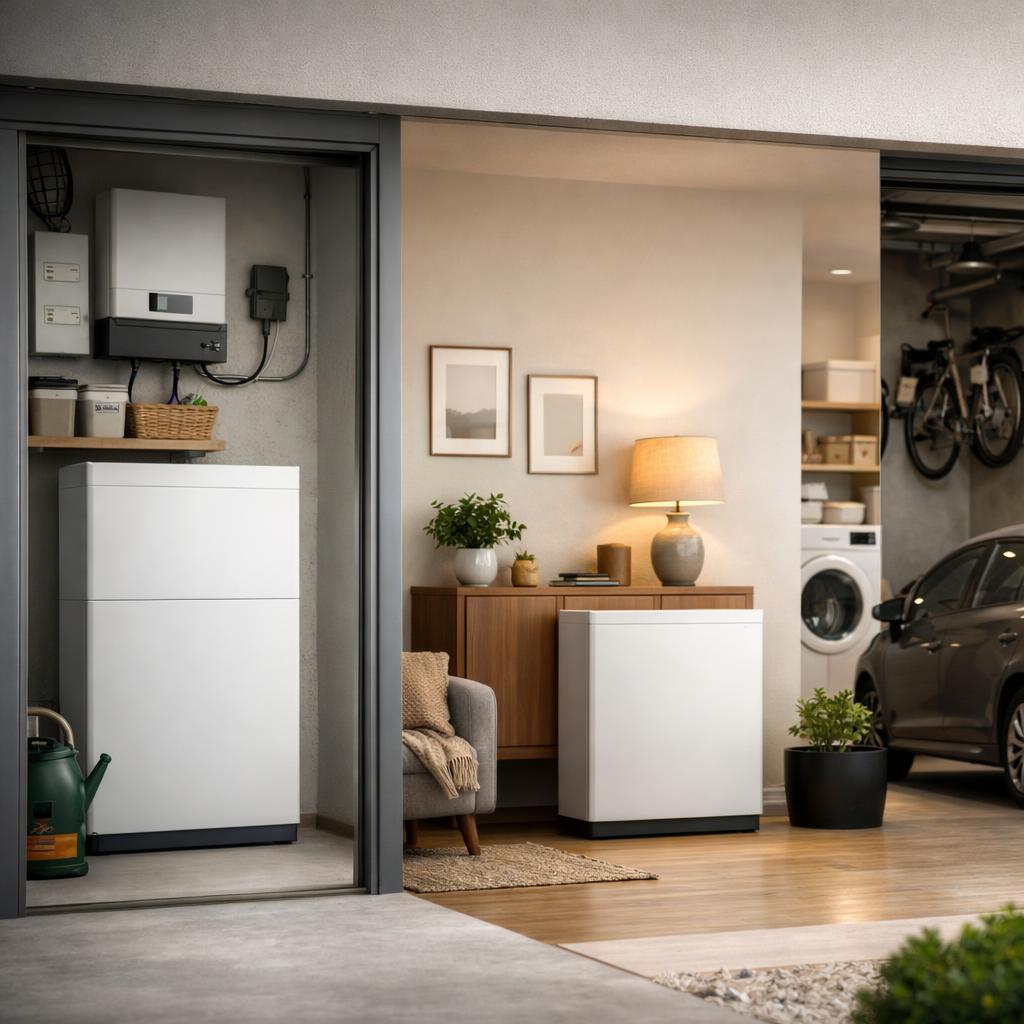
Placing a home battery in the garage is often a logical choice, but not automatically the best one. The right location limits moisture, heat, direct sunlight and obstacles around the installation. At the same time, an installer must be able to work safely and the battery must remain accessible for inspection or service. Therefore, do not only look at a free wall or floor, but also at ventilation, walking space, strength of the surface and the distance to other installations. This way you prevent a place that seems useful now from turning out to be less suitable later.
Short answer: usually in the garage, storage room or technical room
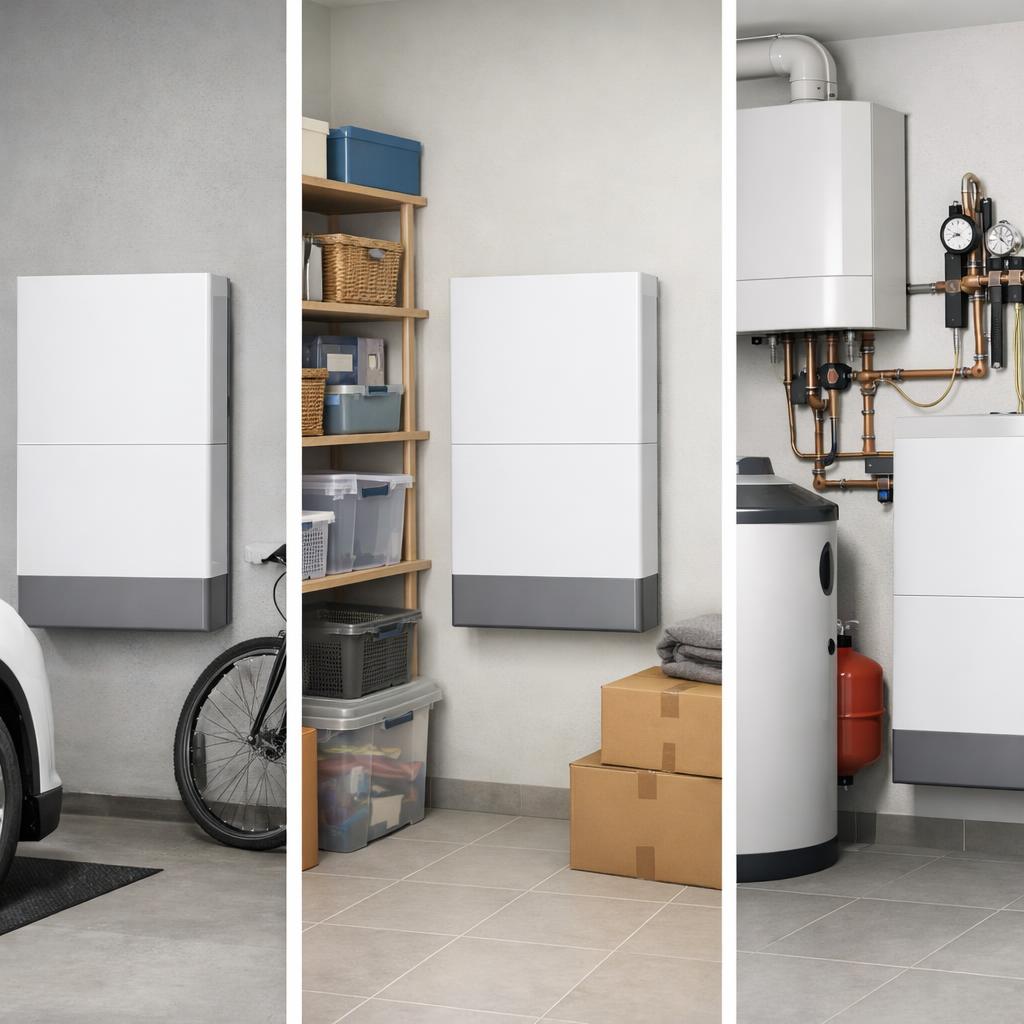
For many homes, a garage, storage room or technical room are the most practical options. These areas are often located near the meter cupboard or other technical facilities, making it easier to lay out cables and connections. They are also usually not rooms where you stay for a long time every day, which is useful if maintenance is required or if an installer needs to be able to access the system later.
However, not every garage or storage room is immediately suitable. A damp room with condensation, a place that gets very hot in the summer or a full storage space without a workspace can still lose weight. It is therefore better to look not only at the name of the room, but at the conditions in that room. The best place for a home battery is usually technical, dry and easily accessible, with a temperature that does not fluctuate sharply all the time.
When placing indoors makes sense
Installing it indoors makes particular sense if you have a sheltered area where the battery won't be exposed to rain, dirt, or direct sunlight. This helps keep the system operating within its intended operating conditions. Maintenance is also often easier indoors, because connections, cabling and housing are more accessible without the influence of weather or seasons.
In addition, indoor installation is often beneficial if you want to keep the cable route short or if the meter cupboard and inverter are already in the same zone. Think of a technical room, a locked storage room or a neat garage. Less logical are living spaces such as a living room or bedroom, because technology is often less practical in daily use. The choice remains dependent on the system itself: always follow the product specifications and have the intended location assessed in advance.
Which place is suitable for safety, temperature and maintenance
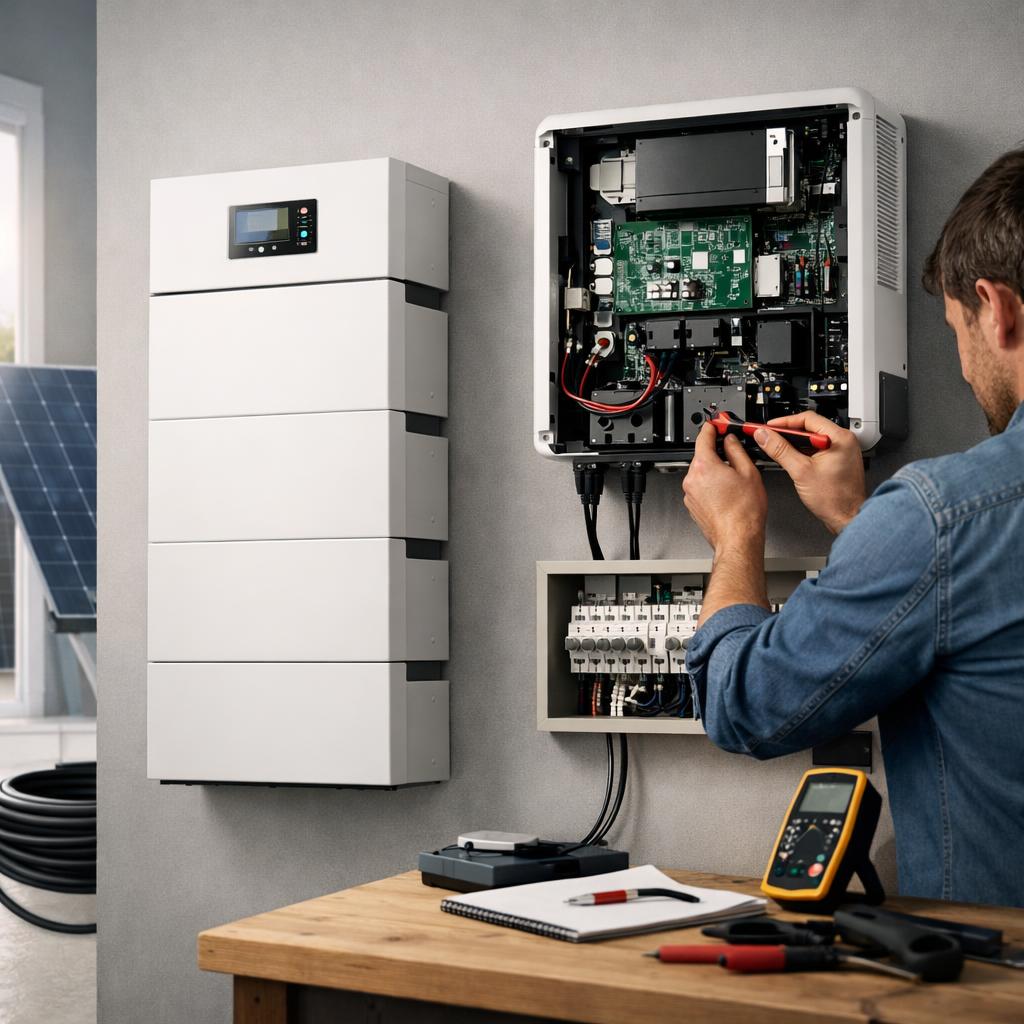
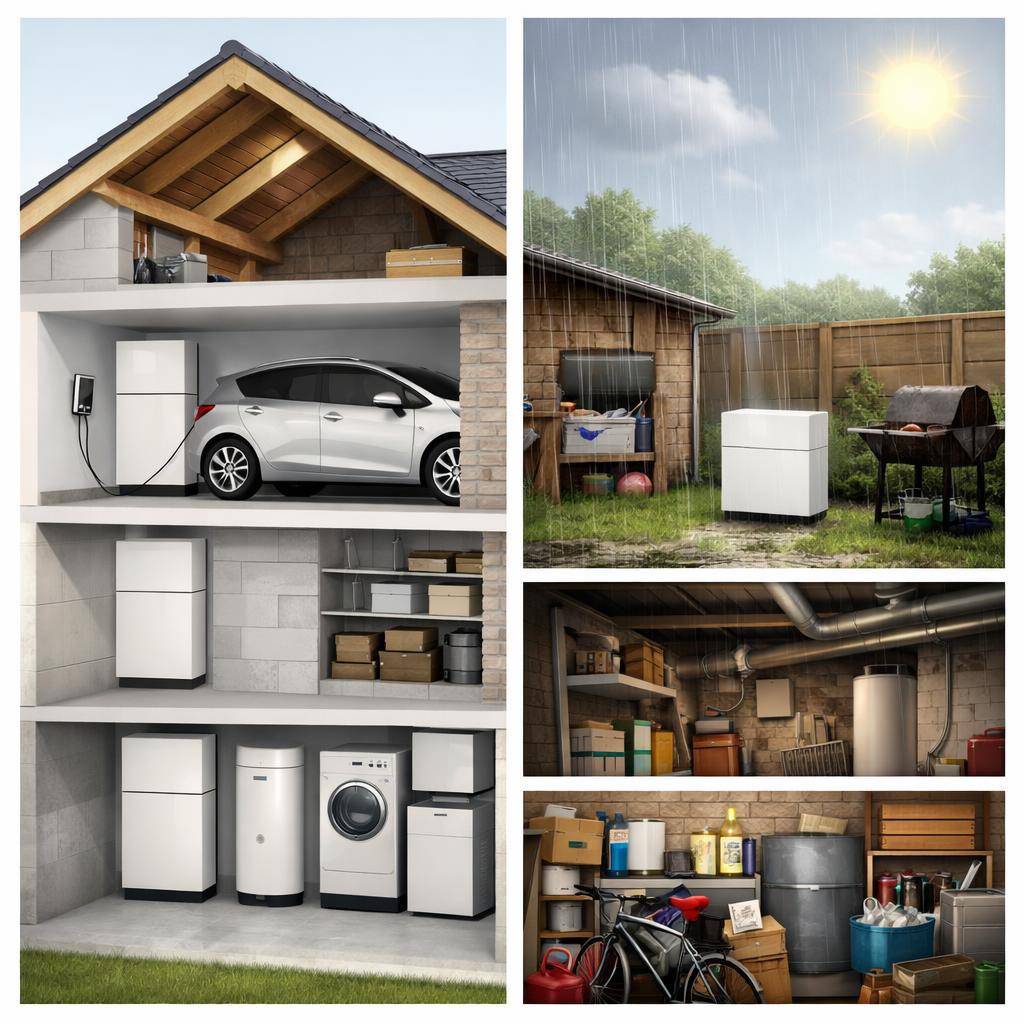
When asking the question of where to safely place a home battery, three points count: safety, temperature and maintenance. Preferably choose a dry place with sufficient air circulation, without direct contact with heat sources and without the risk of flooding. The battery must remain accessible for inspection, service and possible replacement. An installer must be able to work safely and cables must be routed logically and neatly.
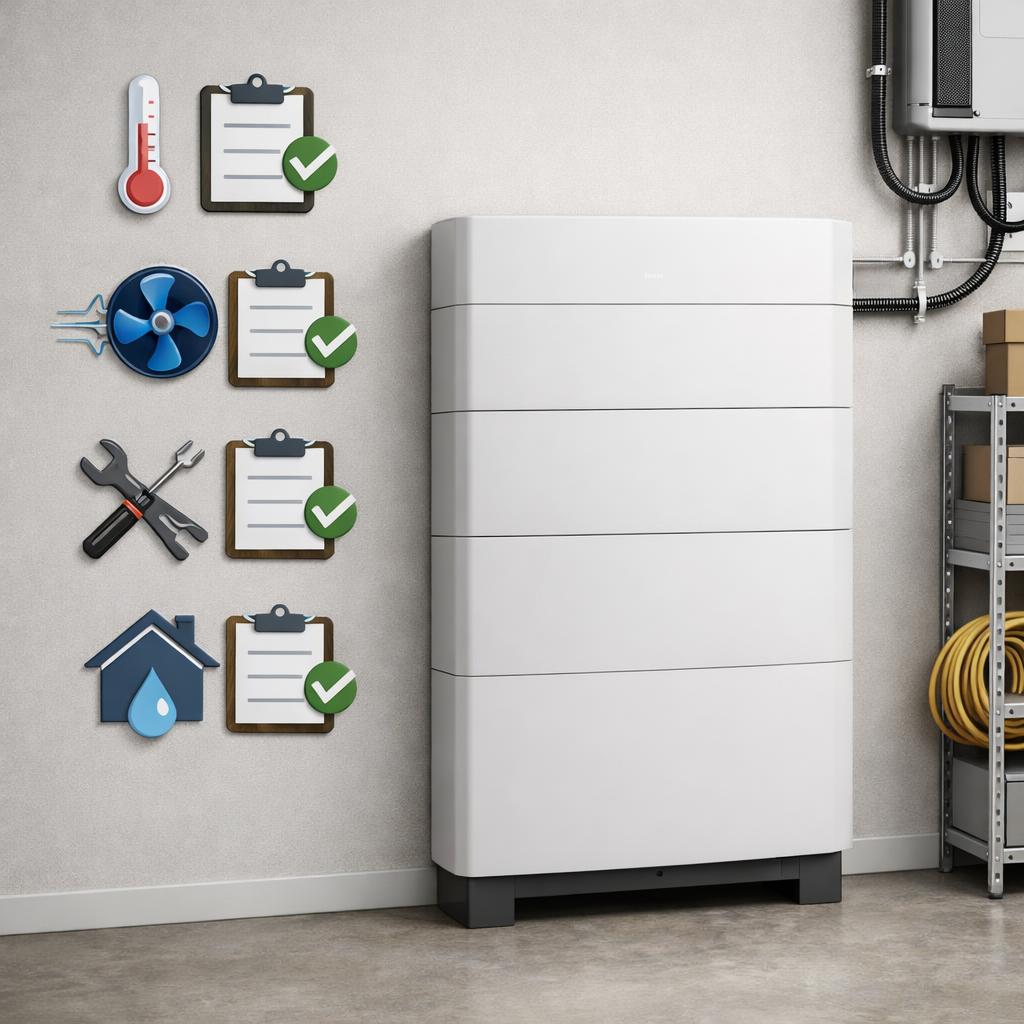
A simple check helps with the choice. Make sure there is a stable temperature, a dry installation, sufficient free space around the system, a sturdy wall or suitable floor and a place where no rubbish or flammable items are placed close to it. Also ask what conditions apply to the distance to other installations, because this varies per model and situation. If you are still unsure about different formats or systems, you can first look at what you should pay attention to in terms of capacity and costs, so that placement and suitability are better matched.
Rooms that are often less suitable
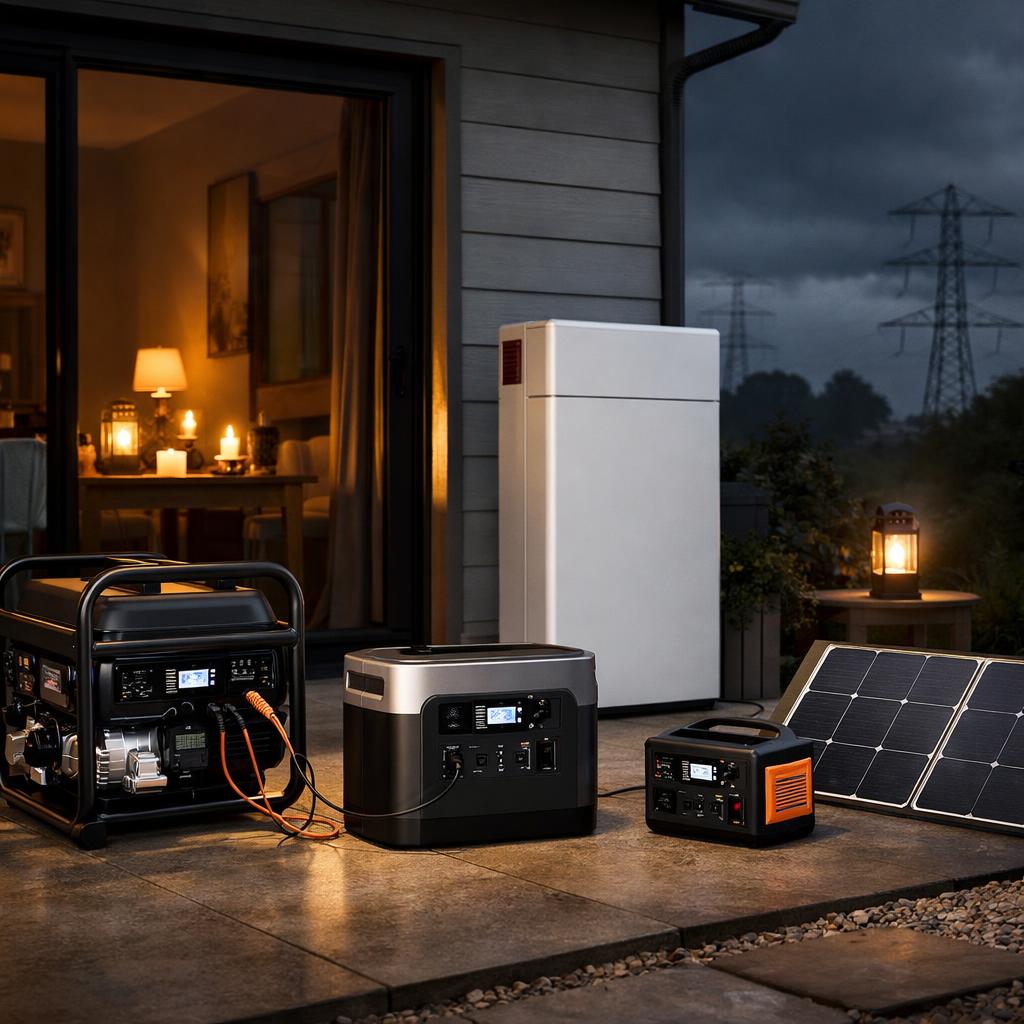
Some spaces seem useful, but are less suitable in practice. Think of damp basements without proper drying, attics that heat up strongly during warm periods or narrow storage cupboards where maintenance is difficult. Places with direct sunlight, risk of leakage or large temperature fluctuations are also often less ideal. If you want to know where to place a home battery if indoors is not a good option, outdoor placement is sometimes an option, but only when the system and the chosen setup are really intended for that.
Living spaces are usually not a first choice. In a kitchen, bedroom or hallway, the battery can quickly become impractical due to heat, limited work space or daily use of the space. Outdoor placement is sometimes possible, but that is a specific solution rather than standard advice. What usually fits well is a protected technical room. What you cannot simply assume is that every free space is actually allowed or sensible without checking the product specifications.
Conclusion: choose the place that is safe, dry and easily accessible
Where is the best place to place a home battery? In most homes this is a garage, storage room or technical room that is dry, remains reasonably stable in temperature and is sufficiently accessible for maintenance. The gist is simple: don't choose a place just because there is still space left, but because that place is technically suitable and practically usable. Placing a home battery in the garage is often a good choice, as long as that garage is not too humid, too hot or too crowded. Outdoor installation is sometimes also possible, but only if the chosen system and the installation conditions clearly support this.
Therefore, first compare the real conditions in your home: dryness, temperature, ventilation, available wall or floor space, accessibility and the distance to the meter cupboard or other technical components. That is exactly why it is smart to compare different systems or models when you are still exploring. Not every system fits equally well with a compact storage room, a garage with varying temperatures or an outdoor installation. So before you choose, check which capacity suits your consumption, whether expansion is possible later, what installation requirements apply, and whether the official product specifications match your space and installation plan.
Frequently asked questions
What distance should a home battery maintain from other installations?
There is no fixed distance that is correct in every situation. The space required depends on the system chosen, the heat output, the cable route, the housing and the regulations followed during installation. Therefore, always look at the product specifications and have the location assessed in advance by an installer.
Can a home battery be placed outside?
Yes, but only if the system and setup are expressly suitable for this. Protection against rain, sun, frost, heat and damage is important. Outdoor installation is therefore possible, but not automatically the best or easiest choice for every home.
Is a basement a good place for a home battery?
This is possible, but only if the basement remains dry, is easily accessible and has no increased risk of moisture or flooding. A cool, dry cellar can be beneficial, while a damp cellar is less suitable. So the actual conditions are more important than just the name of the room.
Can a home battery be kept in a utility room or storage cupboard?
Sometimes yes, as long as there is sufficient free space, ventilation and safe accessibility. A small or full storage cupboard is usually impractical for maintenance. A utility room may be suitable if it is dry, does not get too hot and the battery does not hinder the daily use of the space.