Which plug-in home battery suits a dynamic energy contract?
Short answer: With a dynamic energy contract, a plug-in home battery is especially suitable if it can automatically charge during cheap hours and discharge when electricity is more expensive. For households looking for more storage, expandability and smart planning, the Anker SOLIX Solarbank Max AC is a logical option to compare early on.
The best choice depends on your evening consumption, solar panels, available group and whether your home is suitable for higher powers. Especially with a plug-in home battery, practical points count heavily: insight via a P1 meter, safe installation, local registration rules and a capacity that matches what you really use after sunset.
When is a plug-in home battery a good fit for dynamic electricity prices?
A plug-in home battery is especially interesting if you can shift power consumption. This often works well for households with a dynamic energy contract, because hourly prices can vary considerably. The battery then preferably charges during cheaper hours or with its own solar power, and supplies power to your home later when the price is higher or when your consumption increases in the evening.
In practice, this usually best suits three situations: you have a lot of evening consumption, you regularly generate solar power during the day and the differences between cheap and more expensive hours are large enough to make storage useful. It is often less appropriate for very low power consumption, limited price differences or a home where it is still unclear whether group, placement and local rules allow a higher power level.
That is why the choice is not just about purchase price. What is more important is whether the battery can control hourly prices, consumption profile and solar generation. That makes a big difference between a system that seems mainly useful and a system that is actually useful in your home.
What technical requirements must a plug-in home battery meet?
Important checkpoints for capacity, power and insight
With a plug-in home battery for a dynamic energy contract, three points are decisive: usable capacity, charging and discharging capacity and insight into the actual consumption of your household. The capacity determines how much cheap or self-generated electricity you can store for later use. For many Dutch households, a small battery runs out quickly if cooking, washing or running multiple appliances at the same time in the evening.
The power must also match your use. A battery with insufficient power can store energy, but absorbs peaks in consumption less well. Insight via a P1 meter helps to better coordinate charging and discharging with what is happening in the house. This is especially useful with dynamic prices, because the advantage only arises when the battery responds at the right times.
In addition, pay close attention to the installation conditions. Power levels above 800 W may require additional control of the group, a separate circuit, professional installation and compliance with local regulations. That is not a detail, but an important point for safety and suitability.
- The capacity must match your evening and night consumption.
- The power must match the simultaneous use of devices.
- Insight via a P1 meter helps to charge and discharge smarter.
- Above 800 W, additional installation requirements may apply.
Why Anker Want to compare SOLIX Solarbank Max AC early in this scenario?
Suitable for larger storage needs, less suitable for small consumption
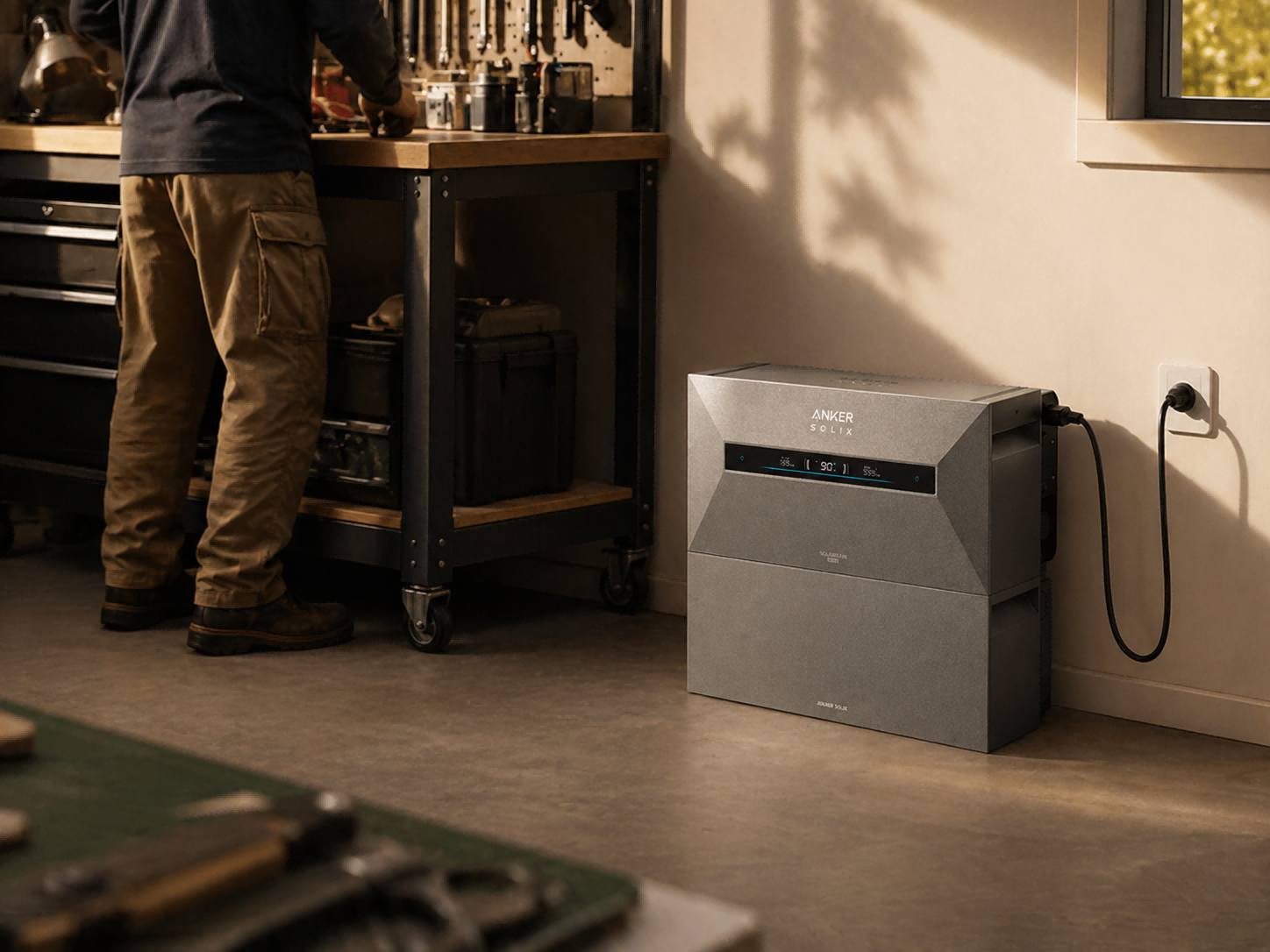
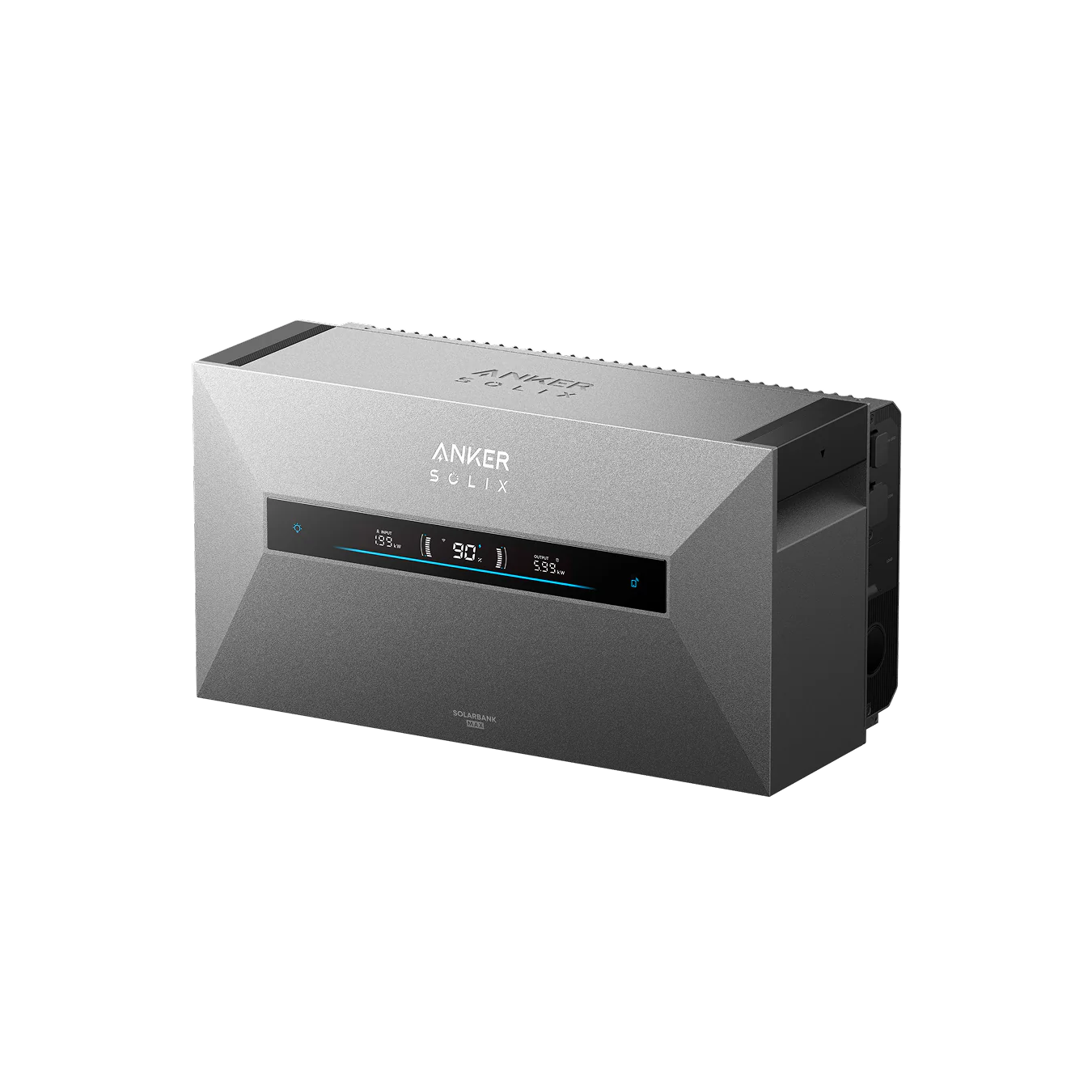
The Anker SOLIX Solarbank Max AC is relevant in this topic because the system starts at 7 kWh and can be expanded up to 42 kWh. For many households, this starting capacity is large enough to accommodate a significant part of evening and night consumption. This makes the model especially interesting if you are not looking for just a small entry point, but for a solution that can also grow later.
That is precisely why this model is worth comparing early. For a household with solar panels, clear evening consumption and a desire to scale up later, a larger initial storage may be more practical than a small battery that is quickly full or empty every day. For households with very low consumption or limited space, such a system is less obvious and additional control is required regarding size, installation and actual added value.
Practical points for dynamic loading and expansion
For dynamic rates, energy planning is especially important. The system can create a daily schedule based on consumption history, weather and dynamic electricity prices. In combination with a P1 meter and smart plugs, you get a better view of the entire house. This makes it easier to use cheap hours and use stored power later at a more logical time.
The various placement options and the stackable structure are also practical. According to the product specifications, the system starts at 7 kWh, is expandable to 42 kWh and supports up to 3500 W in grid-tied mode, 3680 W off-grid and a total power of up to 5000 W. Furthermore, the manufacturer mentions LFP cells, 10000 cycles and a 10-year warranty. These are relevant points for households that not only look at price, but also at lifespan, flexibility and future use.
The nuance remains important: a higher power level is not immediately suitable for every home. Checking the group, installation, installation location and local regulations remains necessary before you can see such a system as a suitable choice.
- Basic capacity of 7 kWh for households with serious evening consumption.
- Expandable to 42 kWh for later growth.
- Suitable for early comparison if you want more than a small entry-level storage.
- Additional control needed if you want higher power in your home
How do you assess efficiency, safety and installation conditions?
The efficiency of a plug-in home battery with a dynamic energy contract remains dependent on your situation. Important variables are your consumption profile, the spread between cheap and expensive hours, charging and discharging losses, solar panels and the question of whether self-consumption is more attractive than supplying. A battery is therefore not automatically profitable just because you have a dynamic contract.
Safety and installation are just as important. Check where the battery will be placed, whether that location is dry and suitable and whether your electrical installation matches the desired power. For higher powers, a separate group, professional control and sometimes additional registration may be required. You need to be clear about this in advance, so that you not only look at storage, but also at what is technically justified.
Reassuring features have also been mentioned for the Anker SOLIX Solarbank Max AC, such as LFP cells, protection against dust and water, heating at low temperatures and switching to emergency power in about 10 milliseconds. Such points make a product more interesting, but never replace checking your own home and installation. The best consideration therefore combines price, surcharge, group tax, regulatory space and possible expansion in the longer term.
Sources and Control Points
Use these resources to check your situation, technical preconditions and economic feasibility before choosing a plug-in home battery.
- contenteditable="false">Consumentenbond, Home Battery, https://www.consumentenbond.nl/binaries/content/assets/cbhippowebsite/gidsen/consumentengids/2025/nummer-5---mei/202505p16-thuis Battery-p.pdf
- Central government, Saldering scheme for solar panels will end in 2027, https://www.rijksoverheid.nl/actueel/nieuws/2024/12/17/eerste-kamer-stemt-in-met-afbouw-salderingsregeling-zonnepanelen
- Anker SOLIX, Solarbank Max AC, https://www.ankersolix.com/nl/products/a17e2
Separately check your evening consumption, differences between hourly prices, presence of solar panels, desired power level, available group, installation location and any registration rules of the grid operator or local installation standards.
Frequently asked questions
When does a plug-in home battery make sense for a dynamic energy contract?
This usually makes sense if you can regularly use cheap hours, later use more in more expensive hours and see sufficient difference between low and high hourly prices. Solar panels and clear evening consumption often make it extra interesting. With very low consumption or small price differences, the effect is usually more limited.
How much capacity do I need for a plug-in home battery?
That mainly depends on your evening and night consumption. Don't just look at your annual consumption, but especially at the number of kilowatt hours you need after sunset. A battery that is too small will quickly be full or empty, meaning you will benefit less from dynamic prices or your own solar power.
Can I just use a plug-in home battery via the wall socket?
Not always without extra control. At lower powers the threshold is often smaller, but above 800 W a separate group, professional installation, control of the home installation and compliance with local regulations may be required. Therefore, always check the product conditions and what is technically acceptable in your home.
When is Anker SOLIX Solarbank Max AC a logical option and when should I check extra?
This model is especially logical if you have a dynamic contract, want to accommodate serious evening consumption, have solar panels or want to expand later from 7 kWh. Additional control is necessary if your consumption is low, your home has limited installation space or you want to use higher powers. First look at the group, installation location, desired power level and whether professional installation or registration is required.
Anker SOLIX Solarbank Max AC
Product description
Conclusion
The right plug-in home battery for a dynamic energy contract is usually not the battery with just the lowest entry price, but the solution that suits your consumption, hourly prices, solar panels and installation conditions. Automatic charging during cheap hours, discharging during more expensive hours and good insight into your household consumption are important factors. Safety, group loading and rules above 800 W must also be taken into account at an early stage.
For households that want to combine ample starting capacity, later expansion and smart planning, the Anker SOLIX Solarbank Max AC is therefore a serious option to compare early. Now check your evening consumption, differences between cheap and expensive hours, available group, installation space, desired power level and official product specifications on the Anker SOLIX Solarbank Max AC product page. This way you can see more quickly whether this plug-in home battery really fits in your home.