short answer: A home battery socket is especially suitable if safety, group load, power, placement and local rules are correct. For households that want to include storage for the evening, smart control and later expansion in their choice, the Anker SOLIX Solarbank Max AC is a logical solution to compare early.
The best choice does not only depend on capacity in kWh. Especially in the case of a home battery socket, the actual power, the suitability of a grounded socket or separate group, and whether registration or additional checks are required are also important. Therefore, always look at product specifications, your consumption and the situation in your home at the same time.
Which points determine whether a wall socket fits home batteries safely?
A home battery socket only fits well if the electrical installation is suitable for it. Start with the socket itself: use a grounded, fixed wall socket and avoid extension cords, power strips, reels and adapter plugs. This reduces the risk of heating and unsafe loads. Then look at the group to which the battery is connected. If appliances such as a washing machine, dryer, oven or electric heater are already running in the same group, this requires extra attention.
Placement is just as important as the connection. Place the battery in a dry, stable and well-ventilated place. Avoid direct sunlight, flammable materials and escape routes. A battery in a room that is too hot, humid or cramped can be less safe and less practical, even if the product itself has protections.
In addition, always distinguish between capacity and power. Capacity in kWh says how much energy you can store. Power in W or kW determines how quickly the battery can charge and discharge. The second point in particular determines whether a home installation is suitable. A larger battery is not automatically better if the group, cabling or connection method does not fit properly.
- grounded wall socket, free ventilation and clear group division.
- Do not: connect via extension cord, power strip or to a heavily loaded group.
- First check: maximum power, connection method and possible reporting obligation.
When is a home battery socket suitable and when not?
Suitable for solar panels and conscious control
A wall socket home battery is especially interesting if you have solar power left over during the day and want to use it later in the day. Storage can also be useful with an electricity contract with varying prices, because you can then charge at favorable times and discharge when electricity is more expensive or your own consumption increases. This type of system can therefore be attractive for households that want to start small and perhaps expand later.
The greatest added value usually arises when the battery can work together intelligently with an energy meter, app or arrow one connection. Then charging and discharging will be more in line with your actual consumption. Without this control, the battery is more likely to operate at less favorable times, which reduces the benefit.
Less suitable for unclear installation or structurally high loads
A home battery socket is less suitable if the electrical installation is old, the group division is unclear or the same group is already heavily loaded. Even if you want to use a lot of power immediately without a separate group or extra control, caution is necessary. In such situations, this is not an obvious choice, but a solution that must first be tested technically and practically.
The core is therefore simple: suitable if your home, usage profile and rules match each other; less suitable if one of those three remains uncertain. Savings and ease of use also differ per household, because evening consumption, solar power, electricity price and charging strategy vary widely.
- Often suitable: for solar panels, evening consumption and conscious management of electricity prices.
- Often less suitable: for unclear distribution box or heavy combination load on one group.
- Practical sequence: first assess installation and consumption, then choose capacity.
- Important nuance: return and savings are always situation-specific.
Why Anker SOLIX Solarbank Max AC fits into this consideration
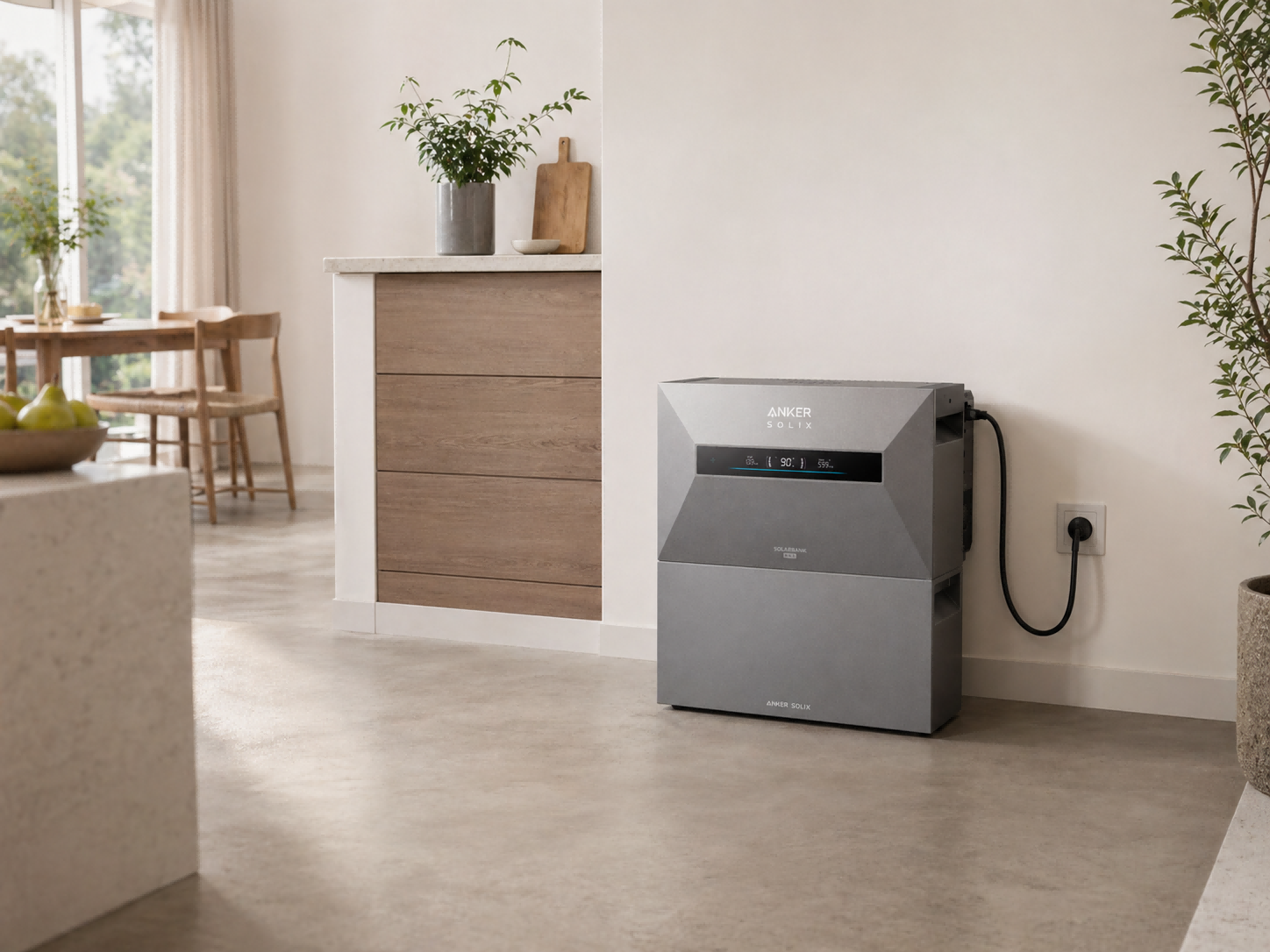
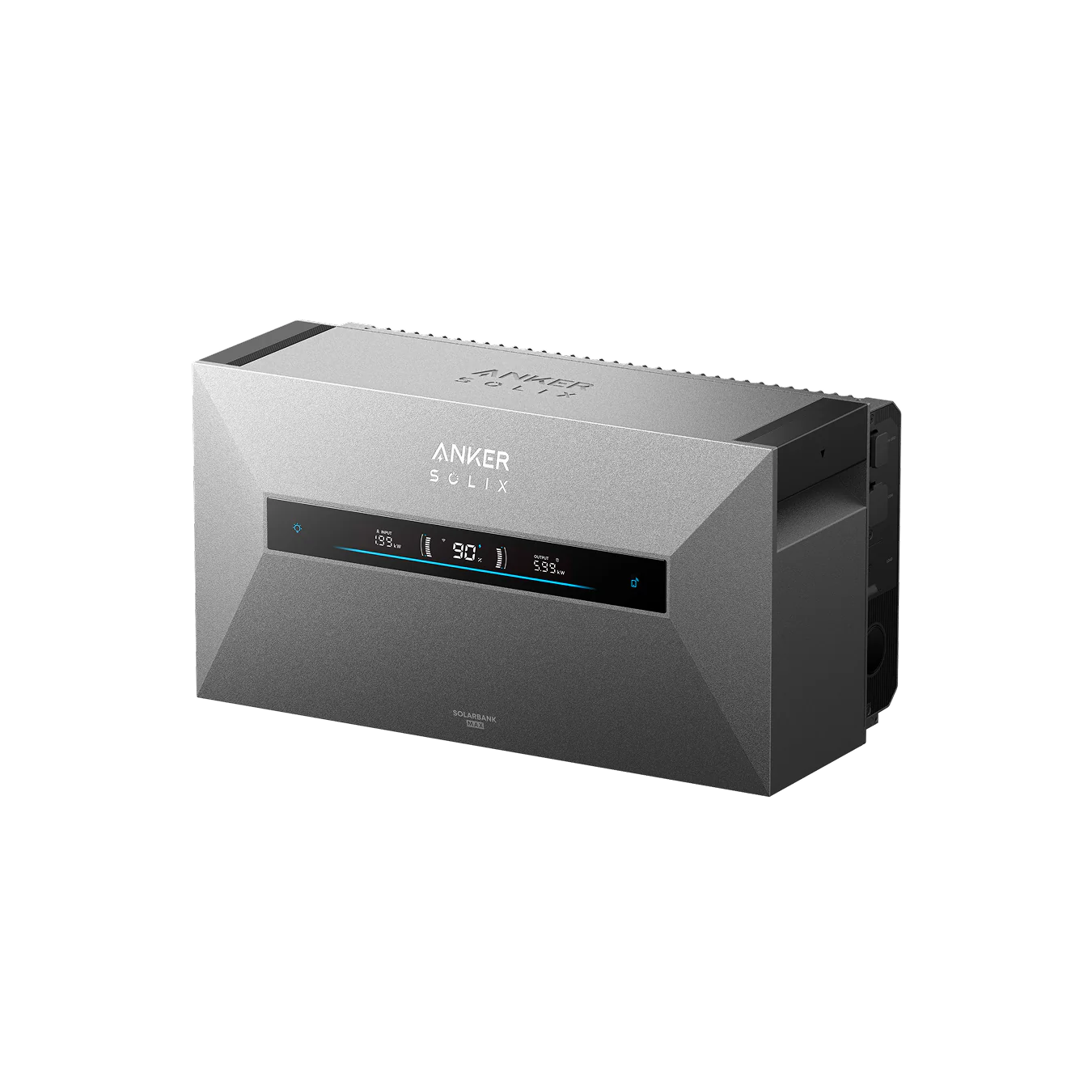
The Anker SOLIX Solarbank Max AC product specs are worth checking out early if you want a wall-mounted home battery that's easy to start, but won't run out of power quickly. This is relevant for households that now mainly want to accommodate evening consumption, but want more storage or more flexibility later. The basic capacity is 7 kWh and the system is expandable to 42 kWh with one main unit and five batteries. This makes it not only an entry-level option, but also a solution that can grow with your use.
The combination of battery chemistry, lifespan and warranty also counts. This model uses LFP cells, supports full discharge, is designed for 10,000 cycles and has a 10-year warranty. Such points are useful for comparison, because a lower purchase threshold is only interesting if durability, usable capacity and warranty conditions match how you really want to use the battery.
With a home battery socket, the connection method is also important. Anker SOLIX Solarbank Max AC supports connection via Schuko plug, Wieland and fixed connection. This makes the model especially relevant for households that want to start simply at first, but want to keep the option open to look at a more difficult or formal connection later. The system supports smart energy management, connection with an arrow, one smart meter and smart plugs, plus an emergency power function. This makes it particularly suitable for homes where flexibility and future-oriented use outweigh just the lowest entry price.
- Capacity: 7 kWh base, expandable to 42 kWh.
- Power: Higher settings require extra control of group, connection and rules.
- Durability: LFP cells, 10,000 cycles and 10 year warranty.
- Why compare: interesting if you want a simple start and later expansion.
Which rules and checkpoints should you check in advance?
Before purchasing, always check four points in context: the group in the house, the chosen connection method, the reporting obligation and the place where you want to place the battery. In the Netherlands there is a lot of attention for the safe use of plug solutions and for the question of how return to a regular group should be assessed. That is why it is wise to not only look at the battery itself, but at the entire situation in the home.
A practical approach helps. First check how much electricity you use in the evening and whether the chosen capacity is appropriate. Then decide whether you want to start with a grounded socket or whether a separate group makes more sense. Then check whether registration with the network operator or another counter is required. Finally, look at the installation location: dry, stable, easily accessible and with sufficient ventilation.
Even if a product has protection against dust, water or low temperatures, common sense is still necessary. Weather protection does not automatically mean that every outdoor space, damp basement or salty environment is suitable. So always check the product specifications and the practical conditions in your home.
- step: choose between earthed socket, wieland or separate landline connection.
- Third step: check reporting obligation, registration and local installation conditions.
- Fourth step: assess ventilation, dryness, accessibility and fire-safe placement.
Sources and control points
- Netherlands Fire Department – Plug-and-play home battery – https://www.brandweer.nl/onderwerpen/plug-and-play-thuis Battery/?utm_source=chatgpt.com
- Zonneplan – Home battery with plug: law and regulations – https://www.zonneplan.nl/thuis Battery/thuis Battery-met-stekker/wet-en-regulation?utm_source=chatgpt.com
- Plugin-battery.nl – Do I have to register my plug-in home battery with the grid operator? – https://plugin-battery.nl/moet-ik-mijn-plug-in-thuis Battery-aanmelden-bij-de-netbeheer/?utm_source=chatgpt.com
- Electrician JK – Home battery plug plug-in and accessories – https://www.elektricien-jk.be/thuis Battery/stekker-plugin/arei/?utm_source=chatgpt.com
- Anker – Anker SOLIX Solarbank Max AC product page – https://www.ankersolix.com/nl/products/a17e2
Anker SOLIX Solarbank Max AC
Product description
Use these resources to review safety advice, group eligibility, registration, local regulations and product specifications. General information about plug-in batteries does not automatically apply to every home or every power level. If sources differ in parts, it is wise to check your group, affiliation and reporting obligation separately.
Frequently asked questions
Can a home battery be connected to any group via the socket?
No. That depends on the condition of the group, the load from other devices and the required power. An earthed fixed wall socket is the basis, but that does not automatically make every group suitable. At higher powers, a separate group or extra installation control is often wiser or necessary.
What should I pay attention to regarding the capacity and power of a home battery socket?
Capacity in kWh determines how much energy you can store. Power in W or kW determines how quickly you can charge or supply. For many households, power is the first practical limit, because this is related to group tax, feed-in and installation conditions. So don't just look at a large battery, but at safe usable power in your home.
Do I have to register a home battery socket with my grid operator?
This may be necessary, especially if the system is grid-connected and delivers more power. The precise obligation depends on the setup, power setting and local rules. Therefore, always check the current registration and registration points that apply to your situation before using it.
When is Anker SOLIX Solarbank Max AC a logical option?
This is especially logical if you want to start with 7 kWh, expand later, use solar power better in the evening or focus on price differences. It is less suitable if your home installation is unclear or if you want high power immediately without a separate group and control. Therefore, first check your group load, desired connection method, any reporting obligation and whether the higher power level is permitted in your home.
Conclusion
A home battery socket can be a practical choice, but only if safety, group load, power, placement and local rules are in order. The honest answer is usually: yes, but only if the installation suits the use and the selected power level. For homes with solar panels or fluctuating electricity prices, smart control is often the most important added value, while in other homes the suitability of the group is the deciding factor.
If you want to compare a solution that is easy to start and at the same time leaves room for expansion, take Anker SOLIX Solarbank Max AC into your consideration. Then compare your evening consumption, usable capacity, connection method, group load, reporting obligation and product specifications on the product page. This way you can see more quickly whether this home battery socket is not only handy, but also safe and suitable in your home.