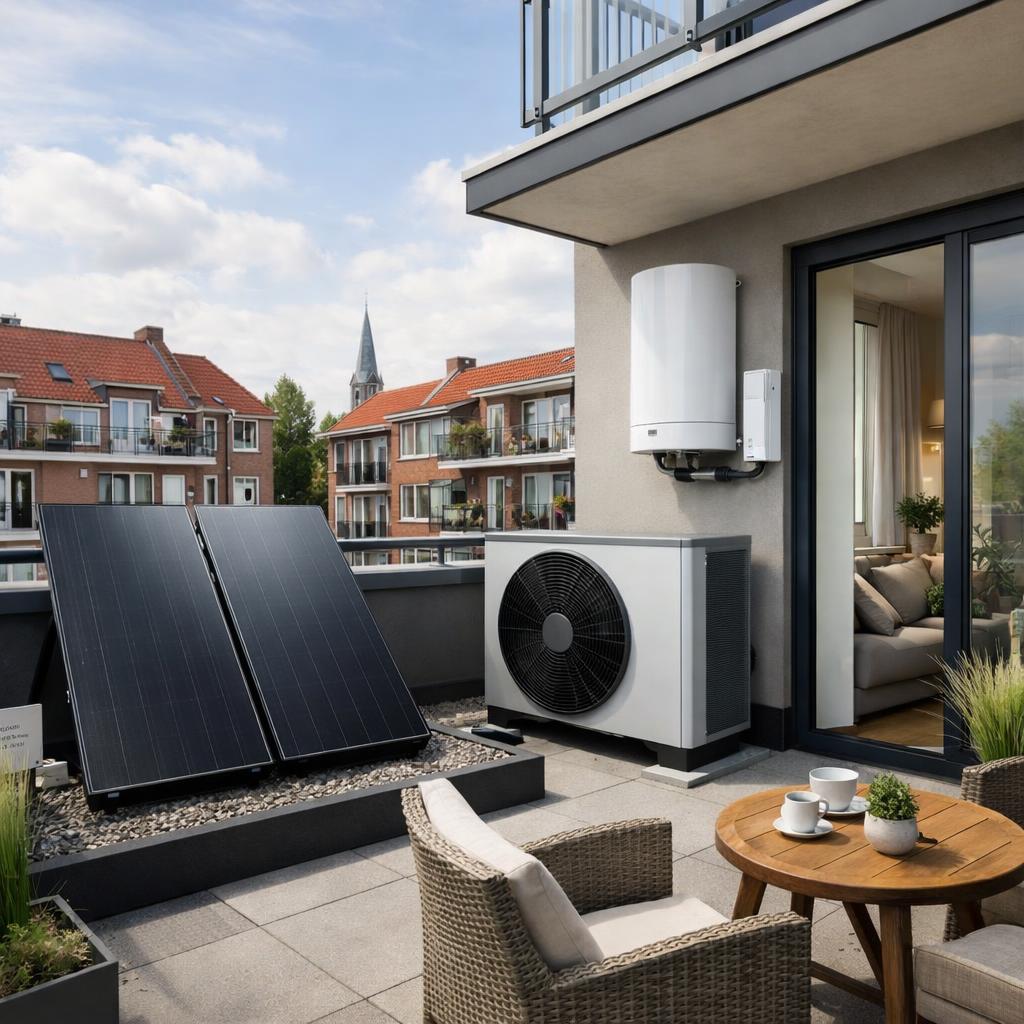
Short answer: yes, but only if your balcony gets enough sun, the available space suits the system and placement is safe and permitted. For many urban households with little outdoor space, balcony solar panels can be a practical first step, but they are not automatically suitable or profitable in every situation. Especially in a balcony solar panel apartment, shade, mounting, orientation and permission often play a greater role than with panels on a normal roof.
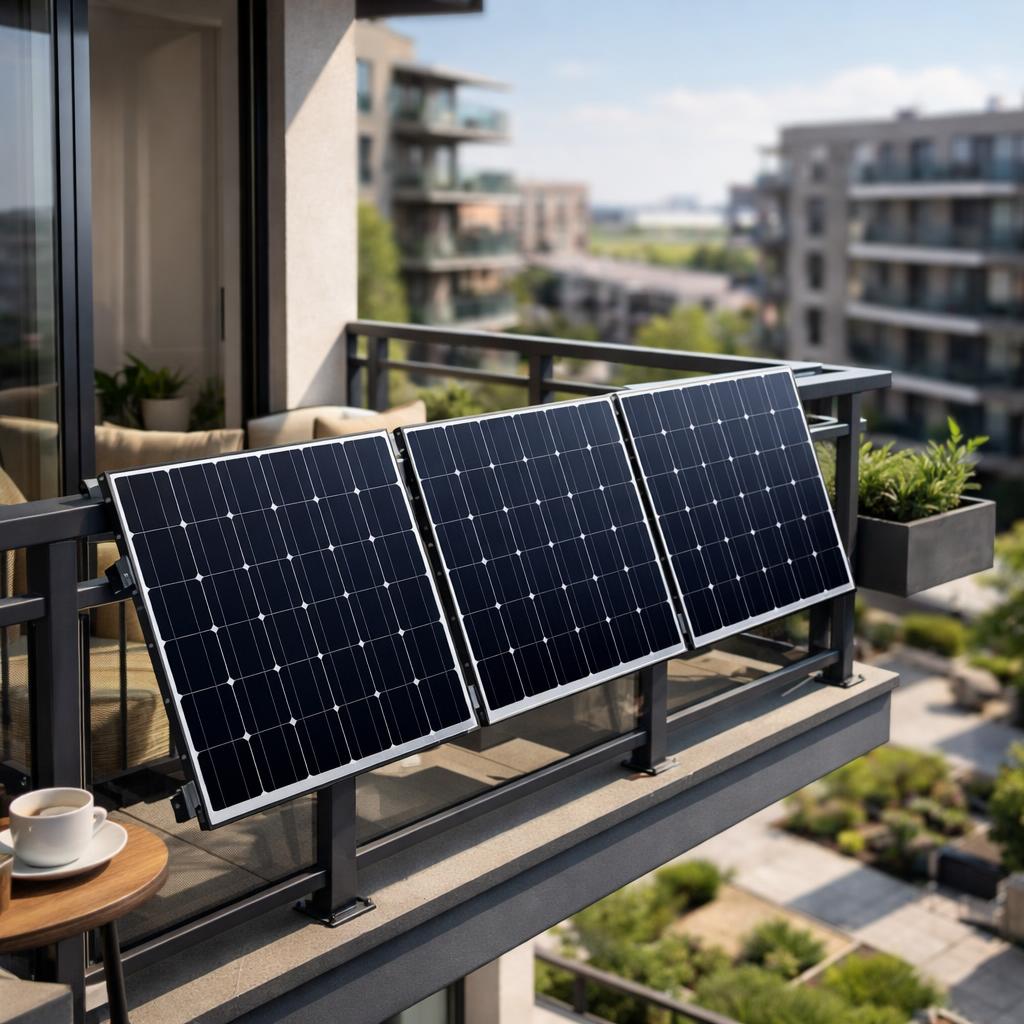
If you are looking for a solution for limited space, first look at the combination of balcony dimensions, daily power consumption and mounting options. Anyone who wants to explore solar panels for apartments more broadly will soon see that compact systems are especially interesting if they have a favorable sun position and a clear, safe mounting location. The real question is not only how much power a panel can generate in theory, but above all whether the system suits your balcony and living situation in practice.
Are balcony solar panels suitable for your situation?
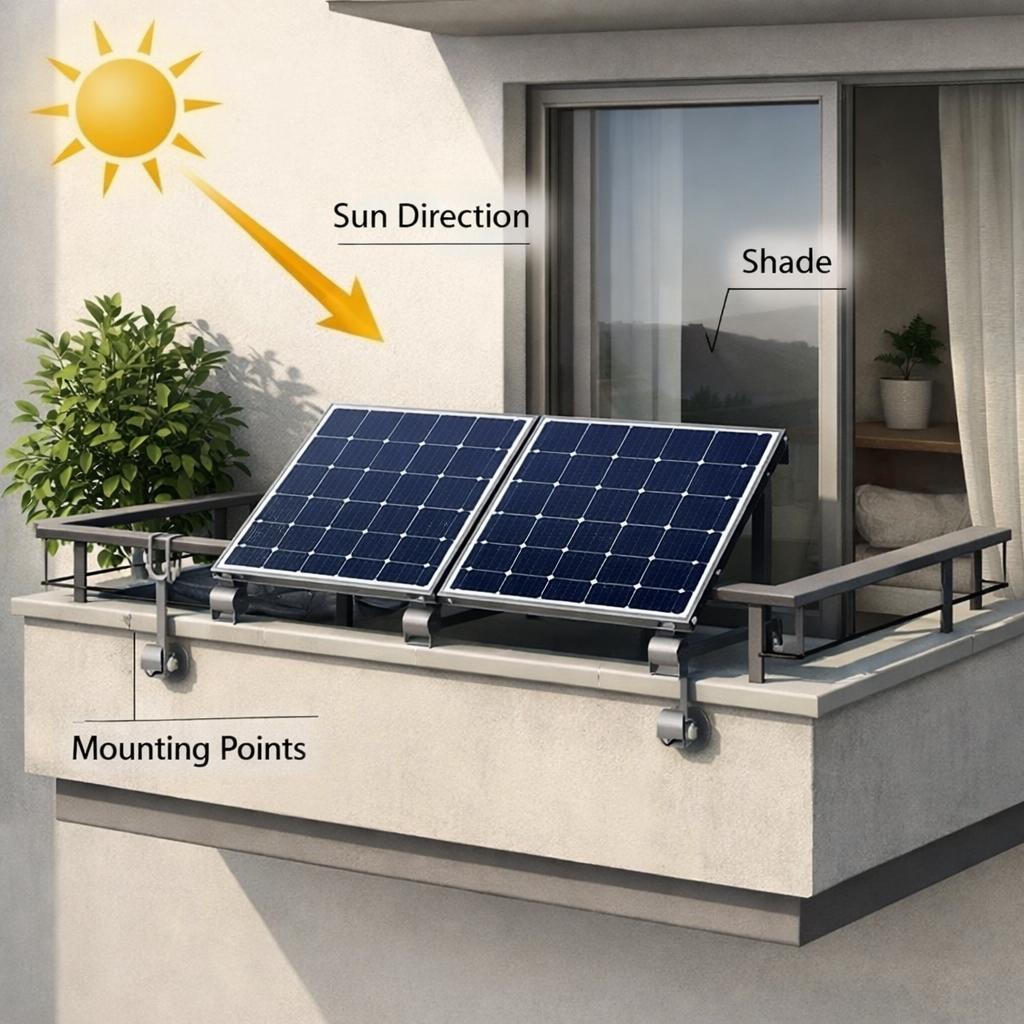
Balcony solar panels are especially suitable if you have little outdoor space, no usable roof at your disposal and a balcony with reasonable sunlight. A balcony facing south, southeast or southwest usually has better chances than a balcony that is shaded for most of the day by taller buildings, trees or deep overhangs. The railing, load-bearing capacity and clear width also count heavily. That is why it is smart to first determine whether there is really a place where panels can be placed firmly and safely.
They are less suitable for a small balcony, a lot of shade or rules from the landlord, association or building management that restrict placement. Anyone who wonders whether balcony solar panels are profitable will therefore not get a simple yes or no. It depends on sun position, consumption, system size, safety and permission. In many cases, they are mainly useful as a compact addition to your power consumption, and not as a complete replacement for a larger system.
When they fit well and when they don't
They are a good fit for residents who use part of their electricity directly during the day, have limited but usable balcony space and are looking for a system that really suits their situation in terms of dimensions and installation. Consider an apartment with an open balcony, little shade and a clear mounting option on a railing or wall. In such a case, balcony solar panels can be a logical way to absorb part of the daily consumption, as long as the product specifications and installation conditions are correct.
They are less suitable for balconies with a lot of wind load, unstable railings, strict building regulations or a location where the sun hardly falls directly on the panels. Even if you have high expectations of the yield, sober comparisons are important. What usually needs to be assessed first is the suitability of the location and installation. What only becomes relevant after that is longer-term expansion. Without concrete product specifications and measurements you cannot reliably estimate the actual yield in your situation.
Benefits, limitations and considerations for placement
The big advantage of balcony solar panels is that they make solar power accessible to homes without their own roof. They usually take up less space, are often easier to install than a complete roof system and can be interesting for residents who want to partly meet their basic consumption during the day. This is attractive for tenants and apartment residents, provided placement is permitted. At the same time, the limitations remain important: a smaller surface usually means less yield, and shade often affects a balcony more quickly than on an exposed roof.
That is why what to look for with balcony solar panels is primarily a practical question. Pay attention to dimensions, weight, wind load, cable routing, mounting points and whether the system can function safely outdoors in your building situation. Please note that rules may vary by building, state or manager. So do not assume permission or a problem-free connection without checking in advance. Especially with compact systems, the combination of safety, usable hours of sunshine and available space determines whether installation really makes sense.
Yield, safety and rules briefly assessed
If you want to know how much power balcony solar panels usually supply, you should mainly look at power, sun position and shade. A small system can be useful for basic daytime consumption, but the actual yield varies greatly depending on the situation. Therefore, do not use a fixed expectation without your own calculation. If you want to estimate this better, compare your consumption and sunshine hours by calculating solar panel yield. This way you can see more quickly whether a compact system suits your daily needs.
Safety deserves at least as much attention as yield. Placing balcony solar panels safely means, among other things, that the mounting must be sturdy, cables must be protected and the system must be suitable for outdoor use and local conditions such as wind and rain. In addition, always check whether placement on a railing or facade is permitted. Also read more about safely installing solar panels if you want to check the most important mounting and control points step by step before comparing systems.
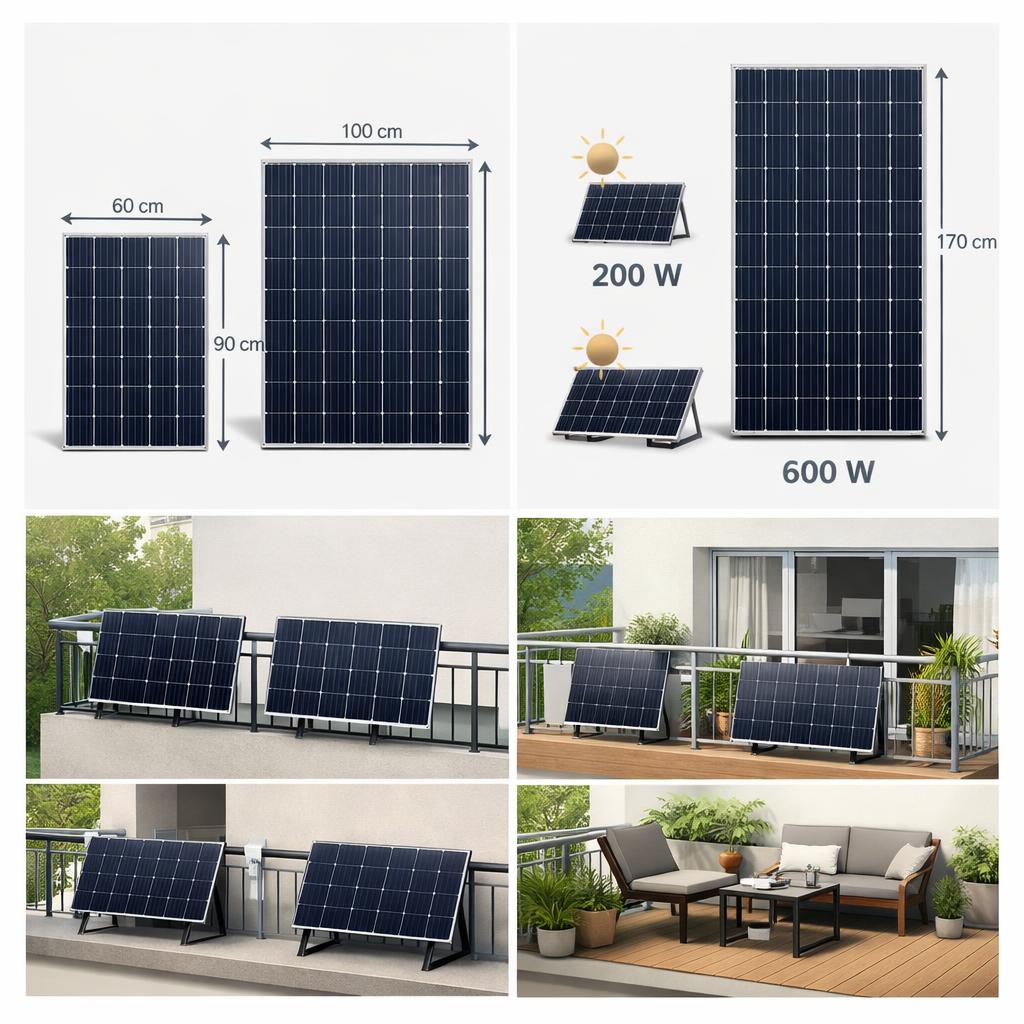
How to choose a system that suits your balcony and consumption
Start measuring. Note the free width and height, see where and when shadows fall and assess whether installation on a railing, floor support or wall is possible in your situation. Then compare the power with your own daily consumption. A larger panel sounds attractive, but only has value if it actually fits and can be installed safely. In addition, pay attention to weight, expandability and official specifications. When space is limited, a system that fits well is often more valuable than a system with only a higher rated power.
Then compare options based on what is really decisive for your situation. First look at size, power, ease of installation and safety. Only then look at things such as later expansion or extra parts. When a product or model is mentioned, it is especially worthwhile to compare it if it fits into a small balcony space, requires a lower entry, is easy to assemble or leaves room for expansion later. This does not automatically make such a solution the best choice, but it is relevant to include in a comparison with other systems.
Therefore, compare your power consumption, balcony space, shade, mounting options and any permissions with the dimensions, power, mounting requirements and official product specifications of the systems you are considering. This way you can see more quickly which solutions really fit, which ones seem attractive on paper and which ones you should rule out immediately.
Conclusion
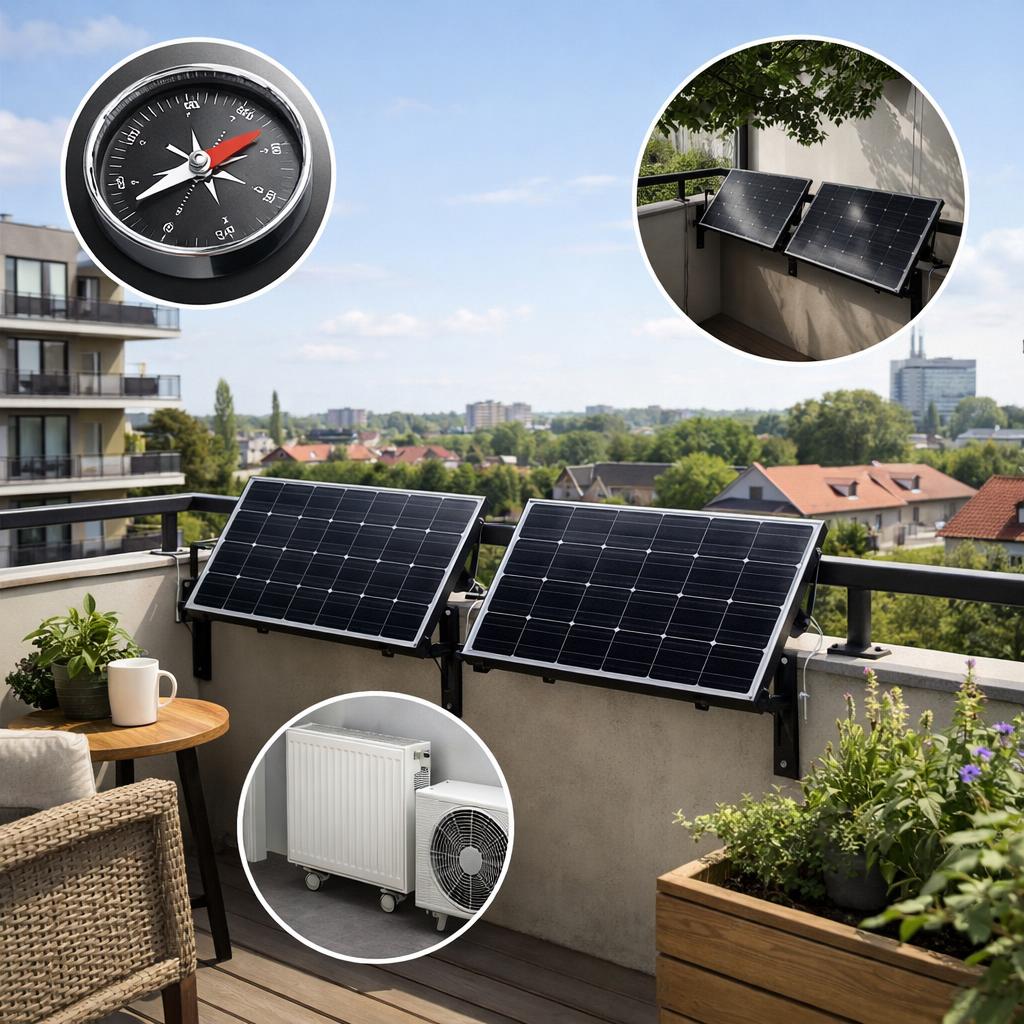
Balcony solar panels can be a smart choice for an apartment or house with little outdoor space, but only if balcony space, sun exposure, safety and rules fit well with the chosen system. The key is not whether such panels exist or are popular, but whether your balcony can support them practically and safely and whether the expected yield matches your consumption. Especially with a balcony solar panel apartment, customization remains important, because shade, railing type and permission vary greatly per building.
If you want to take the next step, compare your own power consumption, available balcony space, shade, mounting options and any permission with the dimensions, power, expandability, mounting requirements and official specifications of the systems you are looking at. This will help you discover more quickly whether balcony solar panels really suit your situation and which options are worth checking further.
Frequently asked questions
Are balcony solar panels in an apartment worth it?
This is possible, but only with sufficient sun, usable space and safe placement. In an apartment they are especially interesting if you do not have a suitable roof and use part of your electricity directly during the day. They are less attractive if there is a lot of shade, strict building regulations or a balcony where installation is difficult or unsafe.
How much power do balcony solar panels usually generate?
This varies per system and per location. Power, sun direction, shade, slope and times of use all have an influence. As a result, there is no reliable fixed number that applies to everyone. Your own comparison of consumption, sunlight and product specifications provides a more useful picture than a general estimate.
What should you pay particular attention to with balcony solar panels?
Pay particular attention to dimensions, weight, mounting, wind load, cable safety, shade and permission. In addition, check whether the system's power logically matches your consumption. A system that looks good on paper may be unsuitable in practice if the balcony is too small or installation cannot be done safely.
Can you always install solar panels on your balcony without further ado?
No, that varies per home and building. Permission from the landlord, building management or association may be required, and local conditions may also play a role. So do not assume automatic suitability. First check the rules, the installation location and the technical conditions before making a choice.