Short answer: Feed-in costs for 2027 cannot yet be determined as a fixed national outcome for every household. The following applies to most households with solar panels: it depends on your energy supplier, your contract type, your meter data, the way in which netting and net feed-in are settled and any changes in rules or conditions. You can only make a useful estimate if you check whether a separate rate, deduction or threshold applies for return delivery and whether this has already been officially established or is still only a proposal.
If you want to quickly assess what this could mean for you, first look at your contract, your actual return and public tariff information. Less suitable is relying on general expectations about 2027 without checking conditions and policy. Also read netting and return explained if you first want to clarify the difference between settlement and return costs.
What do feed-in costs mean for your situation in 2027?
Feed-in costs are possible costs, deductions or adjusted fees associated with electricity that you feed back into the grid. So it is not just about whether you have solar panels, but mainly about how your supplier processes that return. The most honest answer therefore remains conditional: only when rules, contract conditions and rate structures determine this, can feed-in costs 2027 really apply to you.
For a quick assessment, it is useful to divide your situation into three parts: the official rules, your supplier's conditions and your own consumption pattern. Someone who uses a lot of electricity directly during the day often produces less net return than someone who is mainly absent during the day. As a result, the financial impact per household can vary greatly. It is therefore not wise to apply a general statement about 2027 to every home without looking at thresholds, scales, measurement data and possible contract changes.
When are return costs more likely?
Feed-in costs are more likely when you generate much more than you directly consume, when your supplier uses a separate tariff structure for feed-in or when your contract clearly distinguishes between offtake, offsetting and net feed-in. The contract form can also make a difference. For fixed, variable and dynamic contracts, the method of settlement may be different, meaning that the final costs or fees are not the same.
When is extra caution needed in predictions?
Extra caution is needed when reports about 2027 still concern plans, market expectations or possible policy changes. Such messages are not a definitive answer to your personal situation. Therefore, keep confirmed policies, supervision, network rules and supplier conditions strictly separated from expectations. Only when these components fit together can you say with reasonable certainty what feed-in costs 2027 can mean for you.

Which factors determine whether and how much you pay?
The impact of feed-in costs usually depends on your net feed-in, your direct self-consumption during the day and the way in which generation and consumption are settled. Therefore, think in practical situations. With high feed-in and low direct self-consumption, there is a greater chance that feed-in conditions will become noticeable. For a household that uses more solar power itself during the day, the effect may actually be smaller. Particularly in the case of deviating rate structures, it is important to read exactly how return delivery, compensation and any deduction are described.
A practical assessment requires four checkpoints. Firstly: does your contract contain a separate feed-in tariff, a threshold or a graduated scale? Secondly: does your meter register purchase and return clearly and completely? Thirdly: how much net do you actually return per month or per year? Fourthly: does your situation concern confirmed rules or changes in preparation? Anyone who wants to refine this overview can compare energy contracts based on feed-in. This is especially worthwhile because you not only look at the basic electricity price, but also at the way in which feed-in is paid for in practice.
Recommended for checking: contract, meter, consumption and local rules
Use this short checklist. Is return delivery mentioned separately in your conditions? Do you see on your annual or monthly overview how much electricity you supply back? Do you know whether your meter and supplier use the same registrations for settlement? Have you checked whether the relevant rules have already been finalized? If you do not have a clear answer on several points, an exact prediction for 2027 is still too uncertain. The recommendation for households with a lot of returns is therefore: first check, then calculate. Less suitable is a quick conclusion based on a news item or a general expectation alone.
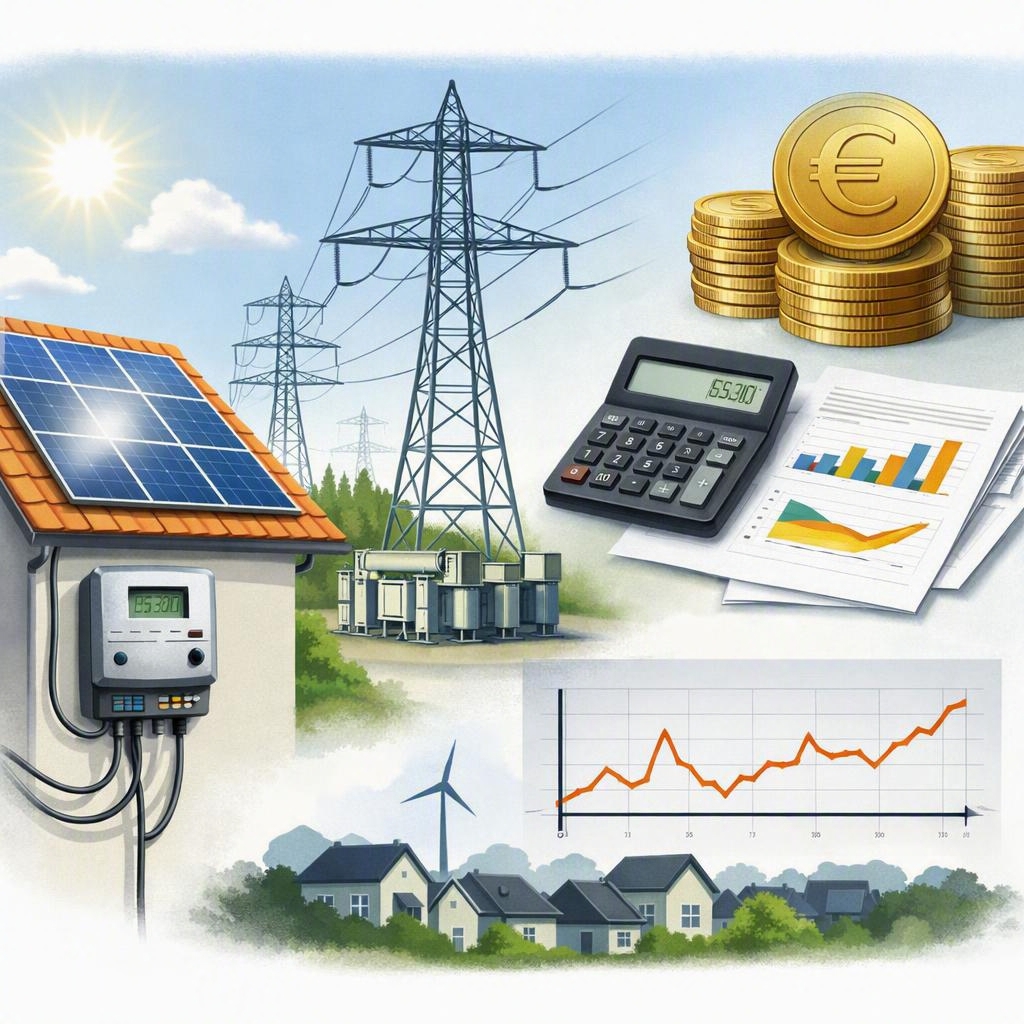
What can you do now if you want to limit feed-in costs in 2027?
The most direct step is not to guess, but to measure. Look at your actual feed-in and your consumption during the day. If you use a lot of generated electricity directly yourself, your net feed-in may be lower and the effect of possible feed-in costs may be smaller. As a result, an analysis of your daily pattern is often more valuable than a loose prediction about policy. For a broader estimate, you can also use a solar panel efficiency check to compare yield, self-consumption and feed-in.
Practical alternatives to an uncertain forecast are: compare contract conditions, adjust your consumption pattern and wait with firm conclusions until official information has been confirmed. The first step is to check your current contract and public rate documents. The second step is to view your meter data and your net feed-in. The third step is to follow policy information from the government, regulator and network organizations. It is not wise to base investment decisions solely on rumors about 2027 without these three checks. Therefore, compare your annual return, the presence of thresholds or scales, the amount of reimbursements and the official conditions of your supplier before you decide whether your current contract still fits.
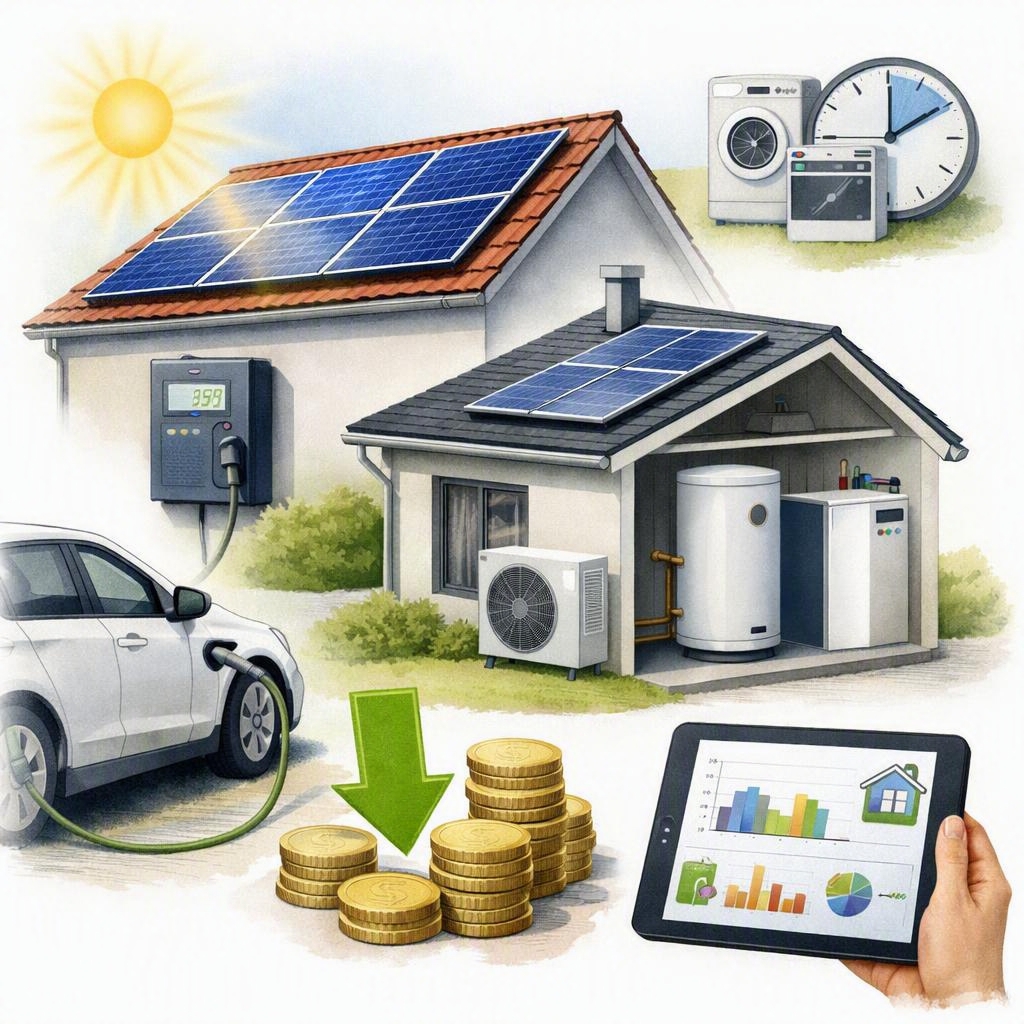
Sources and checkpoints
Use official and public sources to separate rules, explanations and supplier terms. First check the national rules, then consumer information, then network information and finally the conditions of your own supplier.
- Central government, Offsetting self-generated electricity
- Consumer and Market Authority, Information about energy contracts
- Network management in the Netherlands, Information about the electricity grid and feed-in
- Environment Central, Solar panels
- Consumer association, Compare energy
Frequently asked questions
Will feed-in costs automatically exist in 2027 for everyone with solar panels?
No. You can't automatically assume that. It depends on official rules, supplier conditions, your contract form and the way in which your return is settled. Those who rely only on general messages often miss the difference between confirmed policy and possible future change.
How can I see whether my energy supplier will charge feed-in costs in 2027?
Check your current contract conditions, rate sheet and explanation of return delivery. Pay particular attention to terms such as separate feed-in tariff, deduction, threshold, graduated scale or deviating compensation. Then check whether new conditions already apply or have only been announced.
Does my own consumption during the day really make a difference?
Yes, often. The more solar power you use directly, the less you have to return net. As a result, the influence of feed-in costs may be smaller than for a household that uses little electricity during the day and returns a lot of generation to the grid.
Can I now calculate exactly what the return costs will be in 2027?
Only limited. A preliminary estimate is possible with your current consumption, return supply and contract details. An exact amount for 2027 is not reliable without confirmed rules, current supplier conditions and correct meter data. Therefore, see a calculation as indicative, not definitive.
Conclusion
Feed-in costs 2027 do not have a fixed answer that applies to all households with solar panels. The core remains: it depends on your supplier, contract, rate structure, meter data and the official status of the rules that apply to your situation. General information is useful for a first impression, but for a reliable decision you must compare your contract and consumption pattern with confirmed rules.
If you have solar panels or are considering them, check your contract conditions now, see how much net electricity you actually return and then compare thresholds, scales, reimbursements, meter registration and official rules. This will give you a more realistic picture of your net benefit and you can better assess whether your current contract and usage pattern still suit your situation.