Short answer: A 3-phase connection distributes electrical load over three phases instead of one. This allows an installation to process higher powers more evenly and often more stably. Whether you need such a connection mainly depends on your total load, peak load, simultaneous use of heavy equipment, the mains supply at your address in the United States and the requirements for panel, meter and installation.
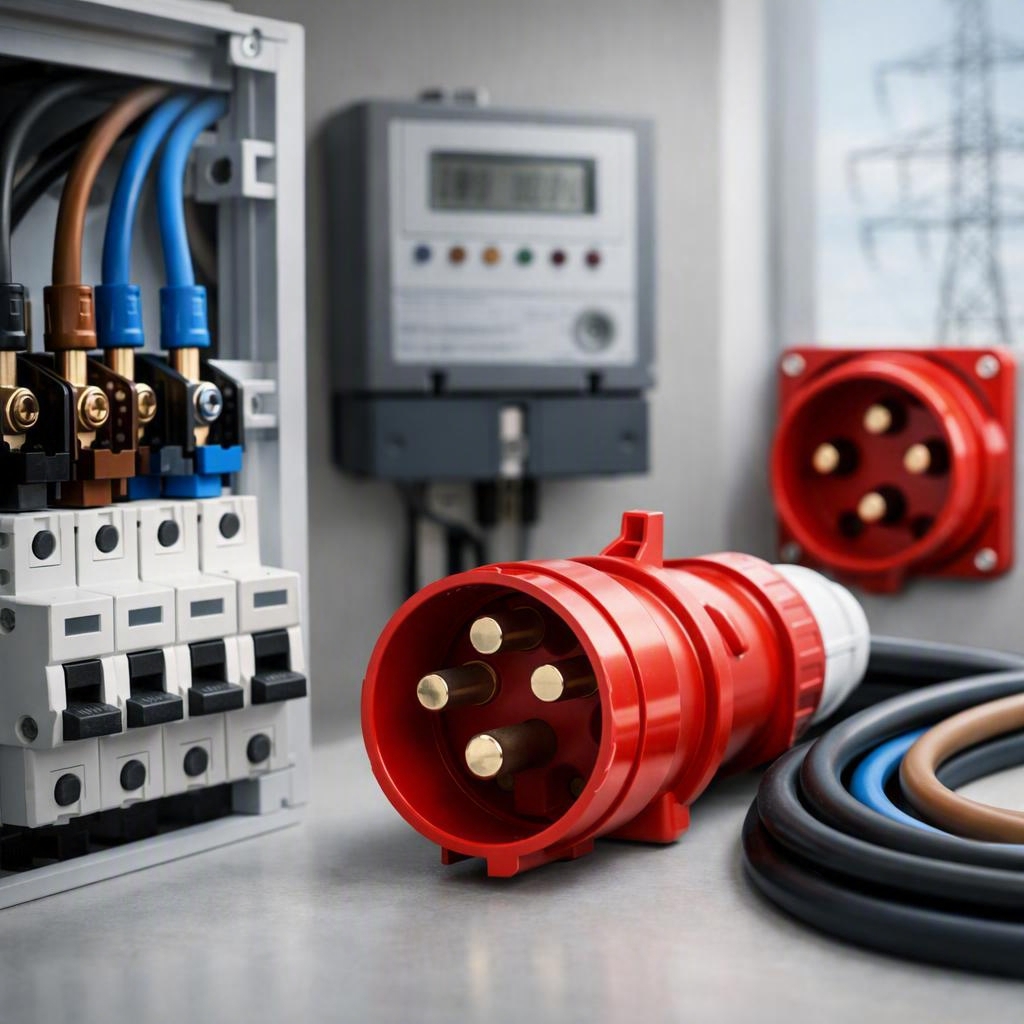
For many homes, 1 phase is still sufficient. A 3-phase connection only becomes really relevant if several heavy applications run simultaneously, if certain equipment explicitly requires 3-phase or if a workshop or small business premises needs a heavier and more balanced power supply. If you want to assess the difference between 1 phase and 3 phase, it is advisable to first identify the load and device requirements and then check the local connection conditions.
What is a 3 phase connection and what is the difference with 1 phase?
A 1-phase connection supplies power via one phase and is suitable for many normal applications in homes. A 3-phase connection uses three phases, so that the load is distributed over multiple conductors. The main difference is therefore not only in different wiring, but in the way in which power is supplied and distributed within the installation.
In practice this means the following: with a light household load, 1 phase is often appropriate and sufficient. As soon as you use several heavy consumers at the same time, or when equipment is specially designed for 3 phase, 3 phase may be a more logical choice. Consider, for example, larger machines, certain charging solutions or installations that require a lot of power for a long time. The right choice does not follow from preference, but from what your use actually requires.
How power and load are distributed over three phases
With 3 phase the load can be spread better. This helps to load the installation more evenly, especially when several large appliances are operating simultaneously. In such situations, the power supply can be better suited to practical use than with a standard 1-phase connection. However, 3 phase does not automatically provide benefits for every home or building. If the load is limited or heavy equipment rarely runs at the same time, the extra power is often not necessary.
A good first step is therefore always to make an overview of the largest consumers. Make a note of which devices require a lot of power, how long they run and whether they are often on at the same time. Only then can you sensibly assess whether 3 phase really has a technical added value.
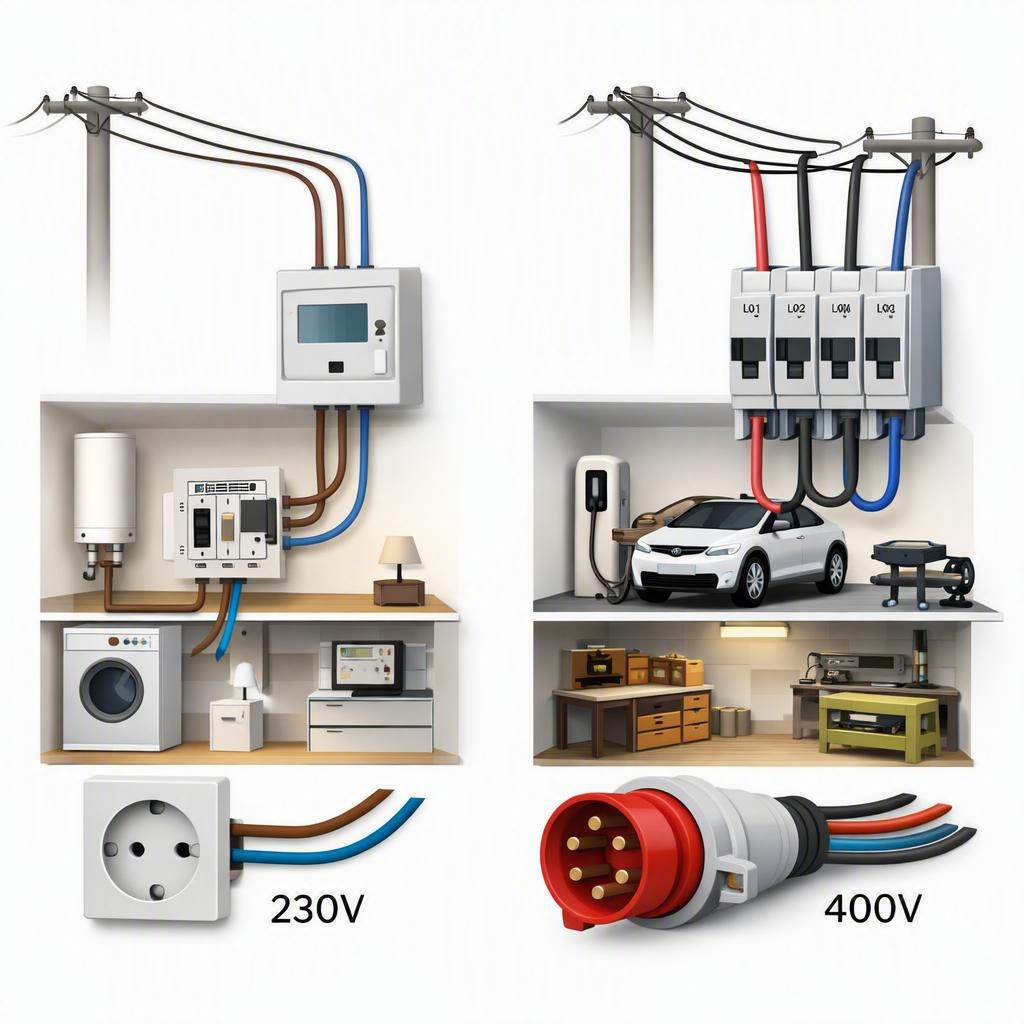
When is a 3-phase connection suitable and when not?
A 3-phase connection is usually suitable for homes with multiple heavy electrical applications, larger garages or workshops with machines, and small business premises where the load is regularly high and simultaneous. This mainly concerns situations in which consumption not only peaks for a short time, but also remains high for a longer period of time. Then 3 phase may technically be a better fit, because the power supply is distributed more evenly across the installation.
For a standard home without special equipment, 1 phase is often still the most logical solution. Not every location immediately benefits from a heavier connection, and not every building can switch without adjustment. If you have any doubts about future expansion, such as additional charging points, heavier machines or new electrical appliances, extra checks are wise. Then look not only at what you use now, but also at what you expect to add in a few years.
Recommended for and not recommended for
Recommended for: homes with several heavy consumers at the same time, workshops with machines, small business premises with high simultaneous loads and equipment with a clear requirement for 3 phase.
Not recommended for: homes with normal household loads, limited peaks and no appliances that explicitly require 3 phase.
A useful method is simple and verifiable:
- National Fire Protection Association, National Electrical Code, https://www.nfpa.org
- Occupational Safety and Health Administration, Electrical Safety, https://www.osha.gov/electrical
- U.S. Department of Energy, Electricity Explained, https://www.energy.gov
- National Institute of Standards and Technology, Electrical Measurement and Safety Publications, https://www.nist.gov
- Check in practice: grid availability at your address, panel configuration, meter setup, device specifications, load calculation and local building or installation regulations.
- Limit of evidence: without inspection and load calculation you cannot determine with certainty whether 1 phase is sufficient or 3 phase is technically necessary.
This prevents you from requesting a connection that is too heavy without technical necessity, but also from getting stuck with a connection that can no longer handle your use.
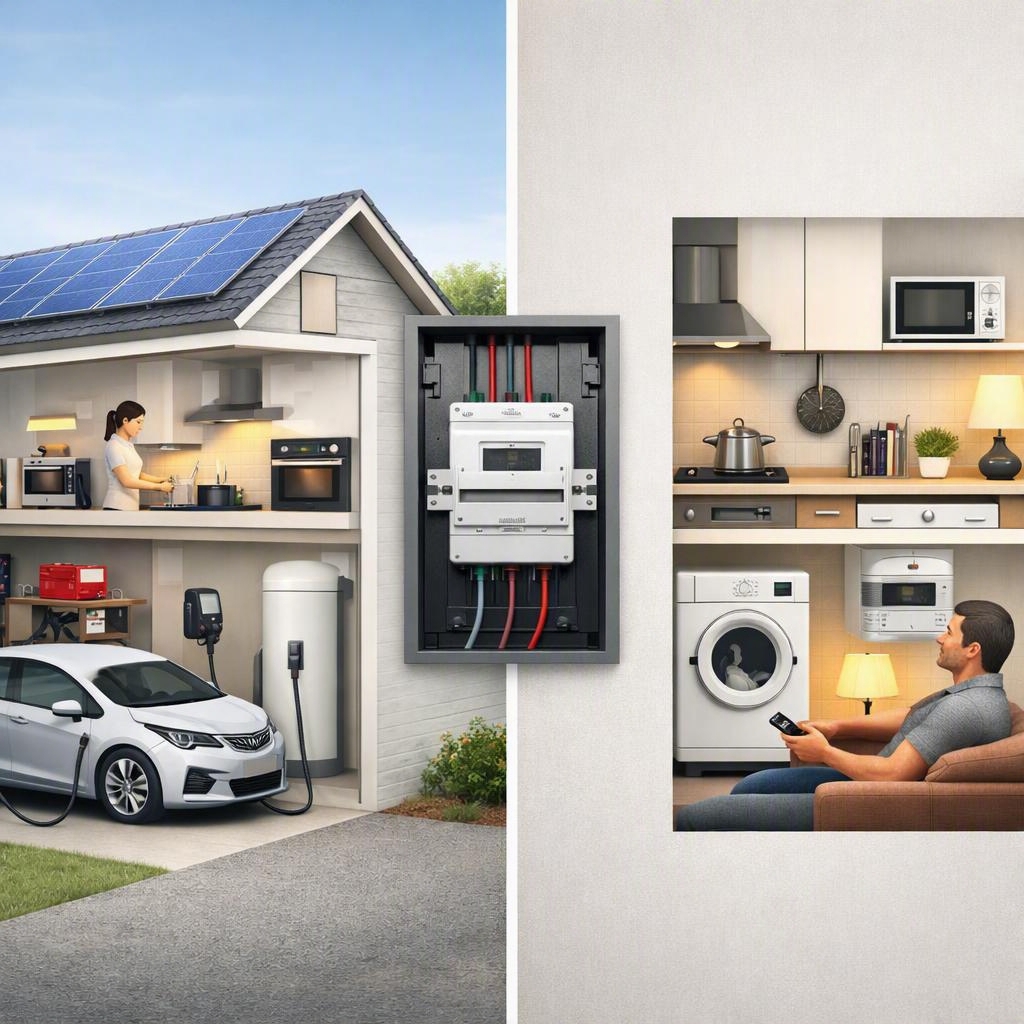
Which checkpoints determine whether 3 phase is technically feasible?
The feasibility of a 3-phase connection depends on more than just your desire to have more power. You should check whether the grid at your location can supply 3 phase, whether the meter setup is suitable, whether the main panel has the correct configuration and whether the connected equipment works with the voltage and phase layout available at your address. A quick glance at the panel can sometimes tell you something about available space, but does not provide any certainty about safety or suitability.
It is therefore wise to first check your meter cupboard and connection capacity and then determine which parts may need to be adjusted. Pay attention to the service configuration, main panel, protections, device labels, load distribution and local regulations. For homes and small properties in the United States, you must always take into account both the technical implementation and local regulations. Not every building can switch to 3 phase without changes, even if the purpose of use requires it.
Meter cupboard, connection capacity, equipment and local requirements
Start with the devices that require the most power. Check which voltage and phase classification they require and whether manufacturers mention specific conditions. Then look at the panel: how much space is there, what is the main connection and is the meter setup suitable for expansion or conversion? The next step is to confirm whether the mains connection at your address actually supports 3 phase.
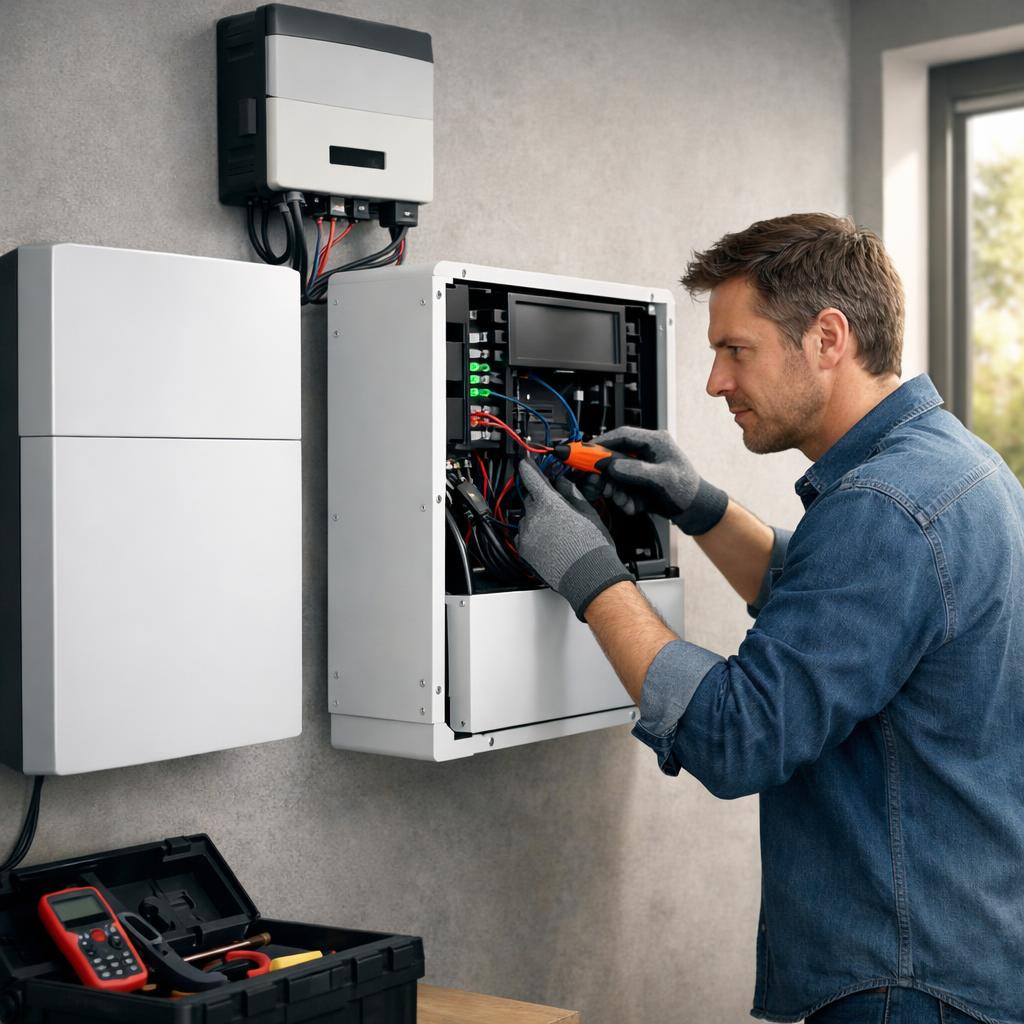
It is useful to distinguish between what you can check yourself and what a certified installer must confirm. You can collect device data yourself, estimate simultaneous use and note visible characteristics of the panel and meter. A professional must then measure, calculate and assess whether the installation is safe, appropriate and permitted according to local regulations.
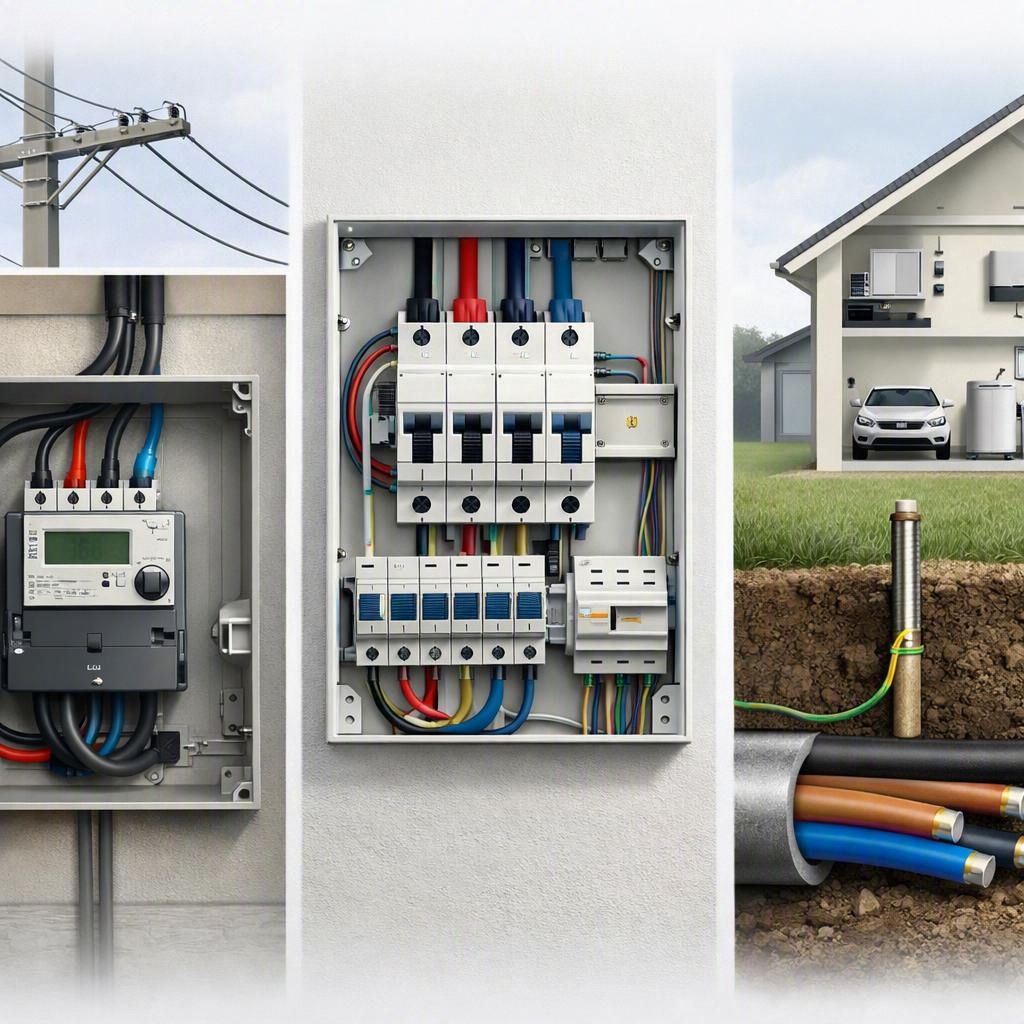
Sources and checkpoints
Use these resources to verify technical explanations, safety rules and checkpoints. They help you separate facts, conditions and limitations before you decide whether a 3-phase connection is suitable for your situation.
Frequently asked questions
What is a 3 phase connection in simple words?
It is an electrical connection where the load is distributed over three phases instead of one. This allows heavier or more simultaneous loads to be better supplied, provided the installation and local connection are suitable.
When does a home really need a 3-phase connection?
This is usually only the case if several heavy electrical applications are used simultaneously or if certain equipment explicitly requires 3 phase. For an average home without such requirements, 1 phase is often sufficient, but only a tax audit provides certainty about this.
Can every building simply switch from 1 phase to 3 phase?
No. This depends on the mains availability, the meter setup, the main panel, the protections and local regulations. Sometimes a switch is technically possible, but only after adjusting several parts of the installation.
What information should I first collect before asking an installer for advice?
Make a note of all major consumers, their power and whether they run at the same time. In addition, collect data from panel, meter and device labels, and check whether manufacturers require a certain phase layout. With this information, an installer can make a much more targeted assessment of whether 1 phase is sufficient or whether 3 phases are appropriate.
Conclusion
A 3-phase connection is especially useful when load, peak load, simultaneity and device requirements become too heavy or too uneven for a standard 1-phase situation. For many households, 1 phase remains sufficient, while homes with multiple heavy applications, workshops and small business premises can often benefit from 3 phase. The choice is therefore primarily a technical capacity question.
If you want to know what is sensible for your situation, compare your total load, simultaneous use, device specifications, available connection capacity and local connection conditions. Then check whether your panel, meter setup and mains connection are suitable for conversion. This way you make a choice that not only sounds heavier, but also really suits your home, workshop or small building.