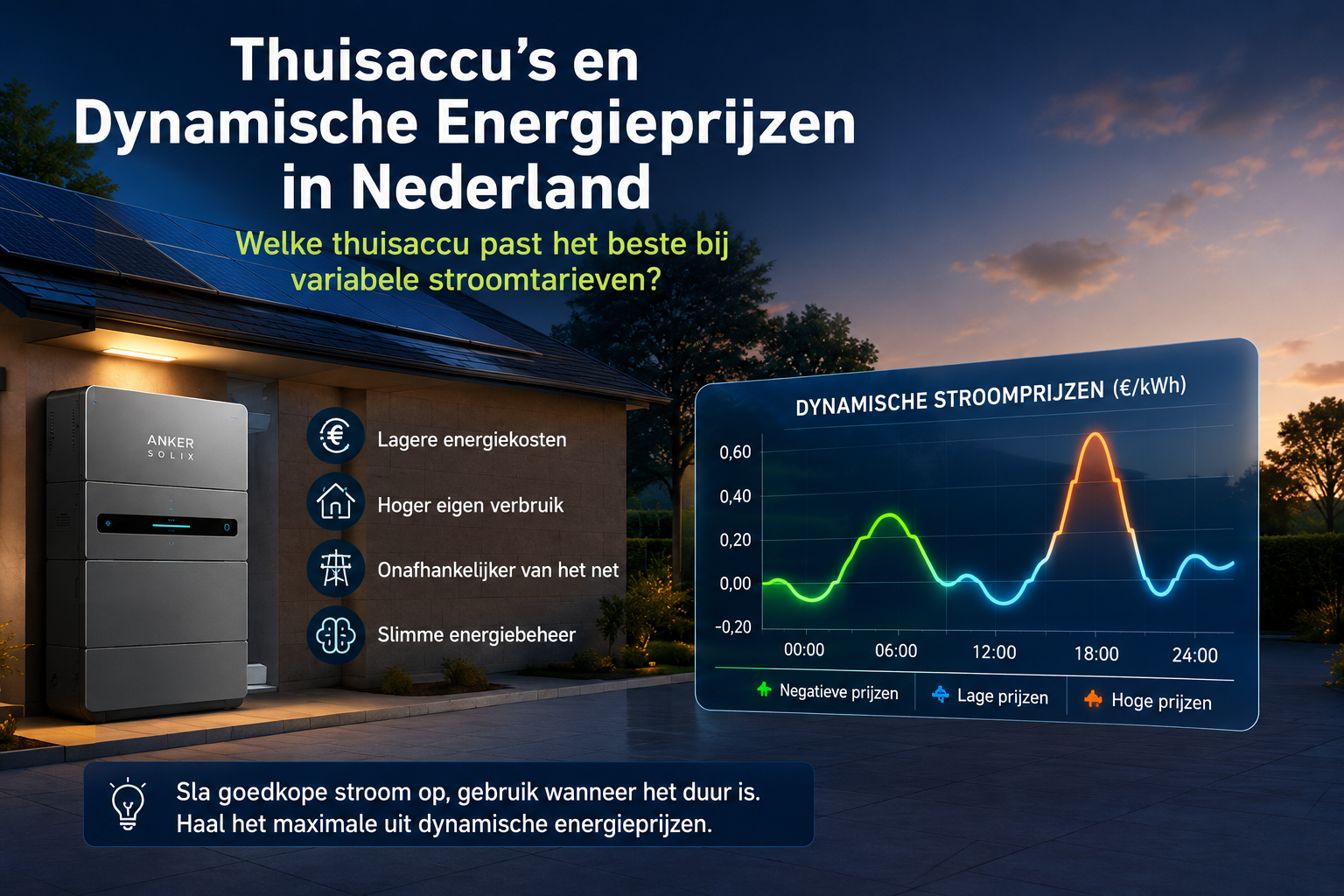
Short answer: Yes, charging at a low price and using at a high price is possible, but only with a home battery that supports charging from the grid and automatic control of varying rates. For this use, the Anker SOLIX Solarbank Max AC is a logical option for early comparison, because expandable storage, energy management and deployment with dynamic rates fit well with this scenario.
Pay particular attention to four points: whether charging from the grid is permitted, whether the system can automatically respond to hourly prices, whether power and capacity match your consumption, and what installation requirements apply above 800 W. When charging with a low-price dynamic energy contract, the actual benefit also depends on your nighttime consumption, peak consumption, solar panels and the real difference between cheap and expensive hours.
When does charging at low price and using at high price really work?
This approach especially works when a home battery does more than just store solar surplus. The system must also be able to consciously charge from the grid during cheap hours and use that power later when the price is higher. Storage, control and installation are all important for this. Simply having a lot of capacity is not enough.
The practical answer is therefore: yes, but only if the battery, energy management and home fit together well. A suitable system supports grid charging, can automatically control dynamic rates, supplies sufficient power for peak moments and is designed for many charging and discharging cycles. Without that combination, you often end up with manual shifting, which is usually less accurate and less attractive in daily use.
- Direct answer: price-controlled charging and unloading is possible.
- Key conditions: mains charging, automatic price control, appropriate power and appropriate capacity.
- Limitations: Not every home or group is immediately suitable for higher power.
- Practical step: First compare your night consumption, peak consumption and available group with the product specifications.
- Caveat: savings and payback time differ greatly per household.
What should you pay attention to with a dynamic energy contract and a home battery?
Which technical conditions make the difference?
Capacity is important for this use, but power is often just as decisive. A battery with a lot of storage but limited discharge capacity is less able to absorb expensive hours. If you're cooking, washing, and using multiple appliances at the same time in an evening, it takes enough usable power to really shift that consumption to previously charged power.
Therefore, pay attention to neutral selection points. Choose a system that is explicitly suitable for charging from the grid, automatic control of dynamic prices and daily charging and discharging. In addition, look at usable depth of discharge, cycle life and installation options in the home. If you have solar panels, it also counts how much electricity generated during the day can be stored for later use in the evening.
- Capacity: must match your evening and night consumption.
- Power: determines how much consumption you can hedge at the same time.
- Lifespan: many cycles are relevant for daily price control.
- Control: automatic planning is in practice more convenient than manual switching.
- Installation: check group, connection and local rules in advance.
For whom is this suitable, and for whom less so?
A home battery for dynamic rates is especially suitable for households that have significant consumption in the evening and night, regularly see price differences between cheap and expensive hours and have sufficient space or installation capacity. This can also be interesting with solar panels, because stored electricity can come not only from our own generation, but sometimes also from cheap grid electricity.
This use is often less suitable for households with very low power consumption, little price difference in the contract or a home where installation adjustments are difficult. Then the practical gain can remain limited. That is why it is wise not only to look at the purchase price, but also at your daily consumption pattern, available group and whether you will use the system often enough.
When does Anker SOLIX Solarbank Max AC suit this use?
Why this model is worth comparing early
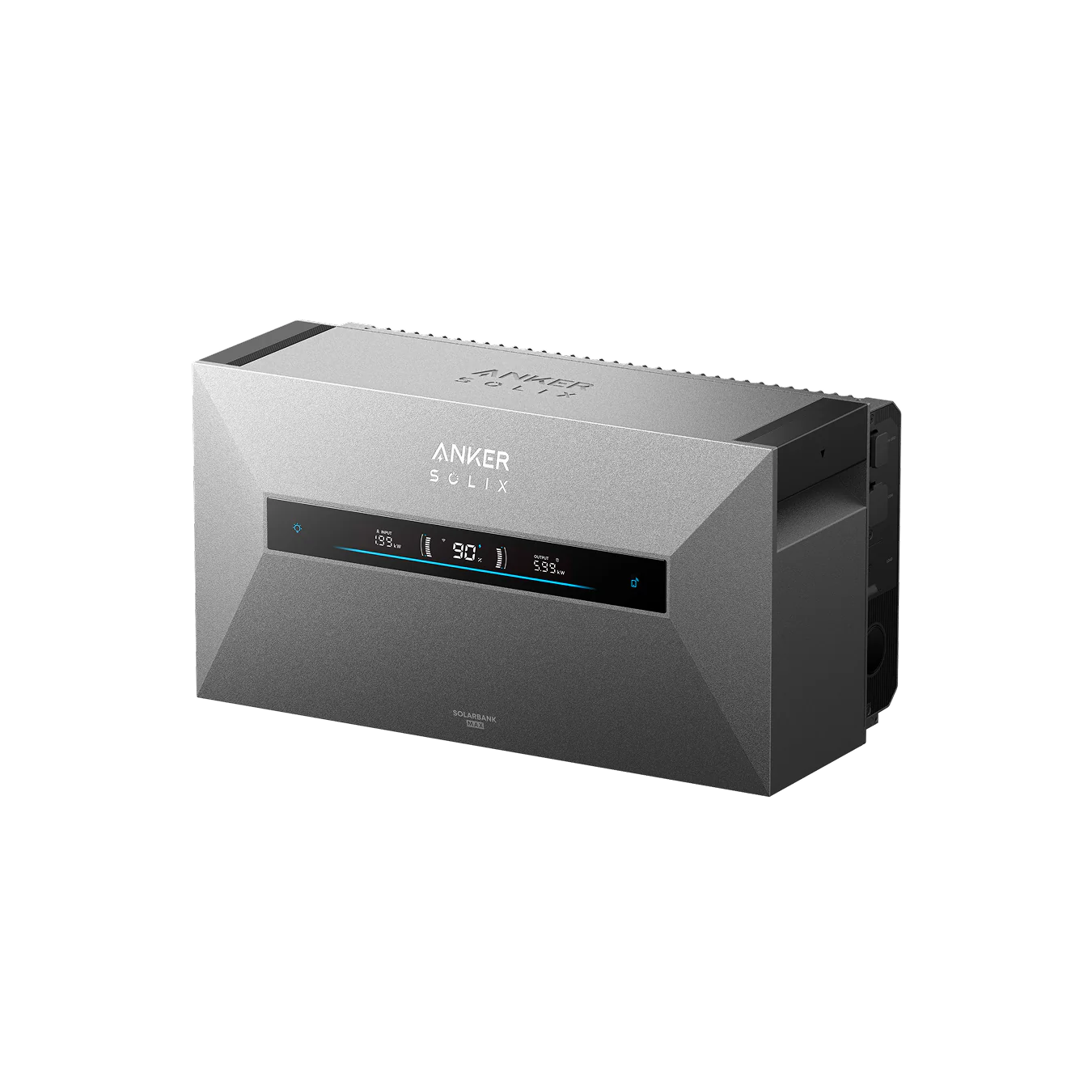
The Anker SOLIX Solarbank Max AC is relevant for this scenario because the system brings together storage, power and energy control in one solution. The basic capacity of 7 kWh can already accommodate a large part of the evening and night consumption for many Dutch households. This makes the model interesting for those who want to start without immediately reaching maximum size.
The expandability up to 42 kWh is useful for households that want to scale up later, for example with higher consumption, extra solar panels or a changing family situation. This makes this model not only interesting as a final choice, but also as a point of comparison: it allows you to test how much capacity you need now and how much flexibility you want to retain later.

Power is also important here. With 3500 W in grid-connected situation, 3680 W off-grid and 5000 W total power, the system is more widely applicable than solutions that only support smaller consumers. Furthermore, LFP cells, 10,000 cycles, 10-year warranty, 100 percent depth of discharge and placement flexibility are relevant strengths for daily use. However, there is a clear limit: above 800 W there are additional installation requirements. For 3500 W you must count on a separate group, professional installation and checking of the local registration rules.
- Suitable for: dynamic rates, existing solar panels, higher self-consumption and need for emergency power.
- Less suitable for: households with very low consumption or without suitable installation situation.
- First check: night consumption, peak consumption, free group and local requirements for registration.
Key product points in brief
- Capacity and power: 7 kWh base, expandable to 42 kWh, 3500 W grid-tied, 3680 W off-grid and 5000 W total power.
- Battery and life: LFP cells, 10,000 cycles, 10-year warranty, 15-year design life and 100 percent depth of discharge.
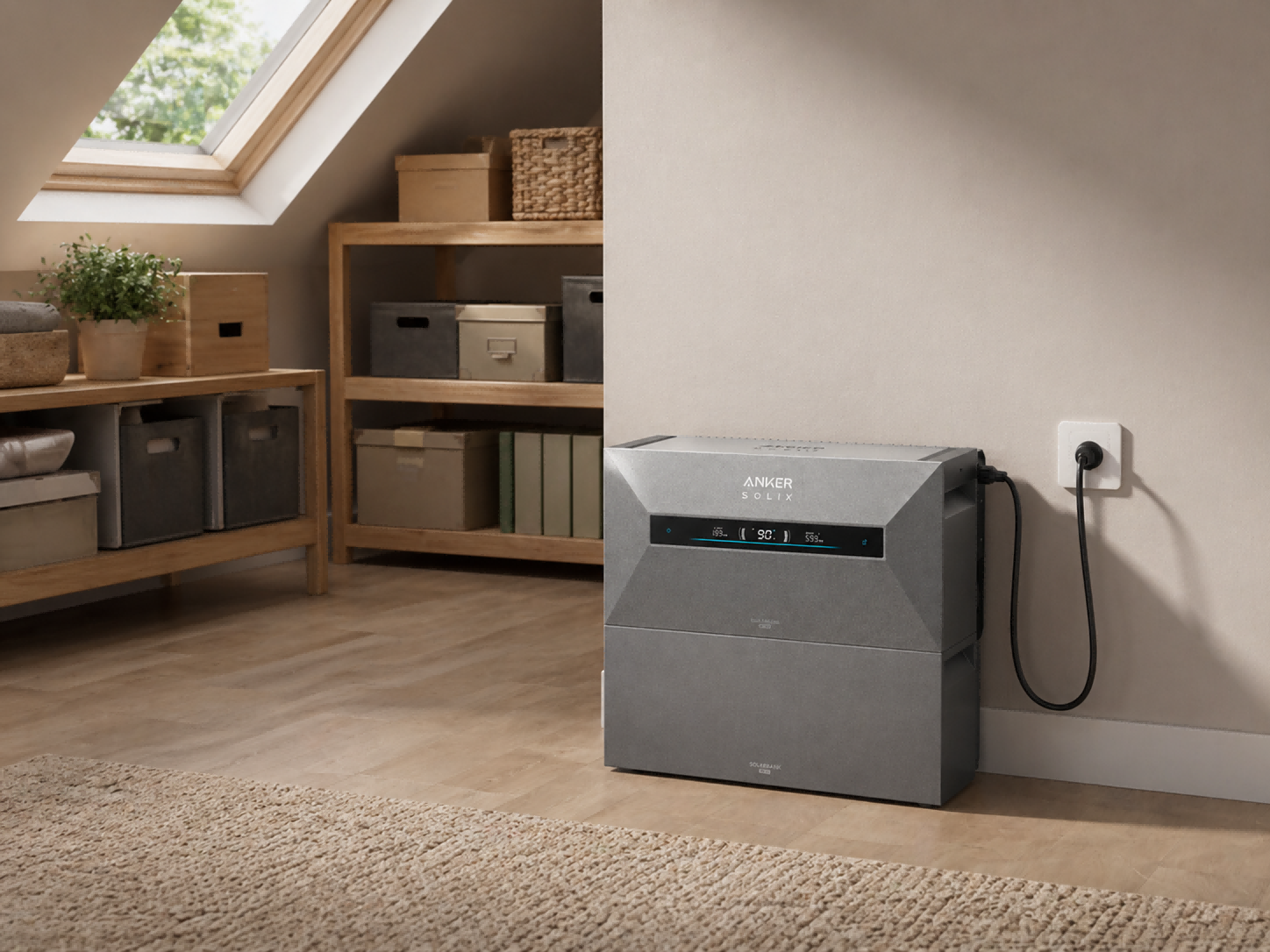
- Usage and installation: installation in about 5 minutes without wired stack mounting, with plug, Wieland or fixed connection, can be used in garage, basement or on a balcony.
- Control and monitoring: energy control based on consumption history, weather and dynamic prices, with connection options for home monitoring.
- Safety: switch to emergency power in about 10 milliseconds, protection class IP66 and active heating at low outside temperatures.
How do you assess savings, payback time and practical use?
With a dynamic energy contract, storage capacity is often considered too quickly. In practice, your consumption profile determines the result. Those who use electricity mainly in the evening and night can benefit more from charging during cheap hours. Those who already consume a lot directly from solar panels during the day are more likely to look at increasing their own consumption and covering the evening peak.
With an electric car, heat pump or higher peak load, the logical battery size often shifts upwards, but only when the system can actually deliver that power. A larger battery is therefore not automatically better. Without sufficient daily cycles or without clear price differences, the financial benefit remains limited.
Savings therefore remain a calculation based on assumptions as long as your real hourly prices, consumption and installation have not been tested. Product calculations are useful as a direction, but not as a fixed outcome. A practical approach is to compare your night consumption, peak load, available group and desired storage with the specifications of Anker SOLIX Solarbank Max AC. Then you can see more quickly whether the combination of capacity, power and installation conditions really suits daily price control, solar storage and possible emergency power.
- Higher chance of benefit: clear price differences, regular evening consumption and many usable charging cycles.
- Lower chance of benefit advantage: small consumption, little price difference or limited installation options.
- Important nuance: outcomes differ per household, contract and market situation.
Sources and control points
Use these resources to check rules, contract forms and product information in the Netherlands before making a choice. Always check whether your contract has dynamic rates, whether charging from the grid is practical in your situation and what requirements apply to connection and registration.
- class="ql-indent-1">Authority for Consumers and Markets, information about energy suppliers and contracts, https://www.acm.nl/nl
- Grid Management Netherlands, information about electricity grid and connections, https://www.netbeheernederland.nl
- Milieu Centraal, home battery, https://www.milieucentraal.nl/energie-besparen/zonnepanelen/thuis Battery/
- Anker SOLIX, product page Anker SOLIX Solarbank Max AC, https://www.ankersolix.com/en/products/a17e2
- Dynamic Electricity Rates, home battery and dynamic rate combination, https://dynamic-stroom rates.nl/kennisbank/thuisbatteries-dynamisch- Rate-combination/
- Green Your Life, home battery charging with dynamic rates, https://vergroenjeleven.nl/thuis Battery-laden-met-dynamic- rates-via-anwb-energie/
Anker SOLIX Solarbank Max AC
Product description
Frequently asked questions
Can I really charge a home battery at a low price and use it at a high price?
Yes, but only if the home battery supports charging from the grid and can automatically control dynamic hourly prices. A model that only stores solar surplus is limited for this purpose. Therefore, always check whether grid charging, price control and appropriate power are explicitly present.
How big should a home battery be with a dynamic energy contract?
That mainly depends on your evening and night consumption. For many households it makes sense to first check how much electricity you use outside sunny hours. A battery that is too large is not automatically better; without enough daily cycles and price differential, recoupment becomes more difficult.
When is Anker SOLIX Solarbank Max AC a logical option?
This model makes sense if you want to focus on cheap and expensive hours, possibly together with solar panels, and if you value expandable storage and higher usable power. It is less appropriate if your consumption is low or your installation does not allow a suitable group or registration. First check your night consumption, peak consumption, free group and the requirements above 800 W.
Is charging from the grid with a home battery always allowed in the Netherlands?
No, you must check this per product, installation and local situation. Connection, separate group, professional installation and registration requirements play a role, especially with higher power. So do not assume one standard answer for every home, but always check the technical and local conditions.
Conclusion
Charging at a low price and using at a high price can be a sensible use of a home battery, but only when mains charging, automatic price control, power, capacity and installation conditions are really right. For households with a dynamic energy contract, it is therefore smart to first compare their own night consumption, peak consumption, the available group and any solar generation with the product specifications.
The Anker SOLIX Solarbank Max AC is a relevant option to compare early in this scenario, because the system combines expandable storage, robust power and energy control with placement flexibility and emergency power. As a next step, check the product page of Anker SOLIX Solarbank Max AC and compare your desired capacity, charging and discharging power, installation situation, registration requirements and daily consumption profile. This way you can specifically assess whether this model is suitable for charging with a low-price dynamic energy contract in your home.