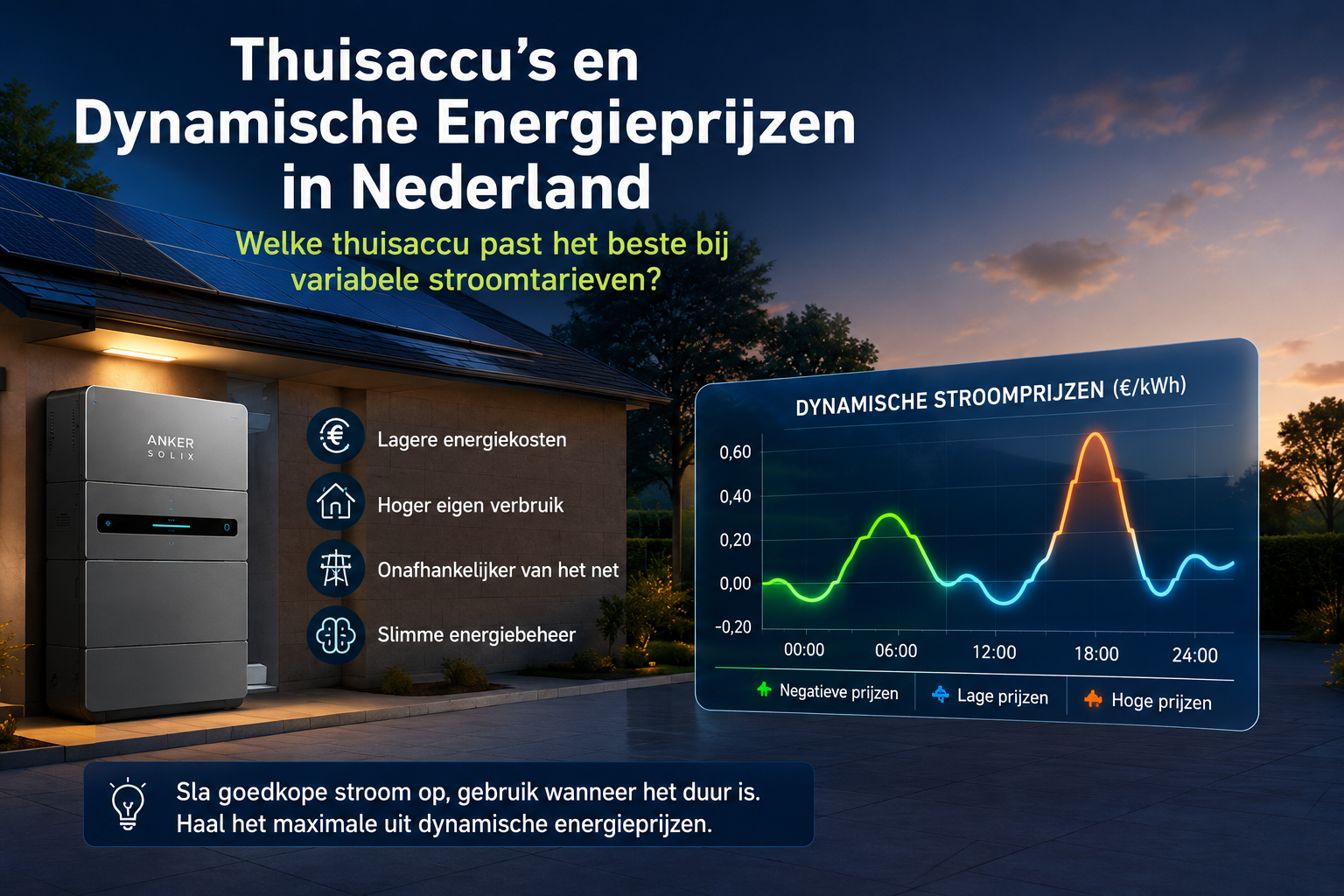
How does the abolition of the netting arrangement change the financial calculation?
Under the current netting scheme, you can offset each kWh supplied back to the grid against each kWh consumed. The net functions, as it were, as a free battery. That makes a home battery less urgent at the moment.
But after 2027 that will change:
The feed-in tariff will drop sharply (possibly to €0.05–€0.10 per kWh or lower).
The purchase price is expected to remain between €0.25 and €0.40 per kWh.
The difference can amount to €0.20–€0.30 per kWh – and that is exactly the range in which a home battery proves its worth.
In other words, your assessment shifts from "how much do I generate" to "how much do I use myself". A battery allows you to convert the electricity that you would otherwise sell for a low price into electricity that you do not have to purchase expensively. That is the core of the business case after the netting reduction.
What should you pay attention to with a home battery after 2027?
Not all home batteries benefit equally from the disappearance of the netting scheme. After 2027, the value of a battery will shift from "storage for self-use" to "dynamic optimization". Preference is given to those who can charge and unload smarter, can be more easily integrated into existing systems and can respond more flexibly to different consumption profiles. The following three aspects are crucial in a post-netting market.
Smart (AI-controlled) home battery systems
Kenmerk:
Equipped with an AI-controlled energy management system that automatically draws up a charging and discharging schedule based on real-time electricity prices, weather forecasts and historical consumption data.
The battery thus becomes not just a storage medium, but an optimization tool for energy trading. The more dynamic the electricity prices become, the greater the value of such a system.
The Anker SOLIX Solarbank Max AC has Anker Intelligence™ AI. This automatically combines electricity price information with weather forecasts and optimizes the charging and discharging strategy 24/7 – without you having to intervene manually. The built-in voice assistant Anka provides real-time insight into ROI, and the system can be integrated with Home Assistant via an open API and Modbus protocol. Moreover, it is ready for future participation in Virtual Power Plants (VPPs). This makes it one of the most advanced smart home batteries on the market.
AC-coupled (retrofit) home batteries
Kenmerk:
Connects to the alternating current (AC) side of an existing solar panel system, without having to replace the existing inverter.
This is a cost-efficient upgrade for households that already have solar panels – which is the vast majority in the Netherlands.
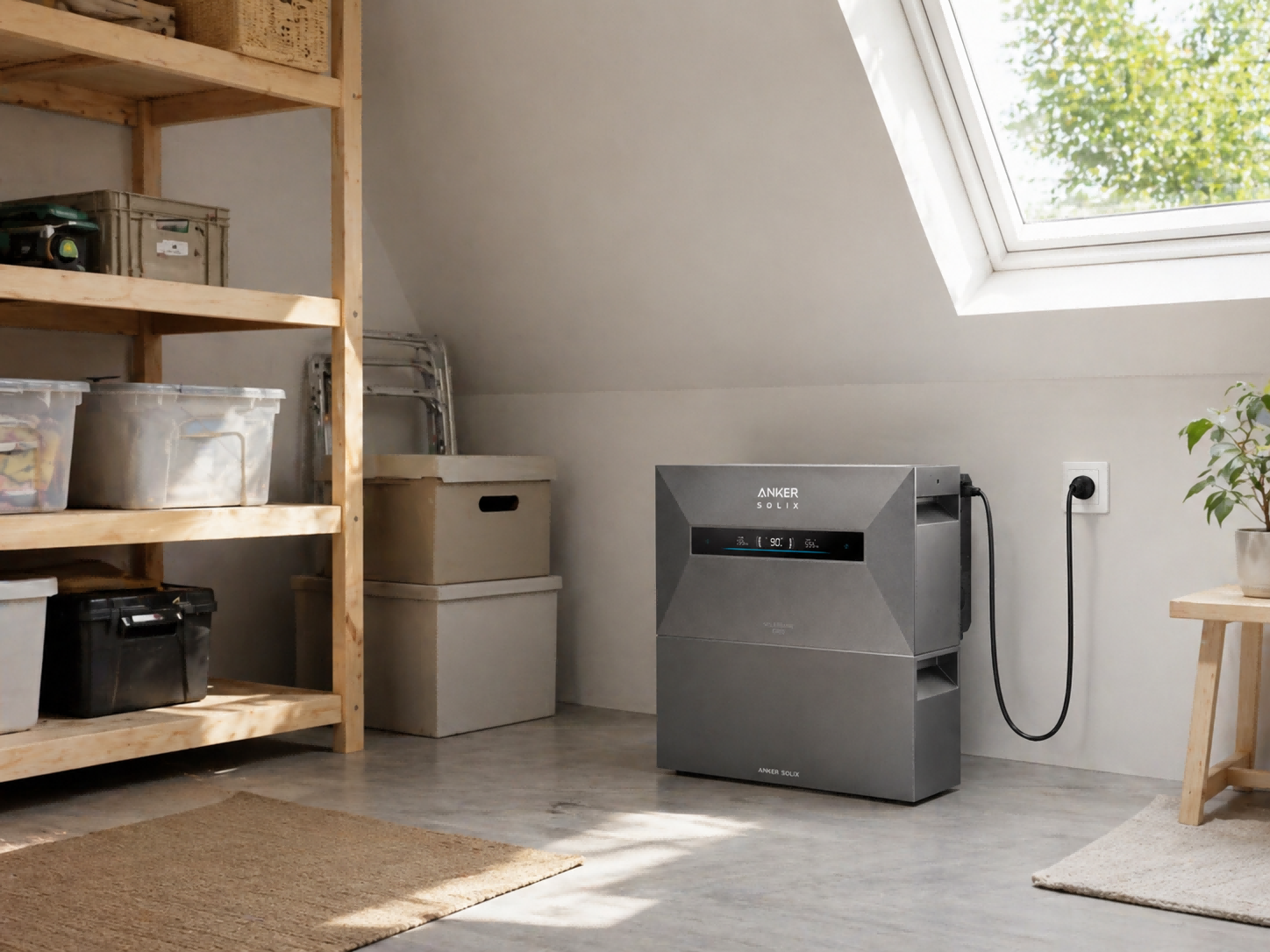
The Anker SOLIX Solarbank Max AC supports three connection methods: Schuko (plug-in), Wieland and fixed connection. This makes it suitable for a variety of electrical installations. In standard 800 W mode, no electrician is needed – you connect it yourself. For households with an existing solar panel system, this is one of the most accessible and least invasive ways to add energy storage.
Plug-in batteries with the correct capacity
Kenmerk:
Low cost, easy installation – via a regular socket. They can cover 60–80% of basic evening consumption.
But their capacity is limited (usually 3–5 kWh), making them insufficient in winter, with high loads or for complete energy independence.
The Anker SOLIX Solarbank Max AC offers a basic capacity of 7 kWh instead of the usual 3–5 kWh. This is exactly enough to power an average Dutch household for a whole night, without the battery running out before midnight. It is just as easy to connect as smaller plug-in batteries, but offers more capacity and is expandable up to 42 kWh. This makes it the advanced choice for those who want to start simple but scale up later.
For which households is the Anker SOLIX Solarbank Max AC suitable after the netting reduction?
| User type | Why suitable |
| Those who want to invest in phases | Modular design: start small, expand later – avoids a one-off large expense. |
| Technology enthusiasts | Open API / Modbus / Home Assistant integration, breaks through closed ecosystems. |
Conclusion: return and long-term value
When choosing a home battery in 2027, you do not just look at the purchase price, but at the total picture:
Increase in self-consumption – each self-consumed kWh of solar energy is worth the purchased electricity price (€0.25–€0.40) instead of the low feed-in tariff (possibly €0.05–€0.10).
Active power – can the battery power multiple heavy devices at the same time?
Future expandability – can the system grow with your consumption?
Non-financial value – emergency power supply in case of power failure.

The Anker SOLIX Solarbank Max AC scores well on all these points:
7 kWh basic capacity – precisely tailored to the average Dutch night-time consumption;
3500W continuous power – supports multiple devices simultaneously;
AI EMS – smartly optimizes energy consumption and responds to dynamic rates;
Modular design – enables phased investment.
Practical advice: start by comparing your annual consumption, daily yield curve of your solar panels and evening consumption with the product specifications. Then consult a certified installer to check whether the installation conditions (such as a separate group) are met. Finally, calculate the theoretical savings based on your own situation, so that you can make the best choice for your household.
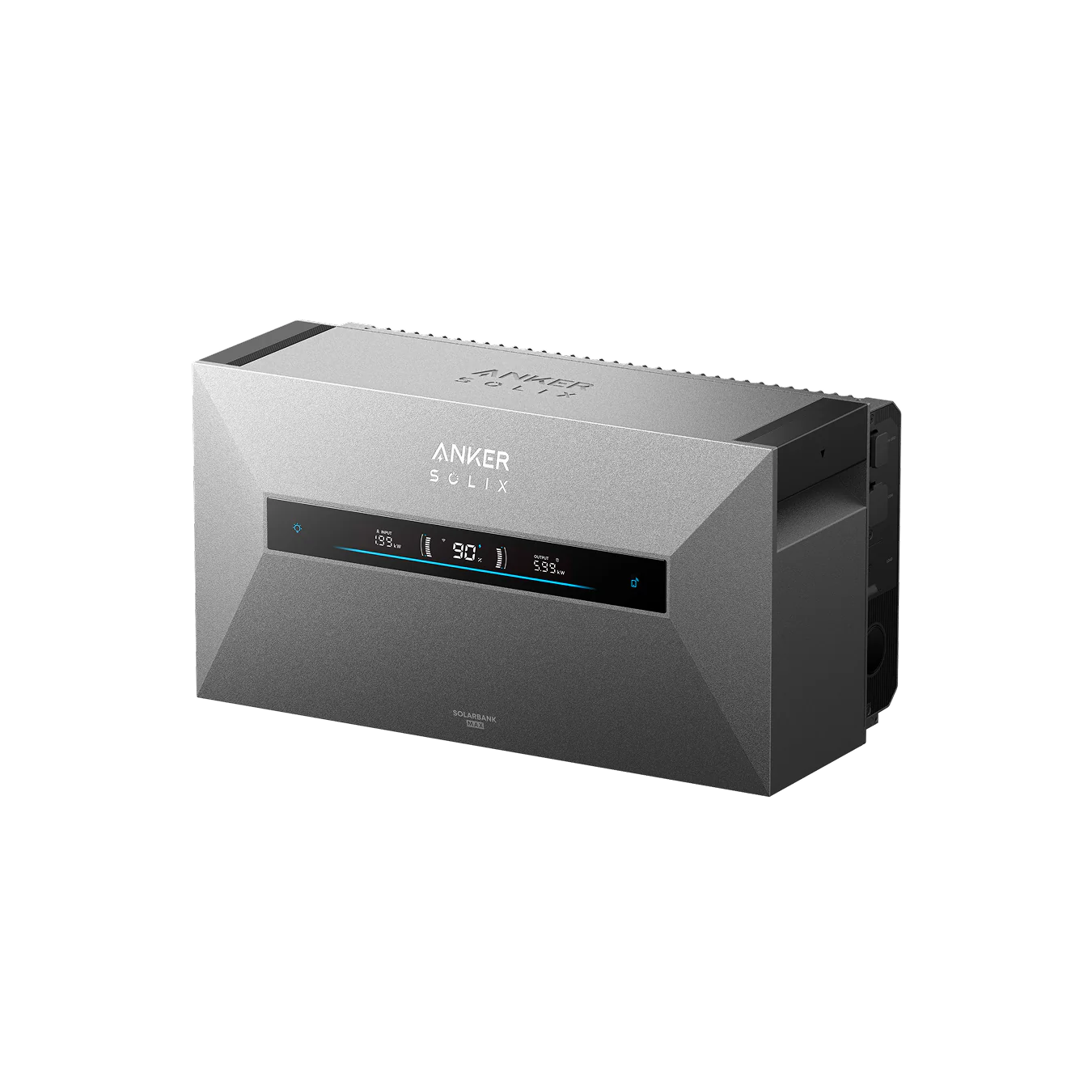
Anker SOLIX Solarbank Max AC
Product description
Sources and Control Points
Always use verifiable Dutch sources for your decision and combine them with your own consumption profile. These publications help to verify the calculation, rules and installation conditions.
- contenteditable="false">Authority for Consumers and Markets — Energy for consumers — https://www.acm.nl/nl/energie
- Netherlands Standardization Institute — NEN 1010 and safe low-voltage installations —https://www.nen.nl/elektrotechniek/systemen/installationregulations/nen-1010-low-voltage-installations
- Anker SOLIX — Product page Anker SOLIX Solarbank Max AC — https://www.ankersolix.com/nl/products/a17e2
Important limit of the available evidence: general rules do not automatically say what works best financially or technically in your home. Therefore, please check separately your return conditions, day and evening consumption, available group, desired emergency power function and whether professional installation or local registration is required.
Frequently asked questions
Will a home battery really become more attractive after the netting scheme is abolished in 2027?
Yes, but only if you have enough solar energy surplus that you can move to the evening. When the feed-in tariff is much lower than the purchase price, the value of each self-consumed, stored kWh increases significantly.
Is 7 kWh enough? What capacity do I need?
The average night-time consumption of a Dutch household is between 6 and 8 kWh. So 7 kWh covers a full night for most households. If you have an electric car, a heat pump or other large consumers, or if you have a large surplus during the day, consider 14 kWh or more. The Solarbank Max AC is expandable from 7 kWh to 42 kWh.
Which devices can I use simultaneously at 3500 W continuous power?
For example, you can run a washing machine (~2000 W), a dishwasher (~1800 W) and a refrigerator (~150 W) at the same time, or charge an electric car (in adjustable power mode). This depends on the actual power of the devices and simultaneous use.
Why is the Anker SOLIX Solarbank Max AC the best choice after the abolition of the netting scheme in 2027?
The Anker SOLIX Solarbank Max AC has been developed for the energy market after 2027. Three features make it valuable then: the 7 kWh basic capacity covers the average Dutch night-time consumption, the AI-controlled energy manager charges at low prices and discharges at high prices, and the module is expandable to 42 kWh for future growth. No wonder this system is often mentioned as a logical choice for the post-balance period.