Solar panels on a shed can be a practical solution if the roof of your home is less suitable or if you want to use extra roof space. For many homeowners, a shed close to home is a logical place to generate electricity, as long as the roof is sturdy enough, receives little shade and is favorable to the sun. If you want to know whether solar panels on a shed are profitable, it is best to look at the available roof surface, the condition of the construction, the cable route and your own power consumption.
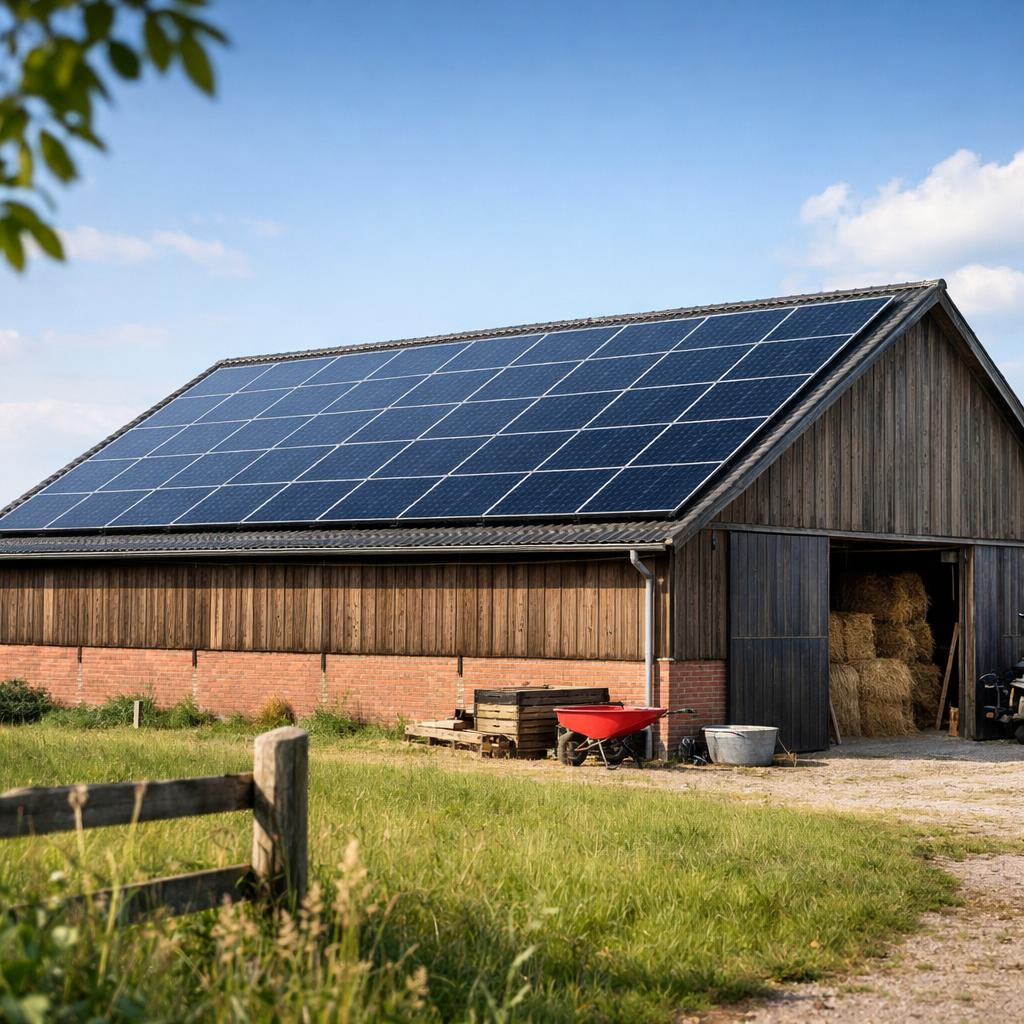
A good first step is to check whether the shed roof appears technically suitable. Pay attention to the slope, the direction of the roof and the general condition of the roof covering, and read more about roof suitability for solar panels. Please note that building regulations, electrical requirements and permits may vary by state, municipality or grid operator. As a result, it is not only the yield that counts, but also a safe and permitted installation.
When are solar panels on a shed a good solution?
Solar panels on a shed are especially interesting when the roof of the house is too small, has a lot of shade or is unfavorably located. A shed with a free roof facing south, southwest or southeast can be very suitable. Installation can also work well on a flat roof, as long as there is enough space for secure mounting and the panels do not shade each other. If you are looking for what you should pay attention to with solar panels on a shed roof, you should start with location, free roof space and the age of the roof.
The distance to the meter cupboard also plays a major role. A shed directly next to the house is usually easier and cheaper to connect than a building at the back of the garden. However, a shed further away can also be suitable, if the cable route is constructed smartly and safely. Also think about your plans for later. If the shed is still being renovated, enlarged or perhaps replaced, this may make the investment less attractive. A well-maintained shed usually forms the best basis.
Assess roof direction, shade and load-bearing capacity
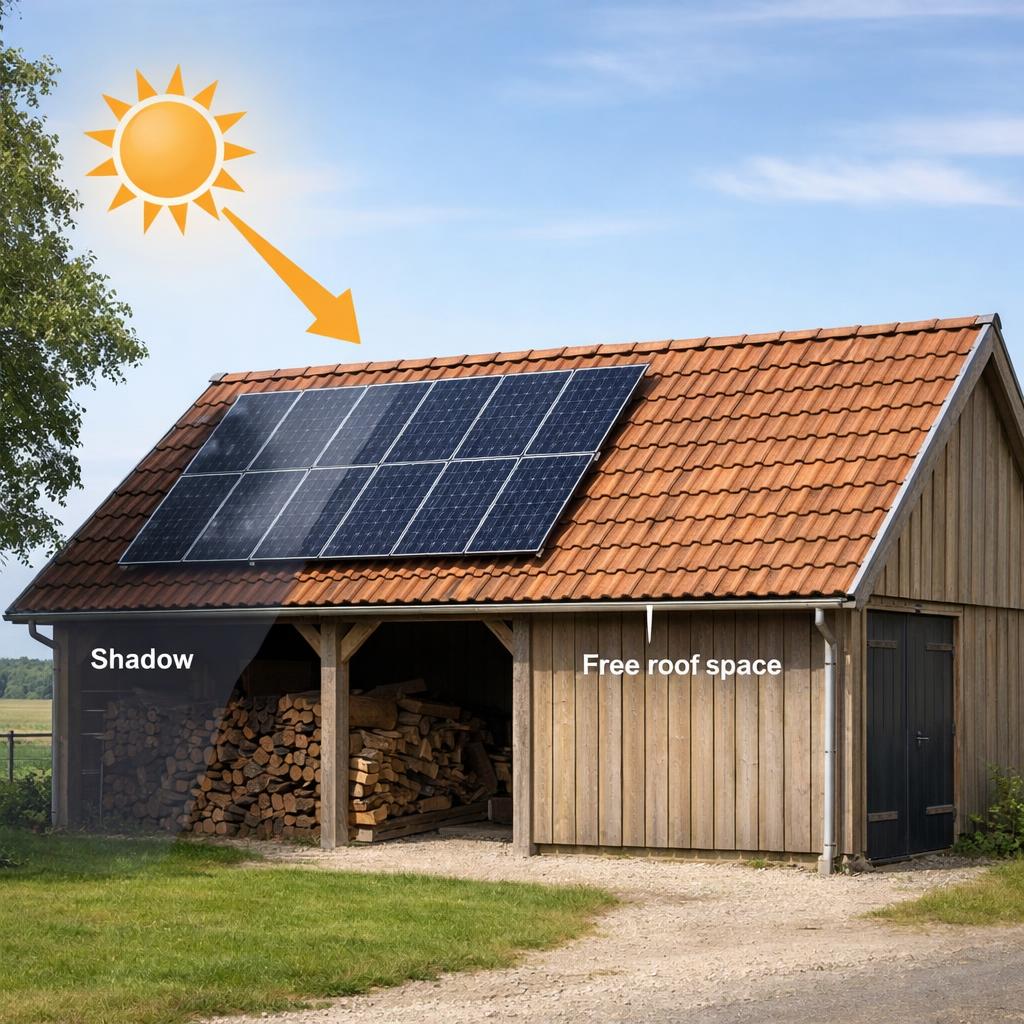
The yield depends greatly on the amount of sunlight. Therefore, check whether trees, fences, dormers or other buildings shield parts of the roof, especially in the morning and afternoon. Even limited shading can affect multiple panels at once. Then look at the roof direction: south is often the most favorable, but east and west can also provide an excellent annual yield. For the question calculate yield of solar panels on a shed, not only the direction and slope are important, but also the number of usable square meters.
Carrying capacity is at least as important. Not every shed roof is built for the extra load of panels, mounting materials and the forces of wind or snow. This certainly applies to older wooden sheds. If you have any doubts about the strength of the roof, first have it assessed whether reinforcement is necessary. This way you prevent damage, leakage or an unsafe situation. A check in advance is advisable, especially for a lightly constructed outbuilding.
Which technical and practical points determine the yield?
With solar panels on a shed, it is not just about the panels themselves, but also about everything around them. The technical design partly determines how much generated power can ultimately be used. Consider the length of the cables, losses along the way, the choice of mounting system and the way in which the installation is connected to the home. Anyone who has a greater distance between the shed and the house must pay extra attention to safe installation and the correct size of the cabling.
The type of roof also makes a difference. Anyone considering installing solar panels on a wooden shed roof should pay close attention to mounting points, waterproofness and the strength of the roof. Accurate installation is extra important on a wooden shed to prevent cracks, water ingress or deformation. In addition, the layout must remain practical: leave space along the eaves for maintenance and any ventilation. A smart installation plan often yields more than simply laying down as many panels as possible.
Inverter, cabling and distance to the home
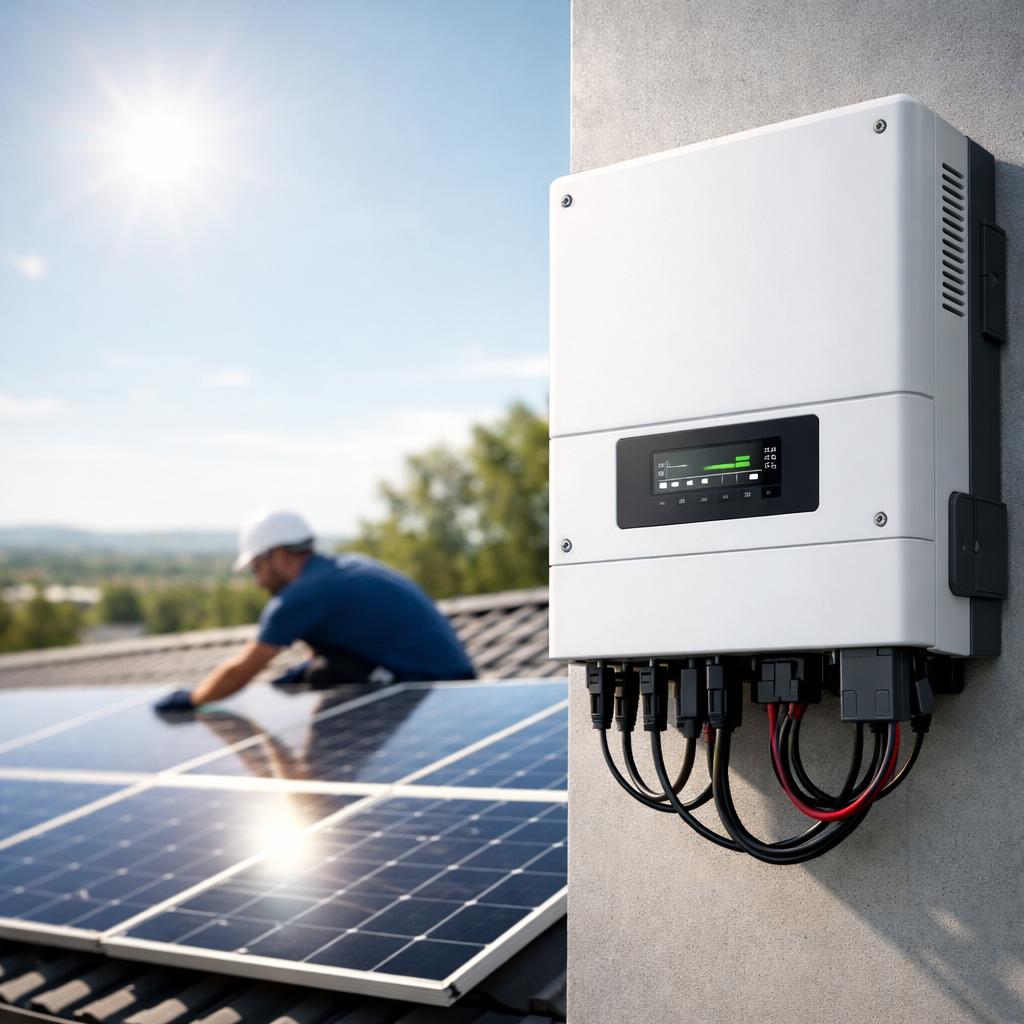
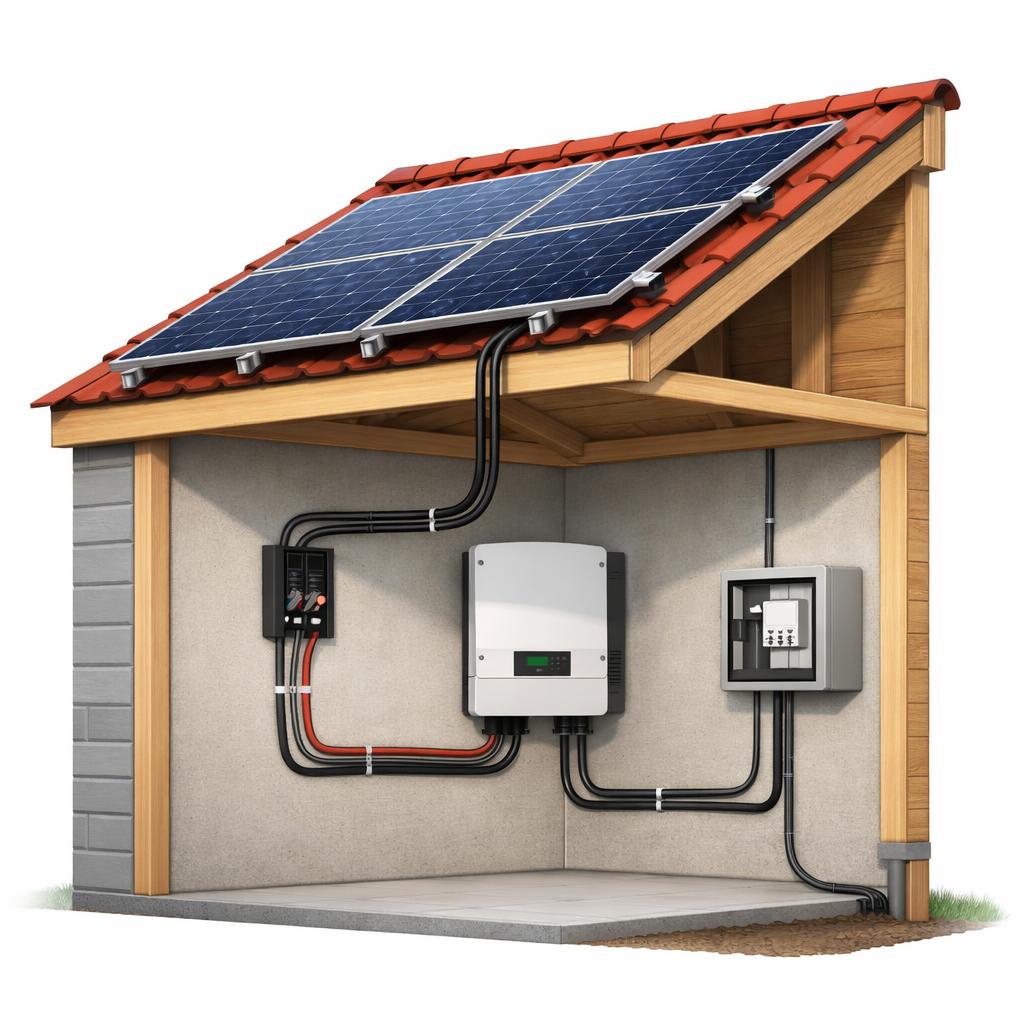
The location of the inverter influences efficiency, maintenance and safety. Sometimes it comes in the shed, sometimes in the house, depending on temperature, ventilation and cable length. If the distance between the shed and the house is greater, an unfavorable cable route can cause additional loss or higher costs. Therefore, read more about the inverter and cabling explanation in advance to better assess which setup suits your situation.
From a practical point of view, the installation must also remain easily accessible for inspection and malfunctions. Make sure cables are protected against moisture, rodents and damage. With a separate shed, a neat passage to the home is also important. Anyone who seriously wants to determine whether solar panels on a shed are profitable must therefore not only look at the power of the panels, but also at technical losses, installation costs and the expected lifespan of all components.
Costs, security and frequently asked questions
The costs of solar panels on a shed depend on the number of panels, the strength of the roof, the distance to the connection and any adjustments to the structure. Sometimes a shed seems economical because there is a lot of roof space, but additional cables, digging or reinforcement can still increase the price. On the other hand, a well-located shed roof can significantly improve the total yield of the plot. Therefore, do not just compare the purchase price, but especially the costs per kilowatt hour generated over several years.
Safety always deserves priority. Consider correct mounting, good roof sealing and sufficient distance to flammable materials. Local building regulations, electrical requirements and permissions may differ per state, municipality or grid operator, so checking in advance is important. Preferably choose materials that suit the type of shed and if in doubt, have a professional take a look. This way you avoid common mistakes, such as overloading the roof, an unfavorable spot in the shade or a connection that is too tight.
Frequently asked questions
Can every shed roof support solar panels?
No, not every shed roof is automatically suitable. The structure must be able to safely support the additional weight of panels and mounting materials. Pre-checking is especially important for older, light or damaged roofs.
Is a wooden shed suitable for solar panels?
Yes, that is possible, as long as the wooden construction is strong enough and is in good condition. The attachment must be done carefully to prevent leakage, cracking and deformation of the roof.
How do you calculate the yield of solar panels on a shed?
To do this, you look at roof direction, slope, shade, number of panels and technical loss in the cabling. The local climate and the quality of the installation also influence the final annual yield.
Is a shed further from the house less suitable?
Not always, but a greater distance can result in higher installation costs and more attention to cabling and voltage loss. Good technical development is then extra important for efficiency and safety.
Conclusion
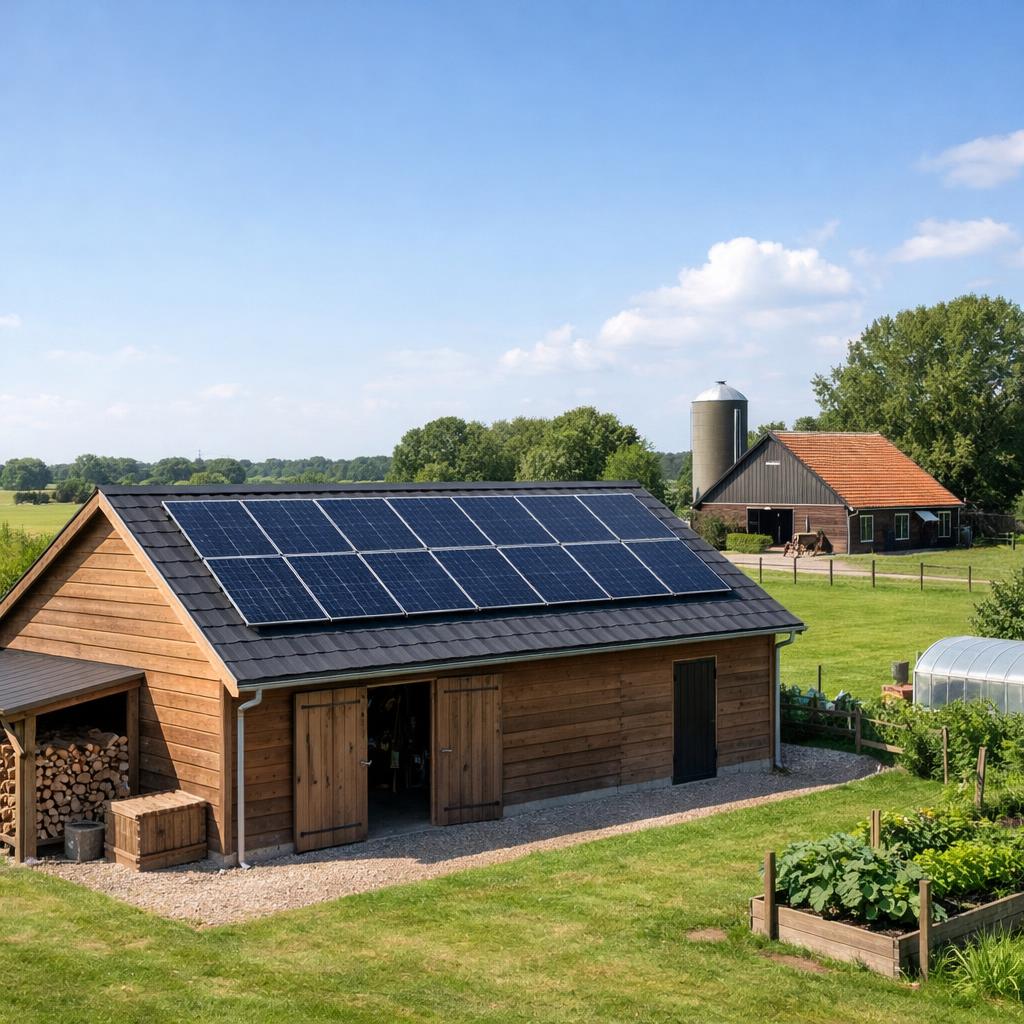
Solar panels on a shed are often a smart choice if the roof receives enough sun, is strong enough and can be properly connected to the home. The feasibility mainly depends on carrying capacity, shade, cable route and local rules. If you carefully consider technology, safety and future plans in advance, you will avoid problems and be able to better assess whether the investment is worthwhile.
For many households, shed solar panels offer extra flexibility and a practical way to utilize unused roof space. If in doubt, have the construction and electrical design assessed, especially with a wooden or older roof. This way you can realistically determine what the yield will be and whether installation on your shed is really profitable and safe.