Choosing the right inverter is important, because this part converts the direct current from your solar panels into usable alternating current for your home. Which inverter do you need for a solar panel installation depends mainly on your roof type, the amount of shade, the total power of the panels, your wish for monitoring and whether you want to expand later with, for example, a battery. If you first want to understand the complete system better, you can also read about how solar panels work.
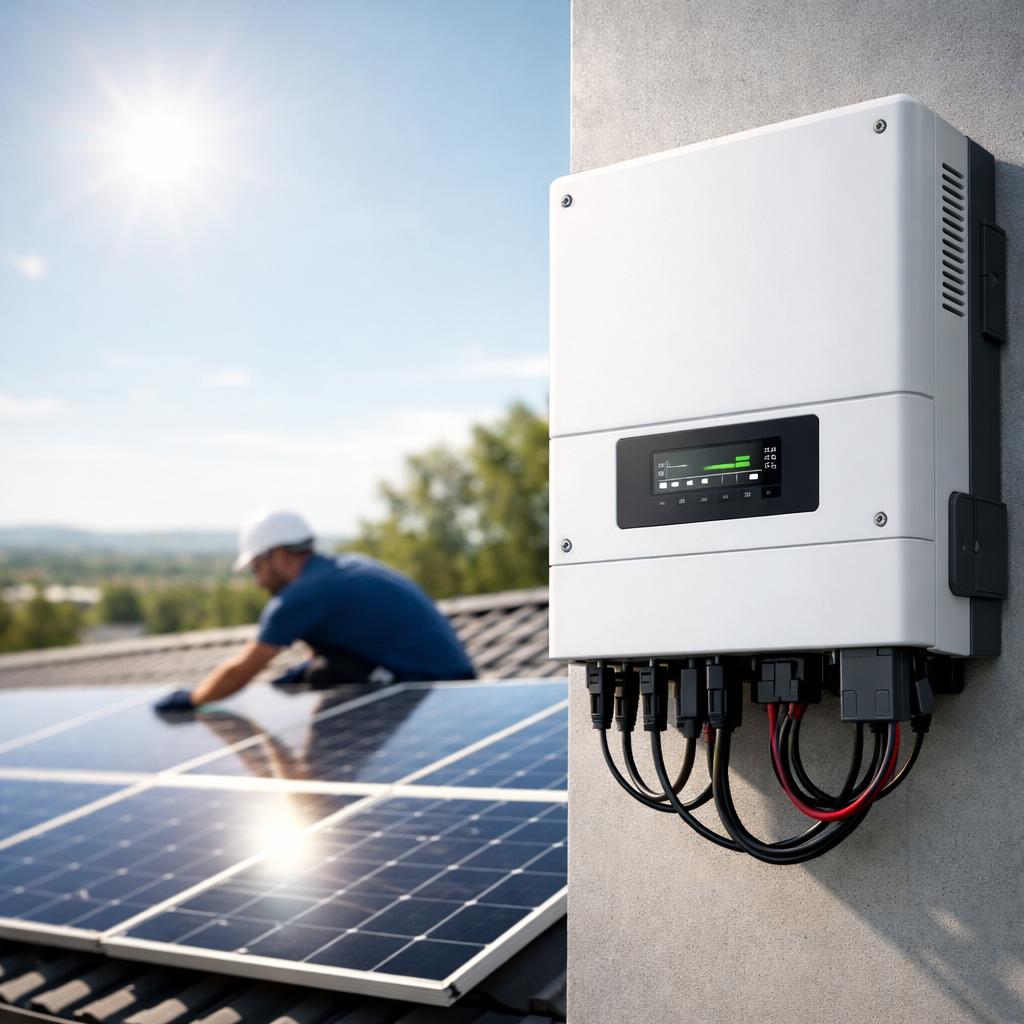
For most homeowners, the choice comes down to three options: a string inverter, micro inverters, or a hybrid inverter. There is no type that is automatically the best in every situation. The smartest choice only comes when you look at panel specifications, voltage range, mains connection and the practical situation on the roof. This will give you a clearer answer to the question of which inverter do I need for solar panels in my home.
What types of inverters are there and when do you choose which one
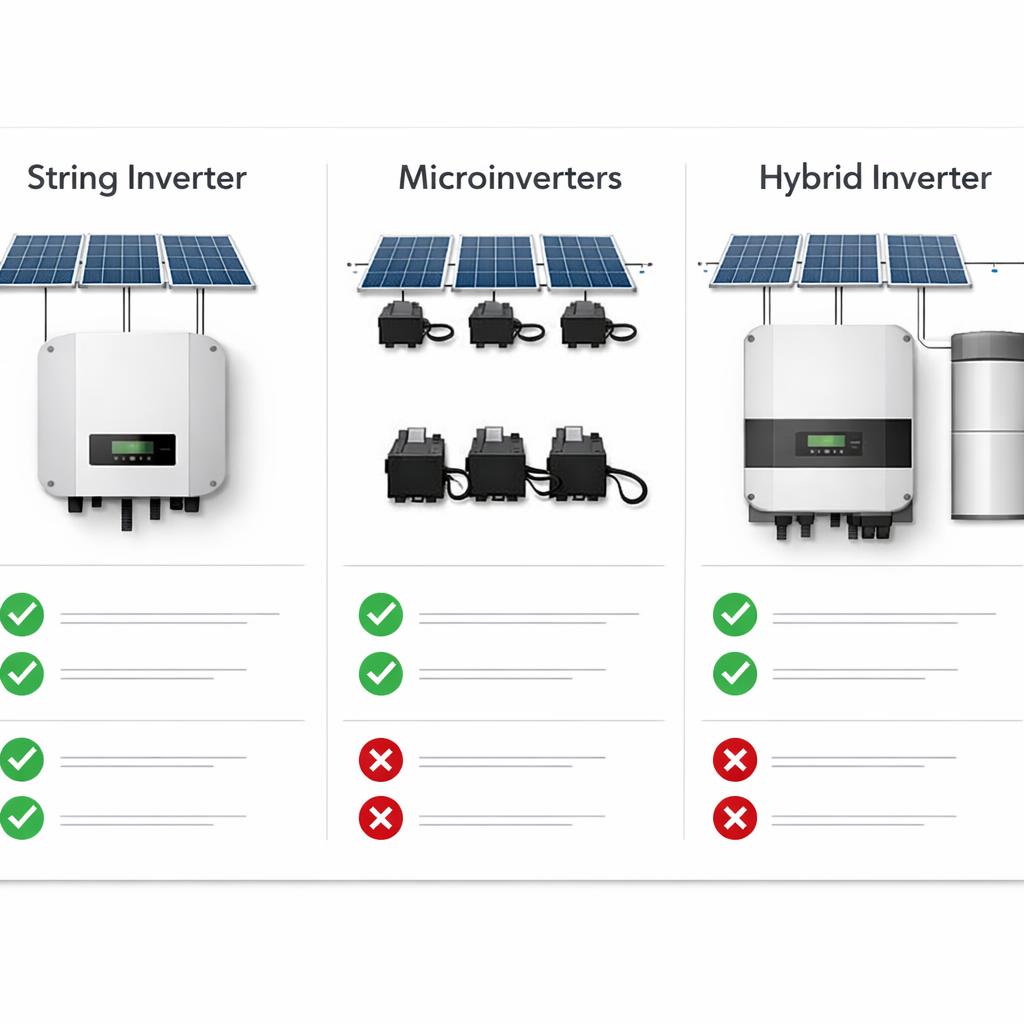
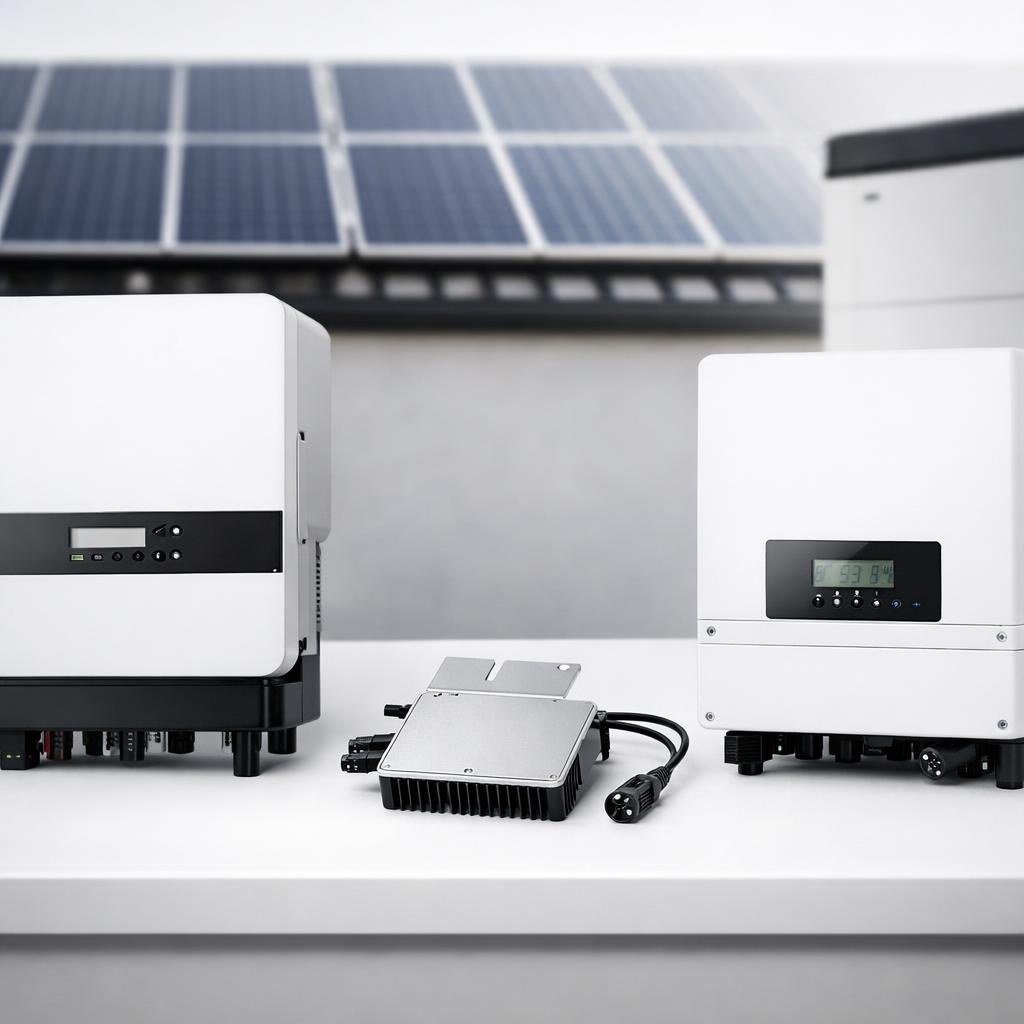
String inverter, micro-inverter or hybrid inverter
A string inverter is often the most logical choice for a simple roof without significant shade. Multiple panels are then linked in one or more strings that are connected together to the inverter. This type is usually attractively priced, relatively easy to maintain and more than sufficient in many standard homes. However, panels within the same string can influence each other. If one panel performs less due to shade or pollution, this can affect the rest of the series.
Microinverters work per panel and therefore offer more flexibility. This is especially useful for roofs with different orientations, small roof surfaces or recurring shade from trees, chimneys or dormer windows. They also often make it easier to track performance per panel. A hybrid inverter is especially interesting if you are already thinking about energy storage or want to add a home battery later. In many cases this makes it easier to expand, although support varies greatly per brand and model. Therefore, always check whether the chosen inverter suits the number of panels, the power per panel and possible future expansions.
How to determine the correct power and compatibility
Pay attention to panel power, roof orientation, shade and expansion
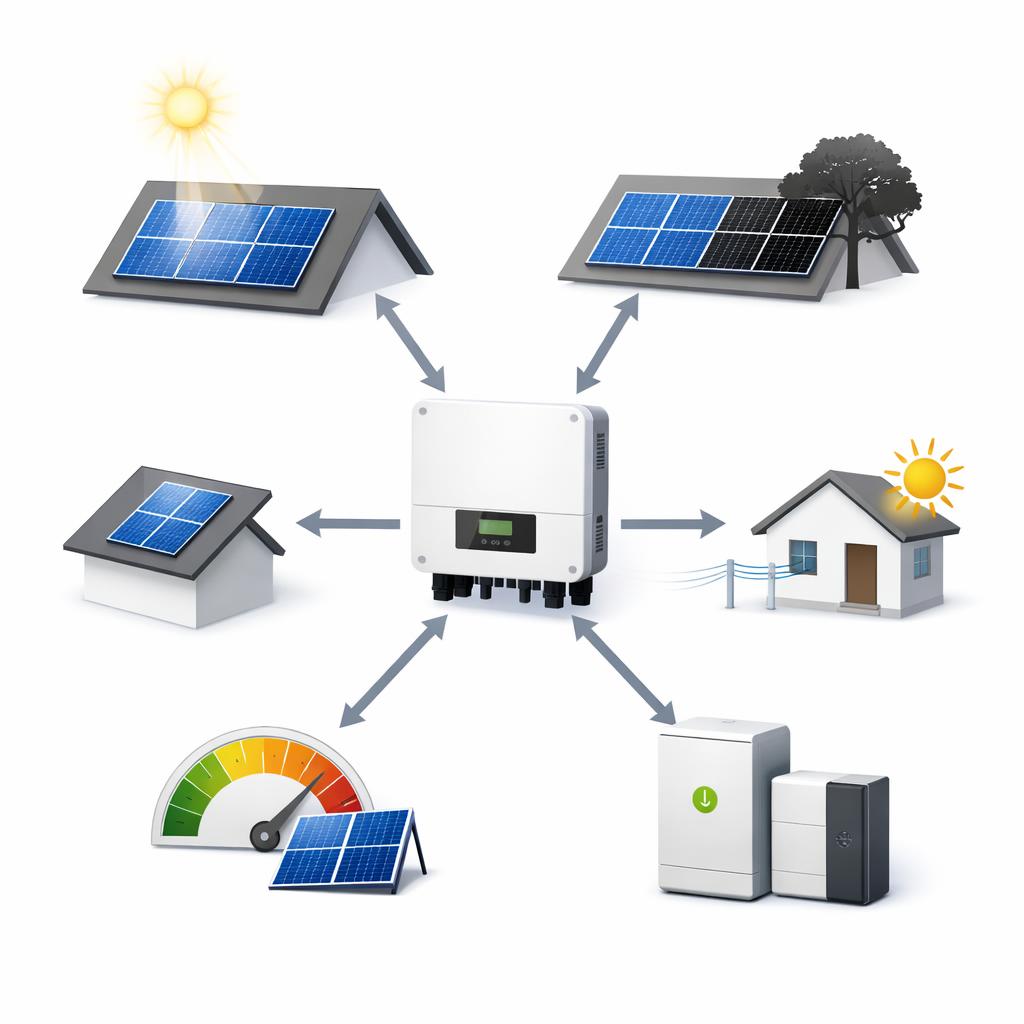
If you want to know how to determine the power of an inverter, start with the total peak power of the solar panels in watts peak. Then you look at the ratio between the combined panel power and the nominal AC power of the inverter. In practice, inverters are regularly chosen slightly smaller or slightly larger. What is sensible depends on factors such as orientation, temperature, local irradiation and the expected yield profile throughout the year. Therefore, a choice should always be checked for voltage windows, start-up voltage, maximum input current and compatibility with the chosen panels.
The roof layout also plays a major role. If panels are located on different roof surfaces or with different inclination angles, you often need more flexibility in MPPT inputs or you will be more likely to use microinverters. For shading, panel level electronics can be beneficial, but that is not a hard and fast rule for every project. Sometimes a good string format is enough. Also think ahead. If you later want to install additional panels or connect a battery, the inverter must be technically prepared for this. It is precisely that combination of power, roof layout and expandability that ultimately determines whether a solution is really suitable.
Also pay attention to practical points that are sometimes less clearly expressed in quotations. Consider the location of the inverter, the noise level, the length of cable routes, the app or portal for monitoring and the warranty scheme. A cheap inverter may seem attractive on paper, but become less interesting if monitoring is limited or expansion proves difficult. That is why it is wise not only to look at the price per device, but at the total usability within your entire solar power system.
What is the smartest choice for your home in practice
Balance between price, return, monitoring and future plans
In practice, a string inverter is often smart with a clear roof, little shade and a clear focus on a favorable price-quality ratio. Microinverters are usually a better fit when panels do not all operate under the same conditions or when you want insight into the performance per panel. When figuring out which hybrid inverter for solar panels and home batteries is suitable, pay particular attention to battery compatibility, emergency power options, software functions and whether the system can grow later. If you want to delve deeper into this, you can read about combining home batteries with solar panels.
The best choice is rarely just a matter of comparing prices. Also look at warranty conditions, service, availability of parts, ease of use of the monitoring and the room to expand later. For many homeowners, the more complex the roof and the greater the chance of future adjustments, the more important flexibility becomes. At the same time, a simple solution remains attractive if your roof is straightforward and you above all want a reliable system that works well today.
If you are unsure between several options, ask not only about the brand, but also about the basis for the design. A good installer can explain why a certain type of inverter suits your roof surfaces, voltage, number of panels and future plans. That makes it easier to compare apples with apples. This way you avoid choosing based on marketing alone or a low quotation price, while a different configuration suits your home better in the long term.
Conclusion:
Which inverter do you need for a solar panel installation? The answer usually depends on four main points: your roof layout, the amount of shade, the total panel power, and your plans for later. A string inverter often fits well with a simple roof without many obstacles. Microinverters offer more freedom for complex roofs or uneven performance per panel. A hybrid inverter is especially interesting if battery storage plays a role now or later. So there is no universally best solution for everyone.
If you specifically compare compatibility, monitoring, expandability, warranty and budget, the choice becomes much clearer. Therefore, see the question of which inverter do I need for solar panels not just as a separate product choice, but as part of the total system design. Ultimately, always have it checked whether the inverter technically matches the panel specifications, voltage ranges, grid connection and any battery requirements. This way you avoid surprises and choose a solution that logically fits in with your home and energy consumption.
FAQ
Is a microinverter better for roof shade?
Often a microinverter can be beneficial in shading, as each panel works independently and is less affected by weaker panels on the same roof. However, this is not automatically the best choice in every situation. The outcome also depends on how much shade there is, when it occurs, how many roof surfaces you have and what the cost difference is. For light or predictable shade, another configuration may also work well.
Can I connect a home battery to my inverter later?
That is sometimes possible, but not every inverter is suitable for this. Some hybrid models are prepared for battery storage, while other systems require additional equipment or offer limited support. Therefore, check in advance whether the chosen model is suitable for specific battery brands, power levels and functions such as emergency power or smart energy management. If you are already thinking about storage, it is wise to immediately take that wish into account when choosing your inverter.