Solar panels on dormer windows can be a practical solution if the main roof has little usable space or is unfavorably positioned in relation to the sun. Technically, installation is often possible, but that does not automatically make it the best choice. The outcome mainly depends on the dimensions of the dormer window, the strength of the construction, the roof load, the location and the amount of shade from trees, chimneys or higher roof parts. Local rules and inspection by an experienced installer also play an important role.
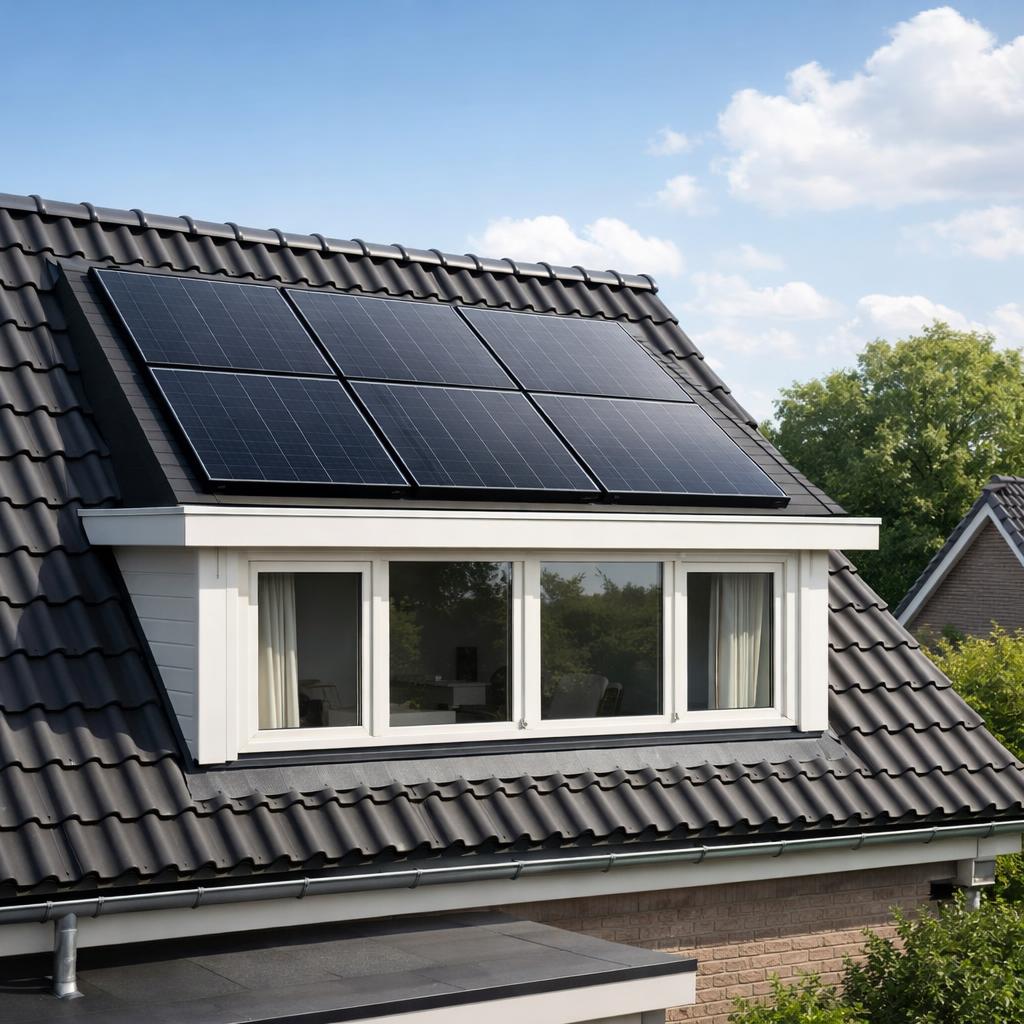
Anyone who wants to know whether solar panels can be installed on a dormer window must look further than just the free surface. Safety, waterproofness and good mounting determine whether this is a wise investment. If you first want to make a broader assessment of whether my roof is suitable for solar panels, then immediately include the dormer window in that assessment. In some homes, a dormer window provides valuable additional generating space, while in other homes the limited size or structure makes it less attractive.
When solar panels on a dormer window are suitable or not
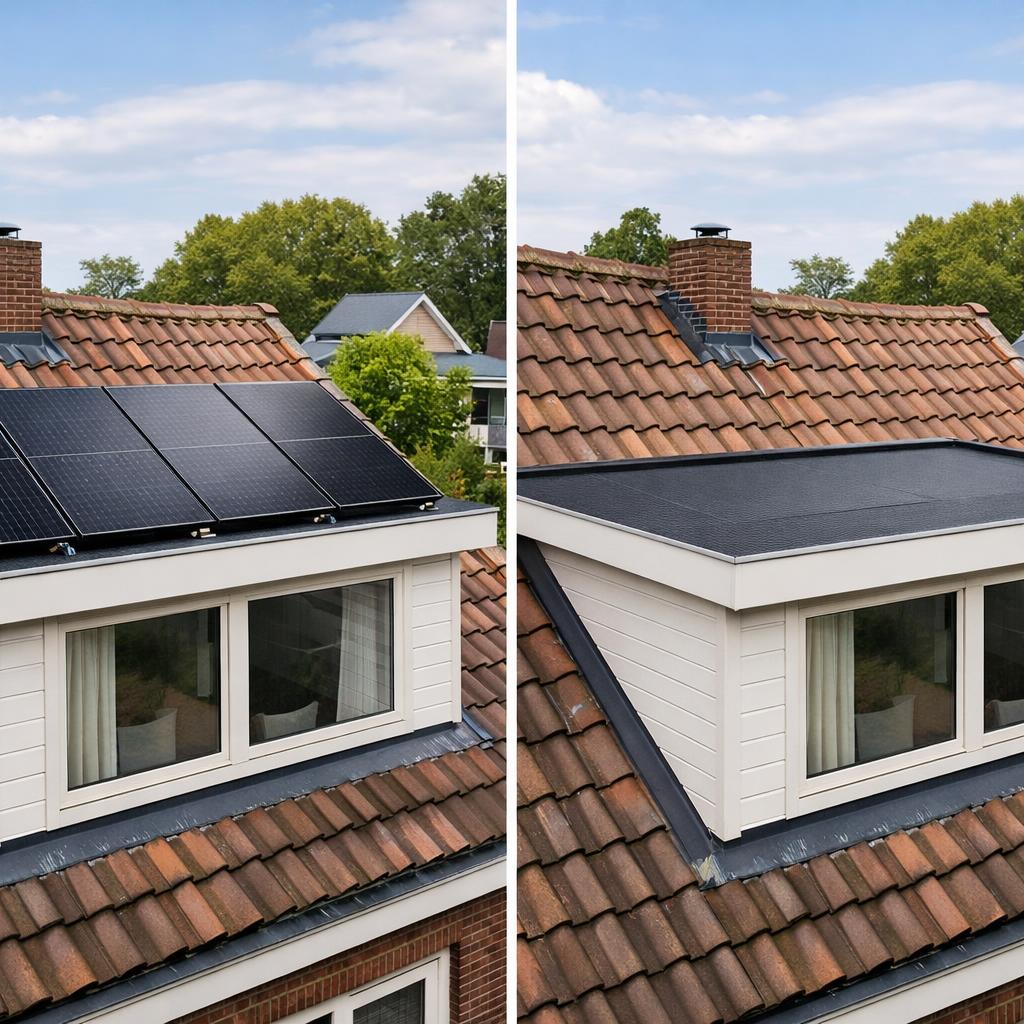
A dormer window is especially suitable if the roof surface is strong enough, has sufficient free space and is not affected by much shadow. In a wide dormer window with a flat roof, single panels can often be placed with a low arrangement. As a result, flat roof dormer solar panels can be a logical choice for homes where the remaining roof is less favorably oriented. With small dormer windows, the number of panels is often limited, which means the total yield is lower and the payback period can be longer.
Not every dormer window suitable for solar panels is really safe or profitable. Older dormer windows, light prefabricated versions or roofs with a questionable finish deserve extra attention. The combination of extra weight, wind pressure and mounting material can cause problems if the structure is not designed for this. The installation must also be carried out in such a way that the roof covering remains intact and rainwater is properly drained. That is why a preliminary assessment by a professional installer is important, especially if there is doubt about the age or condition of the dormer window.
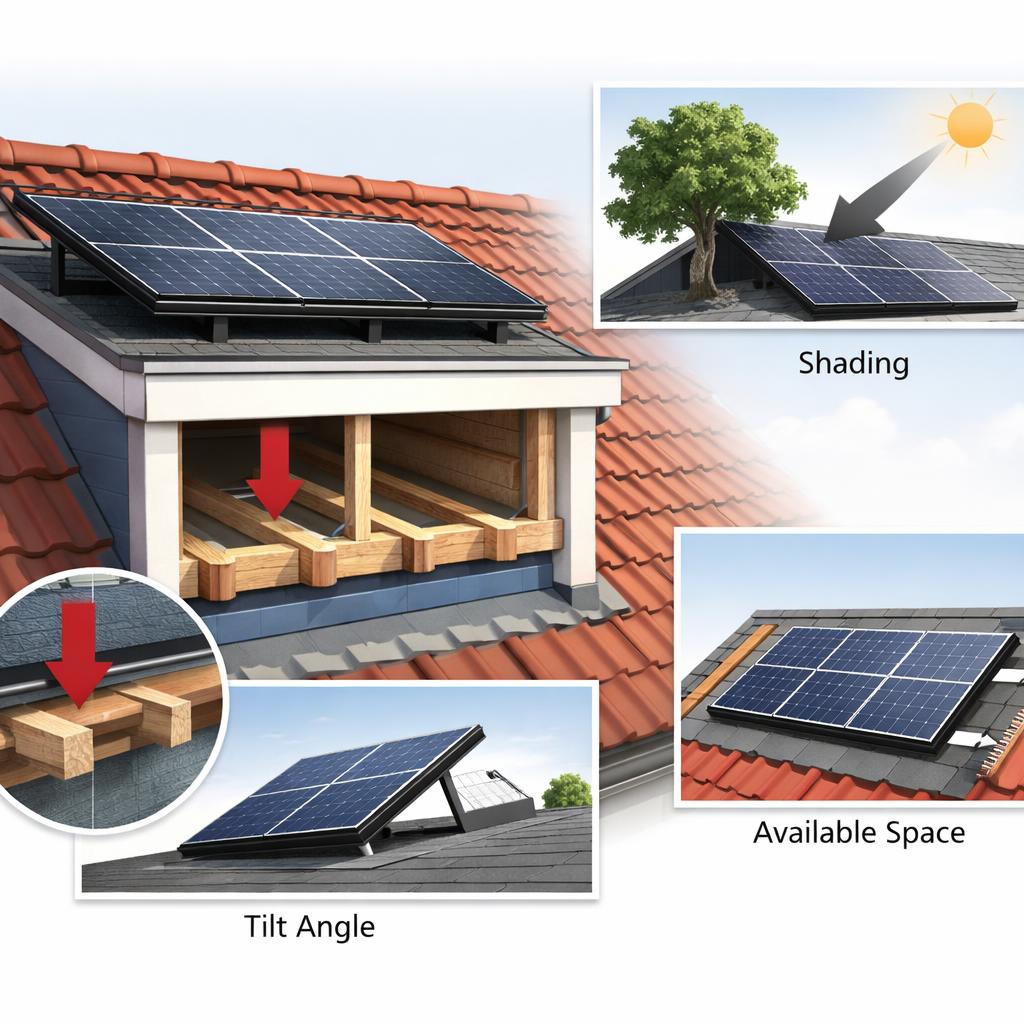
Important points: carrying capacity, shade and available space
The load-bearing capacity determines whether the dormer window can sustain the weight of panels, substructure and additional loads due to wind and precipitation for a long time. Especially with flat roofs, additional reinforcement is sometimes a point of attention. Shade is just as important, because even a small shade strip can noticeably reduce yields. In addition, the space must be large enough to safely install panels, with sufficient distance to eaves, drains and curbs. The better the basis, the greater the chance that solar panels on dormer windows will actually be a useful addition.
- north.
Benefits, limitations and expected returns
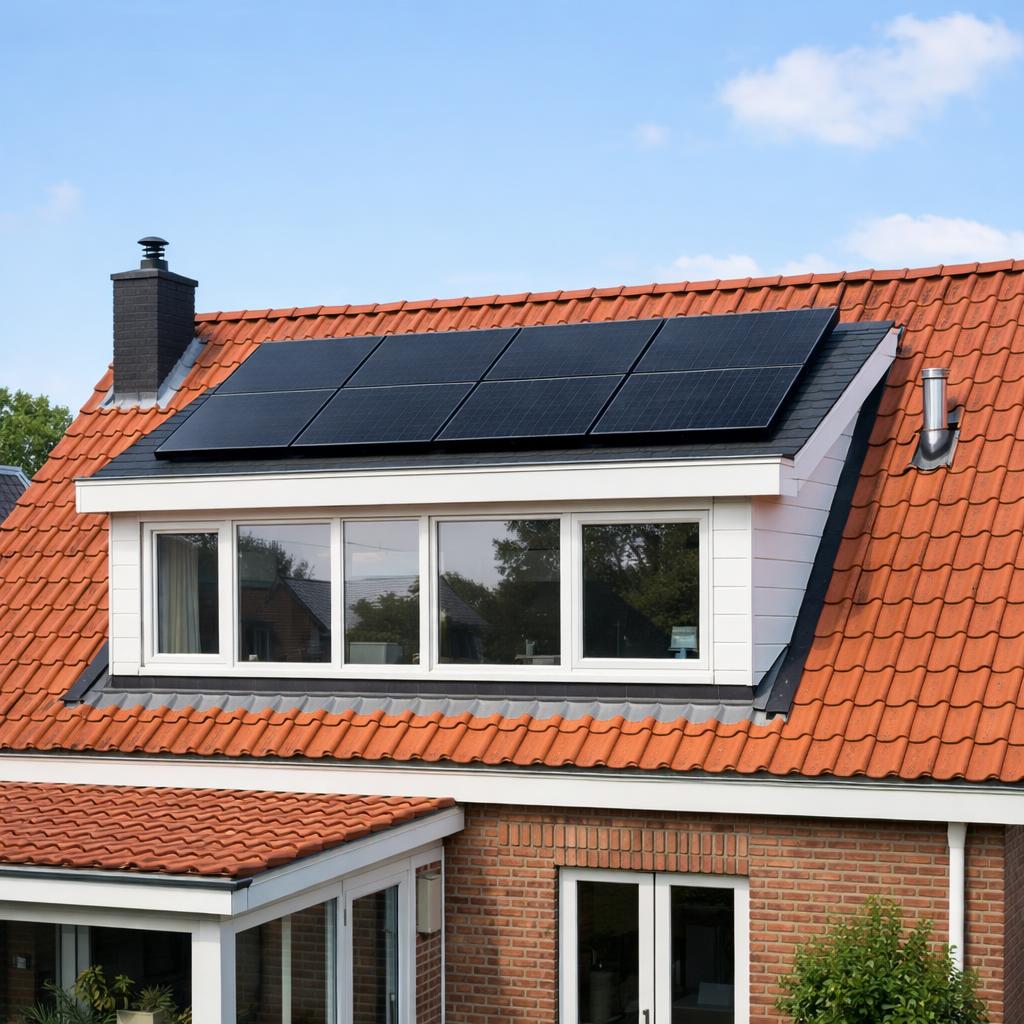
The biggest advantage of solar panels on a dormer window is that you use extra generating space that would otherwise remain unused. This is especially interesting for homes with little usable roof space. Sometimes that small expansion ensures that a larger part of the annual power consumption is covered. On the other hand, space is usually limited. Many dormer windows only fit a few panels, which means that the total production remains modest and fixed installation costs weigh relatively heavily.
The yield of solar panels on dormer windows therefore varies greatly per home. A wide dormer window without shade can perform surprisingly well, while a narrow dormer window facing north adds little. The chosen panel type also makes a difference, because more powerful panels can yield more per square meter. Those who are looking for the highest production are usually more likely to achieve this on a larger main roof. Anyone who wants to make smart use of every available square meter can still create a valuable addition to an existing installation with a dormer window.
How alignment and panel size affect yield
Location is one of the most important factors for yield. A south-facing dormer window usually yields the most, but east and west can also be interesting, especially if power consumption is spread throughout the day. North is often less attractive, although it can still be useful when alternatives are lacking. The angle of the panels also counts. On a flat dormer window, a low installation can help to make better use of sunlight without causing too much mutual shadow.
In addition, the panel size is important. A standard layout does not always fit a dormer window, so smaller or more powerful panels sometimes work better. This way, the available space can be used more efficiently. However, more power per panel does not solve everything. Only if shading, cabling, mounting and construction are properly coordinated will the extra efficiency actually deliver benefits. Especially when space is limited, an accurate layout often makes the difference between reasonable and good results.
Conclusion
Solar panels on dormer windows can certainly be a smart choice, but only if the technical basis is in order. The best opportunities are usually found with a wide dormer window with sufficient load-bearing capacity, little shade and a favorable location. The limited space means that the number of panels and the total yield often remain lower than on a large roof area. That is why you must take a particularly critical look at costs, safety and expected returns.
Anyone considering solar panels on a dormer window would be wise to first have the construction, dimensions, roof load and local regulations assessed. With an inspection by a professional installer you will get a more realistic picture of feasibility, safe installation and the expected yield. If you also want to better assess the financial side, see how to calculate the costs of solar panels. This way you prevent a technically possible installation from later disappointing in practice.
Frequently asked questions
Can solar panels be safely installed on every dormer window?
No, not on every dormer window. Safety depends on the construction, the load-bearing capacity, the condition of the roof covering, the dimensions and the additional wind load. A professional installer must assess in advance whether installation is justified and whether the watertightness is maintained.
How many solar panels fit on average on a dormer window?
This varies per width, shape and layout, but usually involves a small number of panels. Sometimes only one to three panels fit on a small dormer window, while a wide dormer window offers more options. The safe distance to edges and drains always remains important.
Is a flat roof of a dormer suitable for solar panels?
Yes, that is possible, but only if the construction can handle the weight and any additional reinforcement. With a flat roof, drainage, mutual shade and the influence of wind on the installation must also be carefully considered. Careful placement is extra important here.
When is placement on a dormer window less financially interesting?
This is often the case with little space, a lot of shade or relatively high installation costs per panel. If the yield is limited and the installation is technically complicated, installation on the main roof or in another location may be more attractive. A comparison of costs and expected returns provides the clearest answer.