Short answer: Connecting solar panels means that you correctly coordinate panels, cabling, inverter and meter cupboard, so that generated electricity can be used safely in the home. The panels produce direct current, the inverter converts it into usable alternating current and that energy enters the home via the meter cupboard. It is precisely this route that determines whether an installation works safely, efficiently and in accordance with local rules.
Wie zoekt op zonnepanelen aansluiten, wil meestal niet alleen weten hoe panelen op het dak komen, maar vooral welke onderdelen nodig zijn, hoe de aansluiting op de meterkast verloopt en wanneer een erkende vakman nodig is. Dat is logisch, want fouten in bekabeling, beveiliging of afstemming kunnen later zorgen voor storingen, opbrengstverlies of onveilige situaties. Good preparation prevents many problems.
That is why it is smart to first understand the entire system before choosing materials or planning work. Pay attention to the condition of the roof, the location of the inverter, the length of cables and the options in the meter cupboard. Also read more about choosing an inverter for solar panels, because this part determines how the power from the panels becomes usable for appliances in the home.
What you need to connect solar panels properly
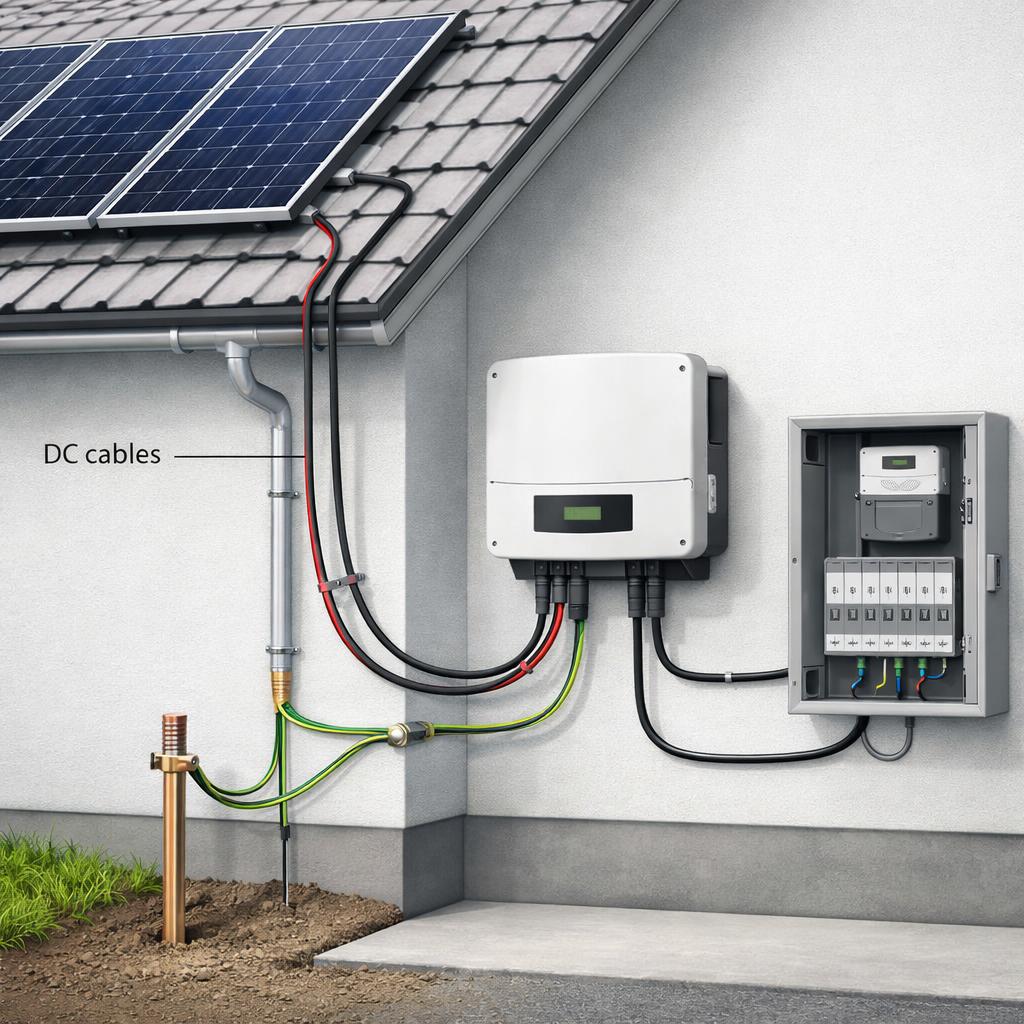
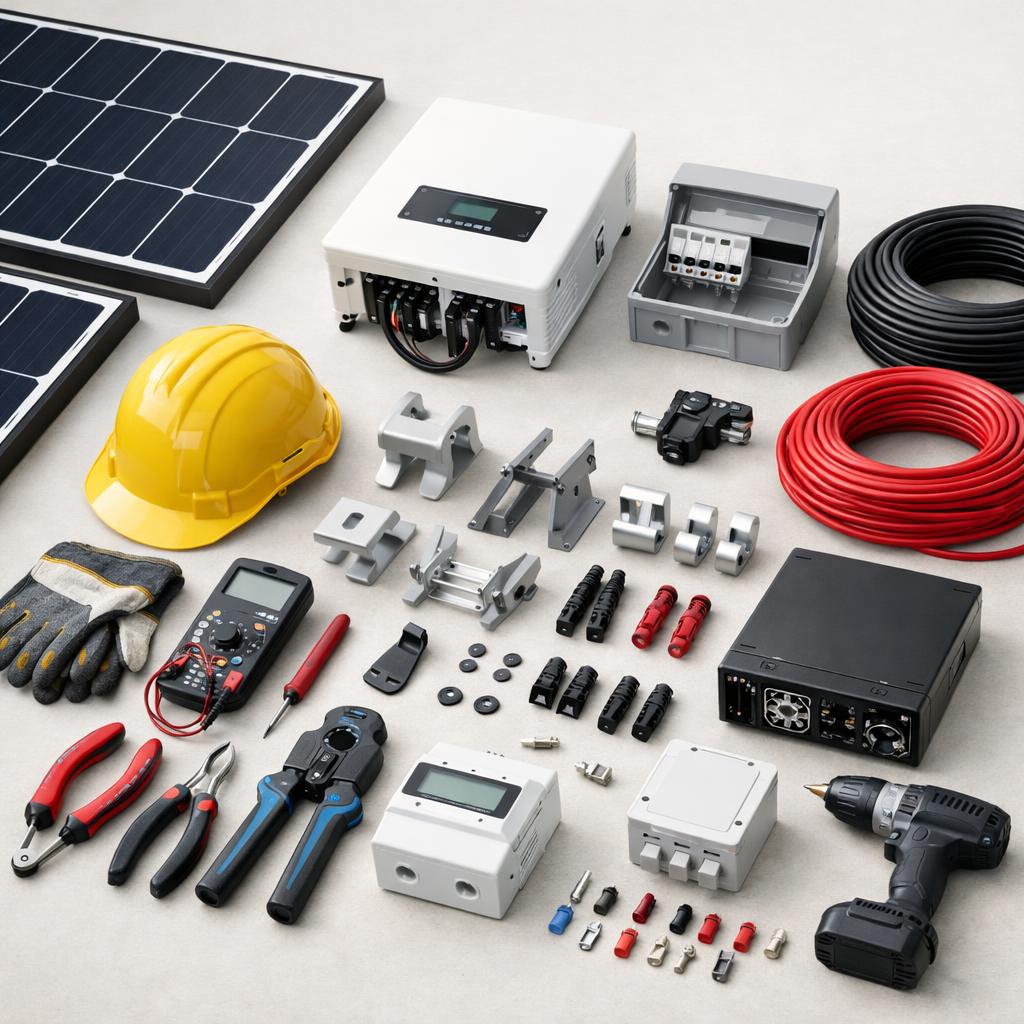
To properly connect solar panels, you need more than just panels and an inverter. A complete system usually consists of solar panels, mounting materials, DC cables, connectors, an inverter, earthing points, protections and a suitable meter cupboard. In addition, roof slope, sun position, shade and the distance between roof and meter cupboard also influence the final design.
Especially for homes in the United States, rules may differ per state, municipality or grid operator. As a result, not every system can be connected in the same way everywhere. Sometimes additional requirements apply for the location of the inverter, the type of switch or the way in which the system is connected to the distribution box. Therefore, always check local regulations before you start purchasing or installing.
Important parts from panel to meter cupboard
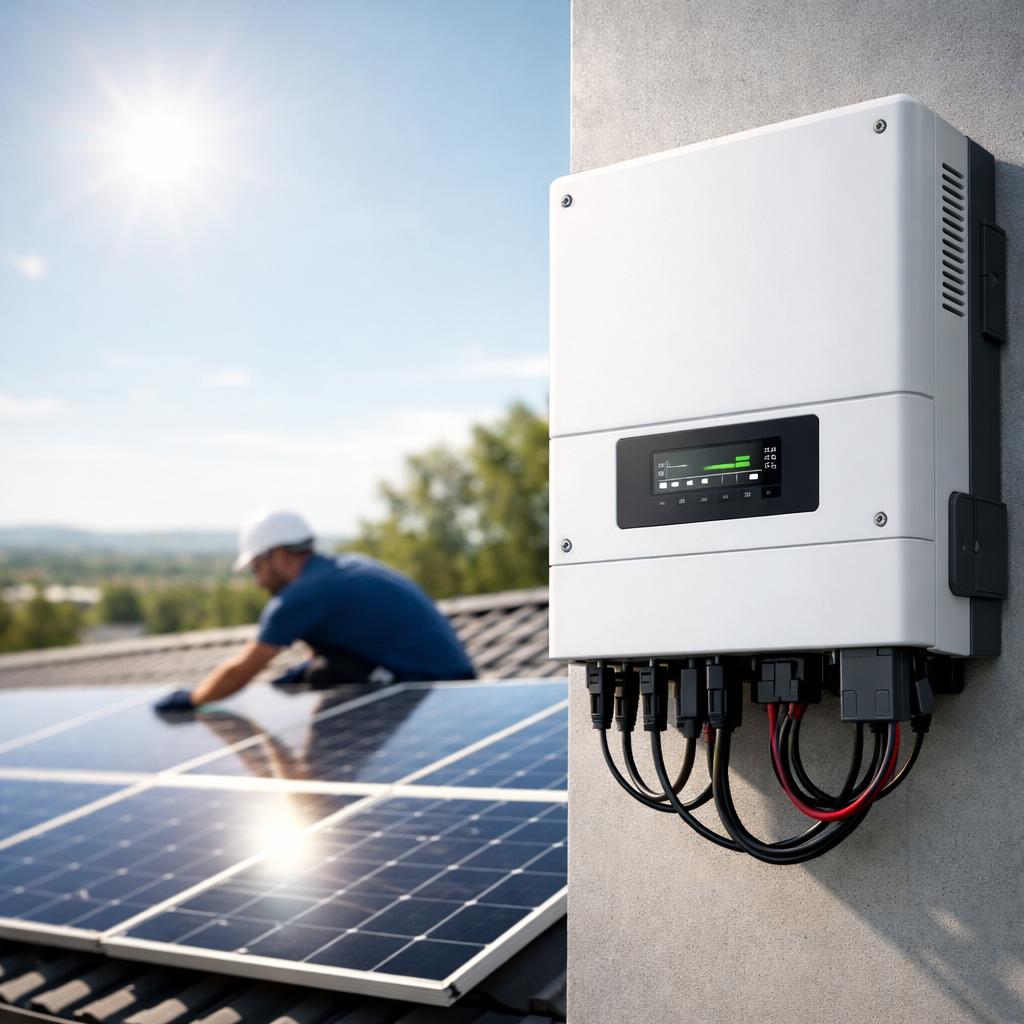
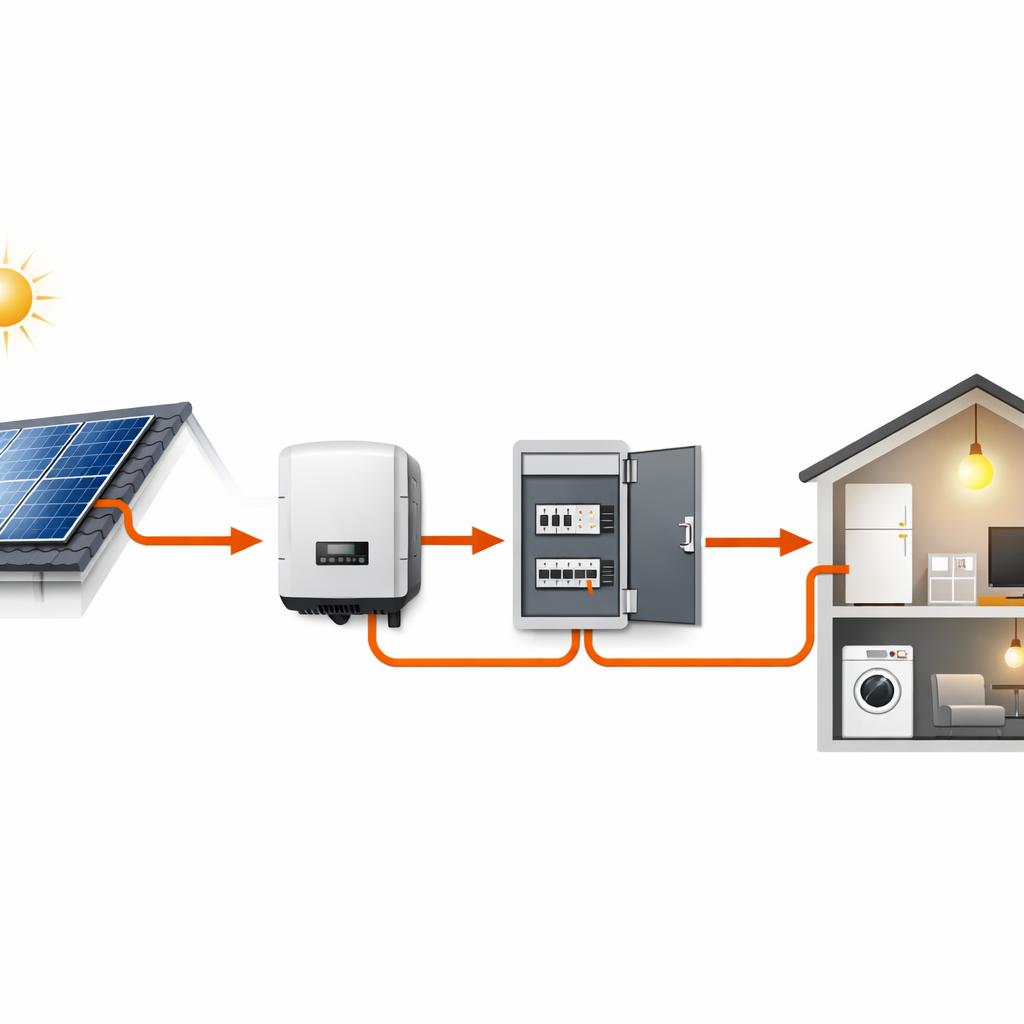
The panels generate electricity as soon as daylight falls on them. That power goes via cabling to the inverter, where direct current is converted into power that you can use in your home. The electricity then runs to the meter cupboard, where security, earthing and a correct connection to a separate group are of great importance. The inverter is the central switching point. If panels, inverter and meter cupboard do not connect properly, the risk of malfunctions and power loss increases.
Connecting solar panels in logical steps
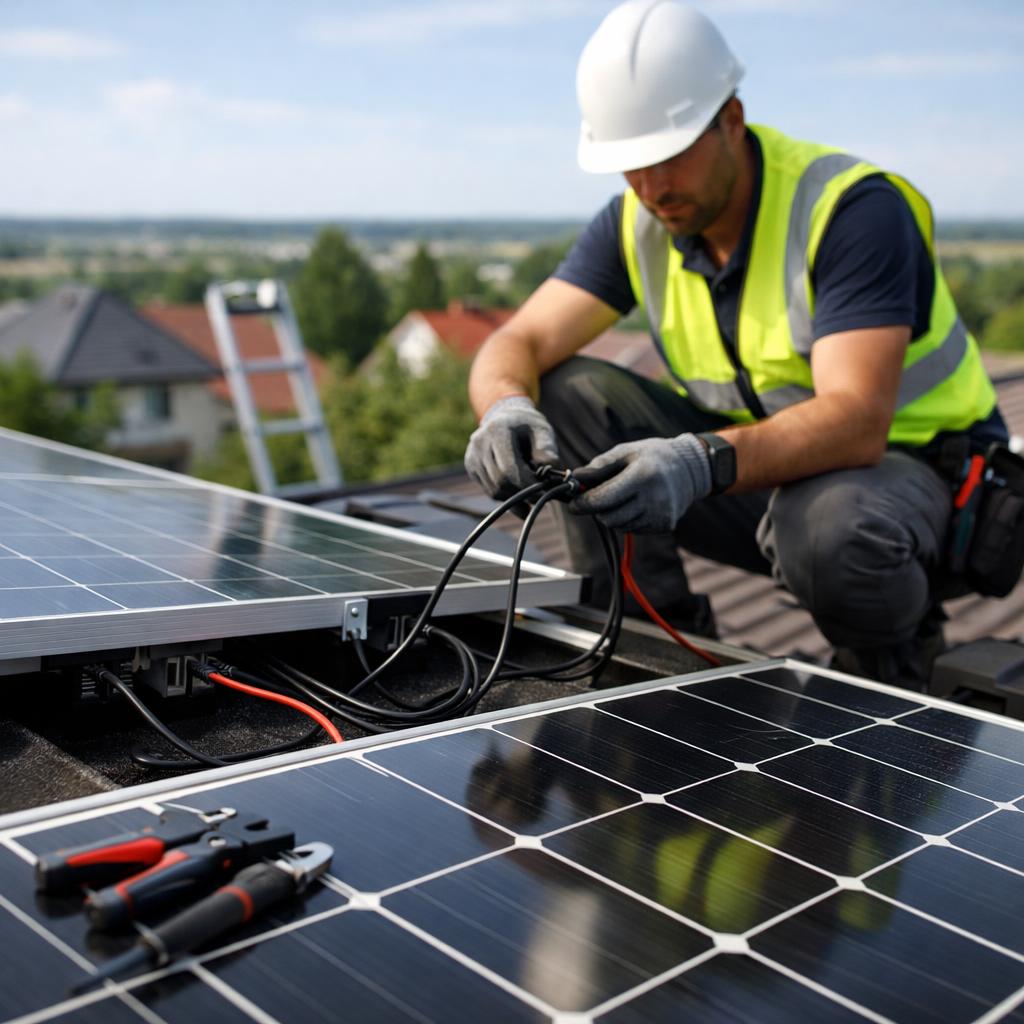
When connecting solar panels, the work usually starts with determining a suitable roof surface. This is followed by the assembly of the supporting structure and the installation of the panels. The panels are then connected to each other and the cabling goes to the inverter. Only then does the connection with the meter cupboard come into the picture, often via a separate group with appropriate security. Finally, the system is tested, checked and only then put into use.
This seems simple on paper, but the electrical connection in particular requires accuracy. A small error in cable selection, connection or security can affect the operation and safety of the entire system. That is why it is important to not only look at the installation, but also at ventilation around the inverter, neat cable routes and sufficient space in the meter cupboard.
From direct current to usable electricity in the home
The electricity that solar panels generate is not directly suitable for household use. The inverter converts this power into a form that appliances in the home can use. The electricity then runs to the house via the meter cupboard. If more is generated than is currently consumed, part of it can be returned to the grid, depending on the connection and local rules.
Anyone who wants to understand how connecting solar panels to the meter cupboard works must first know that the meter cupboard needs sufficient capacity and the right protections. An older or full cupboard may first need to be adjusted. Therefore, also take a look at preparing the meter cupboard for solar panels before you plan the installation.
Safety, inspection and when to call for help
Safely connecting solar panels at home means looking beyond just yield. Electrical voltage, working at height, fire safety, earthing and inspection all play a role. In many cases, the final electrical connection may or must be carried out by a certified professional. This certainly applies when local rules, insurance conditions or requirements of the network operator prescribe this.
Common mistakes include choosing an unsuitable inverter, sizing the cables incorrectly, leaving too little ventilation around the inverter or underestimating the meter cupboard. Some people also think that connecting solar panels themselves is always allowed, while in practice this is often limited. When in doubt, expert help is not a luxury, but a sensible safety measure. A good installation is not only efficient, but also well secured, controllable and suitable for the home.
Therefore, be informed in advance about reporting obligations, inspections and local requirements. This prevents delays, extra costs and adjustments afterwards.
Conclusion
Connecting solar panels is easy to understand if you see the system as a fixed route: from panel to inverter, via security to the meter cupboard and then to the home. It is valuable for homeowners to know this structure, even if a certified installer ultimately carries out the work. This way you make better choices about materials, planning and safety.
Whether you are looking for connecting solar panels yourself, safely connecting solar panels at home or for a clear explanation about the inverter and meter cupboard: the most important thing is that the installation is technically correct and complies with local regulations. You can figure out a lot yourself for orientation, but for the electrical connection and inspection, a professional is often the wisest choice.
Frequently asked questions
Can you connect solar panels yourself?
You can sometimes do some of the preparation yourself, such as collecting information, understanding the structure of the system and assessing the location of panels. However, in many places the final electrical connection may or must be carried out by a recognized professional. This depends on local regulations, requirements of the grid operator and insurance conditions.
Do you always need an inverter for solar panels?
Most homes require an inverter to convert the generated direct current into usable electricity for household use. However, the type of inverter differs per system. The right choice depends on the number of panels, shade, roof direction and the desired design of the installation.
How do you know whether the meter cupboard is suitable?
This depends on the available space, the load on existing groups and the required security. Checking the meter cupboard is important before panels are connected. If the meter cupboard is outdated or has insufficient capacity, adjustments may be necessary before the system can be used safely.