Short answer: Wallbox charger compatibility mainly depends on four things: your car, the plug type, the maximum charging capacity and the electrical installation at home or at work. If you check these points in advance, you will avoid a charging point that technically fits, but in practice charges too slowly, requires additional adjustments or does not work optimally at all.
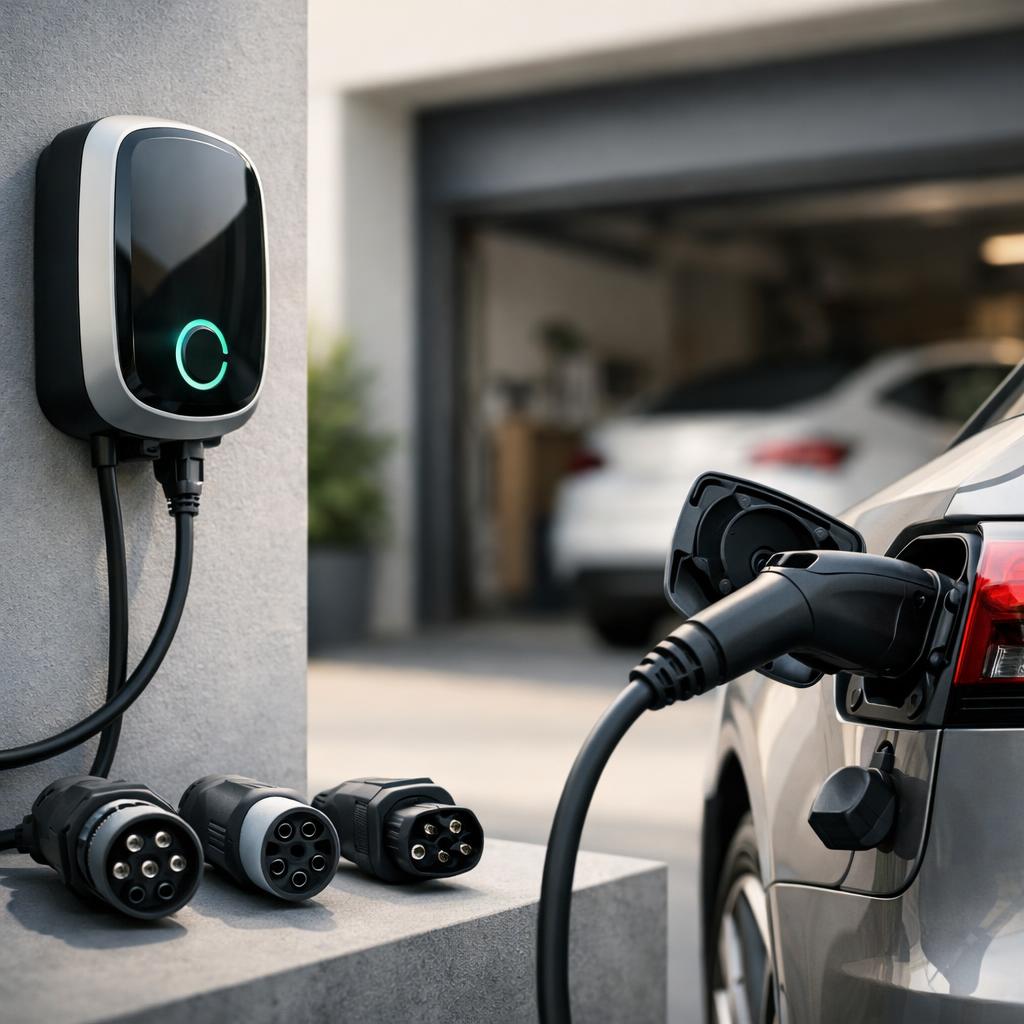
When choosing a charging point, you often first look at price, brand or appearance. Yet the real difference lies in the combination of vehicle and installation. A wallbox can be powerful and modern on paper, but still be limited by the car's on-board charger or by the capacity in the meter cupboard. That is precisely why it is smart to look beyond just the charging station itself.
If you want to check wallbox charger compatibility, start with the details of your car and the power supply on location. Then you look at cable, phase layout and security. This makes it easier to understand which wallbox suits my electric car and whether that choice will still make sense in a few years. You can also read more about calculating loading capacity at home if you want to make a realistic estimate in advance.
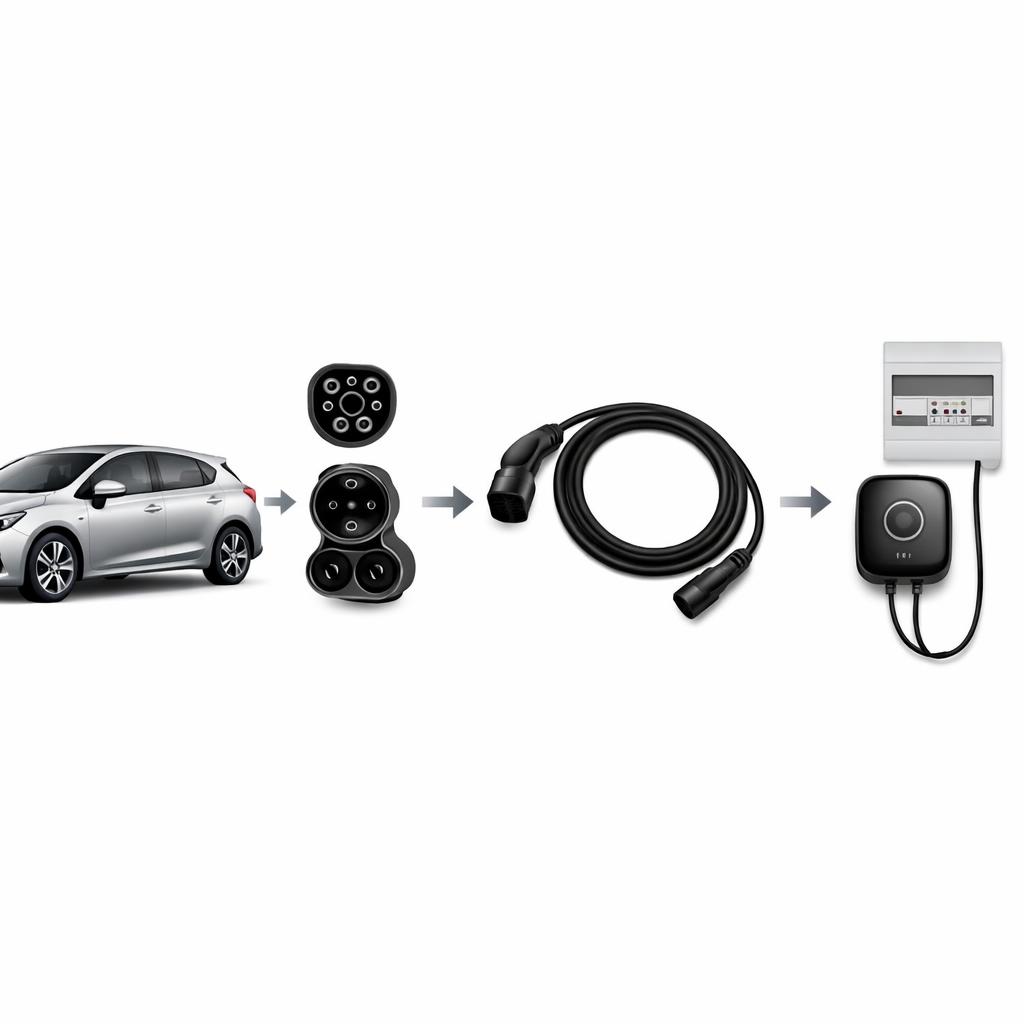
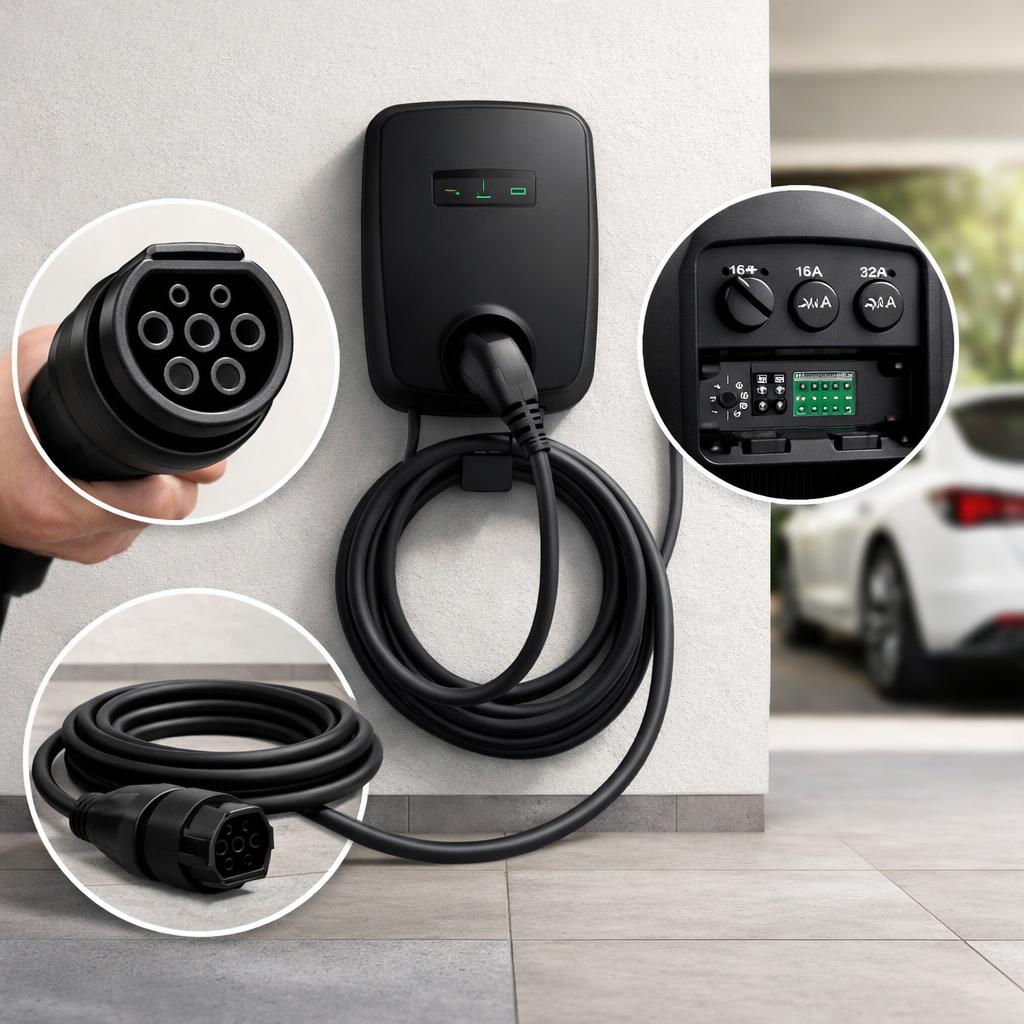
Image: Diagram with vehicle, plug, charging cable and meter box to clarify compatibility.
Which components determine the compatibility of a wallbox charger?
The compatibility of a wallbox charger is determined by the interplay between car, plug, cable and power connection. That sounds simple, but that combination often causes misunderstandings. For example, a charging point can supply more power than your car can handle. In that case, you will not charge faster, but you may pay for options that you do not use. That is why you can never assess wallbox plug compatibility and charging capacity separately.
Plug type, charging capacity and connection clearly explained
In practice, the plug type is often the first check. The car's plug must of course match the wallbox or the cable you use. Then you look at the charging capacity via alternating current, because that determines how much power the car can actually absorb. A powerful charging point is of little use if the car itself has lower limits. The connection in the home also plays a role: a single-phase connection offers fewer options than a three-phase connection. This means that a wallbox is suitable for the meter cupboard at home only if the vehicle, plug and installation are properly matched.
Also pay attention to practical details. Not every charging cable is equally useful in daily use. A cable that is too short, an unsuitable phase division or a charging point in an illogical location can make charging unnecessarily difficult. Good compatibility is therefore not only about technology, but also about ease of use in the long term.
How do you check whether your car and home are suitable?
Start with your car's details. Check which plug type is available and what the maximum charging capacity via alternating current is. Then you check the meter cupboard: how heavy is the main connection, is there enough space for an extra group, what security is needed and how much capacity remains in addition to other consumption in the house? A complete assessment is important, especially if you cook electrically, have a heat pump or generate electricity with solar panels.
Practical checkpoints for vehicle, meter cupboard and cable
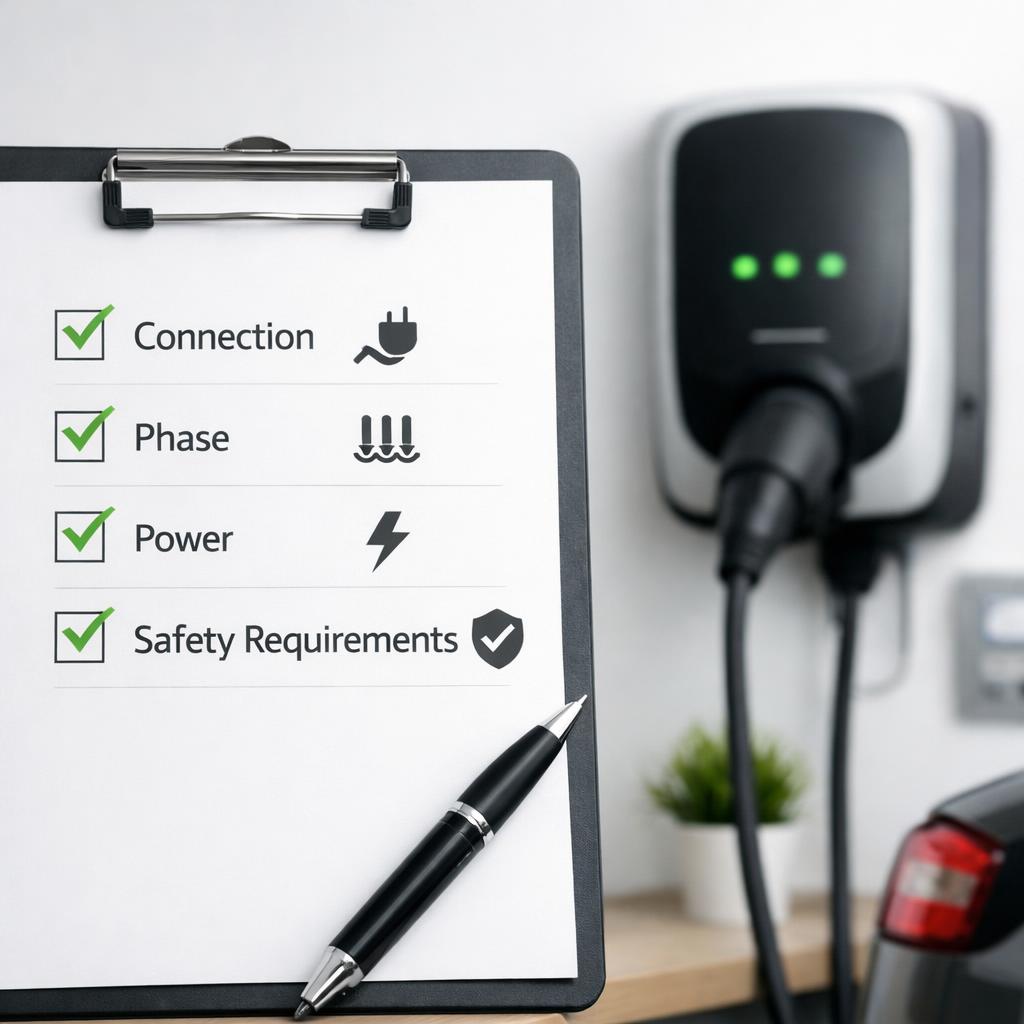
A short checklist helps to keep an overview. Pay attention to the connection of the car, the maximum charging capacity of the vehicle, the suitability and length of the cable, the phase division of the installation and the available space in the meter cupboard. Also check whether the protection suits the chosen charging point and whether the installation location is convenient for daily charging. For additional explanation, you can read about checking the meter cupboard for a charging point. This allows you to check wallbox charger compatibility in a more targeted manner and avoid relying on assumptions.
Sometimes this check shows that charging is technically possible, but not at the desired pace. That's no problem as long as your expectations are correct. Those who charge mainly at night often have to rely on lower power than someone who makes several quick journeys during the day. So choose not only based on what is maximum possible, but also based on what is really necessary in your situation.
Image: Checklist with connection, phase, power, cable and safety requirements.
Conclusion
Wallbox charger compatibility is best assessed step by step. First you look at the car, then at the plug type and charging capacity, and then at the meter cupboard and the available power on location. Only when these components fit together will you have a charging solution that not only fits on paper, but also works well in practice.
A smart choice is not just about price or brand. It is important that the charging point matches your current car, your daily use and the possibilities of the installation. Also think ahead: you might drive a different car later or you might want to use more electric power at home. By carefully looking at Wallbox charger compatibility in advance, you choose safer, more practical and with less chance of additional costs afterwards.
Frequently asked questions
How do I know if my electric car is suitable for a wallbox charger?
Check the plug type of your car and the maximum charging capacity via alternating current. Then compare that data with the specifications of the charging point. Suitability depends not only on the car, but also on the electrical installation and the available power at the location.
Which plug do I need for a compatible wallbox charger?
That depends on the charging connection of your vehicle. Always check which type your car uses and whether the chosen wallbox or cable suits it. In addition, pay attention to power and usage situation, because these also determine whether the combination works well in practice.
Is a more powerful wallbox always better for home charging?
No, not always. A more powerful model only has an advantage if your car can use that power and the meter cupboard is suitable for it. Otherwise you pay for capacity that you hardly use. That is why you should always assess power and installation together.
Can I use the same wallbox for another car later?
Often yes, but that remains dependent on vehicle, plug type, available power and electrical installation. Charging properties may differ from another car, which also changes the charging speed. A charging point with adjustable power usually provides more flexibility.