Short answer: the ideal angle of solar panels depends on your location, roof shape, direction and the time of year when you want to generate the most power. For many homes in the United States, a slope between about 25 and 40 degrees is a useful guideline, but the best choice varies by condition, roof and situation. That is why it pays to look at the whole instead of one fixed number.
If you want to estimate in advance how much difference an angle of inclination makes, you can first calculate the yield of solar panels. This quickly makes it clear what a small deviation in the angle means for the annual yield. In practice, an almost ideal placement often performs very well, especially if shade is limited and the panels are favorably oriented towards the sun.
What is the ideal angle of solar panels?
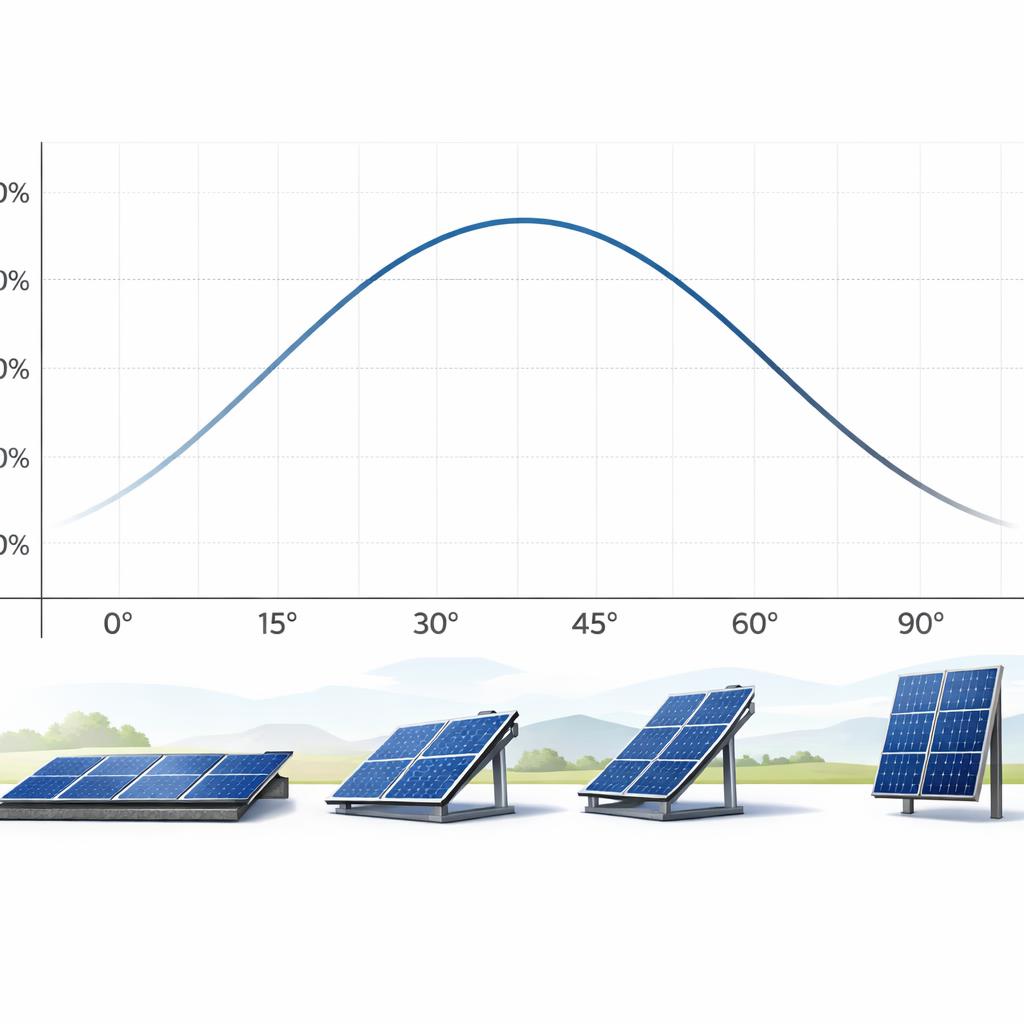
If you are wondering what the ideal angle for solar panels is, the short answer is: the angle of inclination that best suits your latitude and roof. In many parts of the United States, a middle slope often produces the highest annual yield. The further north you live, the steeper the panels can usually be positioned to make better use of the lower sun. In more southern areas, a somewhat flatter placement often works well.
The season also plays a role. In winter, steeper panels often perform better, while in summer a lower angle can be beneficial. That is why homeowners usually opt for a practical middle ground that provides a strong yield throughout the year. Moreover, the difference between good and perfect is often smaller than many people expect, which means that an existing roof slope is often sufficiently favorable.
How latitude, season and roof slope play a role
The latitude determines the angle at which sunlight falls on your roof. A home in a northern state experiences a different sun position over the year than a home in a southern state. As a result, the best slope angle on a flat roof may be different in the north than in warm southern regions. Local conditions also count, such as cloud cover, snow, heat and the number of clear days.
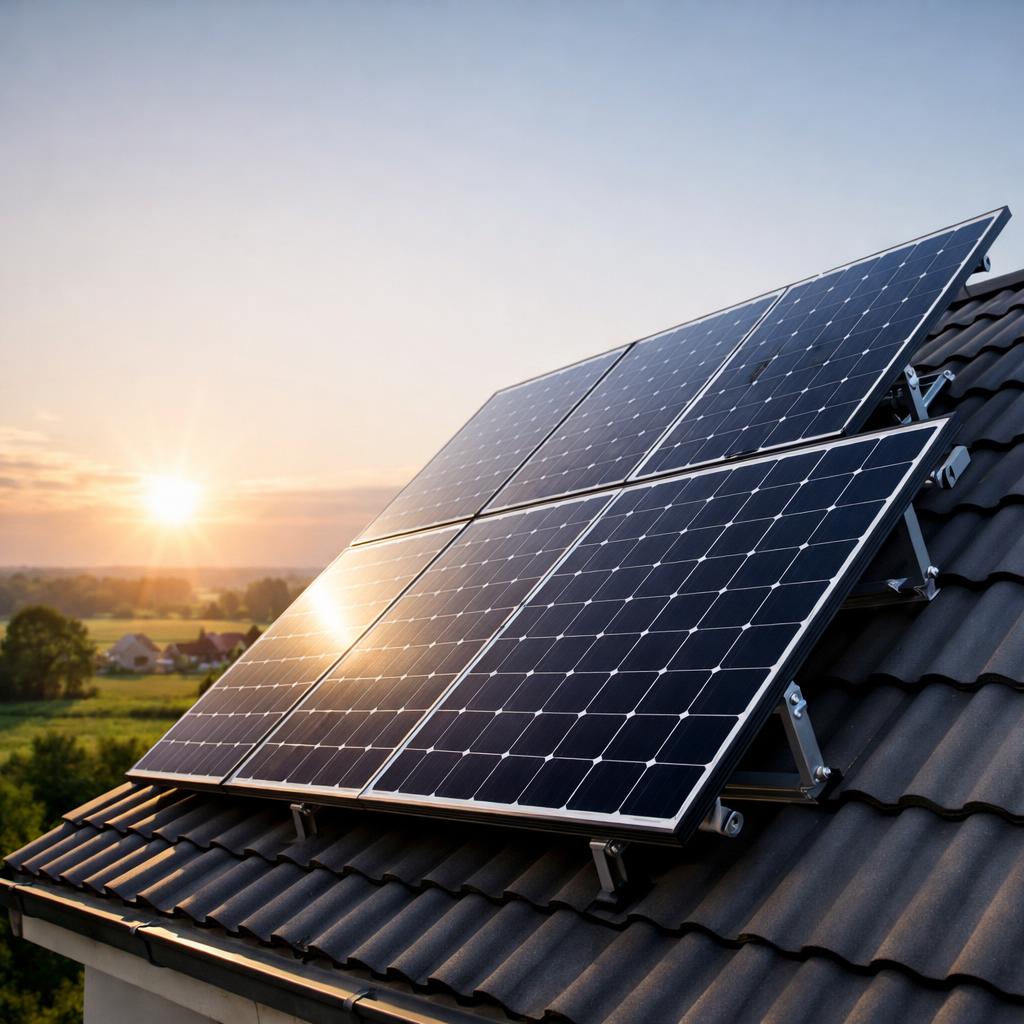
The existing roof slope is often decisive. If you have a sloping roof that is already close to a favorable angle, then adjustment is usually not necessary. The yield with a different roof angle often still remains attractive. Only with a very flat or very steep roof can an adapted installation provide extra benefits. The goal is usually not a theoretically perfect outcome, but a reliable and cost-effective setup that suits your home.
Which angle suits your roof and location?
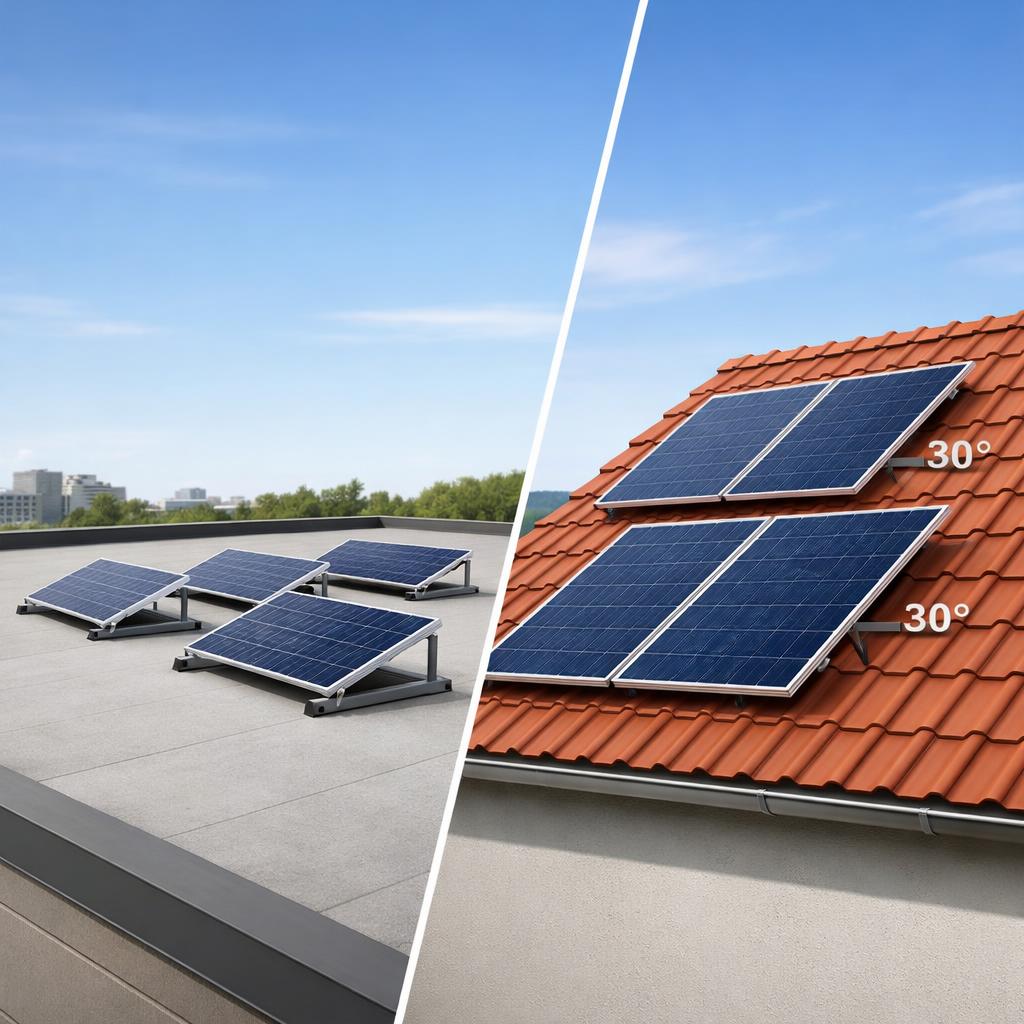
The right choice starts with the type of roof. On a sloping roof you usually follow the existing slope, because it is technically simple and often produces a good yield. On a flat roof you have more freedom and you can have the panels placed in a chosen angle. You must take into account sufficient distance between the rows, so that panels do not shade each other. You can read more about this under solar panels on a flat roof.
The direction of the roof is at least as important as the angle. A slightly less favorable slope on a good sunny side often yields more than a perfect angle on a less favorable side. East or west-facing roofs can still achieve a good annual yield, especially when power consumption is spread throughout the day. The ideal angle of solar panels should therefore always be considered together with direction, roof space and use in the home.
Difference between flat roof, sloping roof and different orientation
A flat roof offers a lot of freedom, but that freedom has limits. A steeper angle may seem favorable on paper, but requires more space between the rows and can be more sensitive to wind loads. That is why in practice a modest slope is often chosen that provides a good balance between yield, safety and available space. For example, the best solution on a flat roof regularly deviates from the theoretical optimum.
The situation is different with a sloping roof. There, installation is often simpler and the construction of the home largely determines the outcome. A different orientation does not have to be a big problem either. Panels on east- or west-facing roofs usually still provide a strong annual yield, especially if power consumption does not only occur around noon. The ideal angle of solar panels is therefore never independent of direction, construction and daily use.
Conclusion
The ideal solar panel angle is rarely one fixed number. Usually it involves a smart balance between latitude, roof type, direction and practical circumstances. For many homes in the United States, a slope between approximately 25 and 40 degrees works well, but a different roof angle can still provide an excellent annual yield. Especially with existing sloping roofs, it is often wiser to look at the total efficiency than at a theoretically perfect position.
Therefore, pay attention not only to the angle of inclination, but also to shade, available space, dirt and the quality of the installation. A good overall setup often yields more than chasing a few degrees difference. The ideal angle of solar panels is ultimately the angle that provides the most benefit in your situation throughout the year, without unnecessary disadvantages in terms of space, safety or maintenance.
Frequently asked questions
What is the best angle for solar panels in the United States?
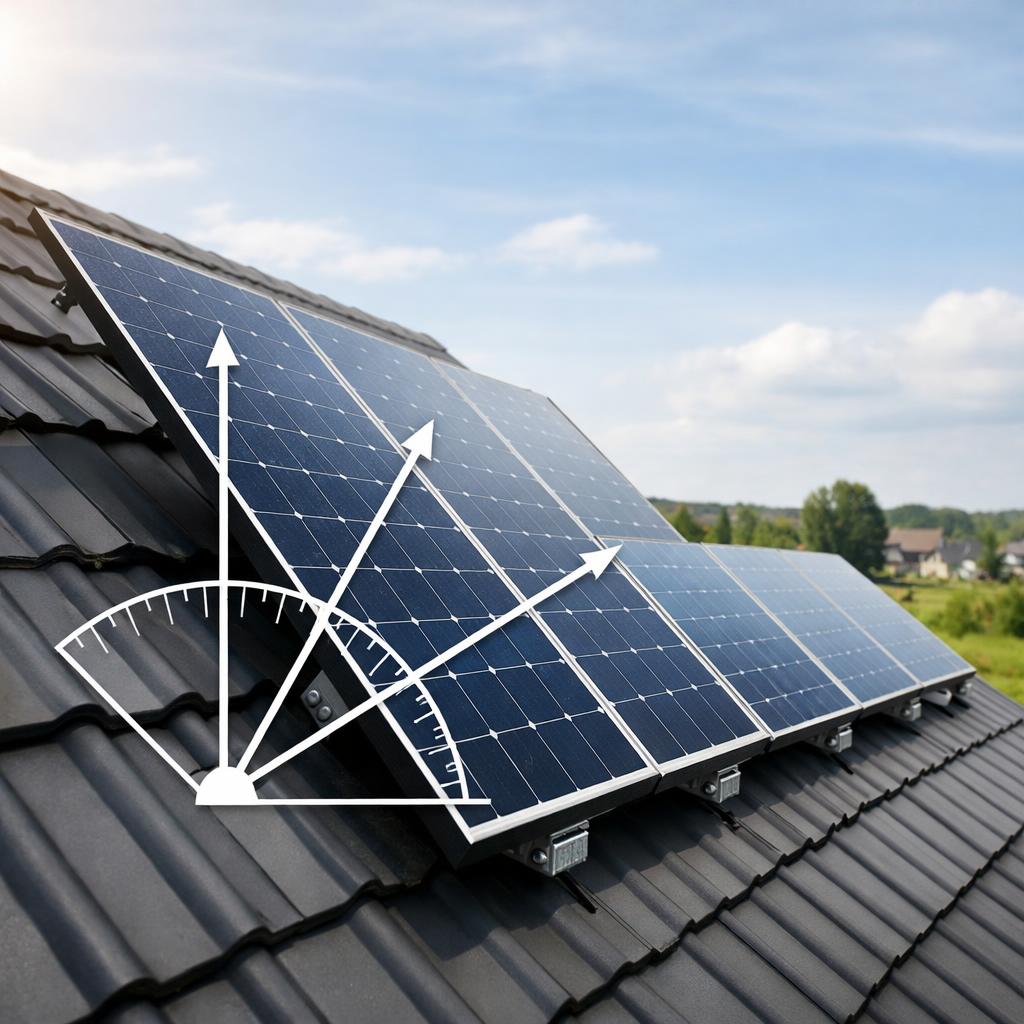
This varies by state and by home. In many cases a favorable angle is between 25 and 40 degrees. In more northern areas, a somewhat steeper slope often makes sense, while more southern regions usually benefit from a flatter angle.
Do solar panels also work well if the roof angle is not ideal?
Yes. A roof angle does not have to be perfect to achieve a good yield. As long as the panels receive little shade and are oriented favorably, the annual yield often remains strong. In practice, the yield with a different roof angle is often still attractive.
What is better: a flat roof or a sloping roof for solar panels?
Both can work well. A sloping roof is often simpler because the existing slope is followed. A flat roof provides more freedom in mounting angle, but requires extra attention to distance between rows, shade and wind load.
Do you have to adjust the angle of solar panels per season?
This usually does not happen for homes. Although the ideal angle of solar panels differs per season, a fixed middle ground throughout the year is often the most practical and cost-effective. A seasonal adjustment can only be useful in special situations.