The best home battery for apartments is rarely simply the largest or cheapest option. In an apartment, what matters most is whether the system suits limited space, can be installed safely and fits well with your daily power consumption. For many residents, the choice revolves around a compact battery that works quietly, requires little maintenance and fits within the rules of the building. If you want to understand the basics first, read more about how a home battery works before comparing models.
If you want to know which home battery is suitable for an apartment, look beyond just the storage capacity. Also pay attention to dimensions, weight, ventilation, compatibility with inverter and meter cupboard, and permission from the homeowners' association or building management. Even when you search for a small home battery for apartment comparison or are considering a home battery apartment without solar panels, a technical check remains essential. The ultimate savings and usability depend on your consumption, electricity rates, local rules and the installation situation in the building.
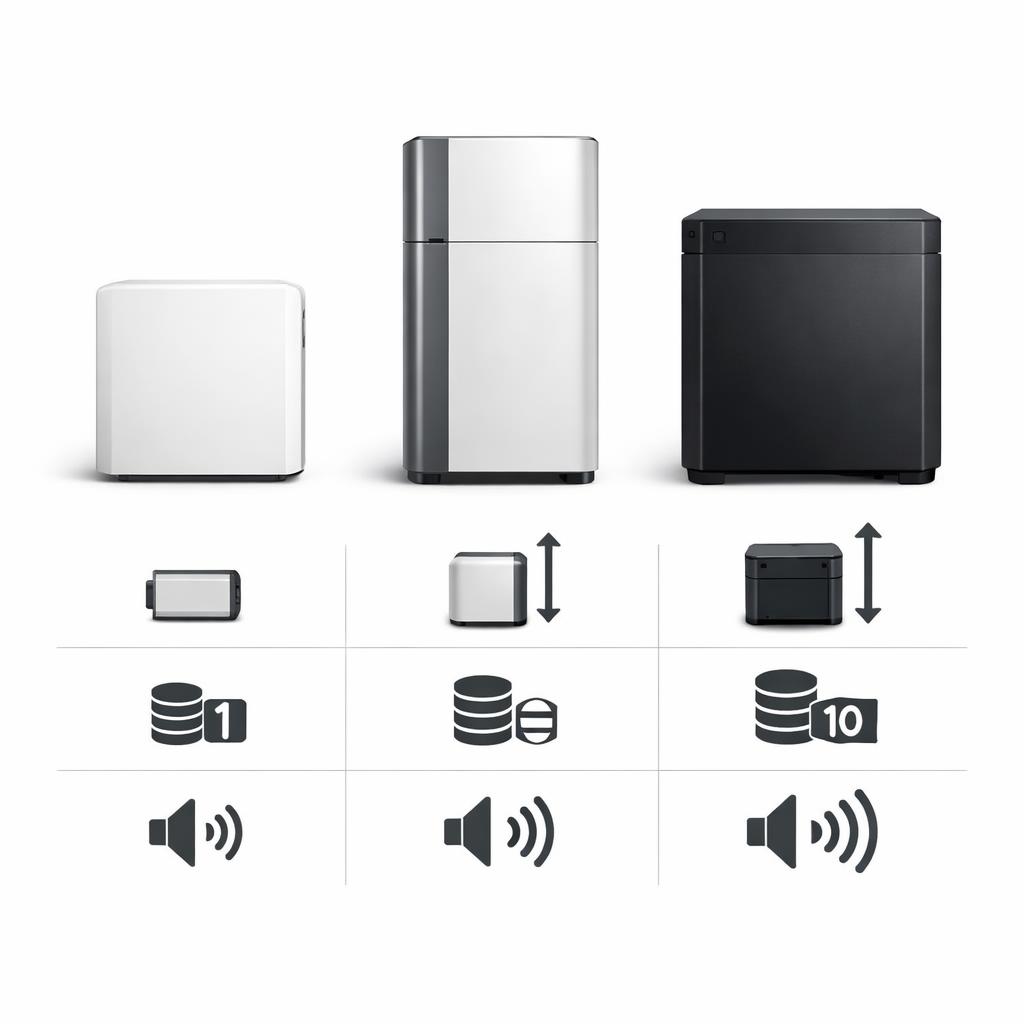
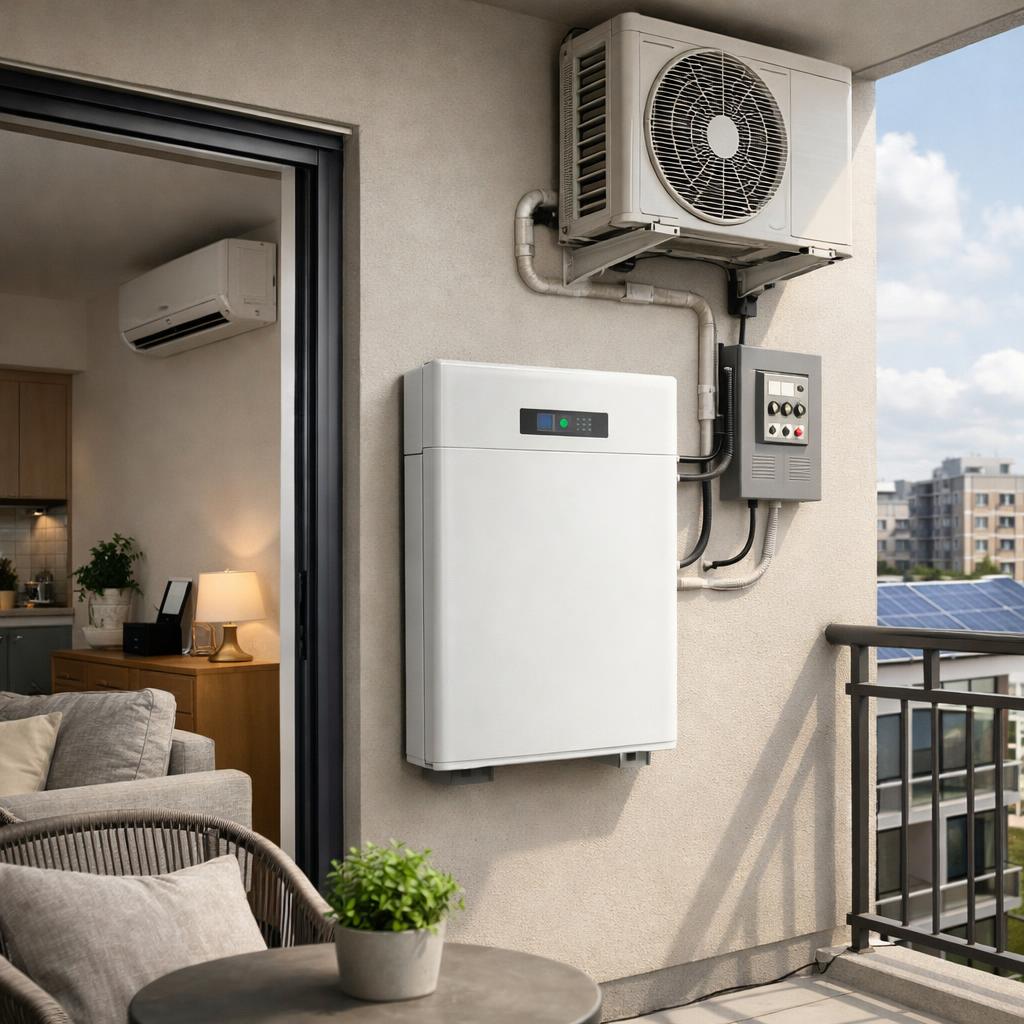
[Infographic: Compare compact home batteries for apartments by size, storage capacity and noise level]
What to pay attention to with a home battery in an apartment
In an apartment, the practical requirements are usually stricter than in a single-family home. You often have less space in a storage room, technical cupboard or utility room, while ventilation, accessibility and noise level are extra important. The Best home battery for apartments is therefore often a compact model that is suitable for indoor installation or for a shielded technical room. Don't just look at the number of kWh, but also at size, installation requirements and heat output.
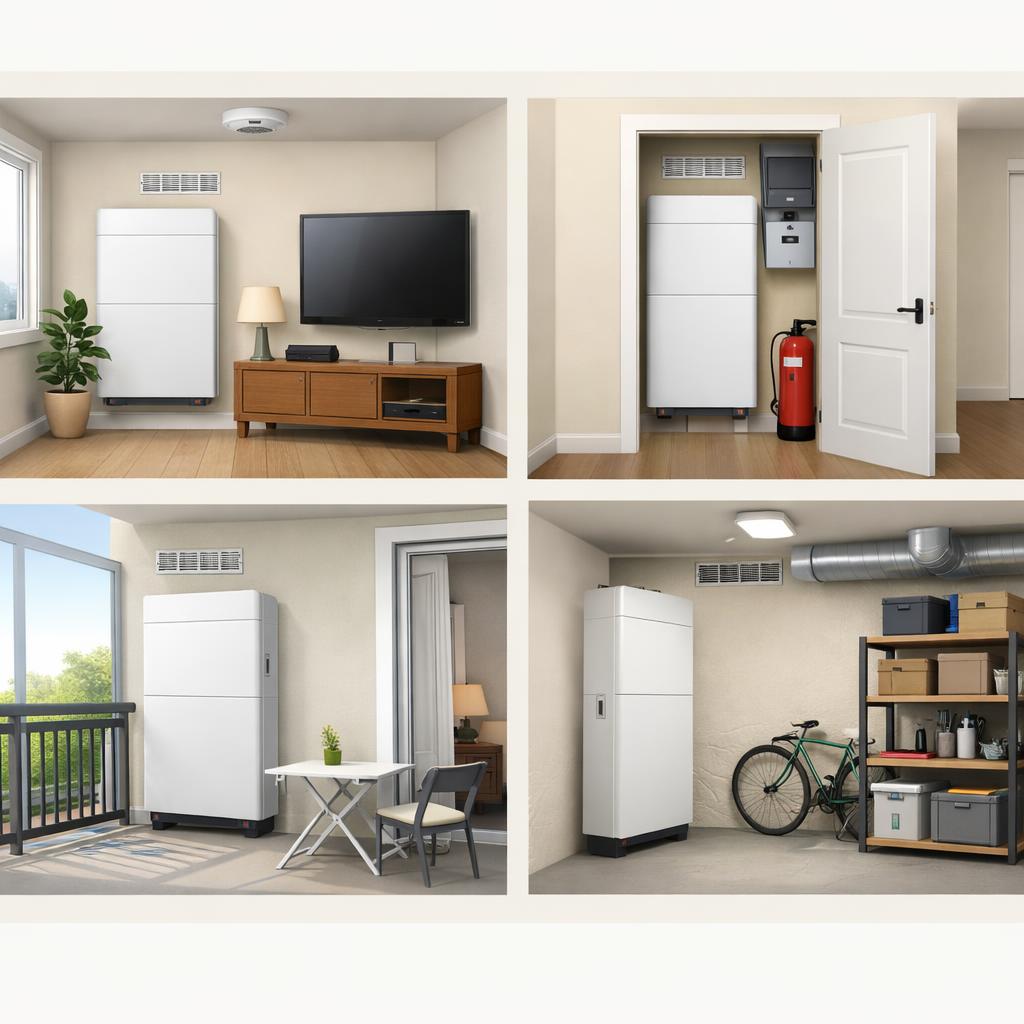
Safely installing a home battery in an apartment also requires attention to fire safety and building rules. Not every location is suitable, and the combination with the existing inverter, meter cupboard and mains connection must be checked in advance. Have a certified installer assess which location is technically sound and which protections are required. The homeowners' association or building management can also impose conditions, for example when pipes run through common areas or when fire compartments are hit.
Available space, noise level and fire safety
Anyone who wants to compare a small home battery for an apartment will quickly notice that in practice size and noise weigh just as much as capacity. A battery of a few kWh can be sufficient to cover evening consumption, without the system taking up unnecessary space. Therefore, pay attention to wall or floor mounting, free space around the system and whether maintenance remains easily possible. In a small apartment, a few centimeters difference in depth or width can be decisive.
Fire safety remains a key issue. Only choose systems that are installed in accordance with local regulations, with suitable cabling, fuses and a clear emergency shutdown. A bedroom or very cramped closet is usually less suitable than a well-ventilated storage room or technical room, if the building allows it. This not only increases safety, but also the chance that the installation will be approved and remain practical in the long term.
Which battery suits your consumption and living situation
The correct capacity depends on how much electricity you use, especially in the evening and night, whether you have solar panels and what exactly you expect from the battery. For many apartments, a small or medium-sized battery makes more sense than a large system, because consumption is often lower and space is limited. The question of which home battery is suitable for an apartment is therefore usually about balance: enough storage for your cartridge, without investing in capacity that you rarely use.
A home battery apartment without solar panels can also be interesting, for example if you want to charge electricity at cheaper times and use it later. However, this is not automatically beneficial in every building or with every energy contract. Possible savings depend on tariff structures, network rules, charging strategy and your daily consumption. Therefore, do not assume fixed payback times, but check in advance whether your connection, meter cupboard and consumption profile suit this approach. Anyone who is also considering different options can also compare the costs of a home battery to get a more realistic picture of purchase and installation.
Small storage for evening use or more backup capacity
For residents who mainly want to use their own solar power later in the day, a compact battery is often the most practical choice. Such a system helps to shift power from daytime to evening, when cooking, lighting and appliances are used simultaneously. In apartments, efficient use of limited storage is often more useful than a large battery that is never fully utilized. A smaller system is also often easier to install and approve faster.
Anyone who wants more backup capacity must look more critically at the technical requirements and limitations of the building. Not every battery system offers the same support in the event of a power outage, and in many apartments the building installation plays a major role. So check whether emergency power functions are really available and can be used in your situation. A larger system only makes sense if it fits in the space, is technically compatible and meets your actual power needs.
Conclusion
Error 500 (Server Error)!!1500.That’s an error.There was an error. Please try again later.That’s all we know.
Have it confirmed in advance that the system is suitable for your inverter, meter cupboard and mains connection, and discuss your plans in a timely manner with the homeowners' association or building management. This prevents a battery that seems ideal on paper from not being installed in practice. With a well-suited system you can use electricity more intelligently, but the result remains dependent on your consumption, local rates, building rules and installation requirements.
FAQ
Can you install a home battery in an apartment without solar panels?
Yes, that is possible in some cases. A home battery apartment without solar panels can be used to store electricity at cheaper times and use it later. Whether this is financially interesting depends on your energy contract, consumption profile, local rules and the technical possibilities of your installation. Always check in advance whether the system is suitable for your meter cupboard, connection and chosen setup, and whether installation within your building is permitted.
Where can you safely have a home battery installed in an apartment?
This varies per building and per local regulations, but usually a well-ventilated technical room or storage room is more suitable than a living space or very cramped cupboard. Safely installing a home battery in an apartment means that a certified installer assesses the location for ventilation, accessibility, fire safety and electrical connection. In addition, check whether the homeowners' association, landlord or building management imposes additional conditions on the location or route of cabling.