Short answer: You can connect a home battery yourself, but in practice this usually concerns a plug-in home battery and not a classic fixed system in the meter cupboard. If you are looking for connect your home battery yourself/home battery without an installer, then a compact plug-in solution is often the most feasible route. In that case, the Anker SOLIX Solarbank Max AC is a relevant option to compare early, because you can start small and expand later.
So the honest answer is: yes, but only if the connection method, power and your home installation suit it. For easy starting, a limited supply via an earthed socket is usually the most convenient. If you want to use more power or opt for fixed wiring, the requirements regarding group, control, registration and safety are increasing rapidly. Therefore, compare your night consumption, available group and desired output power with the product specifications of Anker SOLIX Solarbank Max AC before you decide.
When can you connect a home battery yourself?
You can usually only connect a home battery yourself if the system is expressly intended as a plug-in solution. This means: starting without major adjustments to the meter cupboard, without complex fixed cabling and without immediately requiring a more demanding electrical setup. For households that mainly want to use solar power generated during the day later in the evening, this is often the simplest and most understandable choice.
The situation changes once the system becomes more similar to a fixed energy storage installation. If you want to power an entire home, release high power or have a fixed connection work as if it were a fully integrated system, you will soon end up with additional technical requirements. Then it is no longer just about the battery itself, but about the combination of group, cabling, security, meter cupboard and local rules. For the home battery search without an installer, this is the real distinction: not every home battery is suitable for starting without professional help.
Which is still easy with a plug-in home battery
A plug-in home battery makes particular sense if you want to get started quickly, require little installation work and first want to see in practice how much storage will yield in your home. This suits households with solar panels, reasonably predictable evening consumption and the desire to scale up later. The threshold is lower because installation and commissioning are usually easier than with a fixed system.
That does not automatically make such a solution suitable for everyone. The simple route works especially well when your goal is limited and clear: storing solar power for later use, better absorbing peaks in consumption and gaining experience with home storage without renovation. As soon as your expectations become greater than that, you are more likely to reach your limits.
When extra control or permanent connection becomes necessary
Additional control becomes necessary as soon as you want to use more power, need to reserve a separate group or are considering a fixed connection. For example, with the Anker SOLIX Solarbank Max AC, higher power levels require additional conditions. Then it is wise not to just “plug in and you're done”, but first have it assessed whether your home installation is suitable for this.
This does not mean that the product is unsuitable, but it does mean that the simple start and the more demanding use are two different situations. For those who really want as little hassle as possible, it is therefore smart to first see whether the lower, simpler usage is sufficient for their own evening and night consumption.

For whom is Anker SOLIX Solarbank Max AC a logical choice?
The Anker SOLIX Solarbank Max AC is especially interesting for readers who are looking for a home battery to connect themselves with limited installation pressure, but who do not want to be tied to a very small system. The basic capacity of 7 kilowatt hours is suitable for many homes to accommodate evening and night consumption. That's precisely why this model is worth comparing: it combines a relatively accessible start with room to add more storage later as your usage changes.
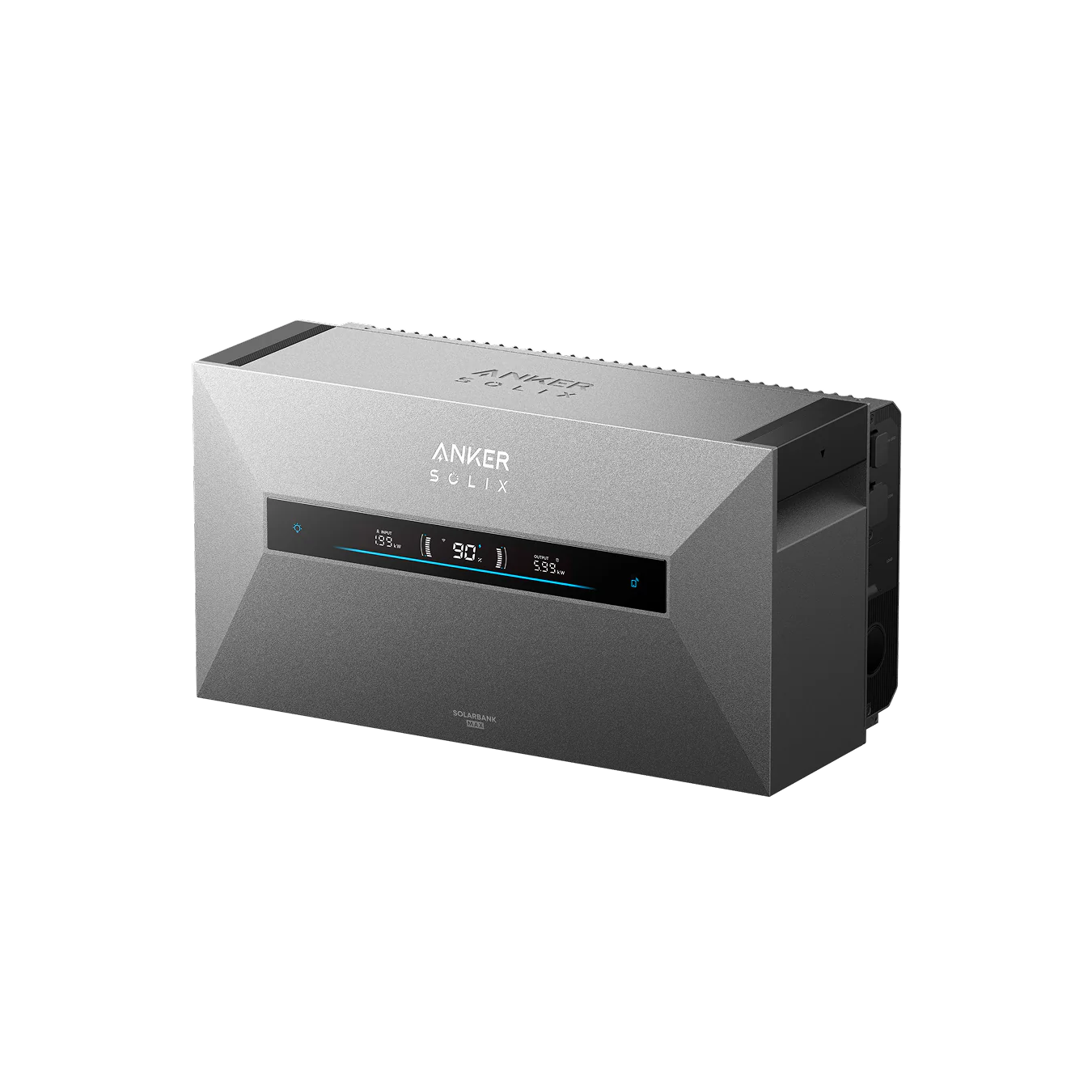
Anker SOLIX Solarbank Max AC
Product description
For that scenario, extensibility is an important plus. According to the product specifications, the system can be scaled up to 42 kilowatt hours with one main unit and additional batteries. This makes it attractive for households who want to get started today, but do not yet know exactly whether their future consumption, generation or tariff structure will change. You then not only buy for the current situation, but also leave room for growth.
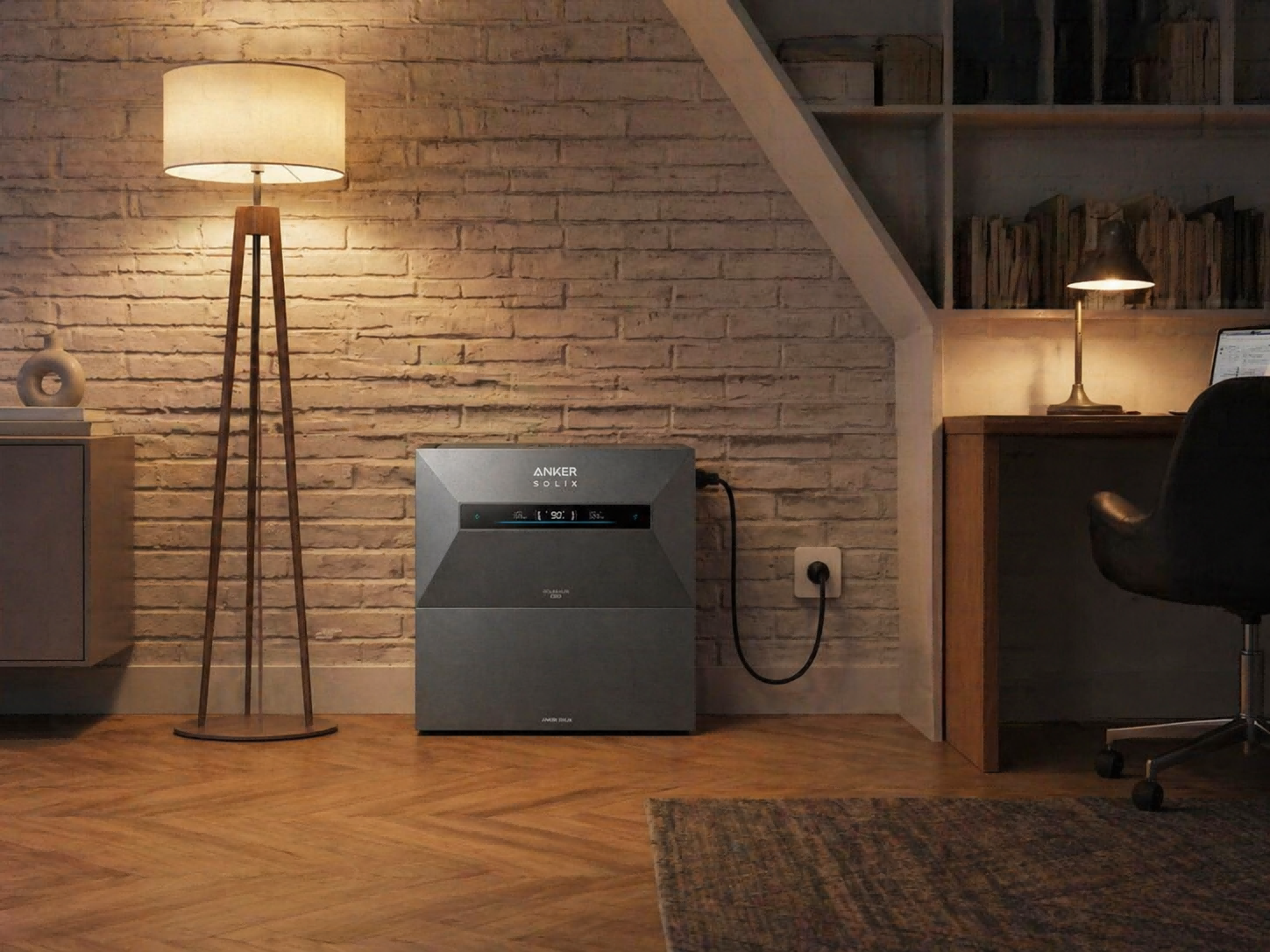
The installation also meets the demand for home batteries without an installer. The battery is stackable and can be quickly assembled according to product specifications. Various connection types are possible, including a plug connection. This makes this model especially suitable for households looking for a practical middle ground: simpler than a classic fixed system, but more serious than a very small temporary solution.
- kilowatt hours
- Power: up to 3500 watts connected to the grid, 3680 watts without grid and 5000 watts total
- Placement: stackable and suitable for multiple connection types
- Battery type: LFP cells
- Lifespan and warranty: according to the product information 10,000 cycles and 10 years warranty
Which specifications, rules and checkpoints are the most important?
If you want to start without an installer, you should not only look at capacity. The practical limits are often more important: how do you connect the system, what power do you really want to use and what can your home installation safely handle? For many households, 6 to 8 kilowatt hours is a useful order of magnitude to cover part of the evening and night consumption. In that respect, 7 kilowatt hours is often a logical starting point, but only if the charging and discharging power also matches your consumption pattern.
In addition, safety and placement count heavily. Pay attention to the battery type, degree of protection, permitted installation environment and how the system responds to a power outage. For the Anker SOLIX Solarbank Max AC, the manufacturer mentions, among other things, LFP cells, protection against outside influences and an emergency power function. These are useful features, but they do not replace control of your group, socket and desired usage situation.
In the Netherlands, you also have to look further than just the technical placement. A battery system must be registered, and with pluggable systems you must pay extra attention to the limits of supply via a normal socket. There are different opinions about this in the market, but the core remains the same: a simple plug-in solution is something different from a completely fixed system. As soon as you want to release more power or place a heavier load on the installation, you must check more closely whether your connection and home are suitable for this.
Practically, you can observe these checkpoints before purchasing or connecting:
- contenteditable="false">Connection type: Do you stick to a simple plug-in solution or is a permanent connection necessary?
- Power: Is a limited setting sufficient, or do you want to use a higher power setting with additional conditions?
- Home installation: Is there a suitable, sufficiently light group available and is your installation in good condition?
- Registration: Is your battery system correctly registered according to the applicable Dutch rules?
- Future: Do you want to expand later, so that a modular system has more value than a fixed end situation?
It is precisely on these points that the Anker SOLIX Solarbank Max AC is worth comparing for this scenario. Not because every household automatically needs this model, but because it offers a combination of plug-in starting, serious capacity and later expandability. That makes it relevant for readers who want to start simply without immediately closing the door to a larger system.
Sources and checkpoints
- Netherlands Enterprise Agency — Register your battery system — https://www.rvo.nl/onderwerpen/netcongestie/register-uw-batsysteem
- Zonneplan — Home battery with plug: law and regulations — https://www.zonneplan.nl/thuisbatteries/thuisbatteries-met-stekker/wet-en-regulations
- Anker SOLIX — Solarbank Max AC product page — https://www.ankersolix.com/nl/products/a17e2
Use these resources to check three things separately: what is technically possible, what you need to officially register, and which product specifications really apply to your chosen configuration. Please note that payback time, practical savings and ease of use always depend on your consumption, generation, rates and home installation.
Frequently asked questions
Can I really connect a home battery myself via a socket?
Yes, that is possible in some cases, but usually only with a plug-in home battery that is expressly intended for this purpose. This usually does not apply to a classic home battery in the meter cupboard. Always check whether your socket, group and usage situation are suitable and whether registration is required.
When do I still need an installer for a home battery?
This is usually necessary as soon as you opt for fixed wiring, a higher power level, a heavier electrical setup or a situation in which your home installation must first be assessed. Even if you have doubts about the load on a group or the safety of the connection, extra checks are wise.
When is Anker SOLIX Solarbank Max AC a logical option and when should I check extra?
This model makes sense if you want to start without a major installation process, require a relatively simple design and find expandability important. Additional control is necessary if you want to use more power, choose a connection type other than a simple plug connection or are not sure whether your group and home installation are suitable.
Do I have to register a home battery in the Netherlands?
Yes, you must register a battery system. Even with a technically simple installation, this remains an important part of the preparation. Therefore, before purchasing and connecting, check which information you need to provide and whether your chosen system is registered correctly.
Conclusion
It is possible to connect a home battery yourself, but usually only in the form of a plug-in solution and only as long as your power, connection method and home installation remain within safe and practical limits. For many households, this is the most accessible way to start storage. Once you want more power, hardwiring or a heavier application, professional control makes more sense.
The Anker SOLIX Solarbank Max AC makes sense to compare early for this scenario, because the system combines an accessible start with serious capacity and later expandability. Therefore, check four points now: your nighttime consumption, the available group, the desired output power and your registration obligation. Only then compare the chosen configuration with the official specifications of Anker SOLIX Solarbank Max AC, so that you can quickly see whether a simple plug-in start really suits your home.