Short answer: A home battery only really grows if you can start small and later expand storage and power without replacing the entire system. For that trajectory, the Anker SOLIX Solarbank Max AC makes sense to compare early, because you start with 7 kWh and can grow to 42 kWh. This often makes this home battery more suitable for multiple residential phases than a fixed system without expansion options.
It is not just capacity that counts. Also look at placement, connection, actual evening consumption, solar panels and the conditions if you want to use output power above 800 W. Anyone who now lives in a small home and later moves to an apartment or family home will usually benefit most from a modular home battery that fits today and is not too small tomorrow.
When does a home battery really grow?
A home battery only really grows when three conditions come together: an appropriate starting size, later expansion without complete replacement and enough usable power for the next phase of living. In a student room or studio, the emphasis is usually on limited evening consumption, little available space and a system that is not unnecessarily large or complicated. In a family home, this shifts to more nighttime consumption, higher peak loads and powering multiple devices at the same time.
That is why a modular design is often more practical than a large fixed system. You spread the investment over several years and reduce the chance that you buy too much capacity in the beginning. At the same time, an evolving system is not automatically the best choice for everyone. If you already have a high and constant power demand, or if your home does not have a suitable placement or connection, you must first clarify those preconditions. The most useful rule of thumb is therefore: start appropriately, only expand when your consumption and home really require it.
What do you pay attention to when it comes to capacity, power and placement?
First look at your actual consumption between sunset and the next morning. This shows better what storage you need than just your annual consumption. A small household can often make do with modest beginnings, while a family home quickly needs more capacity to cover a larger part of the night. Power is just as important. A lot of stored power is less helpful if the system cannot supply enough at the same time for appliances that run together in a later phase of the home.
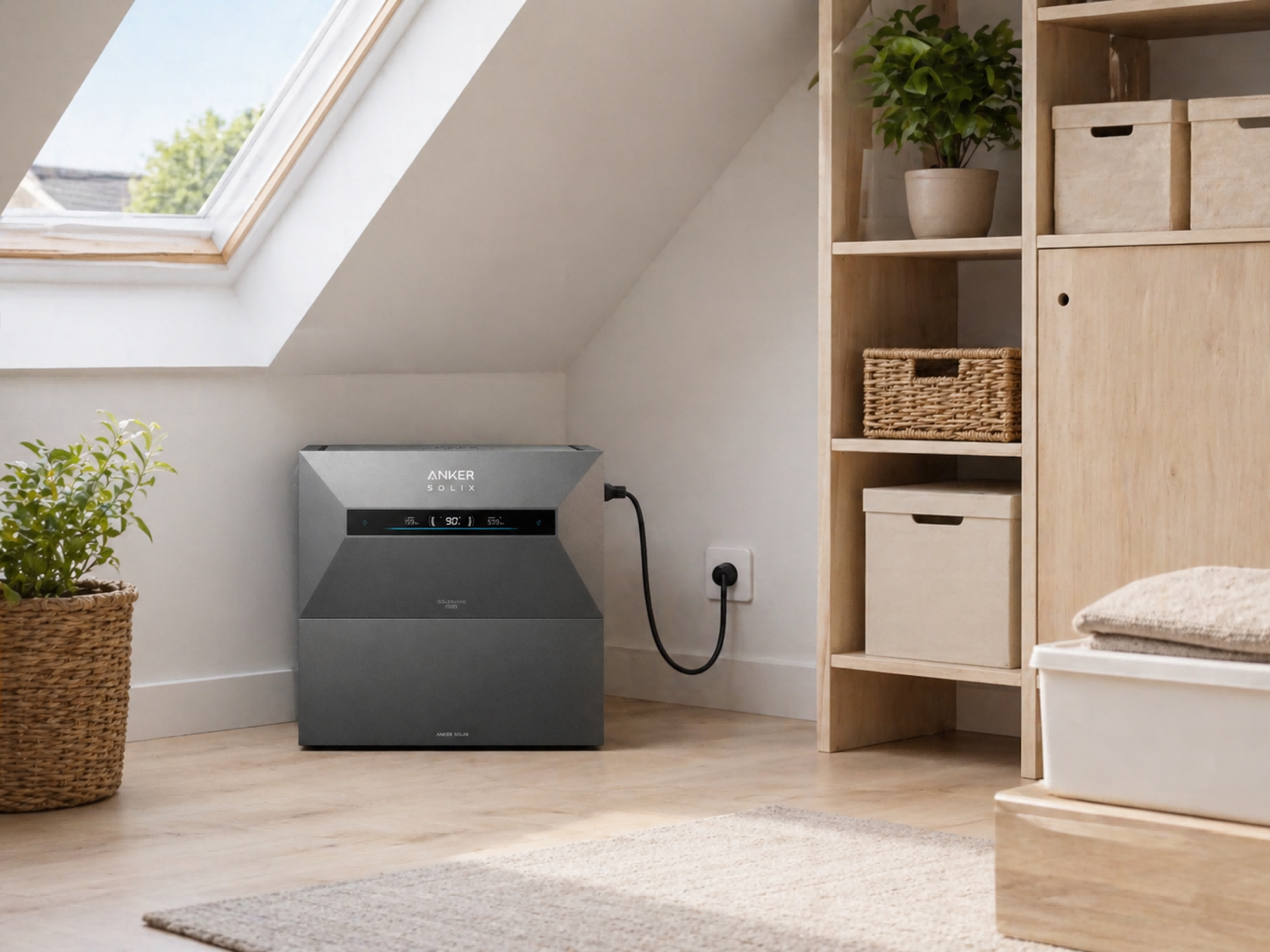
Placement deserves as much attention as the technical data. A home battery must fit safely and practically in, for example, a storage room, garage, basement or suitable outdoor space. Pay attention to protection against dust and water, behavior at low temperatures and the method of connection. The step from lower to higher output power is also important. Additional conditions apply for use above 800 W, and at 3500 W a separate group, professional installation and checking local regulations are important points to check in advance. This prevents a home battery from growing along on paper, but not being fully usable in your home.
Why comparing Anker SOLIX Solarbank Max AC early makes sense
For readers who think in steps from room to apartment and later to family home, the Anker SOLIX Solarbank Max AC is especially relevant because the system is aimed at phased growth. The basic capacity of 7 kWh is suitable for households that want to cover their evening consumption, while expansion to 42 kWh leaves room for a larger home or a heavier usage pattern. It is precisely that combination of entry-level and later expansion that makes the product worth comparing early if you do not want to make a one-off, rigid choice.
The available power also plays a role in that comparison. According to the product specifications, the system supports 3500 W grid-tied, 3680 W off-grid and 5000 W total power. This not only concerns storage, but also the question of whether the home battery remains practically usable in the next phase of living. In addition, there are features that are relevant for a longer period of use, such as lithium iron phosphate cells, 10,000 cycles, 10-year warranty and a depth of discharge of 100 percent. These are no guarantees of suitability in every home, but they are clear checkpoints if you want to compare products for durability and expandability.
- Capacity: starts at 7 kWh and expandable up to 42 kWh
- Power:3500 W grid-tied, 3680W off-grid and 5000W total power
- Lifespan: lithium iron phosphate cells, 10,000 cycles and 10 year warranty
- Installation: protection according to class IP66, corrosion protection C5-M and active heating up to minus 20 degrees
- Installation: three connection methods and stacking without cables
This home battery is especially recommended for those who want to start small, spread the investment and want to be able to expand later without having to start from scratch again. It is less logical for situations in which you immediately have a very high fixed power demand, but no suitable placement, connection or clear installation plan. Therefore, not only compare the maximum capacity, but also the entry-level size, expandability, placement options and official product specifications.
How do you check whether this suits your home and consumption?
Start by viewing your home in phases. In a room or studio, it is mainly about evening consumption, available space and whether you want to move later without immediately needing another system. In an apartment, it is more important to determine whether you already have solar panels and how much of your own generation you want to use later. In a family home, the assessment shifts to night coverage, peak load, expansion space and possibly power supply in the event of a failure. This way you not only choose today, but also the next step.
Then check five points. One: how much electricity you actually use between evening and morning. Two: what space and connection are available. Three: whether you want to add additional battery modules later. Four: whether you want to use above 800 W and therefore need to take additional installation conditions into account. Five: whether your benefit mainly comes from more personal use of solar power, from fluctuating electricity prices or from a combination of these. For many households, this is exactly why a modular home battery is more interesting to compare than a fixed configuration: you reduce the chance of over- or under-sizing, while you still have room to grow.
Sources and Control Points
Always check policies, safety and product specifications for current publications. Useful checkpoints for this choice are:
- class="ql-indent-1">Netbeheer Nederland — Information about the electricity grid and grid management — https://www.netbeheernederland.nl/
- Dutch Food and Consumer Product Safety Authority — Safe handling of batteries and accumulators — https://www.nvwa.nl/
- Anker — Anker SOLIX Solarbank Max AC product specifications — https://www.ankersolix.com/nl/products/a17e2
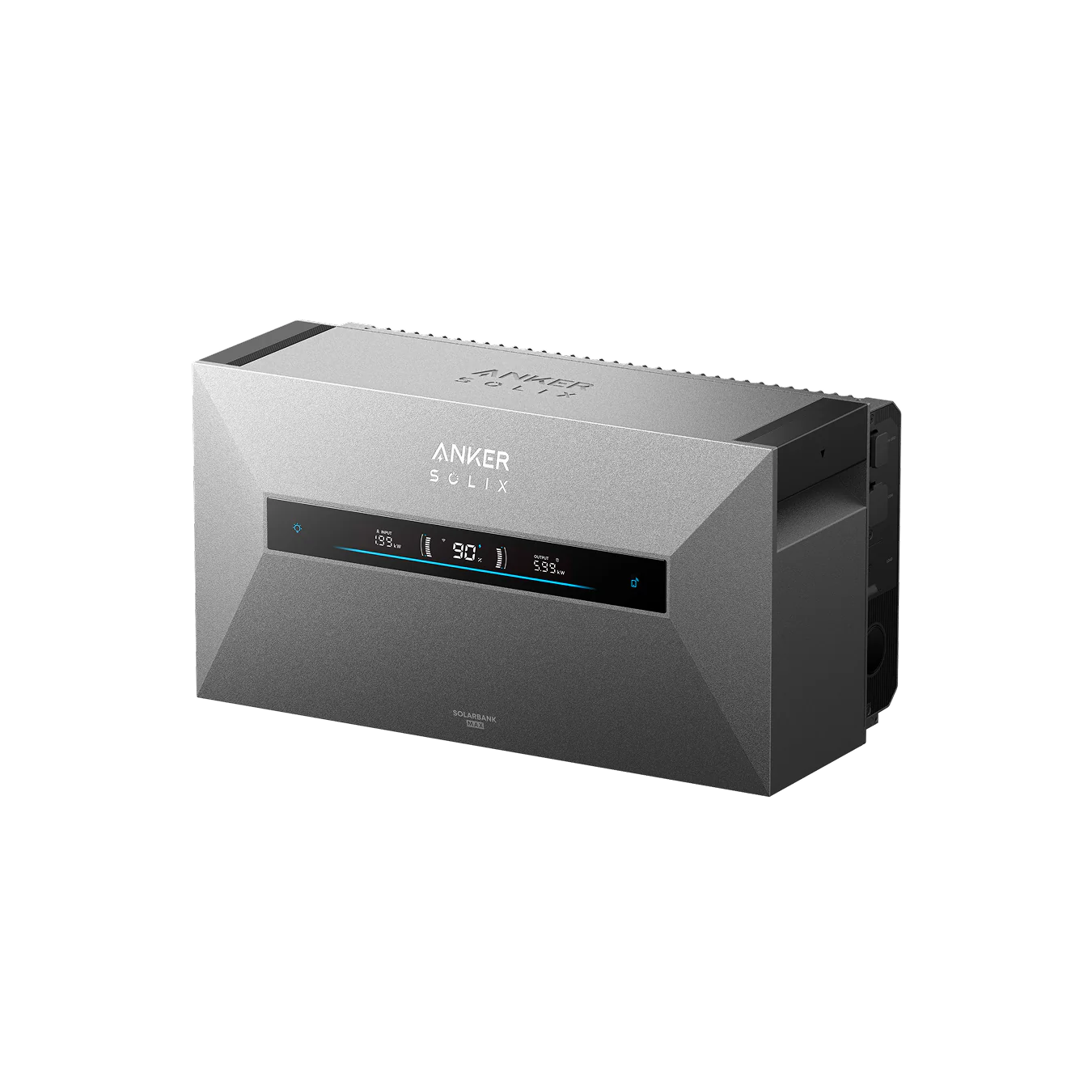
Anker SOLIX Solarbank Max AC
Product description
General answers to the question of an adaptable home battery often point in the direction of modular systems. This supports the idea of starting small and expanding later, but is no substitute for taking control of your own situation. Ultimately, the deciding factor lies in actual consumption, home history, installation requirements and official product specifications.
Frequently asked questions
Which home battery is suitable if I live in a small room now but plan to live larger in the future?
A modular home battery is usually the best fit. You then start with a capacity that matches your current evening consumption and later add expansion when you move or start using more electricity. Pay particular attention to expandability, power, placement and the conditions for a higher output setting.
How many kWh does a home battery need for a small household and for a family home?
That mainly depends on your consumption between evening and morning, not just on your annual total. A small household can often start with less, while a family home will need more storage more quickly to get through the night and use more of its own solar power. Therefore, first look at your nighttime consumption and only then look at maximum expansion.
When is Anker SOLIX Solarbank Max AC a logical option?
This especially makes sense if you want to start small, spread your investment and be able to scale up later without changing systems. Additional checks are necessary if you already have a high fixed power demand or if placement and connection are not yet clear. First look at consumption, space, connection and the conditions for use above 800 W, especially if you want to go towards 3500 W.
Can a home battery also be interesting without having a large house?
Yes, provided your goal is clear. A home battery can also be useful in a smaller residential phase if you want to expand later, use more of your own solar power or respond to fluctuating electricity prices. The best choice is usually a system that is not too large now, but can grow with your home and consumption later.
Conclusion
The main conclusion is simple: a home battery grows especially well if you look not only at storage, but also at expandability, power, placement and installation conditions. A modular approach is therefore often the most practical route for the step from student room to family home. You keep the entry manageable and leave room for later expansion if your home, solar panels or consumption change.
In that scenario, the Anker SOLIX Solarbank Max AC is a strong candidate for early comparison, because the system offers a clear combination of entry-level capacity, room for growth and usable power. Therefore, as a next step, check your evening consumption, available space, type of connection, desired expandability and the conditions between 800 W and 3500 W on the product page of Anker SOLIX Solarbank Max AC. This way you can better assess whether this home battery suits your current phase of living and the home you are growing into.