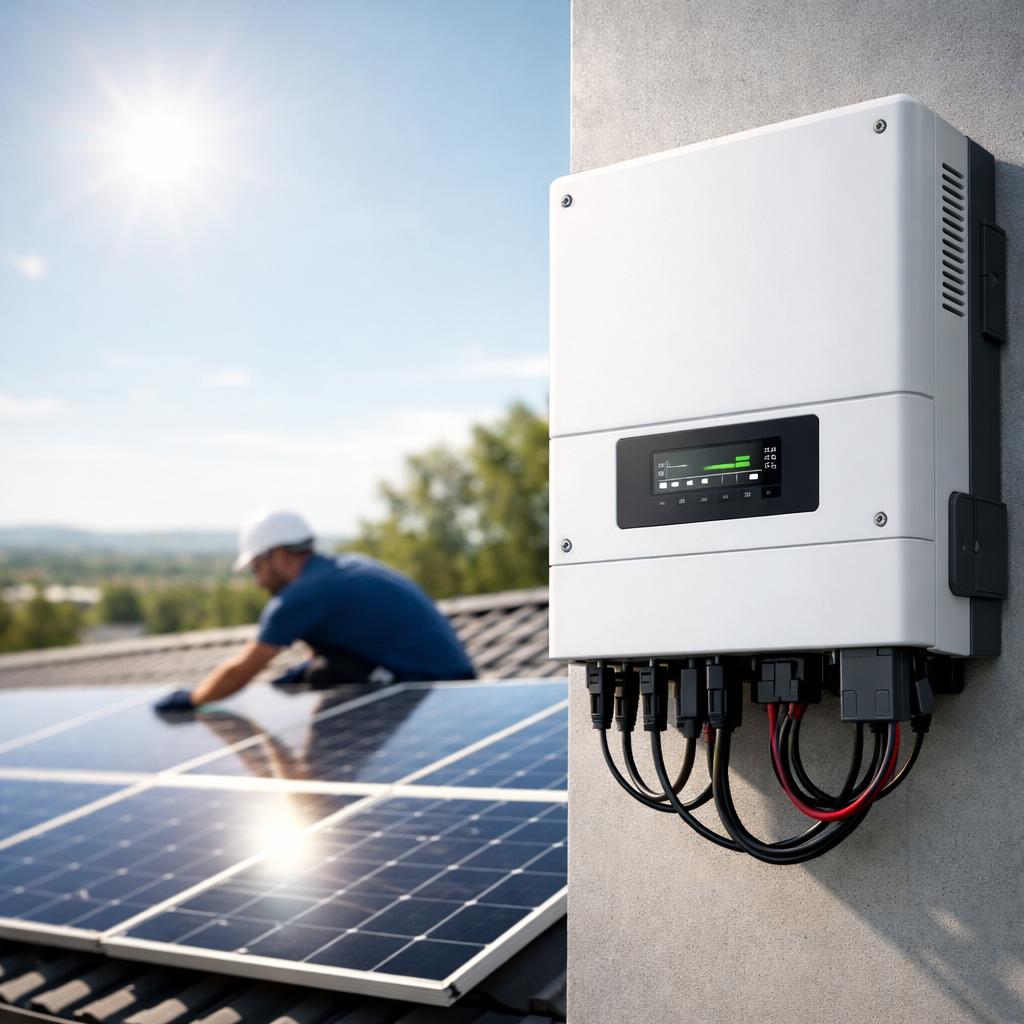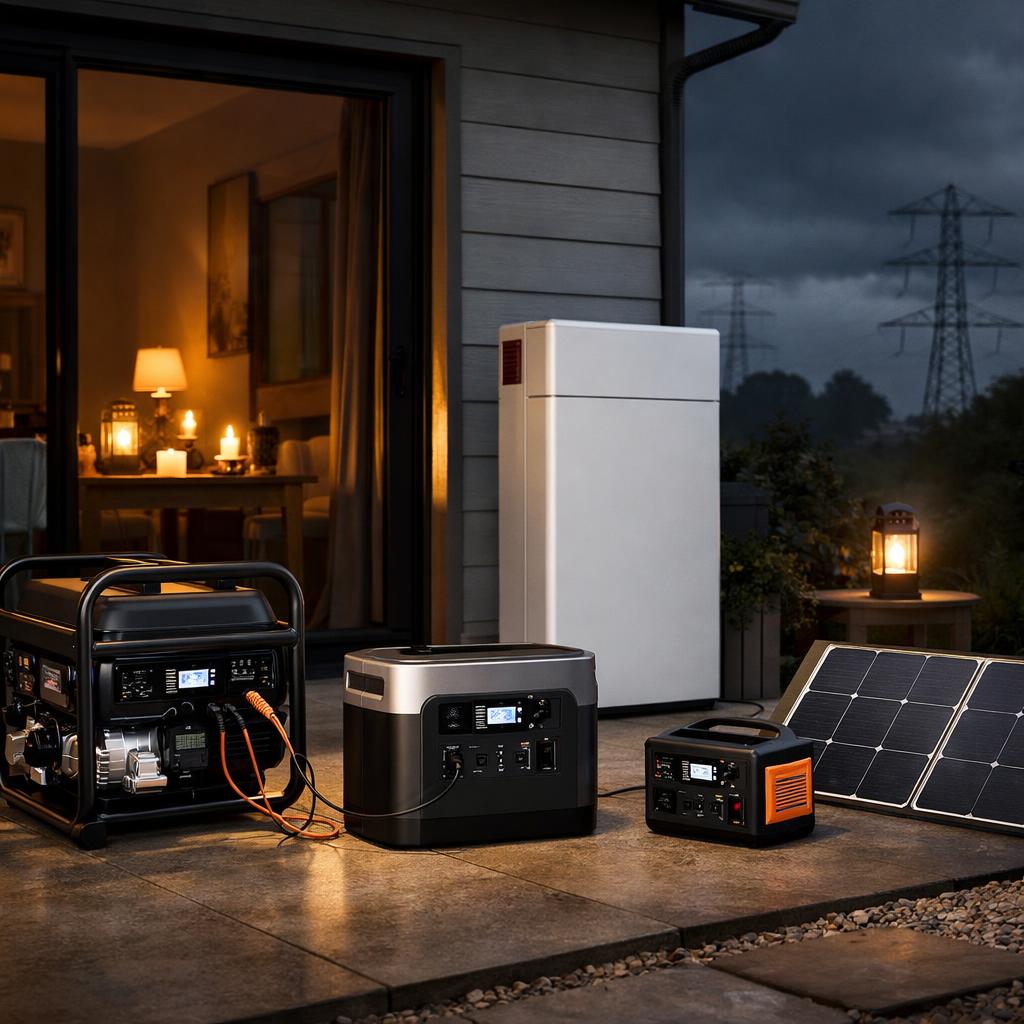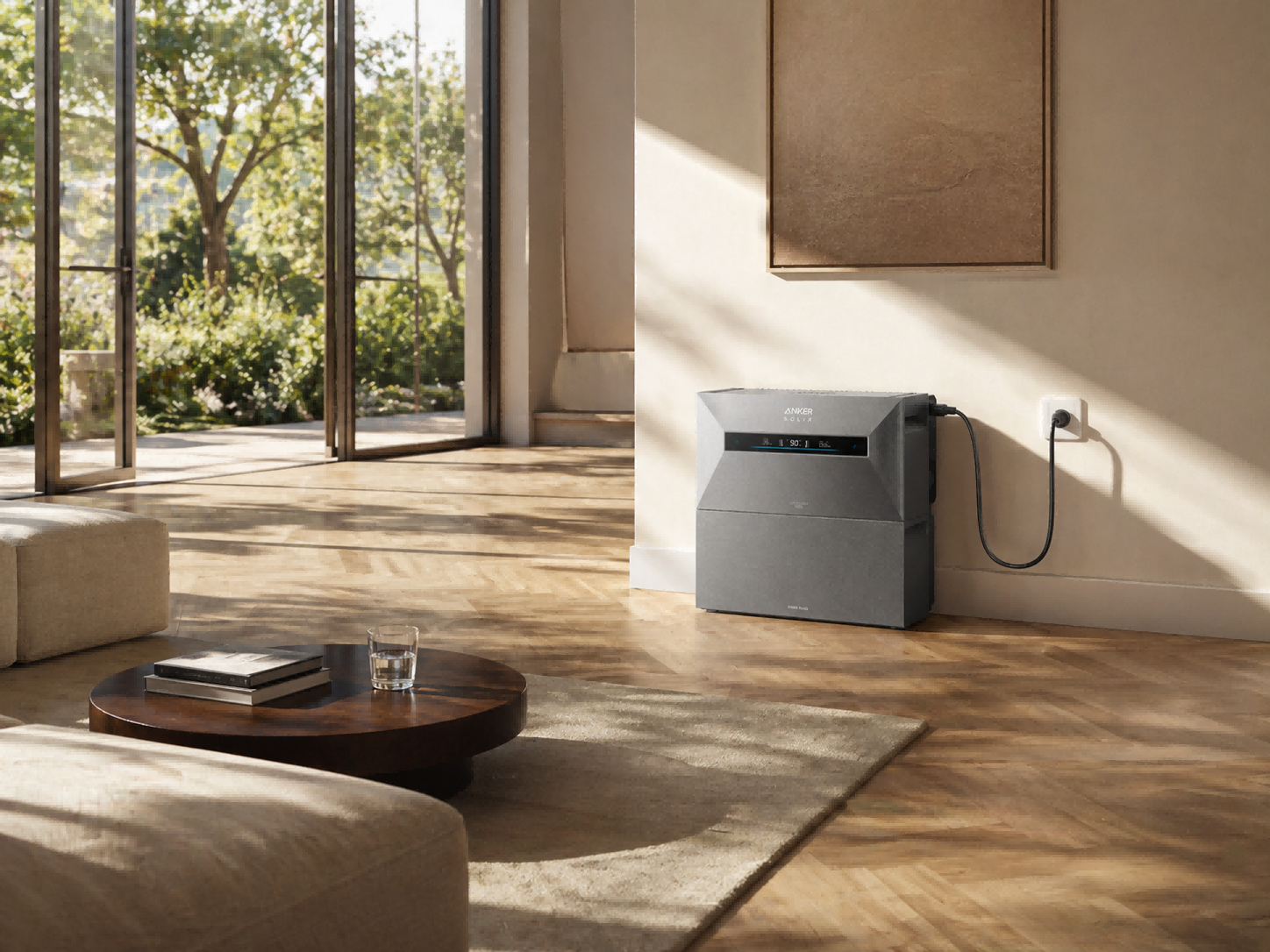
Short answer: An AC home battery is usually the better choice if you already have solar panels and your current inverter is still working well. You then add the battery to the alternating current side, which means that your existing solar power system can often remain largely as it is. That is precisely why it is wise to compare the Anker SOLIX Solarbank Max AC early if you want to start without major renovations, expand later and take emergency power into account.
A regular home battery on the DC side is often a better fit for a completely new system, where solar panels, inverter and storage are included in one design. In existing homes, the choice usually revolves around practicality, usable capacity, charging and discharging capacity, placement and the question of how much self-consumption you can really increase. If you want to quickly test whether such a solution is suitable, take a look at the product specifications of Anker SOLIX Solarbank Max AC.
When is a home AC battery usually the better choice?
The simplest rule of thumb is this: if you already have solar panels with a working inverter, then an AC home battery often makes more sense than a regular home battery on the DC side. The reason is mainly practical. You usually do not have to replace your existing inverter, so the expansion can be less drastic. This often saves on adjustment, downtime and complexity.
This makes an AC home battery especially suitable if you want to add storage afterwards. Consider households that want to use more of their own solar power in the evening, supply less or better prepare for changing rules regarding netting. This is becoming increasingly relevant in the Netherlands, because self-consumption is becoming more important in the calculation for many households.
A regular home battery on the DC side may make more sense if you do not yet have solar panels or if your inverter already needs to be replaced. In that case you can design the entire system as one whole. That can be technically neater and sometimes be more favorable for conversion. At the same time, this advantage is especially strong in new construction or a complete renovation of the installation.
The most important difference is not only technology, but especially the moment at which you get in. For an existing home with solar panels, an AC home battery is often the most practical route. For a completely new design, a regular or hybrid solution is more likely to be the obvious choice.
What do you pay attention to when comparing an AC home battery?
Suitability for your consumption and home
Don't start with the largest model, but with your own power consumption. First look at your night-time consumption, because that part is usually what you want to capture with stored solar power. If you mainly use lighting, kitchen appliances and some fixed appliances in the evening, you need something different than a household that also uses electric heating or wants to charge a car.
Therefore, pay attention to these points:
- Usable capacity: how many kilowatt hours you can actually use, not just the theoretical storage.
- Charging and discharge power: how much current the system can absorb or supply at the same time.
- Emergency power: whether power supply in the event of failure is really included or only works under additional conditions.
- Expandability: whether you can start small and add extra storage later.
- Fitability: whether the system fits your meter cupboard, available space and existing installation.
Also check where the battery will be placed. Space, temperature, ventilation and moisture load are not only practical details, but also determine whether installation is responsible. A system that seems good on paper must really suit your home.
Installation conditions, efficiency and tariff usage
In addition to capacity and power, installation conditions play a major role. For higher output powers, additional requirements may apply, such as a separate group, professional connection or notification in accordance with applicable rules. Especially if you want more than a small basic setup, you should check in advance what is technically and legally required.
Also take returns into account. An AC home battery is often easier to add to an existing system, but usually has slightly more conversion loss than a solution on the DC side. This is because electricity is converted more often between direct current and alternating current. In practice, that difference is not decisive for many existing homes, but it does belong in a fair comparison.
It is also wise to see how the system deals with fluctuating electricity prices. With variable or dynamic rates, a battery can have extra value if you can charge and discharge smartly. Then pay attention to support for management of consumption, generation and tariff moments. Financial outcomes always depend on your situation: generation, consumption, tariff type, feed-in costs and installation together determine whether the choice is really favorable.
Why Anker SOLIX Solarbank Max AC is relevant in this scenario
Anker SOLIX Solarbank Max AC is relevant for households with existing solar panels because the product fits in well with exactly that usage scenario: adding storage afterwards without immediately replacing your entire system. That makes it a logical candidate to include early in your comparison, especially if you are unsure whether to start immediately or start cautiously.
The basic storage is 7 kWh and the system can be expanded to 42 kWh. This is practical for households that first want to compare their actual night-time consumption against the storage capacity and only want to scale up later. You do not immediately commit to a maximum setup, while you do leave room for growth if your consumption changes.
The capital is also relevant for many homes. The system supports 3500 watts on grid, 3680 watts off grid and 5000 watts total power. This makes it not only suitable for small evening consumption, but also for heavier applications in appropriate situations. For many users, this combination of expandability and practicality is a reason to seriously include this model in the comparison.
The manufacturer also mentions LFP cells, 10,000 cycles, 10-year warranty, a discharge depth of 100 percent and protection according to IP66. These are useful product signals, but they should always be read in addition to the installation conditions. Higher powers require extra control of group division, connection and local requirements. The product is therefore interesting, but only truly suitable if your home and electrical installation also support it.
- Basiscapaciteit: 7 kWh
- Uitbreidbaar: tot 42 kWh contenteditable="false">Battery construction: LFP cells
- Lifespan and reliability: 10,000 cycles and 10 year warranty
- Connection options: plug, Wieland or landline
For whom and who not, plus what you should check first
Suitable and less suitable
An AC home battery is especially suitable for households that already have solar panels, want to keep their existing inverter and want to achieve more self-consumption without major renovations. This applies especially if you want to start small, expand later or take emergency power into account in your choice. In that scenario, Anker SOLIX Solarbank Max AC is a logical option for early comparison, precisely because the product is aimed at phased expansion and installation with existing systems.

An AC home battery is usually less suitable if you do not yet have solar panels and are having a completely new system designed. Then a regular or hybrid solution on the DC side may be more attractive, because you can incorporate everything into one coherent design. Even if maximum system efficiency outweighs simplicity of retrofitting, you should take that route seriously.
In any case, check these points before making your decision:
- Your nighttime consumption: this is how you determine which storage is really useful.
- Your peak consumption: this determines what power is needed is.
- Available space: for example in garage, storage room, basement or outdoor area.
- Electrical suitability: whether a separate group or other adjustment is necessary.
- Local rules: for installation, connection and possible registration.
This check prevents you from relying solely on product claims. Ultimately, the best choice is not the battery with the longest list of specifications, but the solution that suits your home, your consumption and the way you already generate solar power.
Sources and Control Points
Use the resources below to review policies, safety, connections, and product specifications. They help to assess the Dutch situation, but do not replace checking your own home and installation.
- class="ql-ui" contenteditable="false">ConsuWijzer of the Netherlands Authority for Consumers and Markets — Energy rates — https://www.consuwijzer.nl/energie/energie Rates
- Grid Management Netherlands — Information about connection and feed-in — https://www.netbeheernederland.nl/
- NEN — Standards for low-voltage electrical installations — https://www.nen.nl/
- PV Magazine — Bericht over het beëindigen van salderen in 2027 — https://www.pv-magazine.com/2024/11/15/dutch-parliament-approves-end-of-net-metering-in-2027/
- Anker SOLIX — Product page of Anker SOLIX Solarbank Max AC — https://www.ankersolix.com/nl/products/a17e2
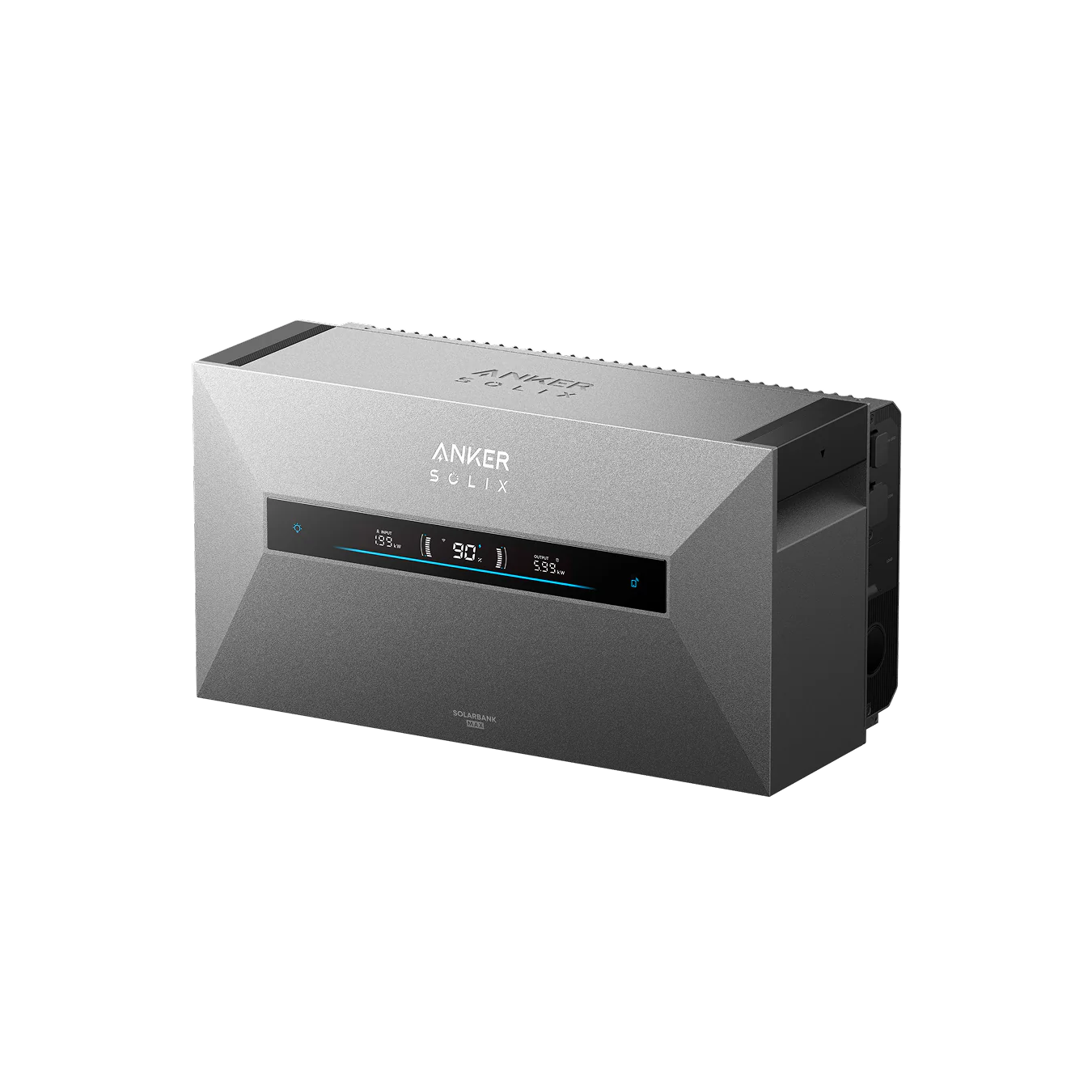
Anker SOLIX Solarbank Max AC
Product description
Important limit of the evidence: general sources help with the distinction between alternating current and direct current coupling and with the Dutch policy context, but they do not automatically say which choice will work best in your home. Therefore, always check the product specifications, group classification, installation conditions and the conditions for connection and registration.
Frequently asked questions
When is an AC home battery better than a regular home battery?
Usually when you already have solar panels and a well-functioning inverter and want to add storage without major adjustments. A regular home battery on the DC side is often a better fit for a completely new system that is designed in one go.
Is an AC home battery useful if I already have solar panels?
Yes, often. The advantage, especially with existing solar panels, is that you can usually keep the current inverter. This often makes installation easier and more flexible. However, you must check in advance whether the electrical installation is suitable for the desired power.
What should I pay attention to in terms of power, capacity and emergency power?
Look at your nighttime consumption, your simultaneous peak consumption and which devices you really want to continue using in the event of a power outage. More capacity is useful for longer bridging, while sufficient power is required for heavier loads. Also check whether emergency power is available as standard or only works under additional conditions.
When is Anker SOLIX Solarbank Max AC a logical option?
This model makes particular sense if you already have solar panels, want to start simple and want to keep the option to expand later. It is also relevant if emergency power and practical power count in your choice. Additional checking is necessary if you want to use higher output powers, need a separate group or want to check whether the placement and connection in your home are permitted and suitable.
Conclusion
The bottom line is clear: an AC home battery is usually a better fit for you than a regular home battery if you already have solar panels and an existing inverter and want to add storage without major replacement of your current system. A regular solution on the DC side remains especially logical if you have a completely new system designed from scratch.
For the common Dutch scenario with existing solar panels, Anker SOLIX Solarbank Max AC is therefore a useful option for early comparison. Not because every household needs this model, but because it meets relevant points for this scenario: starting without a complete system construction, expandability, emergency power options and a clear product specification. First compare your night consumption, peak consumption, desired emergency power, available space and electrical suitability of your installation, and then check the product specifications of Anker SOLIX Solarbank Max AC and the installation conditions. This way you can determine more quickly whether this expandable AC solution really suits your home and use.