Short answer: A 5 kWh home battery is often suitable as a compact starter size for small to average evening consumption, storing part of your solar power and limited emergency power. This is especially true if your daily power demand, the required power and your goal in the event of a power outage match.
However, capacity alone does not say enough. To assess whether 5 kWh in your home really makes sense, you must also look at usable capacity, continuous power, peak power, expandability and the conditions for safe installation. Only that combination will show whether this size is suitable for you, too small or sufficient for the time being.
When is a 5 kWh home battery suitable?
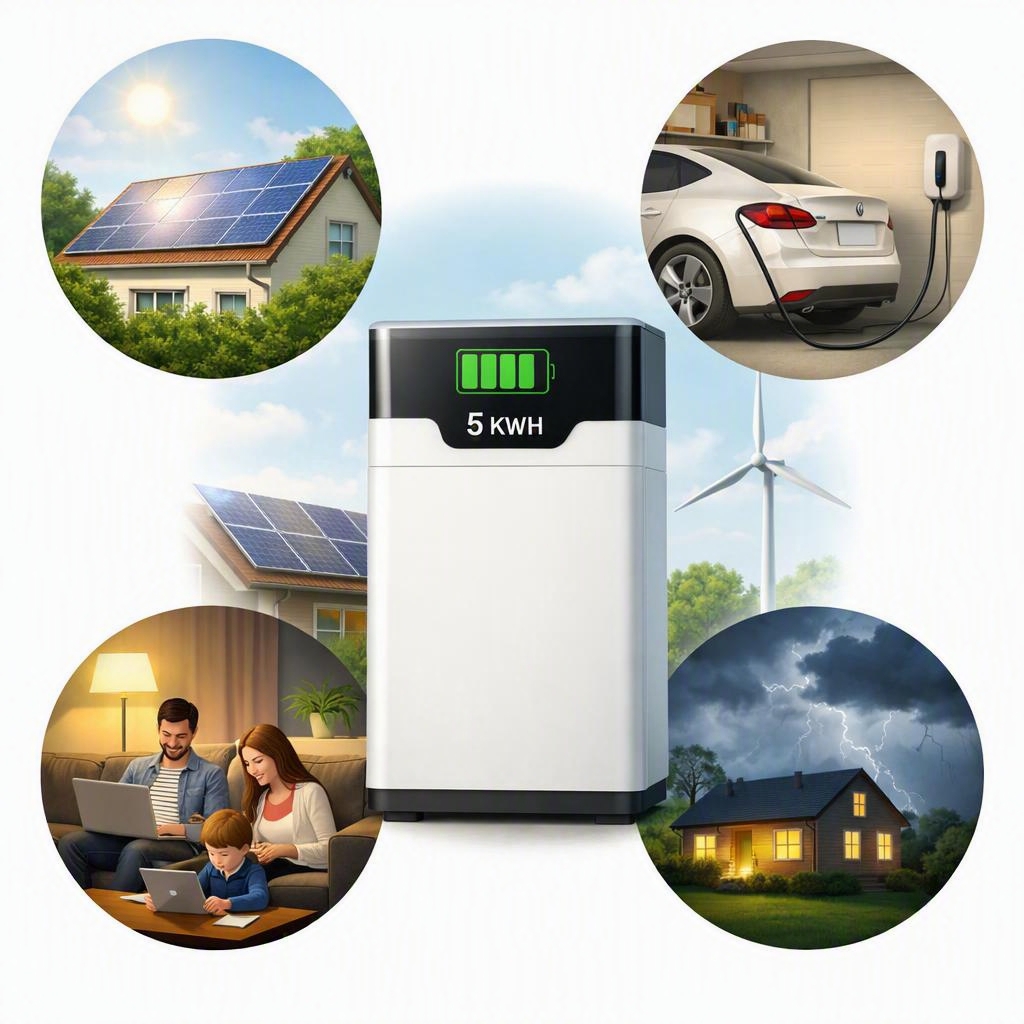
A 5 kWh home battery is usually best suited to households that do not want to run their entire home, but mainly want to shift part of their evening consumption. Think of lighting, internet, refrigerator, television, laptop use and charging smaller devices. In combination with solar panels, this format can be useful for later use of part of the power generated during the day. If you first look at how you calculate your power consumption per day, you will be able to estimate much better whether this format is suitable for practice.
Recommended for small evening consumption and limited emergency power
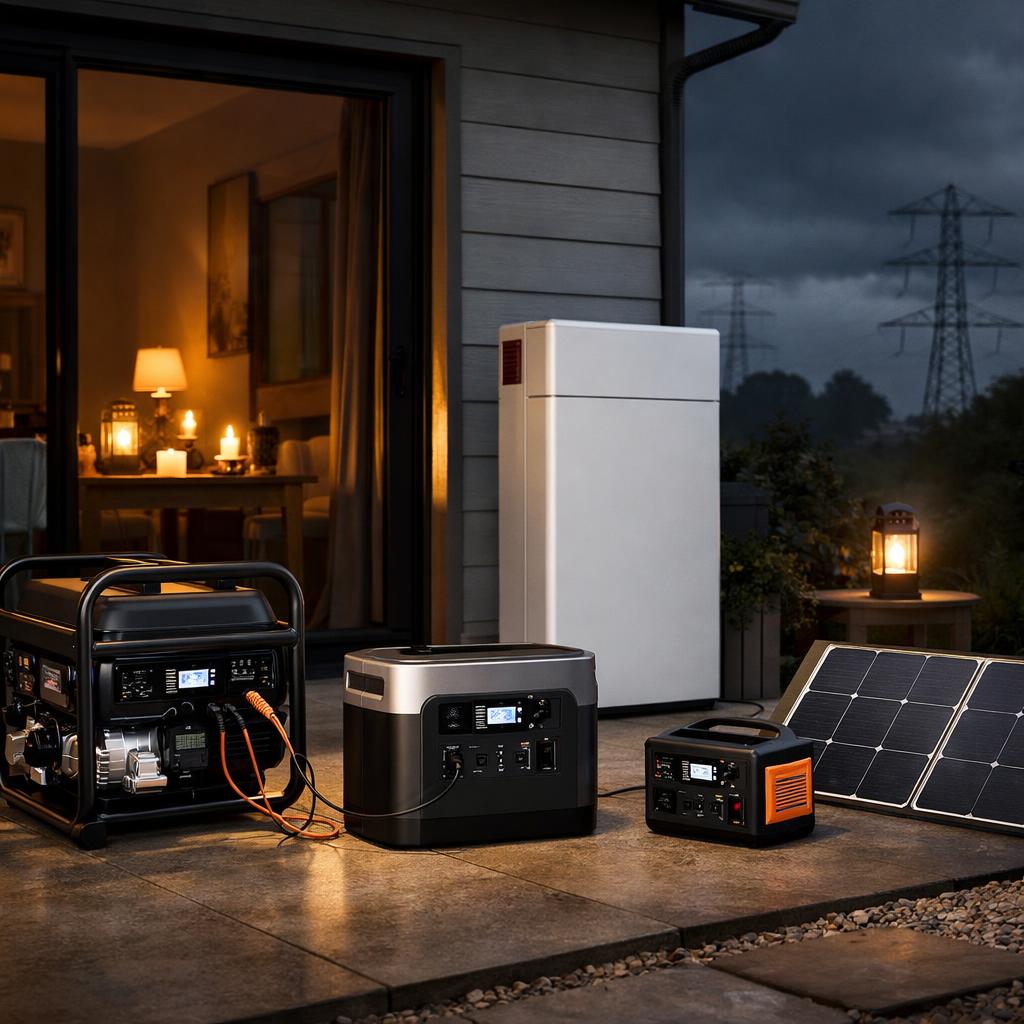
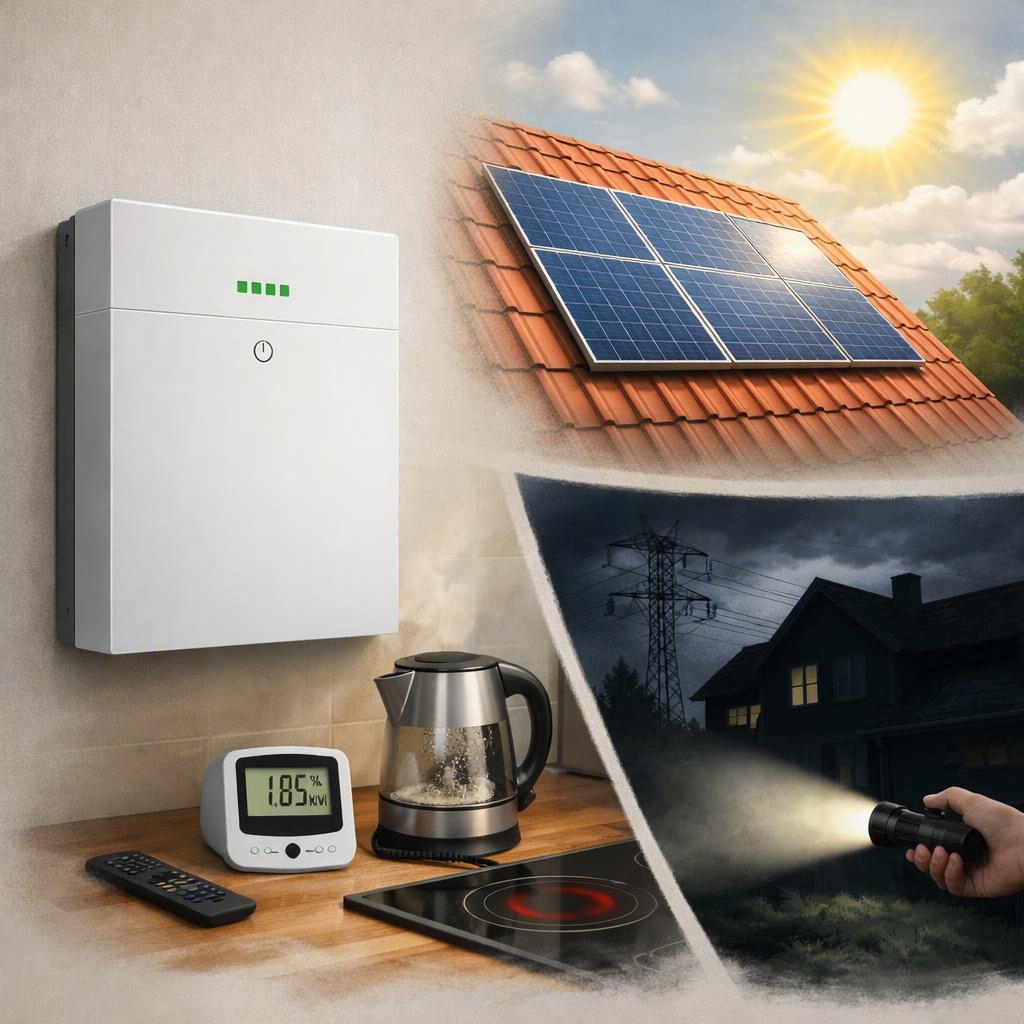
For homes with a modest power demand in the evening, 5 kWh is often a logical starting point. It is especially suitable for residents who want to increase their own consumption without immediately installing a large system. It can also be useful with limited emergency power, for example to supply some essential groups during a short interruption. This usually concerns basic functions, not complete comfort throughout the house.
This size is especially recommended if you have a clear and limited goal: supply less, use more of your own solar power or keep some necessary devices temporarily active. For such situations, a compact system can be attractive because it requires less space and is sometimes easier to install than a larger setup.
Less suitable for full home backup and heavy consumers
For complete home backup, a 5 kWh home battery is usually too limited. This is even more true if you want to power air conditioning, electric heating, a tumble dryer, cooking appliances or other heavy consumers for a long time. Not only does the stored energy quickly run out, the available power is also often a limiting factor.
If you want to continue using several larger devices simultaneously during an outage, it is wiser to look beyond just the storage capacity. Therefore, also read an explanation about emergency power for homes if backup is your main reason. In many cases it turns out that 5 kWh is only suitable for a limited selection of appliances, and not for a complete home supply.
What determines whether 5 kWh is enough in practice?
The biggest misconception is that 5 kWh automatically means that you can also fully utilize 5 kWh. In reality, the usable capacity is often lower than the nominal capacity. It is precisely that usable capacity that determines how much power you actually have available for daily use or in the event of a power outage.
In addition, the power is at least as important as the storage. A battery can have enough energy on paper, but still not provide enough power to start or run multiple devices at the same time. Therefore, the question of whether 5 kWh is enough can only be answered honestly in conjunction with your consumption profile and the technical properties of the system.
Compare usable capacity, power and expandability
A practical comparison starts with three points. First, how much capacity is actually usable per charging cycle. Secondly: what continuous power and what peak power are available. Third, you can expand later if your power demand grows or if you want more emergency power.
For many homes, an expandable system is worth comparing, precisely because a 5 kWh home battery is often considered as a first step. This is especially logical when your budget is still under pressure, your available space is limited or your future consumption is still uncertain. In such a case, a modular system is interesting to compare, not because bigger is always better, but because gradual expansion can provide more flexibility if your situation changes.
Don't just pay attention to the storage size in the folder. Check product specifications, sample daily consumption profiles, emergency power conditions and installation guidelines. This prevents a situation where a system seems suitable on paper, but in use does not deliver enough or proves difficult to expand.
Which alternatives and checkpoints are sensible?
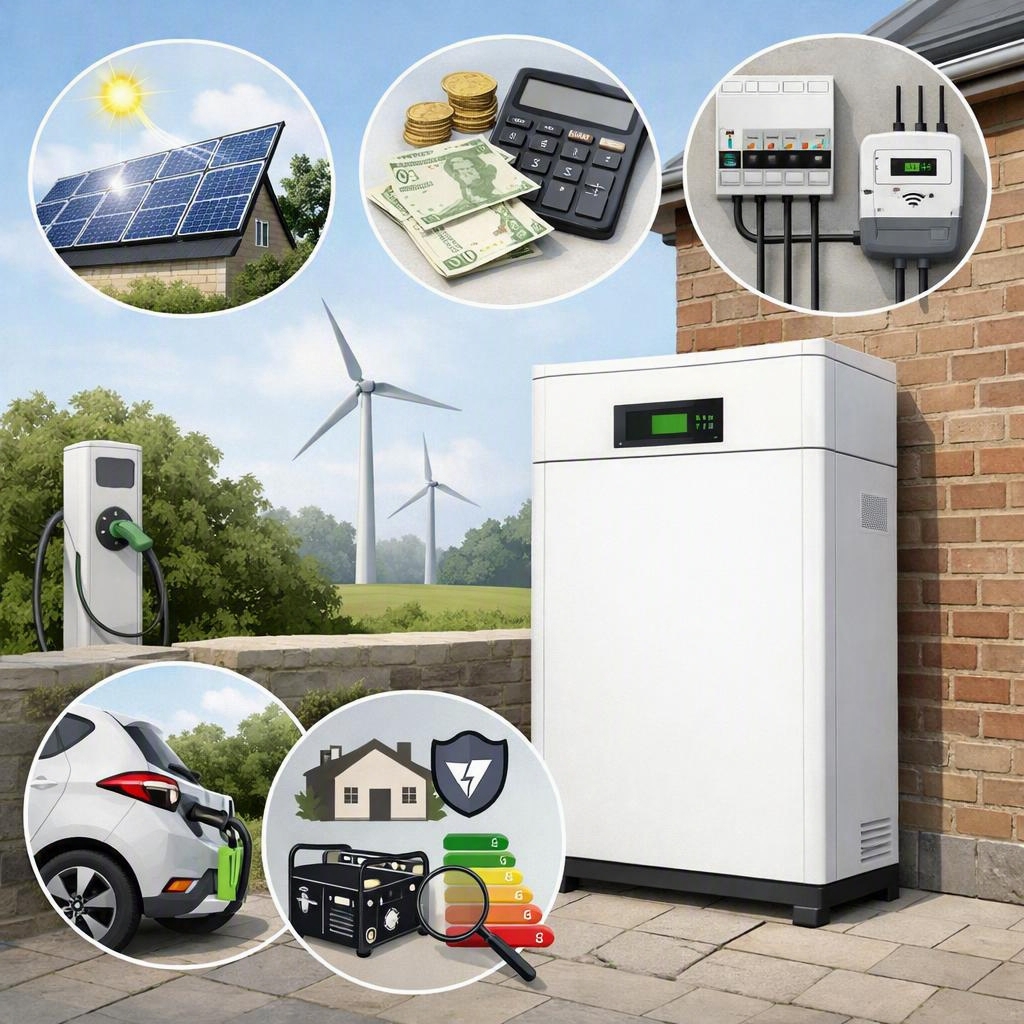
If you are unsure whether 5 kWh is sufficient, there are roughly three logical directions. You can choose this size as a compact starting point for self-consumption and limited emergency power. You can choose a system that can be expanded later. Or you can compare a larger system if your goal is clearly longer bridging, more autonomy or powering heavier devices. The best choice therefore depends on your home, your daily pattern and your expectations during an outage.
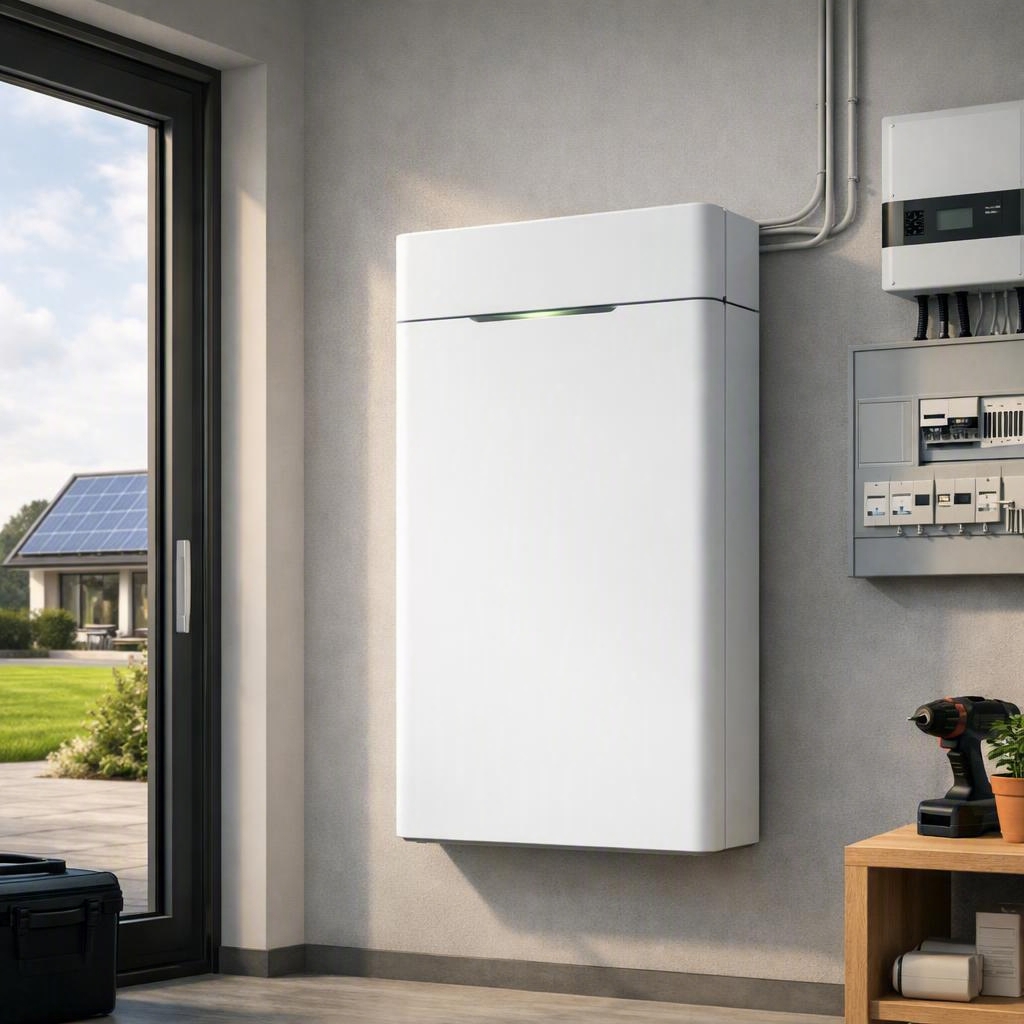
Before installation, always check whether your electrical installation, available space and safety conditions are suitable for a stationary storage system. Also pay attention to requirements regarding ventilation, protection, connection and placement. It is wise to assess the entire system as a whole: battery, inverter, emergency power function, group distribution and the devices you want to use simultaneously.
This way you make a distinction between situations for which 5 kWh is suitable and situations for which it is less logical. This format is especially recommended for homes with limited evening demand and a clearly defined backup target. It is less recommended for households that want to continue using a lot of electric heat, cooling or cooking loads at the same time. This distinction helps you to not just look at a number, but at the actual use in your home.
Sources and checkpoints
Use these resources to verify claims and put product specifications into context. They help you distinguish between general information, safety requirements and points that you need to check additionally per product or home.
- U.S. Department of Energy, Homeowners' Guide to Going Solar, https://www.energy.gov/eere/solar/homeowners-guide-going-solar
- U.S. Energy Information Administration, Residential Energy Use, https://www.eia.gov/energyexplained/use-of-energy/homes.php
- National Fire Protection Association, Standard 855 for the Installation of Stationary Energy Storage Systems, https://www.nfpa.org/codes-and-standards/all-codes-and-standards/list-of-codes-and-standards/detail?code=855
- Consumer Product Safety Commission, Battery Safety, https://www.cpsc.gov/Safety-Education/Safety-Education-Centers/Battery-Safety
- Always check per product: rated capacity, usable capacity, continuous power, peak power, emergency power function, expandability, warranty conditions and installation requirements.
Frequently asked questions
Is a 5 kWh home battery enough for an average household?
That depends on which part of your consumption you want to cover. For limited evening consumption and storing part of the solar power, 5 kWh may be sufficient. This size is often too small for complete home provision or many simultaneous heavy loads.
How long can a 5 kWh home battery supply power in the event of a power failure?
This varies per connected device and per usable capacity of the system. Some essential equipment can continue to work for hours, but at higher loads the operating time quickly decreases. The available output power also determines what is possible at the same time.
Can I run air conditioning or electric heating with 5 kWh?
Usually only limited or not long enough to see this as a main application. Such consumers require a lot of energy and often high power. For this purpose, 5 kWh is generally not a logical size, except for very short and limited use.
When is an expandable system a logical choice at 5 kWh?
This is especially logical if 5 kWh is suitable now as a starting point, but you may want more storage or longer emergency power later. Additional checks are required for true expandability, component compatibility, available space and the official product specifications of the system you have in mind.
Conclusion
A 5 kWh home battery is often a useful choice for households that want to use part of their solar power later, want to partially cover their evening consumption and find limited emergency power important. This size is usually not sufficient for heavy consumers, full home backup or a long bridging period.
If you want to know whether this format suits your situation, the next step is to compare your daily consumption in kWh, the devices you want to use simultaneously, the usable capacity, the continuous power, the peak power, the expandability and the installation conditions. By comparing these points, you will get a much more reliable picture of what 5 kWh can actually do in your home.