Can I connect a home battery myself, and which type is suitable?
Short answer: yes, but usually not completely yourself. You can sometimes install a plug-in home battery yourself, but a permanent home battery that is connected to the meter cupboard, a separate group or an inverter usually requires a skilled installer. For those who want to include an expandable home battery from Anker SOLIX Solarbank Max AC in the comparison, this is especially logical if easy starting, later expansion and clear product specifications are important.
Which type of home battery is suitable depends mainly on your existing solar panels, your desired power, the available electrical group and whether you only want to store electricity or also want to be able to use emergency power. In the Netherlands, registration via Energieleveren.nl is an important checkpoint. At higher powers, such as above 800 watts and certainly around 3500 watts, additional checks, a suitable group and often professional installation are required.
When can you connect a home battery yourself?
Plug-in home battery versus fixed connection
Connecting it yourself is especially feasible with a home battery that is intended for easy installation via a plug connection. This is usually a solution with limited power, intended for an accessible start without immediate major work in the meter cupboard. As soon as a home battery is permanently connected to the electrical installation, it shifts from simple installation to real installation work.
In practice, this means that you can often do some preparatory steps yourself: clear the space, read the manual, place the battery and check whether the space is suitable. The final electrical connection is slightly different. This involves protections, load capacity, cabling and sometimes settings of the inverter. Precisely for this reason, it is wise not to assess a home battery as just a storage box, but as part of your total home installation.
When a certified installer is sensible or necessary
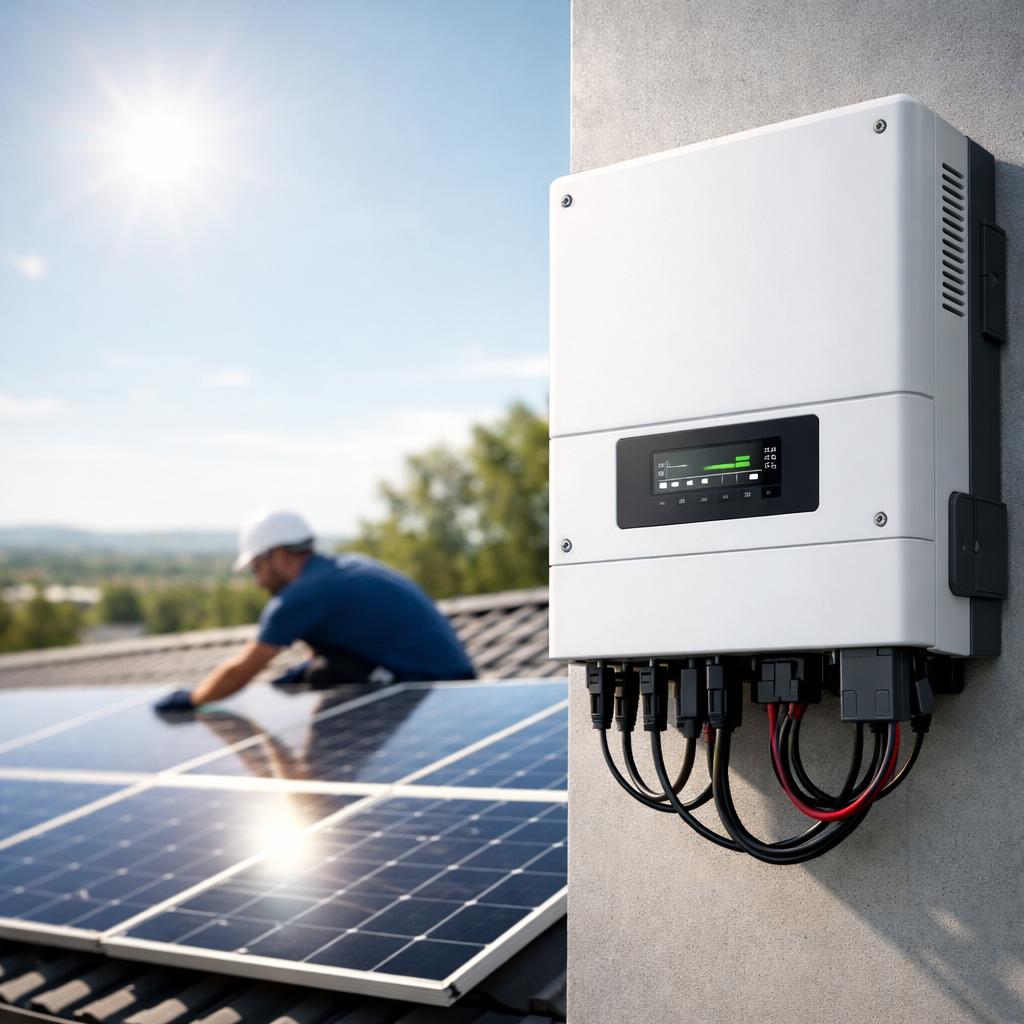
A certified installer is almost always wise as soon as something changes to the distribution box, the fixed cabling, the security or the settings of the energy system. This also applies if you want emergency power, if you want to support multiple heavy appliances at the same time or if you are not sure whether your home installation can safely handle the requested power.
Particularly at higher outputs, restraint is important. Above 800 watts, extra control is wise, and at around 3500 watts you should assume a separate group, professional installation and checking the applicable local requirements. The practical rule of thumb is therefore simple: you can sometimes do it yourself during preparation or with a simple plug-in solution, but for the fixed electrical connection, professional knowledge is usually the safe route.
Which type of home battery is suitable for your situation?
AC coupled, DC coupled and LFP explained
The right type of home battery depends on your current installation. If you already have solar panels with a properly functioning inverter, then an AC-coupled home battery is often the most practical choice. You usually have to make fewer adjustments to what is already there. If you are installing new solar panels or replacing the inverter, a solution that is included in the entire system from the start may make more sense.
Battery chemistry is also important. An LFP home battery is often chosen for home use. This choice is especially attractive for households that pay attention to stability, longevity and daily use. This does not mean that one type is always the best choice for everyone, but it does mean that LFP is a logical starting point for many homes when comparing.
- If you have existing solar panels with a working inverter, an AC-coupled home battery is often suitable.
- Install your new solar panels or renew your the installation thoroughly, then a more integrated design may be a better fit.
- If you want to start simply without major work on the meter cupboard, then a plug-in home battery with limited power is a more obvious choice.
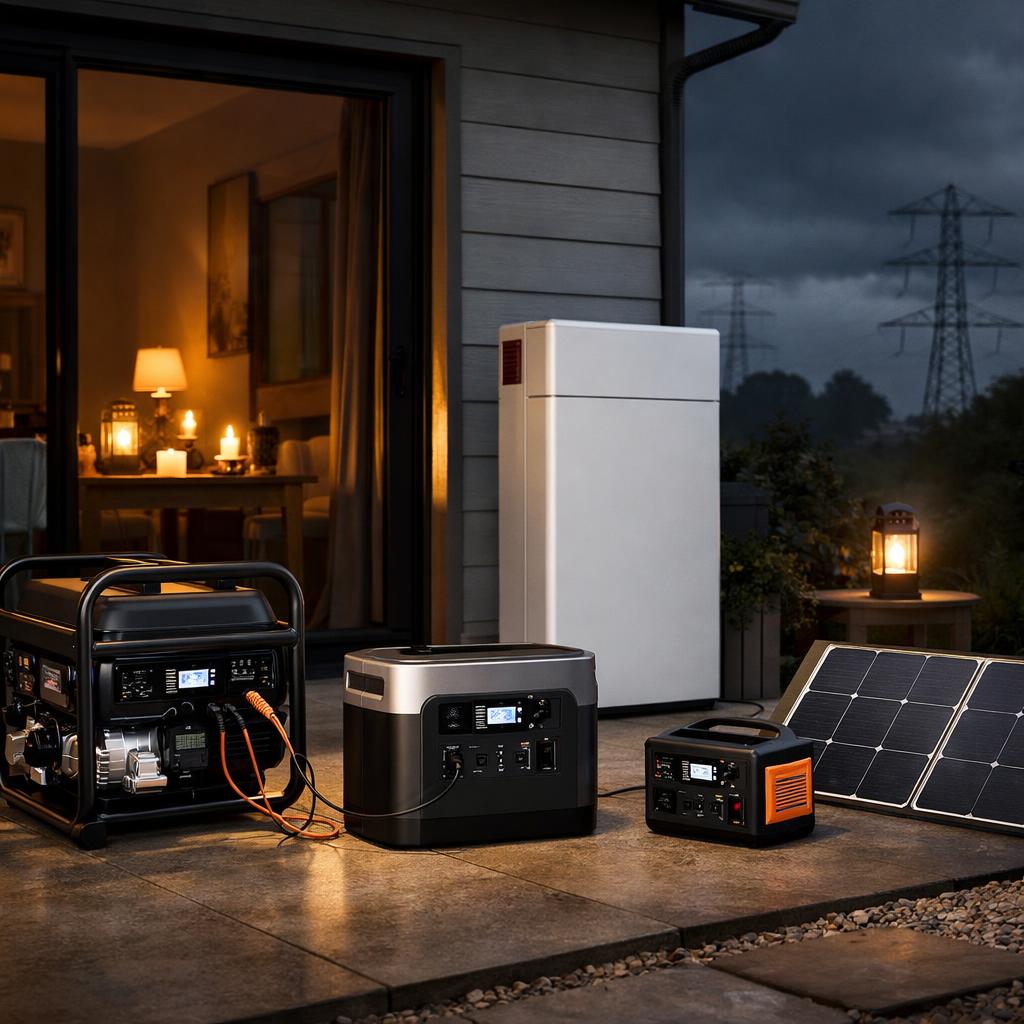
- If you want emergency power or support for multiple groups, pay extra attention to power, switching and installation conditions.
Pay attention not only to storage capacity, but also to power. A home battery can have enough kilowatt hours on paper, but still not provide enough power to properly support multiple devices at the same time. Therefore, look at your evening consumption, electric cooking, a heat pump, washing equipment or an electric car. Only then will you see whether a small home battery is sufficient or whether a larger and expandable system is a better fit.
When Anker SOLIX Solarbank Max AC is a suitable choice
Suitable for, less suitable for and control points
Anker SOLIX Solarbank Max AC is especially interesting for households that do not want to invest as much as possible right away, but do want to have room to scale up later. The basic capacity of 7 kilowatt hours can already be used for many homes to partly cover evening and night consumption. That makes this system worth comparing for those looking for a home battery that can start small and grow later.
The expandability up to 42 kilowatt hours is especially relevant for situations with many solar panels, fluctuating electricity prices or growing electrical consumption. In addition, this home battery is interesting because of the combination of LFP cells, multiple connection options and clear specifications about power and placement. It is precisely this combination that makes it useful to include this model early in your comparison: not because it is automatically the best choice for everyone, but because you can quickly test whether the design suits your home, consumption and expansion plans.
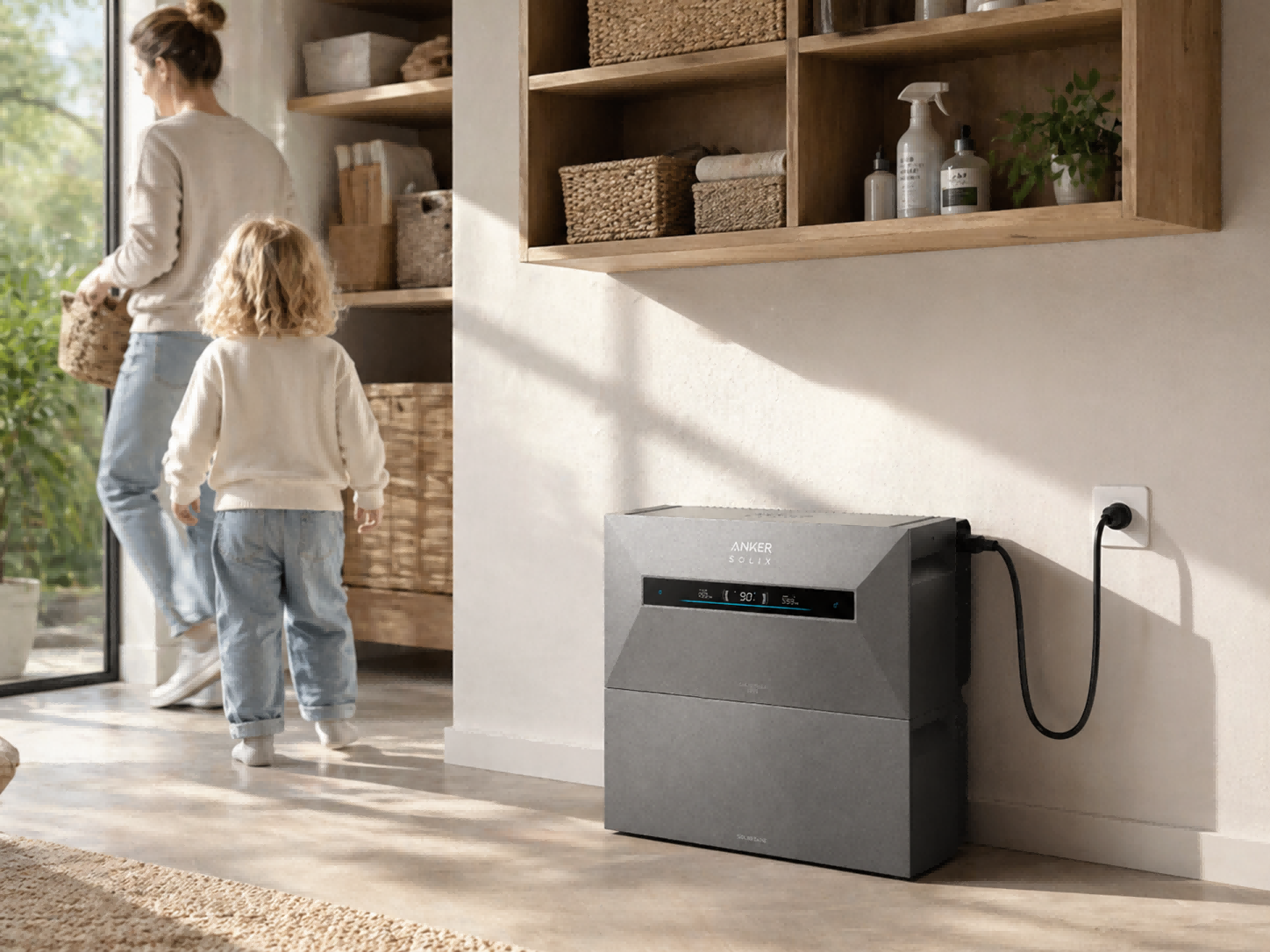
The practical features are also relevant for home use. Consider placement in, for example, a garage, basement or in a sheltered location that meets the product specifications, protection against dust and water, active heating at lower temperatures and a lifespan that is tailored to many charging cycles. At the same time, there is also a clear limit here: if you want to use higher powers, the group, cabling, installation requirements and local rules must really match this.
- Suitable for: households with existing solar panels, people who want to expand in phases and situations where more self-consumption or emergency power is important.
- Less suitable for: homes in which high power is required immediately without an appropriate group, control or professional installation.
- First check: inverter situation, available group, registration requirement, desired emergency power function and actual daily consumption.
View the product specifications of Anker SOLIX Solarbank Max AC if you want to check whether capacity, connection type and installation conditions suit your home. Pay attention not only to the storage capacity, but also to the power on the grid, the power outside the grid, expandability and the installation conditions at higher loads.
- Capacity: 7 kilowatt hours as base, expandable to 42 kilowatt hours
- Power: 3500 watts on grid, 3680 watts off grid and 5000 watts total
- Battery and lifespan: LFP, 10,000 cycles and 10 year warranty
Safety, registration and practical checklist
You don't just choose a home battery based on price or storage capacity. Safe installation, correct registration and a good technical match with your home are just as important. Consider sufficient ventilation, a sturdy and flat surface, protection against moisture in accordance with the product specifications and a location where maintenance and inspection remain possible. A good battery management system and clear monitoring are also important to track performance and safety.
In the Netherlands, registration via Energieleveren.nl is also an important point. This does not only apply to large installations; Even with home storage, you must check whether your system falls under the reporting rules. The exact suitability then depends on your situation: how the groups are divided, what cabling is present, which inverter you use and how much power you actually want to use.
So use this short checklist before you decide:
- If you already have solar panels and you mainly want to use more of your own power, then an AC-coupled home battery is often a logical first option.
- Do you want simple start, check whether the chosen connection type really suits your home and the permitted power.
- If you want to exceed 800 watts, take an extra critical look at the group, cabling and reporting obligation.
- If you want to use around 3500 watts, assume professional installation and checking local rules and product specifications.
- Finally, look at your actual consumption profile: evening consumption, heat pump, electric car and future expansion determine whether 5 to 10 kilowatt hours is sufficient or whether a modular system becomes more useful.
Sources and control points
Use these resources to verify your selection and installation plan:
- Netbeheer Nederland, Register home batteries on Energieleveren.nl, https://www.netbeheernederland.nl/artikelen/nieuws/meld-thuisbatteries-aan-op-energieleverennl
- Fire Service Netherlands, A safe home battery, https://www.brandweer.nl/onderwerpen/een-veilige-thuismobiel/
- Rijksdienst voor Ondernemend Netherlands, Energy supply and register installations, https://www.rvo.nl/onderwerpen/energieleveren
- Anchor, Anker SOLIX Solarbank Max AC product page, https://www.ankersolix.com/nl/products/a17e2
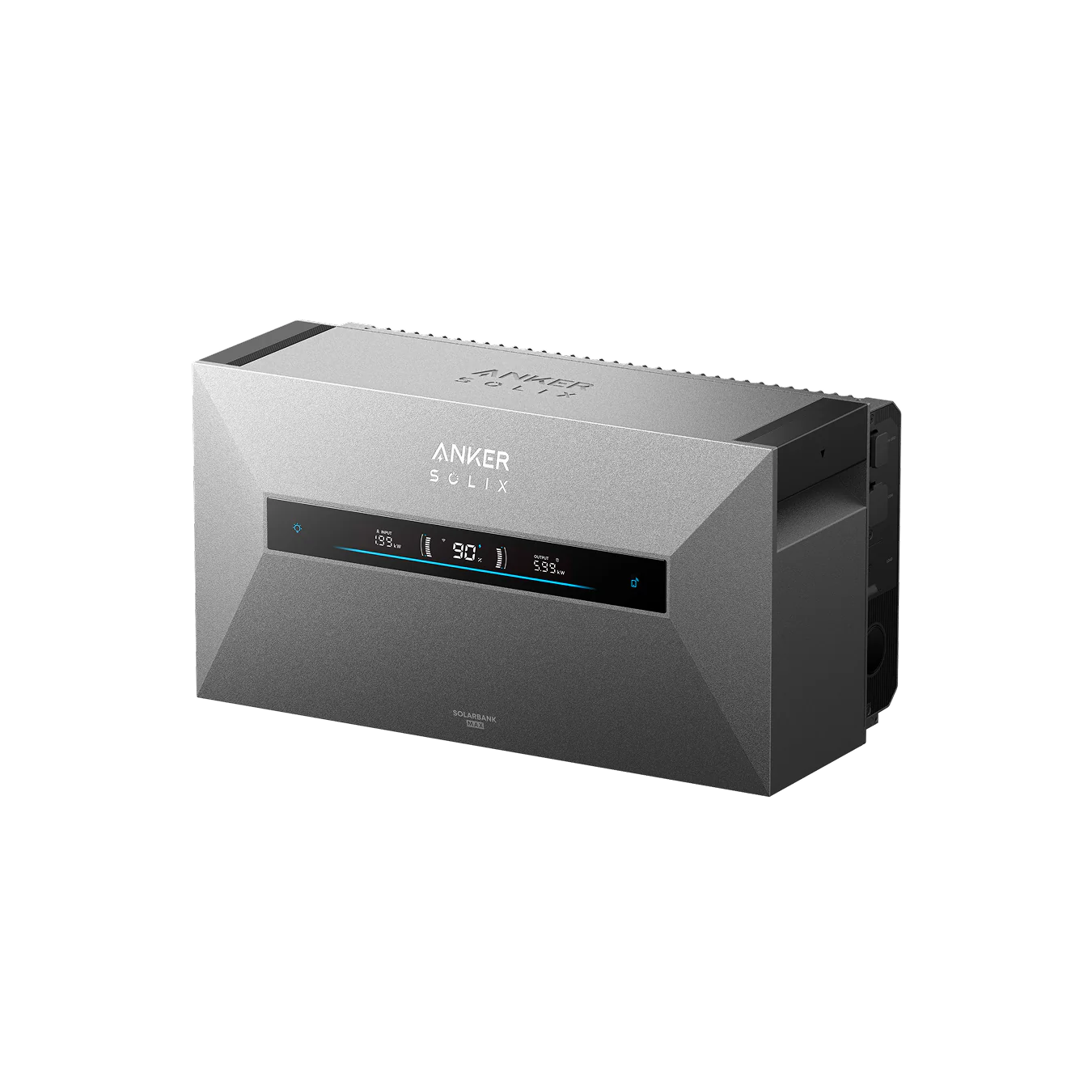
Anker SOLIX Solarbank Max AC
Product description
An important limit of what you can determine in advance: general rules about safety, placement and registration are widely applicable, but the real suitability of a home battery in your home depends on the group layout, the cabling, the inverter, the grid connection and the desired power. Savings and payback time also differ per household, rate and generation profile.

Frequently asked questions
Can I connect a home battery in the Netherlands myself?
This is sometimes possible partially, but usually not completely. In some cases, a plug-in home battery is suitable for self-installation. As soon as a home battery is permanently connected to the meter cupboard, separate group or inverter, professional installation is usually the safe choice. Always check whether registration via Energieleveren.nl is required.
Which type of home battery best suits existing solar panels?
For existing solar panels, an AC-coupled home battery is often the most practical choice, because you have to make fewer changes to the existing installation. Preferably choose an LFP home battery with clear documentation, appropriate power and a good battery management system.
When is Anker SOLIX Solarbank Max AC a logical option?
This model is especially logical if you want to start easily, expand later and be able to clearly compare capacity, power and installation conditions in advance. Additional checks are necessary if you want to use higher powers, consider emergency power important or are not sure whether your group, inverter and registration requirement are properly connected to the system.
What should I pay attention to regarding power, group and registration of a home battery?
Pay attention to three things: how much power you really need at the same time, whether your home installation can handle it safely and whether registration is required. Above 800 watts, extra control is wise. Around 3500 watts you have to take into account a separate group and professional control. So compare not only storage capacity, but also the practical charging and discharging capacity.
Conclusion
You can sometimes partially install a home battery yourself, but usually you cannot fully connect it yourself. The right type depends on your existing solar panels, the desired connection type, the required power and the rules regarding safety, group division and registration. For many homes, an LFP home battery with clear documentation and appropriate installation requirements is a sensible choice.
If you want to start small and expand later, Anker SOLIX Solarbank Max AC is a useful option to compare early, precisely because capacity, connection options and powers are clearly described. Therefore, compare your inverter, available group, desired capacity, emergency power requirement and registration obligation, and then check the product specifications of Anker SOLIX Solarbank Max AC. This way you can better assess whether this home battery is technically, practically and safely suitable for your home.