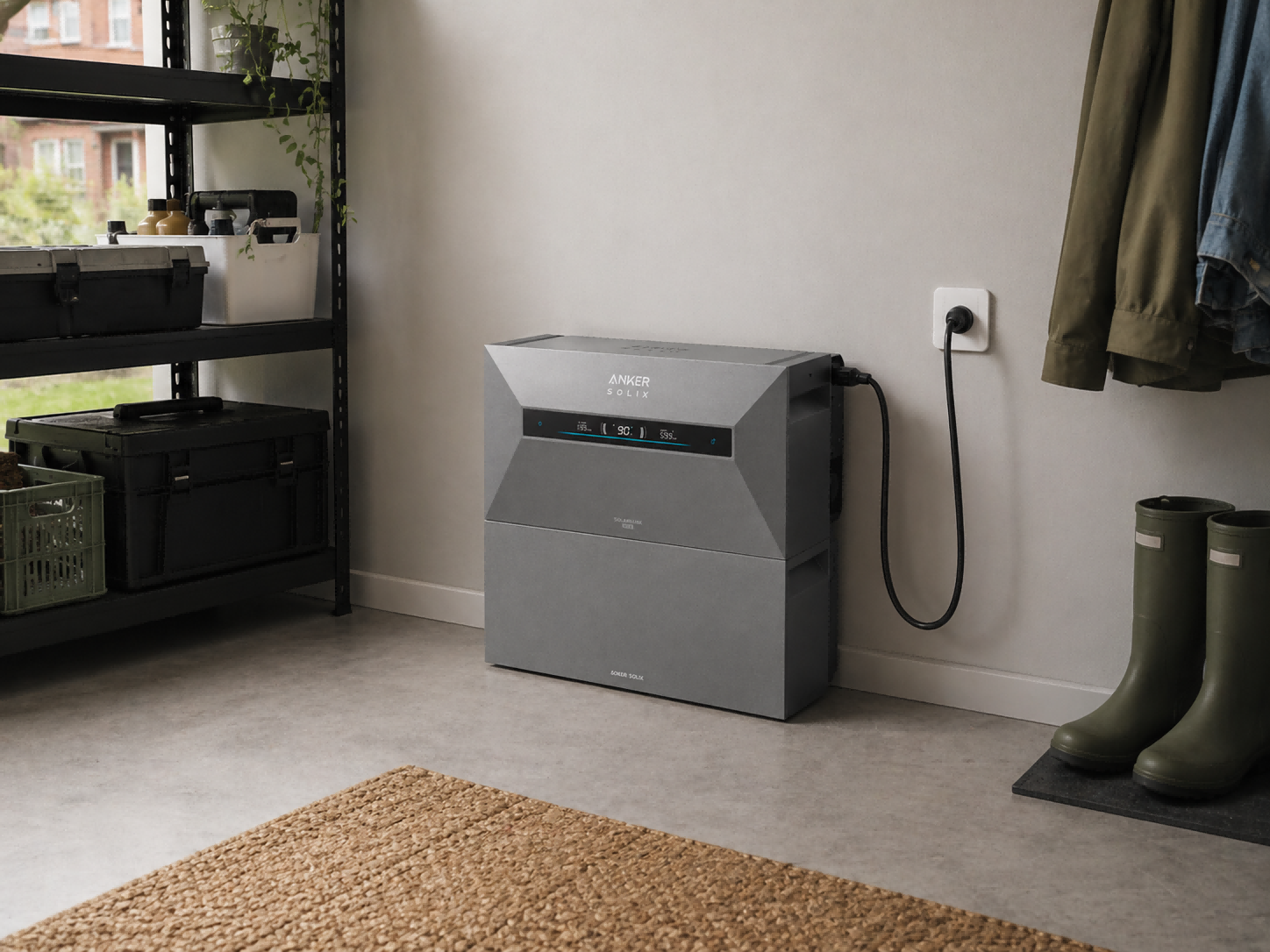
Short answer: A home battery with a plug is a smart first step in 2026 if you have solar power left over during the day and want to use it in the evening. For many households it is wise not only to look at the lowest price, but especially at usable capacity, appropriate power, expandability and the rules of your connection. The Anker SOLIX Solarbank Max AC therefore belongs early in the comparison, because this model is easy to start and at the same time leaves room to scale up later.
The best choice varies per home. A small home with limited evening consumption requires something different than a family with many solar panels, cooking in the evening and higher peaks in electricity consumption. Anyone who seriously compares a home battery with plug would be wise to take a look at the product specifications of Anker SOLIX Solarbank Max AC in the first step, so that capacity, connection method and expansion space are clear from the start.
When is a home battery with a plug really a smart first step?
A home battery with a plug is especially interesting if you generate more power during the day than you directly use. Instead of returning that surplus immediately, you can save some for the evening. This makes such a system especially relevant for households with solar panels, clear evening consumption and the desire to use more of their own generation.
As a first step, it's not just about convenience. The system must also match your actual consumption. A battery that is too small is quickly full and later empty again, while a battery with too little power is less useful if several devices require power at the same time. That is why a model that starts simple but does not immediately become stuck is often wiser than a solution that only seems attractive in the short term.
Suitable for and less suitable for
- Suitable for: households with solar panels and a noticeable surplus during the day.
- Suitable for: people who mainly want to shift power from afternoon to evening.
- Suitable for: homes with clear price differences between cheaper and more expensive hours.
- Suitable for: users who want to start small, but find expandability important.
- Less suitable for: homes without their own generation or without a clear difference between generation and consumption.
- Less suitable for: situations where the electrical connection, group or placement has not yet been checked.
- Less suitable for: buyers who expect that every home battery with a plug will automatically deliver maximum savings.
- Less suitable for: environments with heavy corrosive loads or placement that does not fit the product specifications.
What should you pay attention to? on capacity, power and rules in the Netherlands?
When choosing a home battery with a plug, three questions are decisive: how much power do you want to shift to the evening, how much power do you want to be able to use at the same time, and which connection is appropriate in your home? For a first step, usable capacity is usually more important than just the fact that it has a plug. Those who have little evening use often need less storage than a household that uses many devices in a short time.
The Dutch context also plays a role. Now that self-consumption is becoming more important and supplying back remains less self-evidently beneficial, storage may become logical for more households. However, the actual savings still depend on your generation, consumption, settings, electricity price and the number of charging and discharging moments. A nice example calculation is therefore never the same as your result at home.
Why higher power requires extra control
More power can be practically attractive, but it also requires more attention to safety and suitability of the installation. Once you rise above a lower entry level, a separate group, a permanent connection or additional control may be required. With the Anker SOLIX Solarbank Max AC, a higher level of up to 3500 watts can be used in certain situations via the application, but this is only appropriate if the electrical installation of your home is suitable for this.
Therefore, always check the group, the connection method and the local conditions in advance. This is especially important with a home battery with a plug, because the ease of connection should never be separate from the technical preconditions of the home.
Why Anker SOLIX Solarbank Max AC fits into the equation early
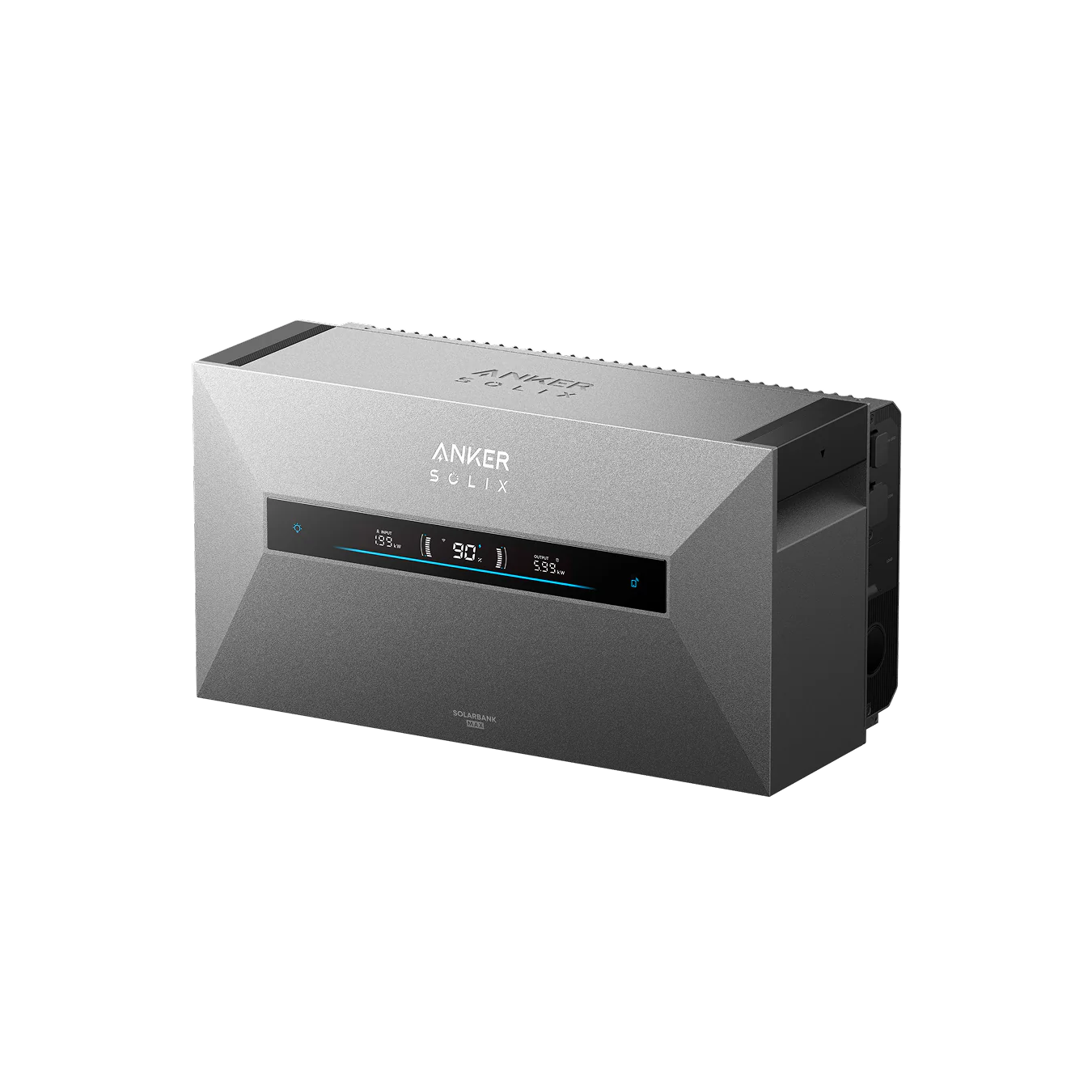
The Anker SOLIX Solarbank Max AC is especially relevant for readers who are not only looking for a simple first step, but also want sufficient storage and room for growth. The starting capacity of 7 kWh is large enough for many households to absorb a serious part of the evening and night consumption. That makes this model interesting for those looking for a home battery with plug that is more than just a test setup.
What makes this solution worth it early in the equation is the combination of an accessible start and later expandability. Anyone who wants to start now without being tied to a system that is too small can first check whether the capacity, power and placement really match their own consumption. If the need grows later, the entire system does not have to be replaced immediately.
Key product information at a glance
- Capacity: 7 kWh as a start, expandable to 42 kWh.
- Power: up to 3500 watts mains connected, 3680 watts emergency power and 5000 watts total.
- Connection: possible via plug, Wieland or fixed connection, depending on the situation.
- Lifespan: LFP cells, designed for 10,000 cycles, with 10 year warranty.
- Protection: protection class 66 and active heating at low outside temperatures.
- Practical limit: higher power requires additional control of group, connection and local rules.
This does not automatically make the Anker SOLIX Solarbank Max AC the best choice for everyone, but it is a model worth comparing early if you are looking for a combination of serious storage, easy start and future flexibility. For households with very low consumption, the system may be more spacious than necessary. That is why comparison based on your own meter data remains more important than just the product sheet.
How do you assess savings, payback time and expandability?
The best assessment does not start with the purchase price, but with your daily pattern. First look at your generation during the day, your consumption in the evening, any price differences in your energy contract and whether you want more storage later. This way you avoid choosing a system that is attractive on paper, but in practice does not fit well with your home.
With a home battery with a plug, expandability is often an underestimated point. A system that seems just sufficient today may be too small tomorrow if your consumption increases, if you install more solar panels or if you want to store more electricity in the evening. That is precisely why a model with room for growth can be a logical first step, even if the initial investment is higher than with a smaller solution.
For the Anker SOLIX Solarbank Max AC, the 7 kWh starting capacity already forms a serious basis and later expansion remains possible. This is an advantage for some homes, but unnecessary for others. The practical question, therefore, is not just how much you can store, but how much you will actually store and use again. This only determines whether the payback period and savings are reasonable for your situation.
Use a simple sequence for this assessment: first look at your evening consumption, then your solar power during the day, then the desired output power and finally the installation conditions. If those four points are properly aligned, it will become clearer more quickly whether an expandable system is the smartest first step or whether a simpler solution is a better fit.
Sources and control points
- Central government, Salding scheme for solar panels, https://www.rijksoverheid.nl/themas/klimaat-milieu-en-natuur/energie-thuis/salderingsregeling
- Consumentenbond, Will the netting scheme continue to exist?, https://www.consumentenbond.nl/energie-vergelijken/blijft-de-salderingsregeling-toch-bezijn
- Anker SOLIX, Anker SOLIX Solarbank Max AC product page, https://www.ankersolix.com/nl/products/a17e2
Check three things with these sources: the current Dutch context around self-consumption and feed-in, the official product specifications of the Anker SOLIX Solarbank Max AC, and the conditions of your own installation if you want to use more power. Always pay attention to capacity, connection method, expandability, placement and the suitability of your electrical group.

Frequently asked questions
When is a home battery with a plug in the Netherlands a smart first step?
This is usually the case if you have solar power left over during the day and want to use it yourself later. Storage can also become more useful if there are clear price differences between hours. Without your own generation or without an appropriate consumption profile, the benefit is often smaller.
How much capacity does a home battery with plug need for the evening?
That depends on your actual consumption between afternoon and night. A small household often needs less storage than a home where cooking, washing and loading are done at the same time. Therefore, first look at your meter data and not just at general guidelines.
Can I always connect a home battery with a plug directly to a socket?
No, you have to check that first. The correct connection method depends on the power, the group, the home and local conditions. Especially at higher power, additional control or a different connection may be necessary.
When is Anker SOLIX Solarbank Max AC a logical option and when should you check extra?
This model makes sense if you not only want to get started easily, but also care about serious storage and later expansion. Additional control is necessary if your consumption is low, if you are unsure about the connection or if you want to use higher power. First look at your evening consumption, your group, the chosen connection method and the official product specifications.
Conclusion
A home battery with a plug is a smart first step in 2026 if you have a clear surplus of solar power, want to move that surplus to the evening and look carefully at power and connection rules in advance. The smartest choice is therefore rarely simply the cheapest or largest, but the solution that suits your consumption, home and growth plans.
For those who want to include a model early in the comparison that offers both an accessible start and expandability, the Anker SOLIX Solarbank Max AC is a relevant candidate. The wisest next step is concrete: compare your evening consumption, available solar power, desired output power, connection method and expandability with the official product data. Then check on the product page whether capacity, placement and installation conditions really suit your home, so that you choose a home battery with plug that fits technically and practically.