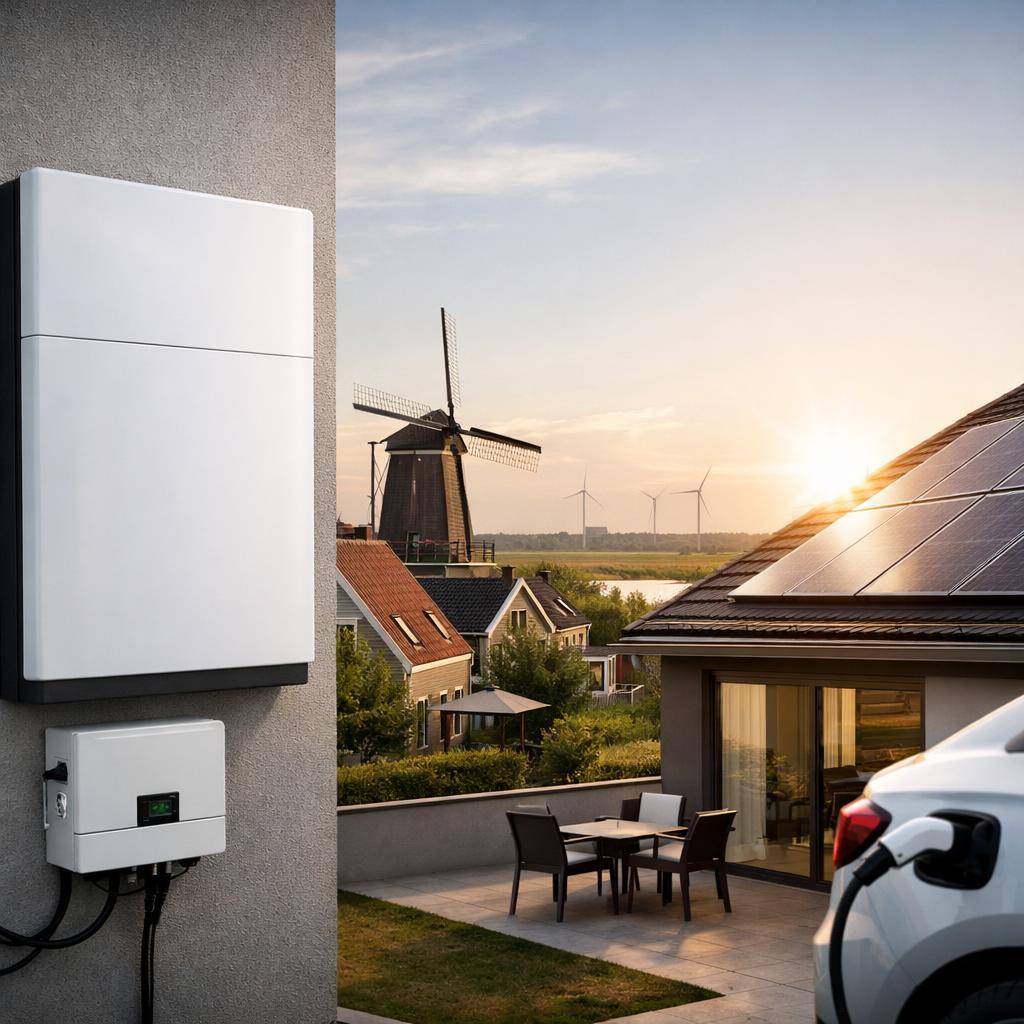
Anyone who searches for SDE++ home battery Netherlands subsidy usually wants to know quickly whether a home battery for a home can receive financial support. The short answer is usually no: in practice, the SDE++ is mainly intended for larger sustainable energy projects and not for the standard home battery of a private household. However, battery storage is not necessarily ruled out. In some cases, a battery can play a role within a broader business or technical energy project, depending on the design and the conditions that apply at that time.
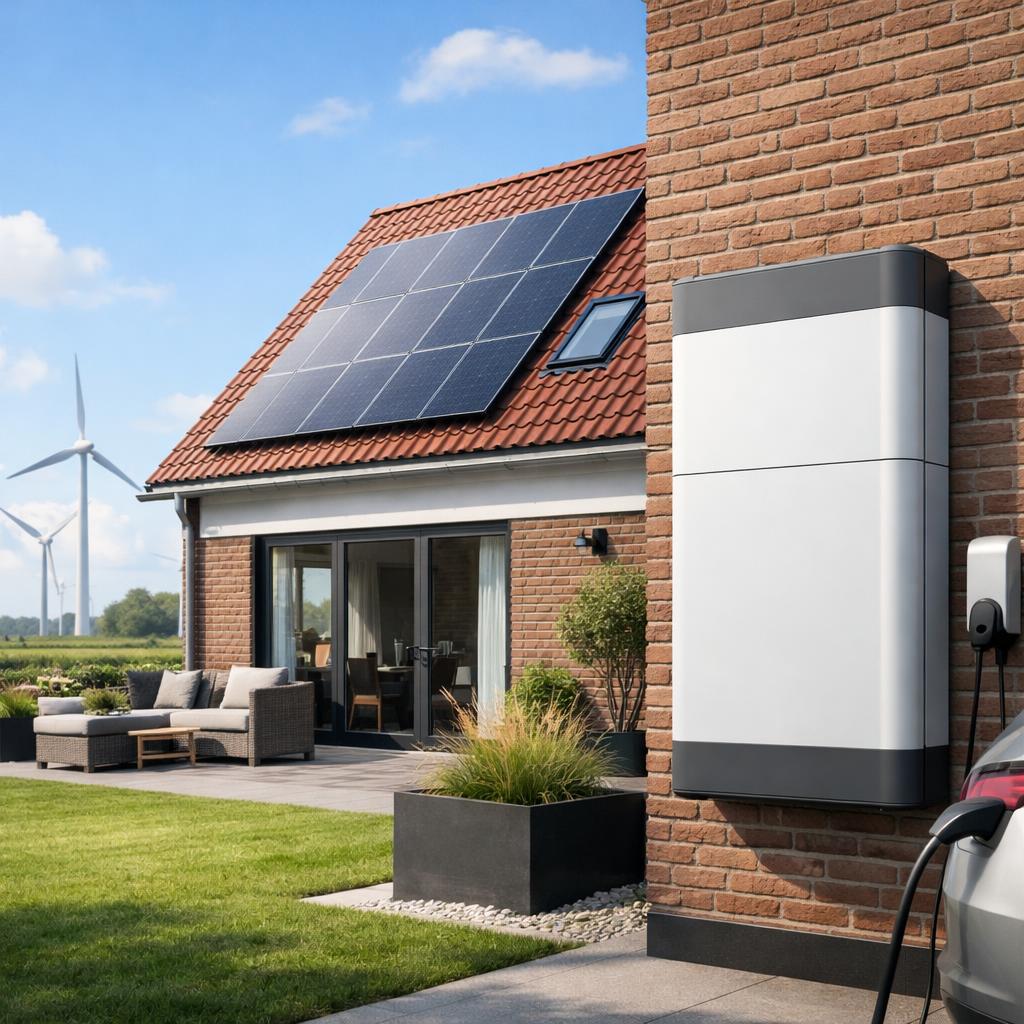
It helps to first see the difference between a battery for private home use and storage within a larger energy project. Therefore, read more about subsidies for energy storage as a first starting point. Please also note that rules, openings and technical requirements may change. Whether a project has a chance always depends on the type of request, the connection, the consumption profile and the way in which the battery is integrated into the whole.
Does a home battery fall under the SDE++ in the Netherlands?
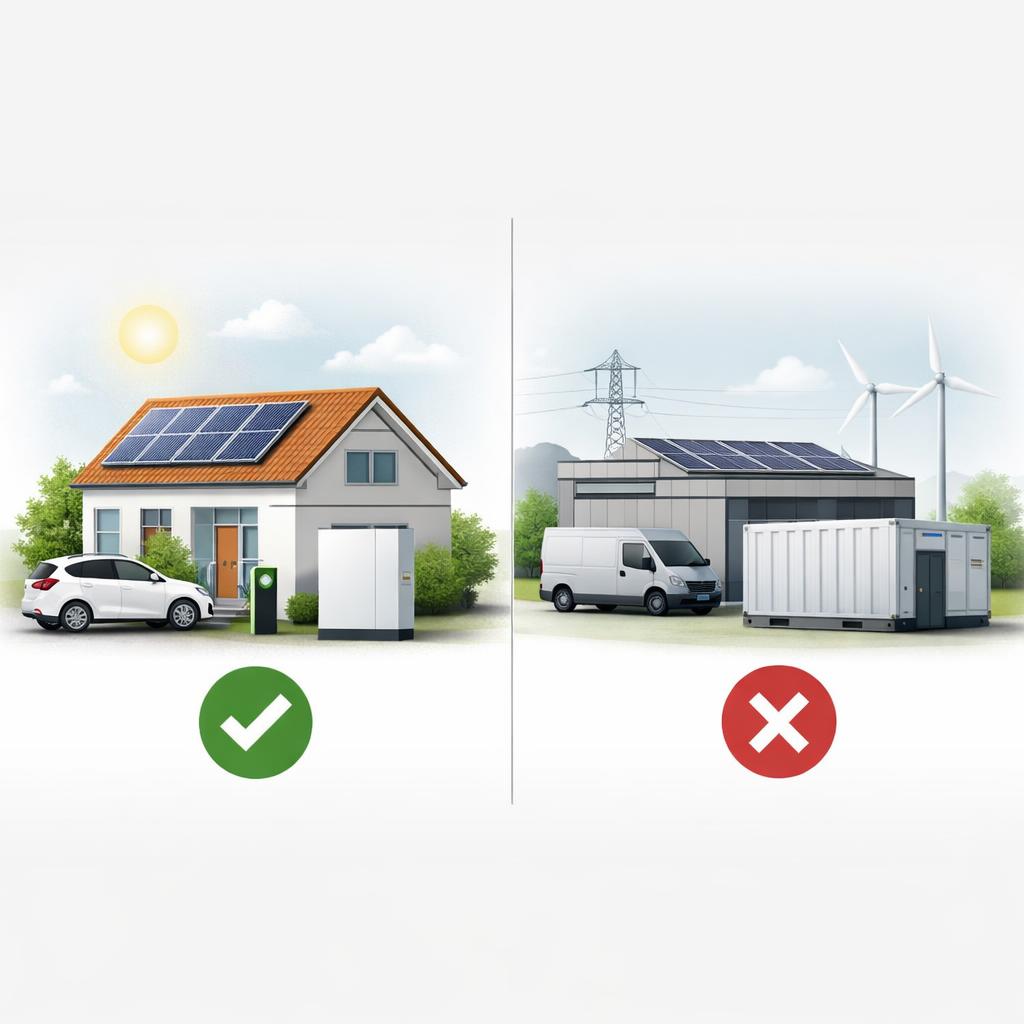
In most cases, the answer to the question of whether a home battery falls under the SDE++ is: no, not when it concerns an ordinary owner-occupied home with a battery for personal use. The scheme was set up to support the unprofitable top of certain techniques for large-scale sustainability. A separate home battery that stores solar power for later use in the home usually does not fit directly into it. Storage is generally not treated as an independent eligible category for private individuals.
That doesn't mean storage is never relevant. Especially in business situations, a battery can sometimes be part of a larger solution, for example in combination with generation, limitation of grid load or better use of locally generated power. Then one not only looks at the battery itself, but at its function within the entire project. That is why the search question subsidy for home battery in the Netherlands, conditions is so important: not the battery alone, but the entire project context determines whether there may be room for support.
When storage does or does not fit within subsidy conditions
Storage is more likely to fit within subsidy conditions if a battery is part of a business energy system with a clear relationship to sustainable generation or system improvement. Consider a company that wants to reduce peak loads, make better use of its own generation or provide technical support for an installation. In such cases, the connection, measurability, economic substantiation and contribution to the larger energy system count heavily.
Storage usually does not fit within the SDE++ when a private individual mainly wants to store generated solar power for use in the evening. For a home with standard consumption and a relatively small battery, the arrangement is usually not a logical route. Even if the battery is mainly intended to use more of its own power or to increase comfort, this often does not fit in well with the purpose of the scheme. That is precisely why it is wiser to check the current conditions than to make general assumptions.
Which conditions, costs and applications count?
Several points play a role in the assessment of battery storage: the size of the project, the connection, the relationship with sustainable generation, the consumption profile and the extent to which the project contributes to sustainability or more efficient energy use. For private individuals, the costs of a home battery are especially important for the payback period, but those costs in themselves do not provide access to the SDE++. Those who especially want to know how storage works out financially can read more about the operation and costs of a home battery to better compare technology and feasibility.
In practice, it is about more than just the purchase price. Installation, compatibility with the inverter, storage capacity, purpose of use and any limitations of the electricity grid also play a role. In the case of a business application, additional requirements may be added, such as measurement data, operating plans and technical documentation. As a result, there is a big difference between a household that wants to store electricity and an organization that is developing a broader energy system. Certainly with business subsidy for battery storage in the Netherlands it is all about substantiation, scale and the demonstrable value of storage within a larger sustainable project.
Difference between private storage and business energy projects
Private storage is usually aimed at more personal use of solar power, less feed-in and possible benefits from fluctuating electricity prices. These are logical goals, but they do not automatically connect to a scheme that mainly focuses on large-scale sustainability and project-based performance. That is why private individuals are usually more likely to turn to market developments, local initiatives or other financial options than to the SDE++ itself.
Business energy projects often have a different design. There, a battery can be part of a business location, a shared facility or a technical energy system with a greater influence on consumption and load on the grid. The assessment is then less focused on the consumer and more on the operation of the entire project. Matters such as production profile, contract form, operational deployment and grid load then weigh more heavily. This explains why the same technology is rarely eligible for a home, while a business application can sometimes fit within a subsidy scheme or other support framework.
What alternatives are there if the SDE++ does not fit?
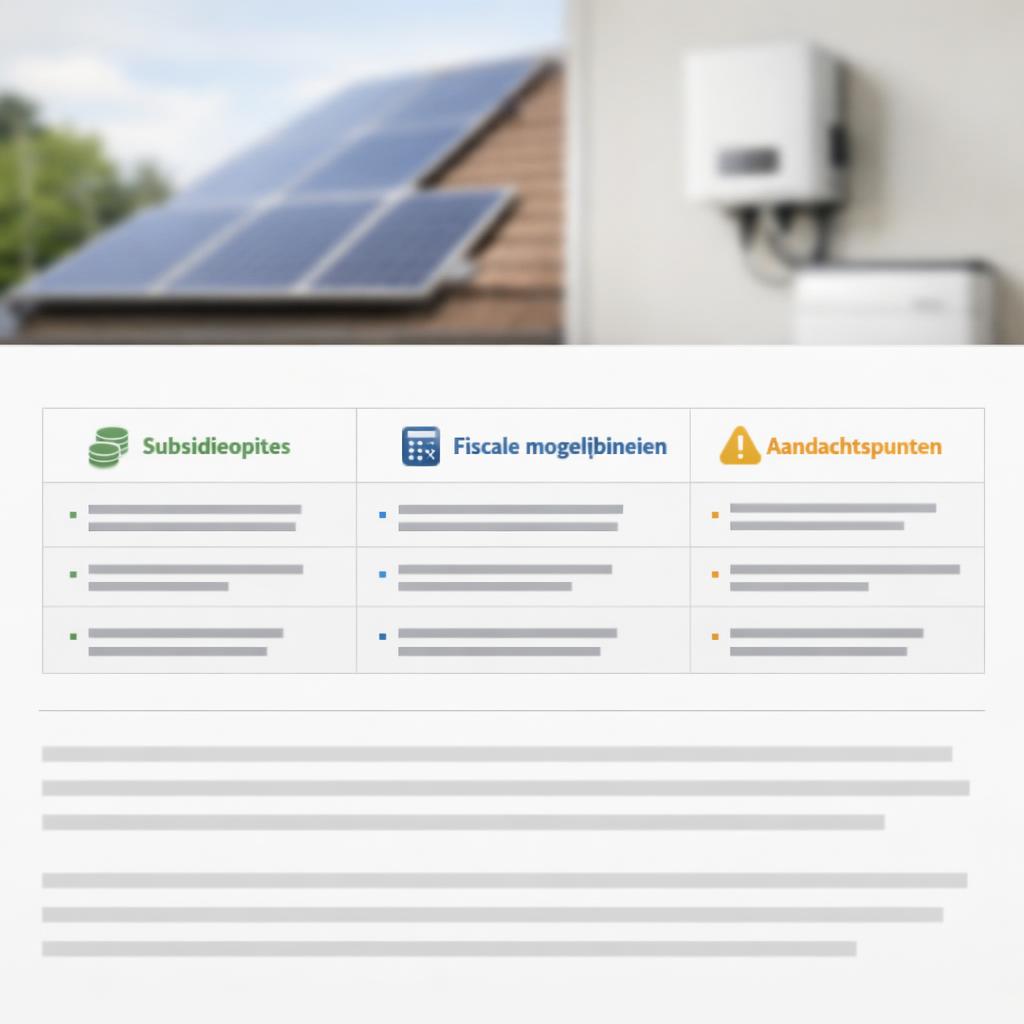
If the SDE++ does not match, there are still alternatives to SDE++ for home battery to explore. Consider local or provincial regulations, tax benefits for entrepreneurs, pilot projects by grid operators or combinations with other sustainability measures for homes or business premises. For many homeowners there is not always a direct subsidy for a home battery, but the financial feasibility can change due to dynamic energy rates, adjusted return conditions and smarter self-consumption.
The wisest step is therefore a practical test. What is the purpose of the battery? What does the power consumption look like? What connection is available? And is it for private or business use? Only then can you properly assess whether a subsidy, tax support or no scheme is the most realistic outcome. With SDE++ home battery Netherlands subsidy, a standard home battery for a home is usually not a direct match, while battery storage within a broader business project sometimes has opportunities.
Frequently asked questions
Is the SDE++ intended for a private home battery?
Usually not. In practice, the scheme is mainly aimed at larger sustainable projects. A home battery in a private home is usually not directly included, especially if it is mainly intended for private use of solar power.
When can battery storage be part of a subsidy application?
This is more likely to happen in a business or integrated energy project in which storage has a clear technical function in addition to sustainable generation or alleviation of grid load. In such a situation, the entire project is considered and not just the battery itself.
Which conditions are most important for the assessment?
Important points are the project type, the connection, the consumption profile, the scale, the relationship with sustainable generation and the current requirements of the scheme. The economic and technical substantiation also plays a role, especially in business applications.
What other options are there if the SDE++ does not fit?
Consider regional regulations, tax options for entrepreneurs, pilot projects and a financial assessment based on electricity prices, feed-in and self-consumption. For many households, a broad feasibility check is more useful than just looking for one national subsidy.
Conclusion
The gist is simple: the SDE++ is usually not the right regulation for an ordinary private home battery. Anyone who searches for SDE++ home battery Netherlands subsidy will soon discover that the scheme is especially suitable for larger projects in which sustainable generation, system improvement and business substantiation come together. For private individuals, the emphasis is therefore more often on costs, purpose of use and possible other arrangements. Always check the most recent conditions before investing or preparing an application.