Which home battery protects my energy bill after the netting scheme?
Short answer: After the netting arrangement, it is usually not the largest home battery that protects your energy bill, but a well-fitting battery that shifts excess solar power to the evening and night. For many households with solar panels, the Anker SOLIX Solarbank Max AC is therefore worth looking at early in the comparison, because you start with 7 kWh and can expand later if your consumption requires it.
The best choice depends on your feed-in tariff, your energy contract, your actual evening consumption and the installation in your home. If the netting scheme ends, self-consumption will count more than supplying. This is precisely when a home battery can be useful, but especially when capacity, power and placement really suit your home and use.
What will change if the netting arrangement ends?
The netting scheme will end on January 1, 2027. From that moment on, you can no longer offset returned electricity against electricity that you later purchase from the grid. Your energy supplier can still provide a feed-in tariff, but this is usually lower than the rate you pay for purchased electricity. This makes the difference between using it yourself and supplying it back financially much more important.
This has a clear consequence for households with solar panels: electricity you generate during the day is worth more if you can use it yourself later. Consider cooking, lighting, heat pump use or other consumers in the evening. A home battery can help with this, but only if the battery is regularly charged and discharged. A system that is too large for your daily pattern may feel safe, but in practice it does not always provide the best protection for your energy bill.
So it is less about the largest battery capacity and more about the right size. Those who have little surplus or consume little after sunset often see less benefit from a large battery. Households with a clear daily surplus and stable evening consumption are more likely to see storage making a real difference.
Which home battery suits your consumption and return?
When a small or medium-sized battery often makes more sense
For many homes, a small or medium-sized home battery is wiser than buying in large quantities. The main reason is simple: you mainly want to absorb the power consumption that normally takes place in the evening and night. If you then opt for much more storage than you usually need, you will only use part of that capacity to a limited extent. That often makes the investment less competitive.
A suitable battery therefore matches your real rhythm. Look at what you usually use after sunset, how much solar power you have left during the day and how often you see that pattern throughout the year. For many households, a system in the middle segment makes more sense than immediately scaling up significantly. This keeps the entry clear and increases the chance that the battery will actually be put to good use on a daily basis.
When scaling up can actually make sense
A larger home battery can certainly make sense, but usually only in a clear profile. Think of homes with many panels, a substantial daily surplus, noticeable evening consumption and the desire to add additional electrical consumers later. Households that consciously want flexibility for expansion are also more likely to look for a system that can grow with them.
In such a situation, don't just pay attention to the storage capacity. Power, expandability, placement options and installation conditions are just as important. A battery must not only be able to store enough, but also be able to practically supply the power at the right time. Those who mainly look at kilowatt hours on paper sometimes miss the difference between a system that seems nice and a system that really fits well at home.
When Anker SOLIX Solarbank Max AC is worth comparing
Anker SOLIX Solarbank Max AC is especially relevant for households that want to use more of their own solar power later in the day after the netting arrangement. The basic capacity of 7 kWh is large enough for many Dutch homes to accommodate serious evening consumption, without having to immediately go to a very large setup. That is precisely what makes this model interesting to include early in your comparison.
The expandability up to 42 kWh is especially valuable for people who do not want to immediately invest as much as possible, but want to leave room for the next step. This is practical if you are not yet sure how your consumption will develop, or if you first want to see how much of your solar power you can actually shift. A system that can start small enough and grow later is often better suited to a cautious but future-oriented choice.
The power specifications are also relevant in the assessment. Anker SOLIX Solarbank Max AC offers 3500 W grid-connected power, 3680 W off-grid and 5000 W total power. This means that stored electricity can also be relevant for heavier consumption situations, as long as the installation in the home is suitable for this. Furthermore, ease of installation and stackability without cables are important factors for households that do not want a complex renovation.
- Capacity: 7 kWh as starting point, expandable to 42 kWh
- Power:3500 W grid-tied, 3680W off-grid, 5000W total
- Lifespan: LFP cells, 10,000 cycles, 10 years guarantee, 100 percent depth of discharge
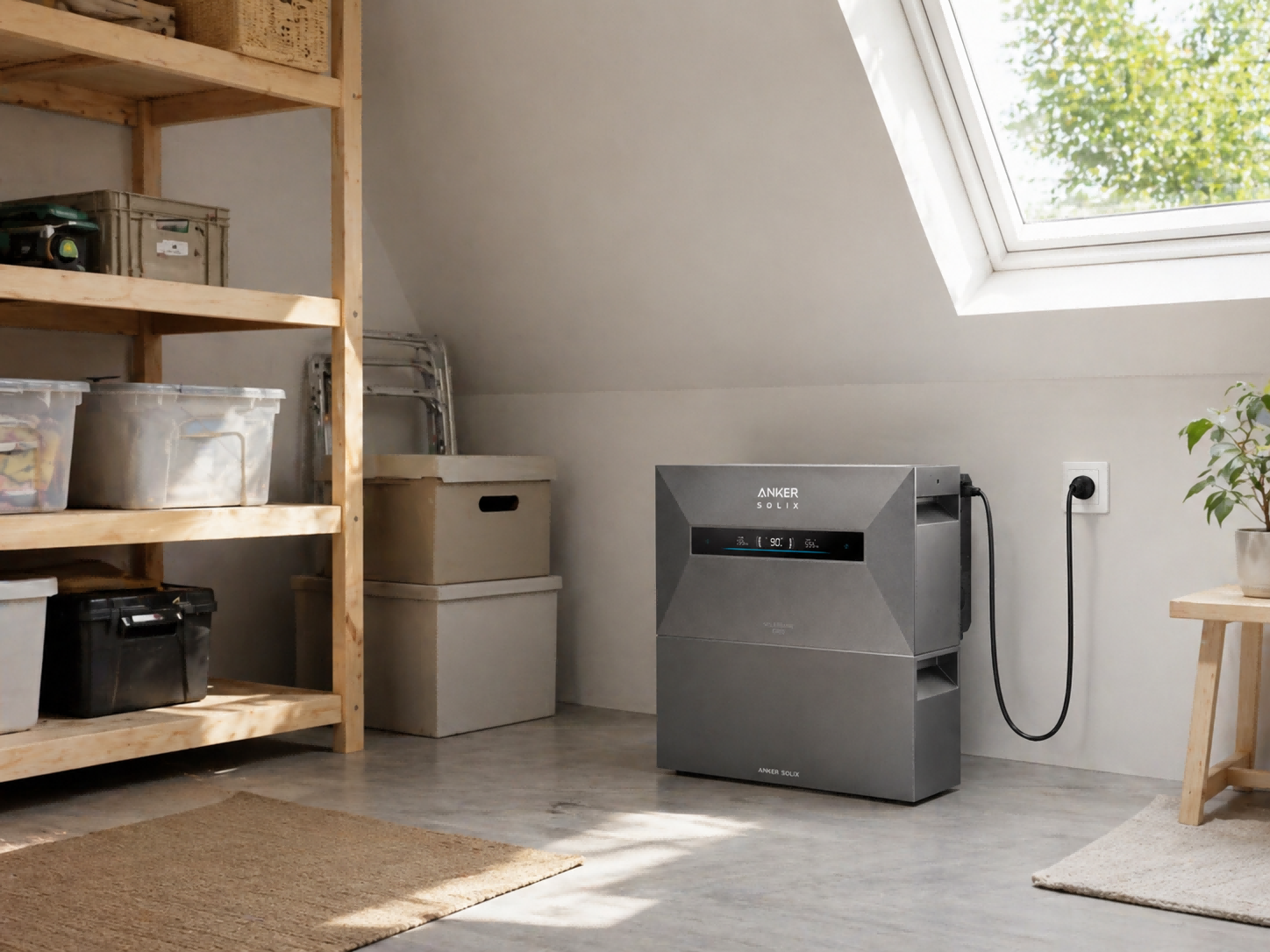
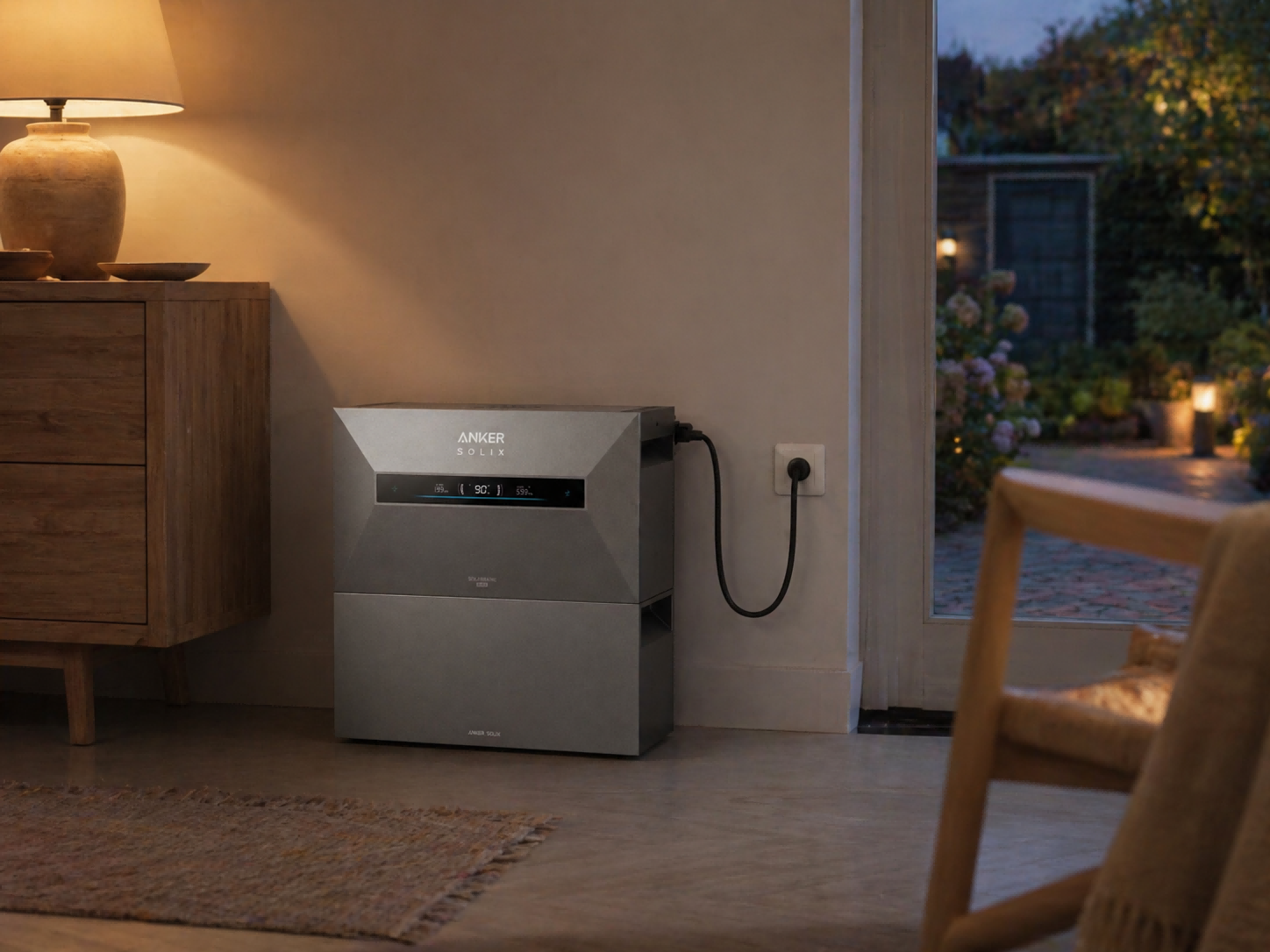
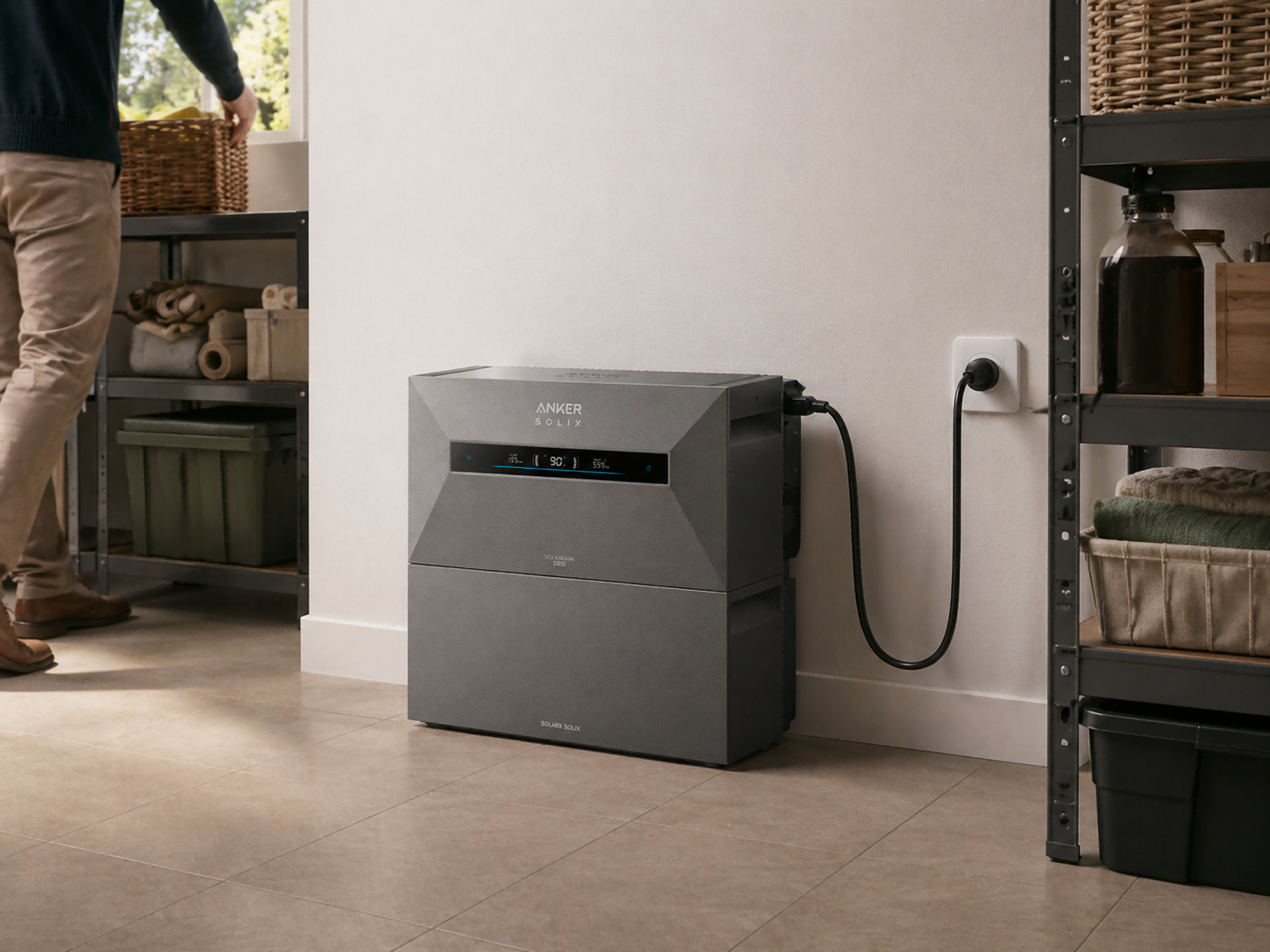
- Placement: stackable without cables, suitable for garage, basement or balcony, among others
- Protection: IP66, C5-M and active heating at low outside temperatures
However, prior control remains important. For more than 800 W, additional installation conditions apply, such as a separate group, inspection by a competent party and compliance with local rules and registration requirements. This makes this model especially suitable for households that not only look at capacity, but also want to seriously test whether power, space and connection in the home are correct.
What should you pay attention to in terms of costs, installation and efficiency?
The best protection of your energy bill usually does not come from a single device, but from a good combination of suitable size, smart use and realistic expectations. A home battery mainly helps with the difference between low compensation for feed-in and higher costs for purchasing from the grid. Fixed delivery costs and other parts of your energy bill will not disappear.
That is why it is wise to first clarify four things: your actual evening and night consumption, the amount of solar power you normally have left over, the conditions of your energy contract and the technical situation in your home. Only then can you properly assess whether a battery should remain small, whether it should be chosen as a large one immediately or whether it should be postponed for a while.
Also look at how you want to gain advantage. Some households mainly want to use more of their own solar power. Others pay extra attention to fare differences during the day. In both cases, a battery only really adds value when it is often put to good use. A system that is too large and that is only fully operational occasionally is often less attractive than a more compact system that is used well almost every day.
That is precisely why Anker SOLIX Solarbank Max AC is worth comparing for households that are unsure between starting small and expanding later. You can then test whether 7 kWh makes sense now, or whether you need more space for the future. Compare your consumption data, your available installation space, the required power and the product specifications of Anker SOLIX Solarbank Max AC to see whether the system suits your situation practically and financially.
Sources and Control Points
Use the resources below to check rules, principles and product specifications before making your choice. This way you can better separate hard rules, practical assumptions and product-specific claims.
- class="ql-ui" contenteditable="false">Milieu Centraal — Netting scheme for solar panels — https://www.milieucentraal.nl/energie-besparen/zonnepanelen/salderingsregeling/
- Consumentenbond — Will the netting scheme still exist — https://www.consumentenbond.nl/energie-vergelijken/blijft-de-salderingsregeling-toch-bestan
- Anker SOLIX — Anker SOLIX Solarbank Max AC — https://www.ankersolix.com/nl/products/a17e2
In any case, check these points: the end date of the netting arrangement, your feed-in allowance, your evening and night consumption, the available group in the meter cupboard, local registration rules, the installation space and whether it is better to start small or immediately need expansion space.
Frequently asked questions
What does the end of the netting scheme mean for my energy bill?
From 2027 onwards, you will no longer be able to offset returned solar power against power that you purchase later. This makes the difference between the feed-in fee and the purchase rate much more important. Your bill then depends more on how much solar power you use directly or store temporarily.

How big should a home battery be if I mainly want to cover evening and night consumption?
First look at your normal consumption after sunset and not at the maximum annual generation of your solar panels. A battery that fits well with your daily pattern is usually wiser than the largest possible system. Regular use is more important than just having a lot of capacity.
Wanneer is Anker SOLIX Solarbank Max AC een logische optie en wat moet ik eerst controleren?
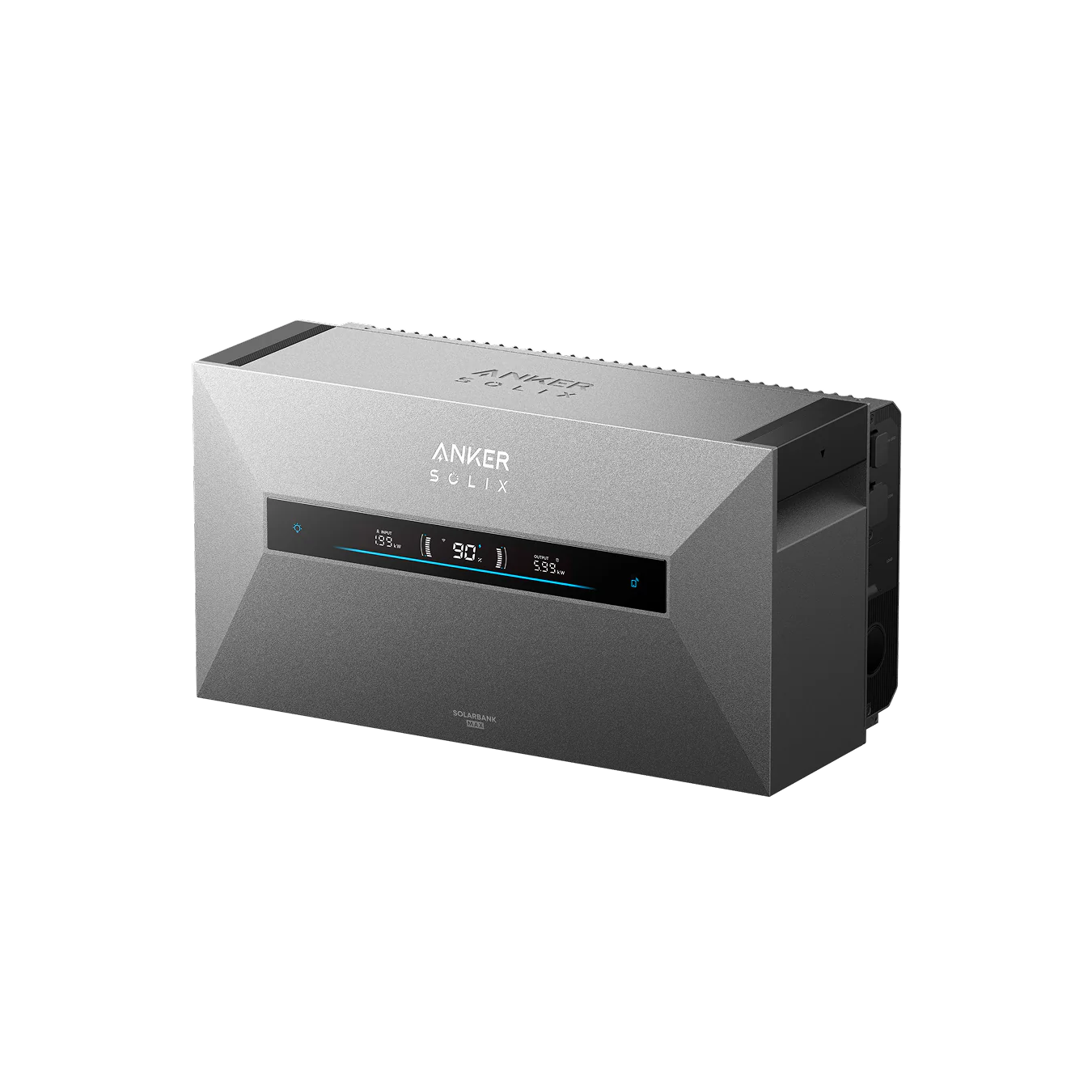
Anker SOLIX Solarbank Max AC
Product description
This model is especially logical if you have solar panels, want to absorb noticeable evening consumption and value 7 kWh starting capacity with expansion options. Extra control is necessary if you have little surplus, hardly any evening consumption or are not sure whether your installation is suitable. Therefore, first check your consumption profile, meter cupboard, installation space and local conditions.
Does a home battery always provide good protection against higher electricity costs after 2027?
No. A home battery especially helps if it fits well with your household and is often usefully charged and discharged. Network costs, fixed costs and a less suitable energy contract are not automatically resolved. The benefit lies mainly in higher self-consumption and better use of your solar power.
Conclusion
After the end of the netting scheme, it is usually not the largest home battery that protects your energy bill, but a system that suits your real evening and night consumption, your feed-in tariff and your installation at home. The gist is simple: start with your usage pattern and only then with capacity and power. This way you reduce the chance that you choose too large or too small.
For households with solar panels that want to return less and at the same time leave room for expansion, Anker SOLIX Solarbank Max AC is a serious option for early comparison. Now specifically check your evening and night consumption, your available installation space, your distribution box, the required power and the specifications of Anker SOLIX Solarbank Max AC. This allows you to see more quickly whether 7 kWh is suitable now, whether later expansion is more logical and which installation conditions you need to confirm first.