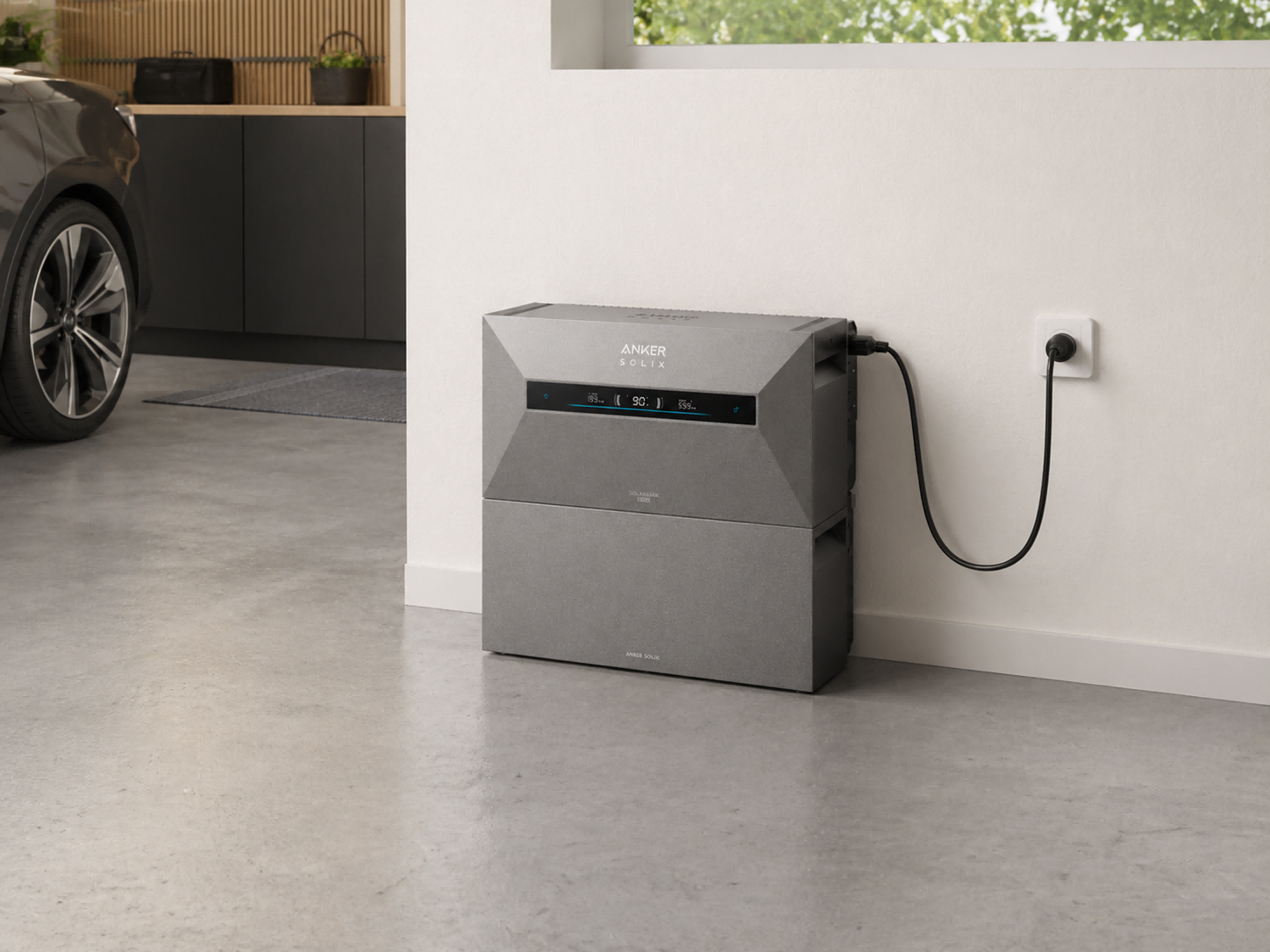
Short answer: A wall socket home battery or plug-in home battery can be a logical first step in the Netherlands if you want to start with energy storage more easily, especially with solar panels and evening consumption. For those who, in addition to simplicity, also want more capacity, expandability and multiple connection options, Anker SOLIX Solarbank Max AC should be included early in the equation.
This solution is especially interesting when feeding back becomes less attractive, you want to use more of your own solar power or you want to charge and discharge based on fluctuating electricity prices. Suitability does depend on power, group, connection method and local rules. For higher powers than 800 W, additional conditions may apply, such as a separate group, professional installation and possible registration.
What is a wall socket home battery and why is the attention growing?
A wall socket home battery, also called a plug-in home battery, is a storage system that stores electricity for later use in the home. The premise is simple: you charge the battery with solar power or relatively cheap mains power and use that energy later, for example in the evening. This way you shift consumption to more favorable times and use a larger part of your own generated electricity.
Attention is growing because more and more households are looking at self-consumption instead of just supplying back. This mainly applies to homes with solar panels and contracts with fluctuating electricity prices. At the same time, this is not a universal solution. A simple entry-level setup is especially suitable for modest powers and a clear usage pattern. As soon as you want to cover more evening consumption, power several heavier devices at the same time or expand later, a larger system with more connection options becomes more logical.
The gist of the answer is: yes, a wall socket home battery/plug-in home battery can be useful, but only if the system suits your actual consumption, your electrical installation and the rules that apply to your situation.
For whom is a plug-in home battery suitable and for whom less so?
Suitable for solar panels, evening consumption and fluctuating electricity prices
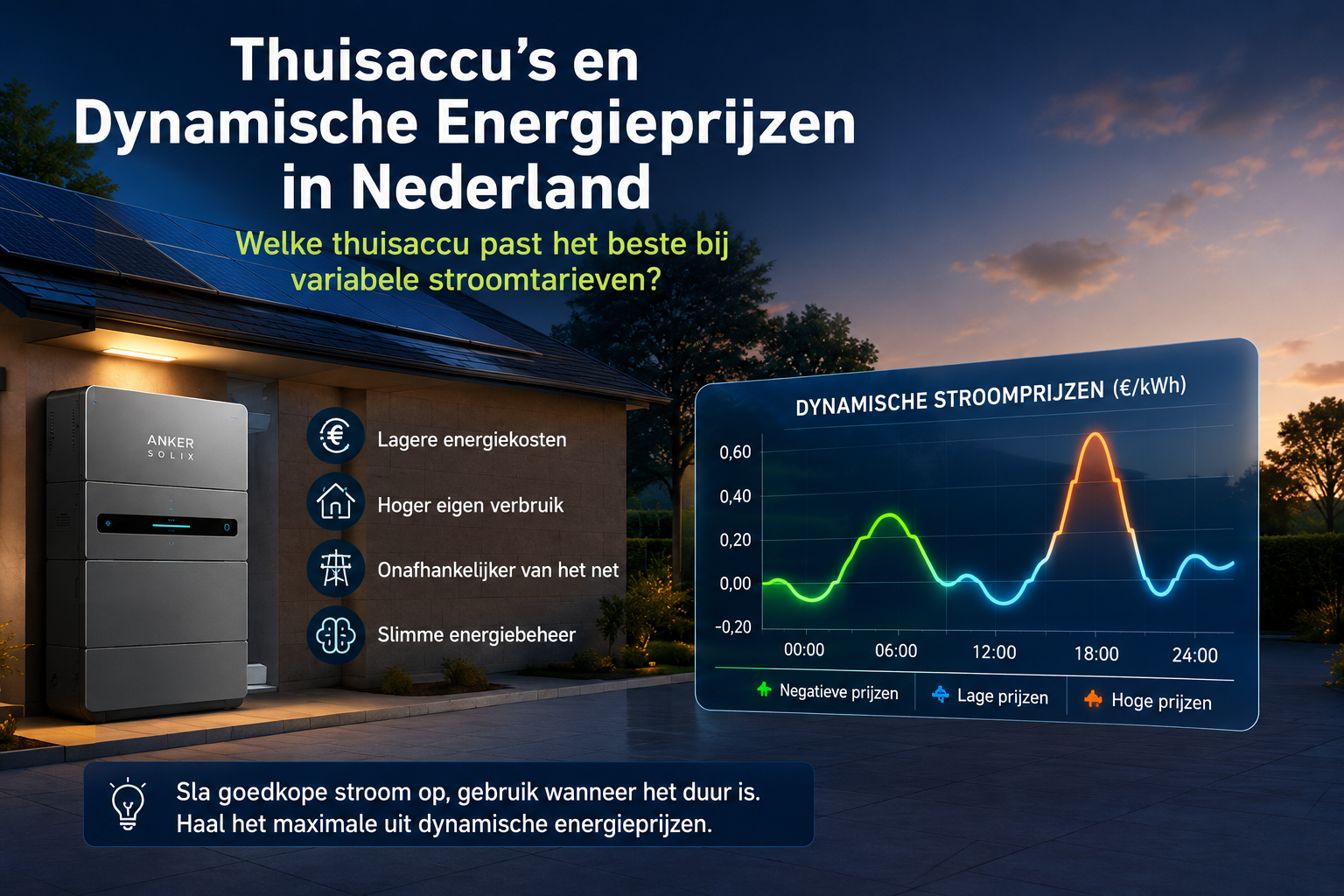
A plug-in home battery is especially suitable for households that generate electricity during the day and want to use that energy later. Think of homes where the dishwasher, washing machine or other daily use takes place in the evening. Storage can also be interesting when electricity prices fluctuate, because charging and discharging can then be more closely aligned with price differences. The practical value is therefore not only in storage, but also in greater control over when power is used.
Capacity, maximum output and expandability are particularly important for this profile. A small system can be a great start, but can also quickly prove too limited when power demand increases. It is therefore wise not only to look at the entry price, but also at whether the system will grow with your home, your appliances and your consumption pattern.
Less suitable for high power demand or unclear installation
A plug-in home battery is less obvious if your home regularly has a high simultaneous power demand or if it is unclear how the electrical installation is set up. Anyone who chooses a heavier setup without checking may encounter technical or practical limits. This certainly applies if you want more than a simple basic setup via a regular socket.
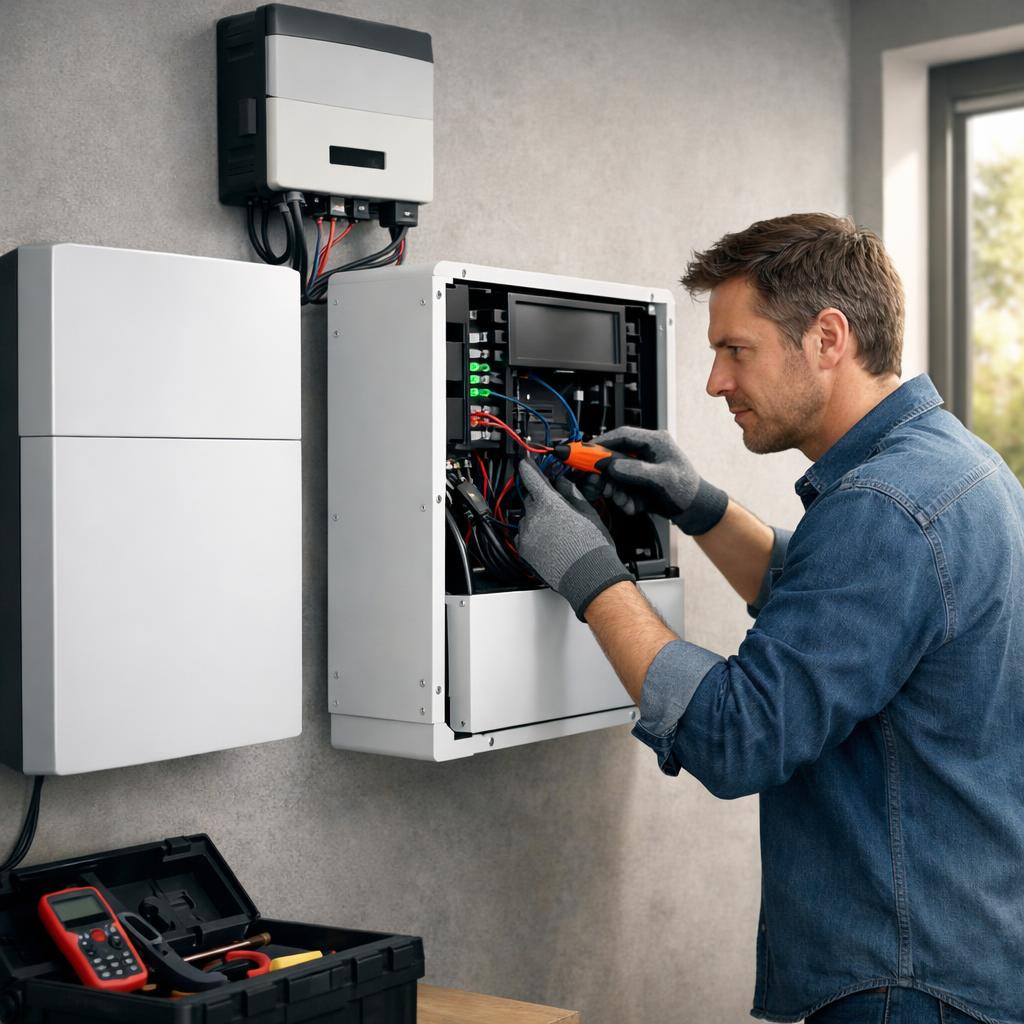
Additional conditions may apply for higher output powers than 800 W. Consider a separate group, professional installation and registration according to local rules. Therefore, check in advance how return delivery, measurement and security are arranged in your home. A wall socket home battery is especially logical when the usage profile, connection method and regulations are well matched.
Why Anker SOLIX Solarbank Max AC fits into this comparison
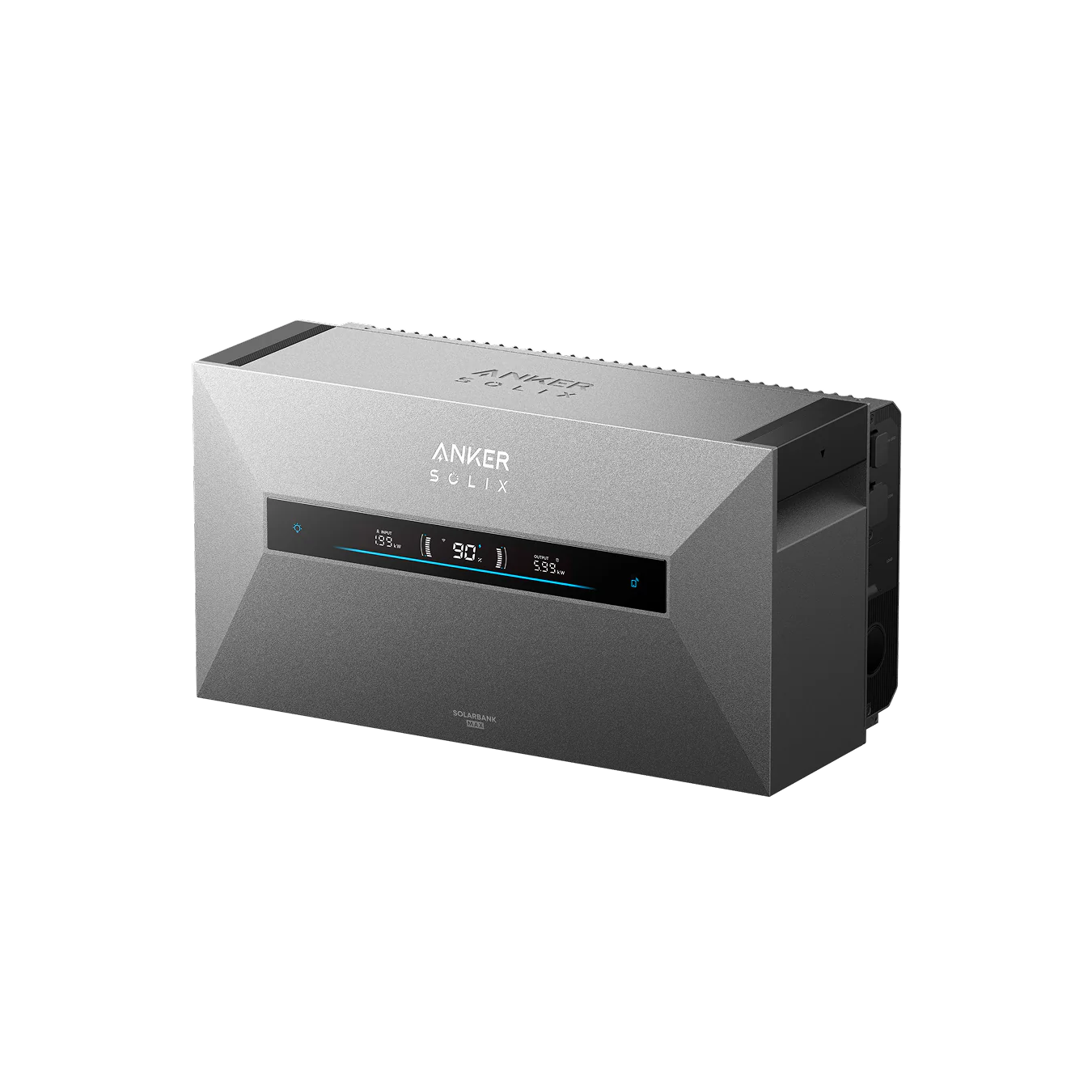
Anker SOLIX Solarbank Max AC fits into this topic because the model combines the accessibility of a plug-in approach with room to grow. The basic capacity is 7 kWh, which is close to usual night-time consumption for many Dutch households. Those who want more storage later can expand to 42 kWh with one main unit and additional batteries. This means that the solution does not stop at just a small entry point.
The power also makes this model relevant in this comparison. The system supports 3500W in grid-tied operation, 3680W off-grid and 5000W total power. This not only keeps small consumption in view, but also the simultaneous powering of heavier applications. The important nuance remains: above 800 W, additional installation conditions may apply. That is precisely why Anker SOLIX Solarbank Max AC is a useful comparison option for readers who want to get started easily, but do not want to get stuck early on capacity or power margin.
- Capacity: 7 kWh base, expandable to 42 kWh; control point: adjust this to actual evening and night consumption.
- Power: 3500 W grid-connected, 3680 W off-grid, 5000 W total; checkpoint: above 800 W additional conditions may apply.
- Battery and protection: LFP cells, 10,000 cycles, 10 year warranty, IP66 and low temperature heating; checkpoint: check whether the installation location is really suitable.
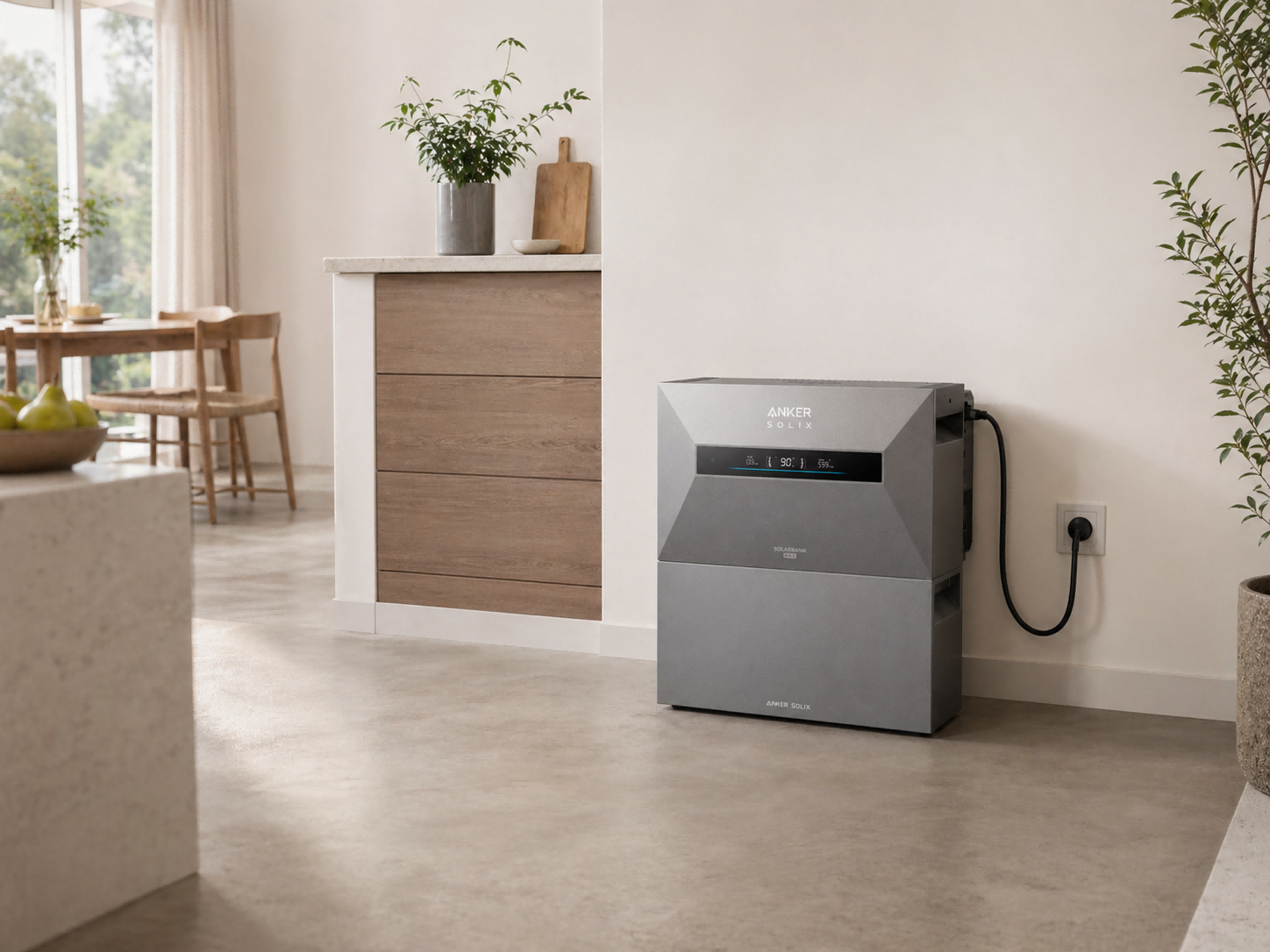
- Installation: stackable installation and multiple connection methods; control point: only choose a setup that suits your group, cabling and home type.
For households who are hesitating between starting small or immediately reserving more space for the future, this is exactly why the model is worth comparing: the combination of a lower entry threshold, significant expandability and multiple connection options makes it suitable for a phased choice, provided the technical conditions in your home allow this.
Which checkpoints count before you make a choice?
Check consumption, connection, rules and product specifications
Anyone considering a wall socket home battery would do well to compare four points: actual evening consumption, available solar power, desired connection method and the conditions of your own installation. So don't just look at the storage size, but also at the peak power of devices you want to use simultaneously. A system may seem spacious on paper, but in practice it may be too small or heavier than necessary.
With a model like Anker SOLIX Solarbank Max AC, the available connection options are practical, because different home types require different solutions. This makes the model usable in a variety of situations, as long as the chosen setup suits the electrical installation. In addition, always check whether a higher power setting, a separate group, professional installation or registration is required in your situation. This way you don't just compare on price or capacity, but on real suitability.
A practical order is:
- First measure how much electricity you mainly use in the evening and night.
- Then see how much solar power you have left during the day or how much benefit you expect from charging. cheaper hours.
- Then check which power and which connection method are appropriate in your home.
- Only then compare warranty, expandability, protection, product specifications and any additional requirements.
This order prevents you from choosing a wall socket/plug-in home battery that looks attractive, but does not fit well with your practice.
Sources and Control Points
Use the resources below to check regulations, grid conditions and product specifications before deciding whether a wall socket home battery fits your home. The outcome remains dependent on your consumption, installation and local implementation.
- class="ql-ui" contenteditable="false">Netbeheer Nederland, information about electricity and the energy network, https://www.netbeheernederland.nl/
- Government Inspectorate of Digital Infrastructure, rules and explanation about interference-free electrical equipment, https://www.rdi.nl/
- Dutch Food and Consumer Product Safety Authority, product safety for electrical products, https://www.nvwa.nl/onderwerpen/productveiligheid
- Anchor SOLIX, product page Anker SOLIX Solarbank Max AC, https://www.ankersolix.com/nl/products/a17e2
- Solar plan, Home battery with plug: laws and regulations, https://www.zonneplan.nl/thuis Battery/thuis Battery-met-stekker/wet-en-regulation
Frequently asked questions
What is the difference between a wall socket home battery and a fixed home battery?
A wall socket home battery is intended as a more accessible starting point for energy storage, while a fixed home battery is usually immediately planned as a heavier installation. The main difference is in connection method, power, expandability and installation requirements. For simple situations, a plug-in home battery may suffice, but for higher powers and more complex homes, additional control is often necessary.
When is a plug-in home battery especially interesting for solar panels?
This is especially true if you generate a lot during the day and consume a lot in the evening. Then your own use of solar power increases and you become less dependent on direct feed-in. Storage can also be useful when electricity prices fluctuate, provided the capacity matches your daily pattern and the installation conditions are in order.
Can a home battery always be used via a socket in the Netherlands without additional checks?
No. That is not a safe assumption. The correct power, group, type of connection and local rules determine what is appropriate in your situation. For higher powers than 800 W, additional conditions may apply, such as a separate group, professional installation and possible registration. Checking in advance prevents an apparently simple solution from requiring adjustment later.
When is Anker SOLIX Solarbank Max AC a logical option?
This model makes sense if you find the simplicity of a plug-in approach attractive, but at the same time want room for more capacity, more power and later expansion. It is especially suitable for households with solar panels, clear evening consumption and the desire to start small without quickly running into limits. Additional checks are necessary when your installation is unclear, you have little installation space or you do not know whether a separate group or professional installation is required.
Conclusion
A wall socket home battery or plug-in home battery can be an underestimated energy solution, but especially if your usage profile, power and installation match well. So it is not an automatic yes or no, but rather: yes, if you want to use more of your own solar power, absorb evening consumption and carefully check the technical conditions in advance.
For readers who not only want to start small but also want to expand later, Anker SOLIX Solarbank Max AC is a model that fits into the consideration early. Therefore, compare your evening consumption, available solar power, desired connection method, maximum required power, expandability and installation conditions with the specifications of Anker SOLIX Solarbank Max AC. This way you can see more quickly whether a simple entry-level solution is sufficient or whether a more spacious and expandable system suits your situation better.