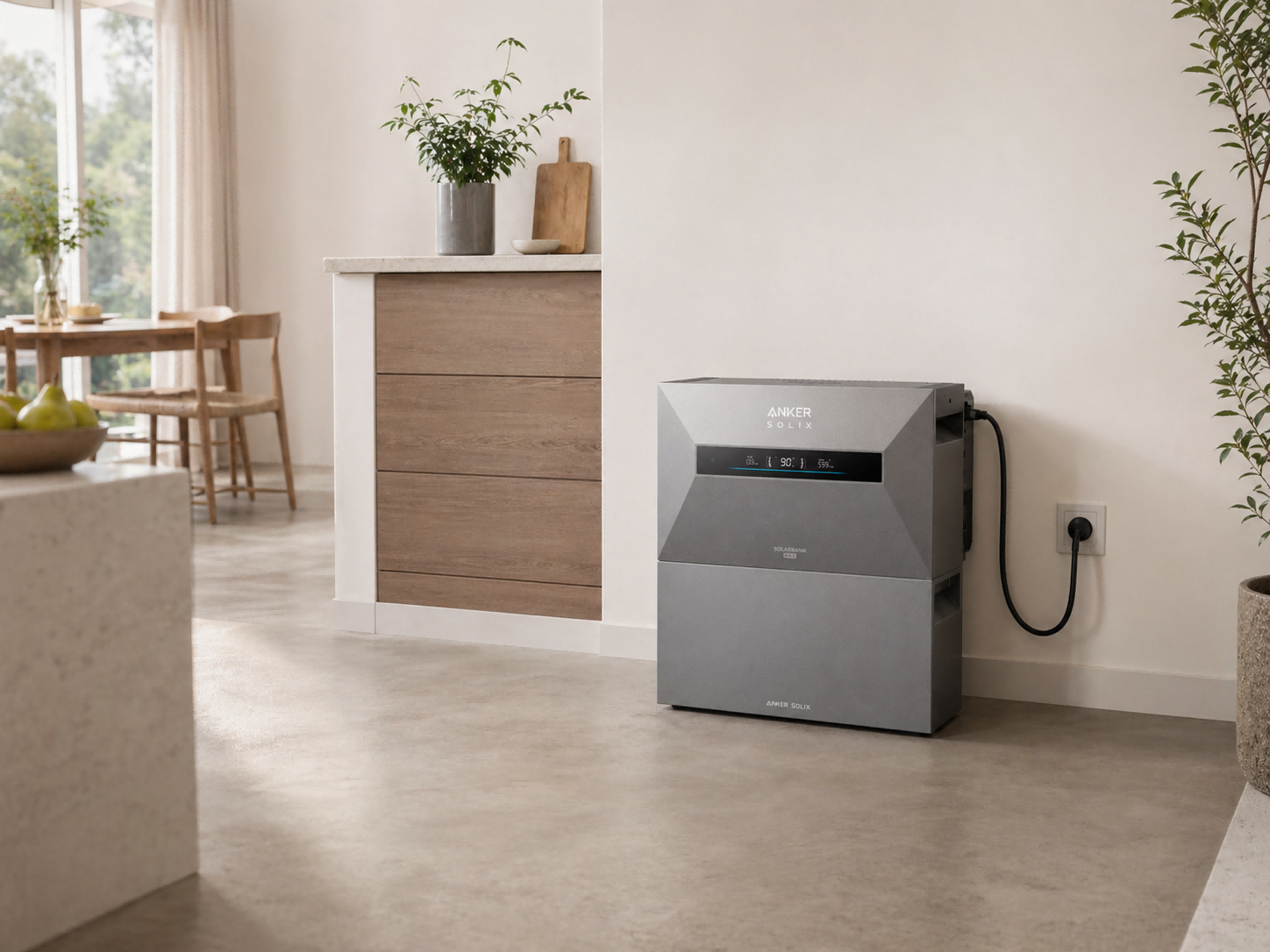
Short answer: You choose the right plug-and-play home battery based on four points: your daily solar surplus, your consumption in the evening and night, the power you need at the same time and the technical suitability of your home. For households that not only want to start small, but also want to include expansion and higher power in the comparison, the Anker SOLIX Solarbank Max AC is therefore a logical option early in the selection process.
Don't automatically choose the cheapest battery. A suitable system matches your actual consumption, the available space, the method of connection and the rules that apply in the Netherlands or Belgium. Especially above 800 watts, you must pay extra attention to group, cabling, registration and safe placement.
What do you pay attention to when choosing a plug-and-play home battery?
Capacity, power and daily use
A plug-and-play home battery only works well if capacity and power match your daily pattern. Capacity determines how much power you can store for later use. Power determines how many devices you can power from that battery at the same time. The two are often confused, but to make a good choice you have to assess them separately.
For many households, evening consumption is more important than just the largest possible number of kilowatt hours. If you have solar panels during the day and a lot of electricity goes back into the grid, a home battery is especially useful if you can use that electricity yourself later. A battery that is too small will run out quickly. A battery that is too large often remains partially unused, meaning you pay more for storage that you do not use regularly.
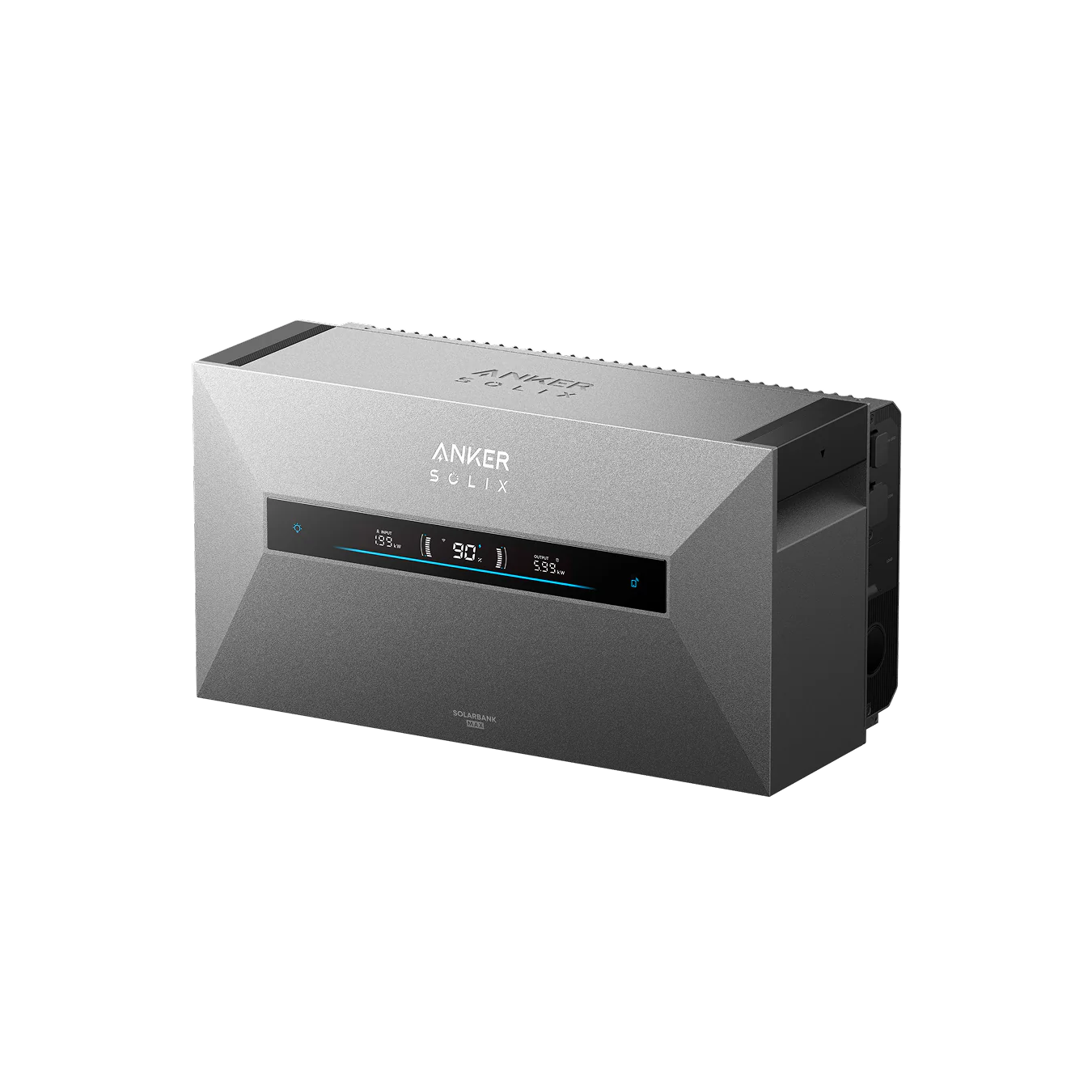
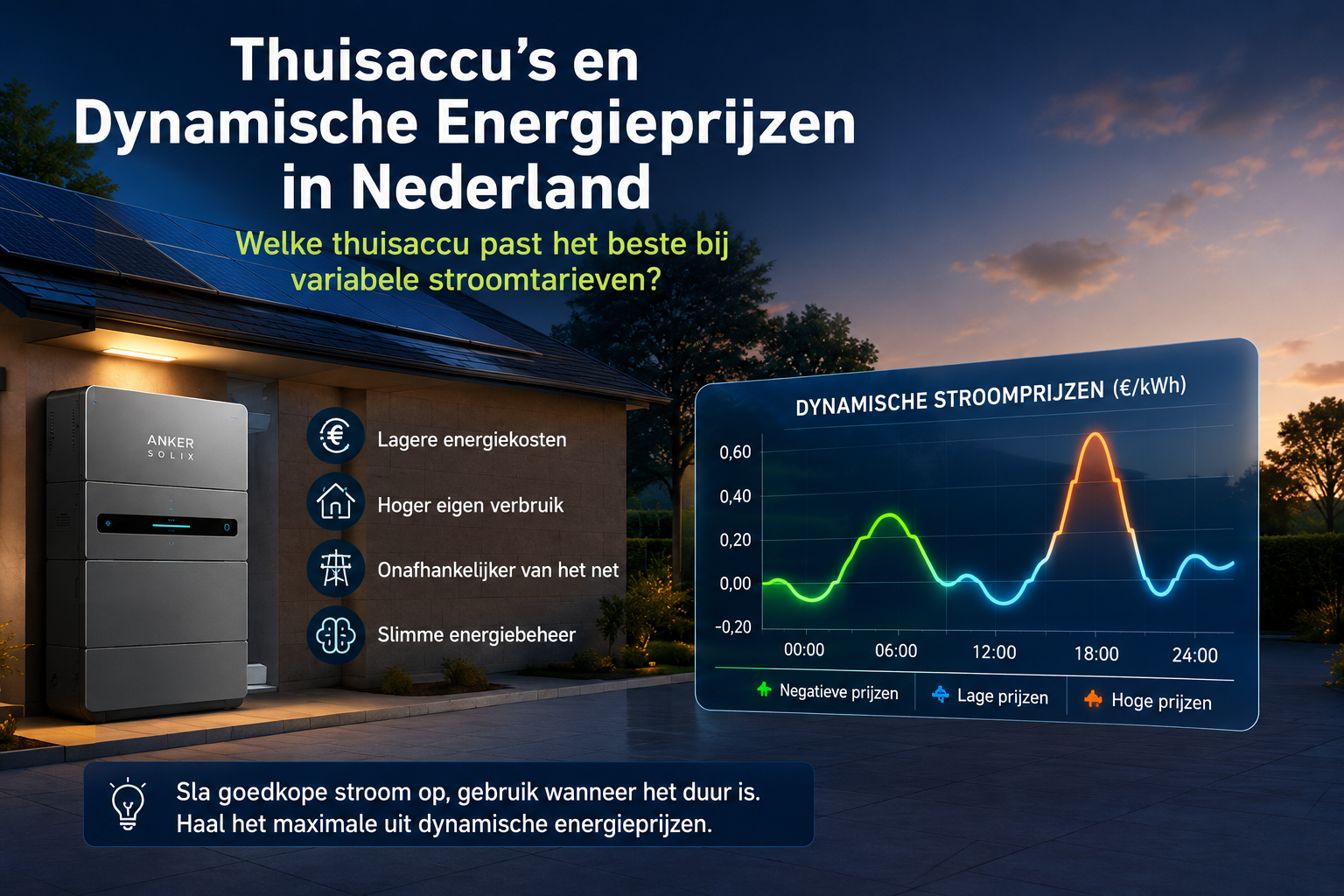
If you use dynamic energy rates, charging at cheaper hours can be extra interesting. Then not only storage, but also control becomes important. In situations like that, it makes sense to compare a model that can do more than just basic storage. Anker SOLIX Solarbank Max AC is relevant in this consideration because it starts with 7 kilowatt hours, is expandable to 42 kilowatt hours and supports up to 3500 watts in grid-connected use. This makes it suitable not only for low basic consumption, but also for households with multiple or heavier consumers.
Installation, group and registration
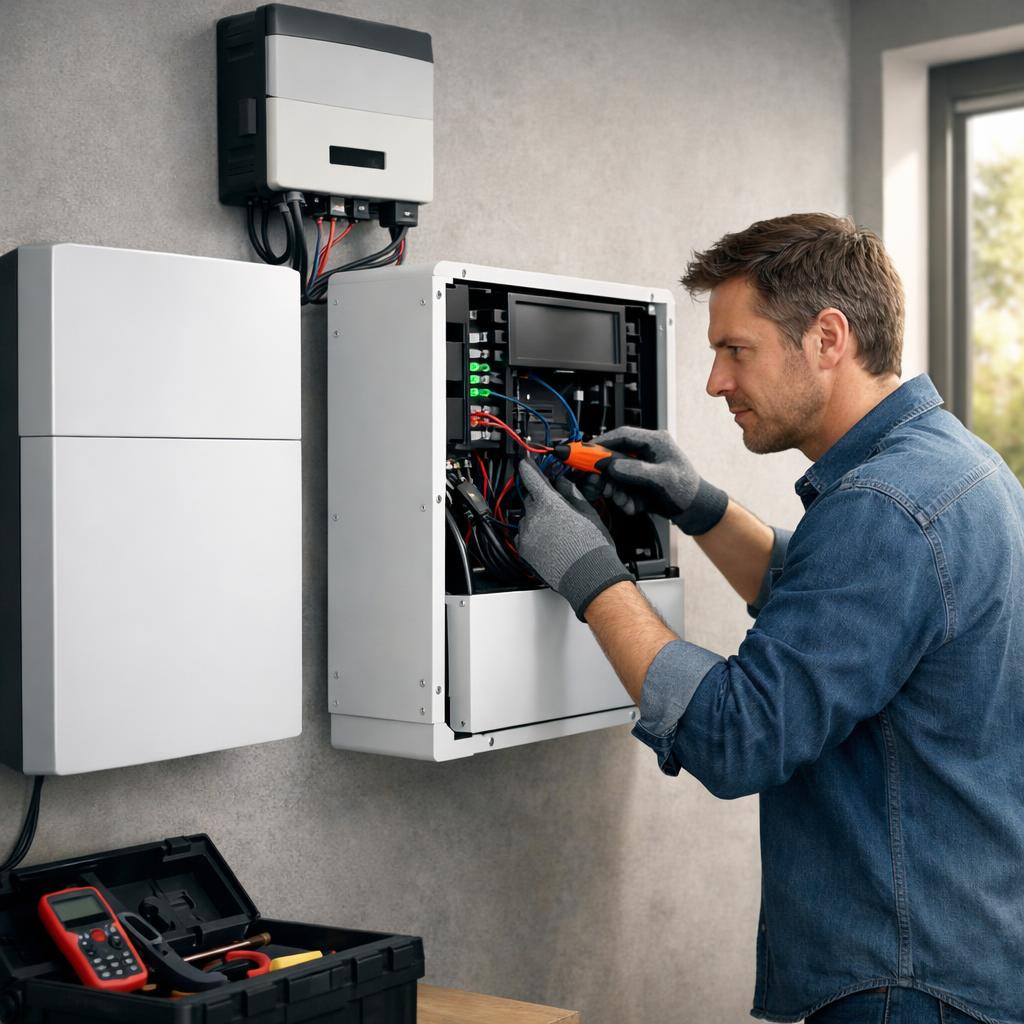
The name plug-and-play sounds simple, but in practice the electrical installation remains decisive. The higher the power, the more important it is to check in advance whether your group, cabling and connection are suitable for this. Above 800 watts, extra attention is usually wise. This does not mean that it is not allowed, but it does mean that you must check in advance what is technically responsible and according to the rules in your home.
This is extra important with a model like Anker SOLIX Solarbank Max AC. The system supports connection via plug, Wieland or landline. According to the product specifications, the higher powers require an independent circuit, installation control and compliance with local regulations. That is precisely why you must first assess whether your home is technically suitable and only then look at price, capacity and expansion.
Registration can also play a role. In the Netherlands you must register home batteries via Energieleveren.nl. Belgium has its own conditions and it is important to check whether a model is permitted according to the applicable requirements. Anyone who skips this step runs the risk of choosing a system that seems technically attractive, but in practice cannot be used without additional measures.
For which situations is a plug-and-play home battery suitable?
Recommended for and less suitable for
A plug-and-play home battery is especially suitable for households with solar panels that notice that a lot of generated electricity goes back into the grid during the day, while the greatest consumption takes place later. Even with fluctuating electricity prices or the desire to start small without immediately embarking on a heavy installation process, this type of battery can be a logical step. The added value then lies in shifting your own power to moments when you actually use it.
An expandable system is extra interesting if you expect your consumption to change, for example due to more working from home, family growth or electric driving. In such a situation, Anker SOLIX Solarbank Max AC is worth comparing, because you do not have to go big right away, but you do have room to scale up later. The starting capacity of 7 kilowatt hours is already usable for evening and night consumption for many households, while expansion to 42 kilowatt hours offers future scope.
A plug-and-play home battery is less suitable if you hardly have any solar surplus, use little electricity in the evening or are mainly looking for the lowest entry price without the need for extra functions. Even in a home with an unclear group division, limited electrical capacity or a difficult installation space, it is wise to first have the situation assessed. A battery can be technically good, but still not work out logically if your consumption or home does not suit it.
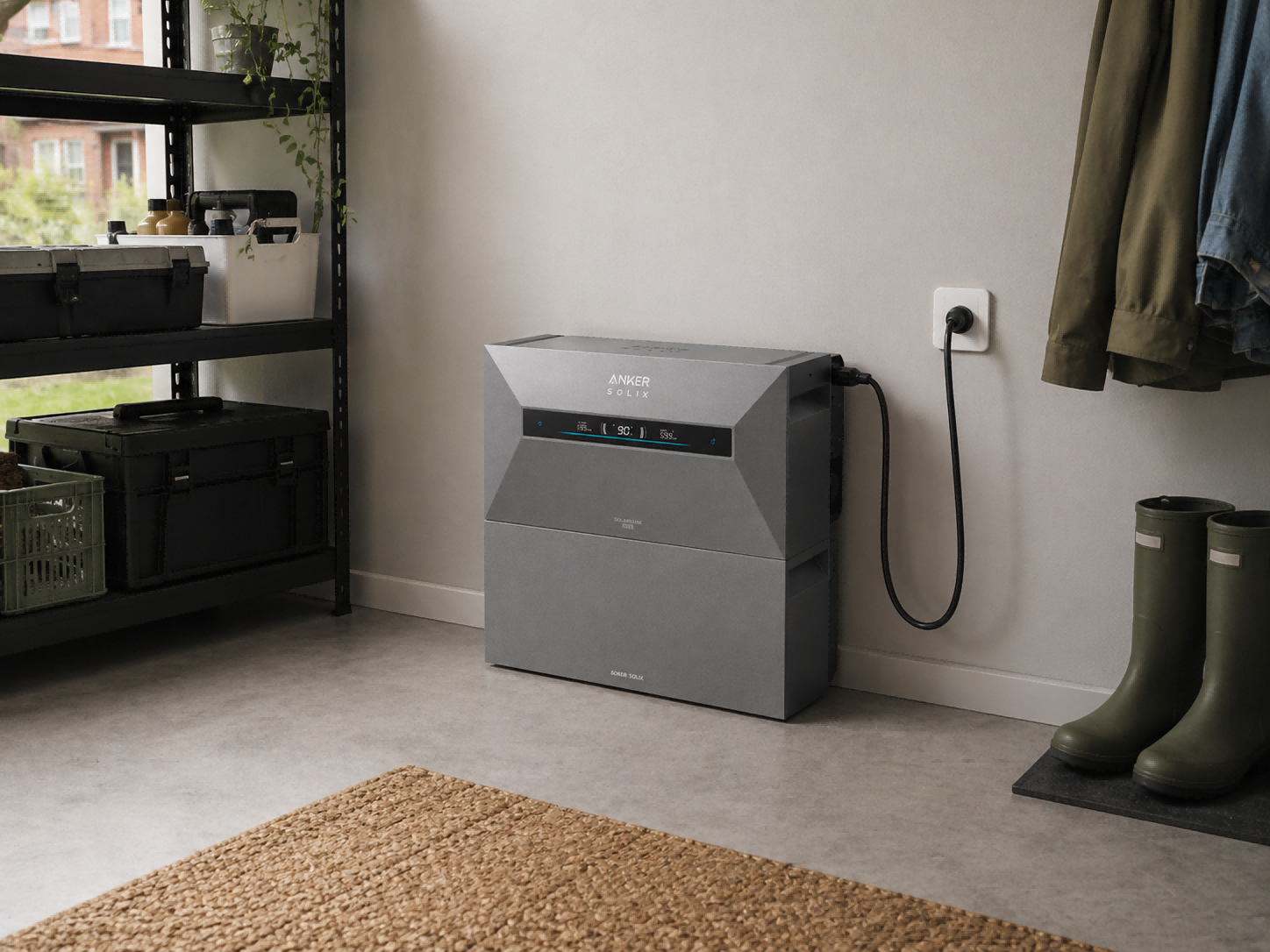
In addition, pay attention to the installation location. Ventilation, moisture, accessibility and escape routes are more important than many buyers think. A protection class for outdoor use does not automatically mean that every place is suitable. Therefore, always check whether the actual conditions match what the manufacturer allows.
When is Anker SOLIX Solarbank Max AC a logical choice?
Anker SOLIX Solarbank Max AC is especially a logical choice if you know early on that you are looking for more than compact basic storage. The system combines 7 kilowatt hours of starting capacity with expansion to 42 kilowatt hours. In addition, LFP cells, 10,000 cycles, 100 percent depth of discharge and a 10-year warranty. These are strong points of comparison for households that want to include storage, growth and long-term use in one consideration.
The power profile also makes this model relevant within the market for plug-and-play home battery solutions. It supports 3500 watts in grid-tied use, 3680 watts off-grid and 5000 watts total power. As a result, it is not only intended for small standby consumption, but also for situations in which several devices play a role at the same time. This makes the model especially interesting for homes where you want more than just absorbing a small evening peak.
At the same time, it is not an automatic choice for everyone. If you have little solar surplus, you only want a very simple basic solution or your installation is not prepared for higher powers, you should compare more critically. That is precisely why this model is worth including early in your comparison: not because it is the best choice for every household, but because it clearly shows what you gain and what you technically need to be able to bear when you opt for more capacity and power.
- Capacity: 7 kilowatt hours as base, expandable to 42 kilowatt hours
- Power:3500 watts grid connected, 3680 watts off-grid and 5000 watts total power
- Durability: LFP cells, 10,000 cycles, 10 year warranty and 100 percent depth of discharge
- Connection: plug, Wieland or fixed connection, with additional conditions for higher power
- Use: suitable for households that want to combine storage, expansion and broader deployable power
Which control points determine your final choice?
Make your choice step by step. First check how much electricity you have left over from solar panels during the day and how much you use in the evening and night. Then determine what power you really need. Do you mainly want to cover basic consumption, or do you also want to run multiple devices at the same time? Only then will it become clear whether a compact solution is sufficient or whether you need more capacity and power.
Then check the placement and connection. Consider available space, ventilation, moisture, accessibility, group division and whether a separate group or permanent connection is needed. Also check whether registration is mandatory and what requirements apply locally. Without that control, a low price or high power means little.
Then look at future-proofing. If you want to expand later, take emergency power with you or a system that can be used more broadly, you should not only look at the starting capacity, but also at expandability, warranty and official product specifications. Anker SOLIX Solarbank Max AC is relevant in that decision framework, because it combines storage, higher power and expansion. But here too, the right choice depends on your home and your use, not just on the specifications on paper.
Therefore, always compare your own consumption profile, desired capacity, actual required power, installation situation and official product data before you decide. This way you avoid choosing a plug-and-play home battery that turns out to be too small, too large or technically inconvenient.
Sources and Control Points
Use these resources to check regulations, safety, and product specifications for yourself. This way you can test claims against official or authoritative information for the Netherlands and Belgium.
- contenteditable="false">Brandweer Nederland — Plug-and-play home battery — https://www.brandweer.nl/onderwerpen/plug-and-play-thuis Battery/
- Energieleveren.nl — Registration of energy installations — https://www.energieleveren.nl
- Synergrid — Overview of permitted devices and technical requirements — https://www.synergrid.be/nl/?id=99&view=category
- Synergrid — From 17-04-2025, homologated plug-and-play devices may be connected in Belgium — https://www.synergrid.be/nl/news-centre/press-room/homepage/vanaf-17-04-2025-mogen-gehomologeerde-plug-play-artikelen-aangaan-worden-in-belgie
- Anchor SOLIX — Anchor SOLIX Solarbank Max AC — https://www.ankersolix.com/nl/products/a17e2
Frequently asked questions
How do I choose the right capacity for a plug-and-play home battery?
Look at your average solar surplus during the day and your consumption in the evening and night. The right capacity is usually the storage that you can regularly fill and use empty again. Those who want to grow later are often better off expanding than starting too big straight away.
Can I simply connect a plug-and-play home battery in the Netherlands?
Not without control. With higher starting values, additional requirements may apply for group, connection, registration and safe placement. Therefore, always check your home, your electrical installation and the applicable regulations before connecting a battery.
When is Anker SOLIX Solarbank Max AC a logical option and when should I check extra?
This model makes sense if you have solar panels, want to absorb serious evening consumption, want to expand later and also find higher power important. Additional checks are necessary if you want to work above 800 watts, your group division is unclear, your installation space is limited or you do not yet know which connection is appropriate in your home.
Is a plug-and-play home battery only interesting for dynamic energy rates?
No, but dynamic rates can increase the added value. Even without such rates, storage can be useful if you have a lot of solar power left over during the day and want to use it yourself later. The outcome depends on your consumption, feed-in, electricity price and technical suitability of your home.
Conclusion
The best plug-and-play home battery is usually not the cheapest or the largest, but the battery that suits your solar surplus, evening consumption, desired power and installation situation. For many households, the choice revolves around usable capacity, safe connection, expandability and the question of whether higher power is really necessary.
If you are looking for a system that takes growth, higher power and flexible connections into account early on in the equation, then Anker SOLIX Solarbank Max AC is a serious option to consider. Now first compare your daily surplus, your evening and night consumption, the required power, the available installation space and the requirements of your group. Then check the product specifications of Anker SOLIX Solarbank Max AC, so that you can determine whether capacity, connection, expandability and installation conditions really suit your home.