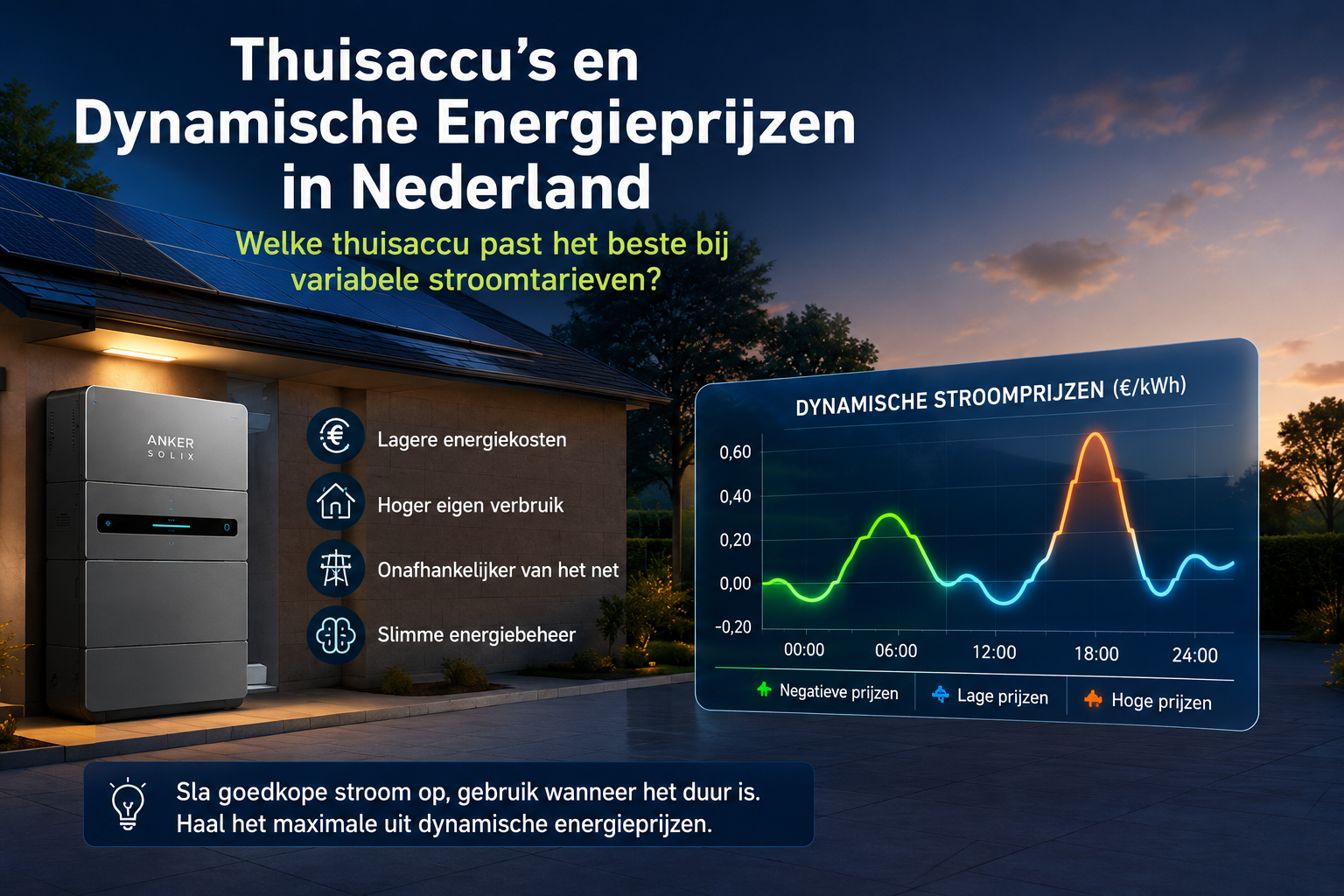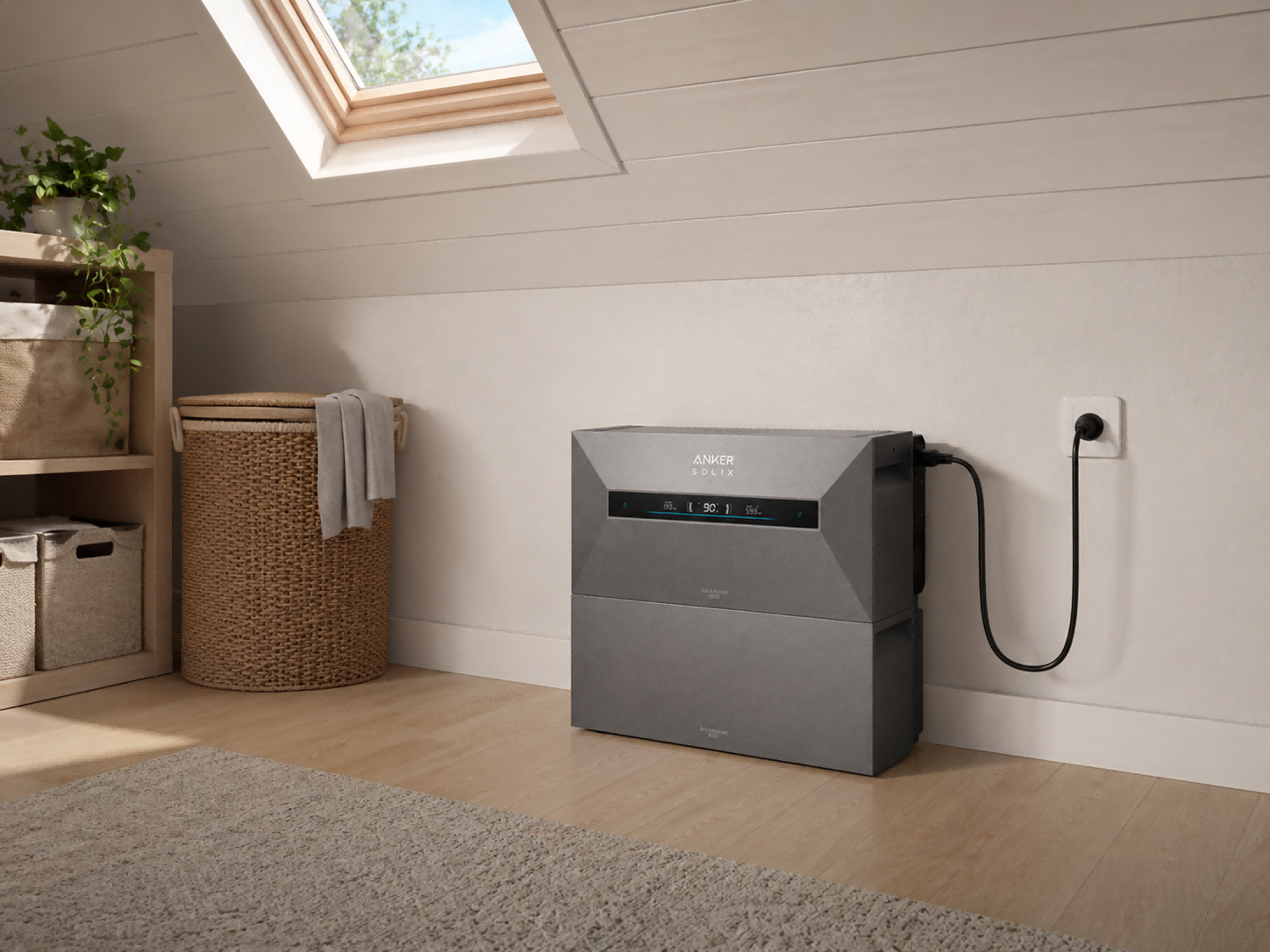
Short answer: A home battery without solar panels can reduce your energy bill, but usually only if you have a dynamic energy contract and mainly use electricity during expensive hours. In that case, comparing the Anker SOLIX Solarbank Max AC early makes sense, because you are not only looking at storage, but also at expandability, power and the ability to store mains power at favorable times.
Without a dynamic contract, the savings are often small or uncertain. The outcome mainly depends on your evening consumption, the difference between cheap and expensive hours, charging losses, installation conditions and whether you want to add solar panels later. The following therefore applies to many households: yes, but only under clear conditions and with a sober calculation in advance.
When does a home battery without solar panels really save money?
A home battery without solar panels saves money especially when you can buy electricity cheaply and use it later at times when electricity is more expensive. This works best with a dynamic contract, because the electricity price changes per hour or per quarter of an hour. Households with high consumption in the evening therefore have a greater chance of saving than households with low and even consumption.
That advantage is limited. You will have to deal with conversion loss, wear and tear per charging cycle, taxes, grid costs and the purchase price of the system. This means that a home battery without solar panels is usually less interesting with a fixed or variable contract, with small price differences or when you have little ability to shift consumption. In those cases, saving energy in the home or installing solar panels later often yields more.
The most logical situation is therefore clear: a dynamic contract, noticeable evening consumption and a battery that can charge and discharge automatically. A cautious second route is to opt for a system that you can expand later, so that you do not immediately invest too large a size while it remains to be seen whether the savings in your home are really sufficient.
What should you pay attention to with capacity and power?
For a home battery without solar panels, bigger is not automatically better. After all, you do not store your own solar power, but cheap grid power for later use. Therefore, the capacity must mainly match your consumption during expensive hours, not the largest possible theoretical storage. For many households, starting small or medium-sized is wiser than immediately opting for a large system.
For those who mainly want to test whether price differences are sufficient, a limited storage is often the safest choice. Households with a charging station, heat pump, boiler or high evening consumption can benefit from extra capacity, but only if that storage is regularly used. A battery that often remains half unused is rarely the best choice financially.
In addition to capacity, power is just as important. A battery with little output power cannot properly support heavy devices, meaning you still draw a lot of power from the grid during peak times. Therefore, pay close attention to the difference between storage in kilowatt hours and output in watts. Also check the practical limits in your home: higher powers require extra attention for a separate group, a suitable connection, professional installation and compliance with local rules.
Suitable for and less suitable for
More suitable for:
- households with a dynamic energy contract;
- homes with clearly higher consumption in the evening;
- users with a charging station, heat pump, boiler or air conditioning;
- people who want to start small and expand later.
More often less suitable for:
- households with a fixed or variable contract without clear hourly differences;
- low consumption and few peaks in the evening;
- situations in which the meter cupboard or installation does not support higher powers;
- buyers who count on a fast or guaranteed payback time.
Why the Anker SOLIX Solarbank Max AC is worth comparing here
For readers who want to save without solar panels, but are looking for flexibility, the Anker SOLIX Solarbank Max AC is a serious option to include early in the comparison. The reason is practical: you do not only have to look at the purchase price, but also at expandability, available power, ease of use and whether the system will still fit if your consumption changes later.
The system starts with 7 kilowatt hours of storage and can be expanded to 42 kilowatt hours. This makes it interesting for households that do not want to invest as much as possible immediately, but do want to keep room to scale up later. This makes the model especially worth comparing for homes where evening consumption is already quite high or where additional power demand may arise later, for example due to electric heating or charging.
Power also plays a role. In a grid-connected situation this is 3500 watts, outside the grid it is 3680 watts and in total 5000 watts. This is relevant because a home battery without solar panels is only useful if it not only supports small appliances, but can also absorb some of the heavier consumption. That is often the difference between a battery that sounds nice and a battery that can really contribute something in practice.
Furthermore, the specified properties are relevant to many buyers: LFP cells, 10,000 cycles, 10-year warranty, complete discharge, protection according to IP66 and active heating down to minus 20 degrees. Multiple connection options are also available and stacking is possible without cabling. This makes the system especially interesting for those who value phased expansion, future-proofing and a product that is not only intended for one fixed scenario.
Key points to compare
- Storage: 7 kilowatt hours base, expandable to 42 kilowatt hours.
- Power: 3500 watts grid-connected, 3680 watts off-grid and 5000 watts total.
- Practical use: usable for evening consumption, emergency power and phased expand.
- Battery and lifespan: LFP cells, 10,000 cycles, 10 year warranty and full discharge.
- Control point: above 800 watts, extra installation control, a separate group and compliance with local rules are important.
Which risks, limits and control points should you consider in advance?
The most important limit is simple: saving without solar panels is not self-evident. Cheap hours are not cheap every day, expensive hours are not always expensive enough and every charging and discharging moment costs some of the energy. As a result, a home battery without solar panels can yield less in practice than expected on paper.
Especially with low consumption, limited price differences or an unsuitable contract, the calculation quickly becomes tight. It is therefore wise to first look at your consumption profile and only then at the battery itself. Check how much power you use, especially in the evening, how high your peak load is and how often you are likely to actually use the battery.
In addition, look at the practical conditions at home. Consider available space, the meter cupboard, a possible separate group, desired emergency power and whether you want to add solar panels later. For higher powers, professional installation is usually sensible and sometimes necessary. Registration may also apply. That is precisely why an expandable system is often more attractive than immediately choosing the largest model: you keep the first step manageable and can later test your actual use in practice.

Sources and Control Points
Use these resources to review contract terms, registration, product specifications, and policy context before you decide.
- contenteditable="false">Rijksoverheid — Will the netting scheme for solar panels continue to exist — https://www.rijksoverheid.nl/onderwerpen/duurzaam-energie/question-en-response/blijft-de-salderingsregeling-voor-zonnepanelen-bezijn
- Energieleveringen — Registering your production installation — https://www.energieleveren.nl/
- Consumentenbond — Home battery: costs, operation and points of interest — https://www.consumentenbond.nl/zonnepanelen/thuis Battery
- Anker — Anker SOLIX Solarbank Max AC product page — https://www.ankersolix.com/nl/products/a17e2
In any case, check these points: your contract form, the difference between cheap and expensive hours, your evening consumption, the technical capabilities of your meter cupboard and the official product specifications. This way you not only assess whether savings are possible, but also whether the chosen system fits safely and practically in your home.
Frequently asked questions
Can a home battery without solar panels really save money?
Yes, but usually only if you have a dynamic contract and can regularly charge cheaply to use later during more expensive hours. Without clear price differences, the savings are often too small due to charging losses, wear and tear and purchase costs.
Do I need a dynamic energy contract for a home battery without solar panels?
In practice, that is usually the most logical route. With a fixed or variable contract, the price differences that are necessary to purchase cheaply and use it cheaply later are often missing. This makes recoupment more difficult and uncertain.
How big should a home battery without solar panels be for my household?
That depends on your evening consumption and peak load. For many households, starting small or medium-sized is wiser than buying in bulk right away. Additional capacity may be appropriate for a charging station, heat pump or other high evening consumption, as long as the storage is actually used regularly.
Wanneer is de Anker SOLIX Solarbank Max AC een logische optie?
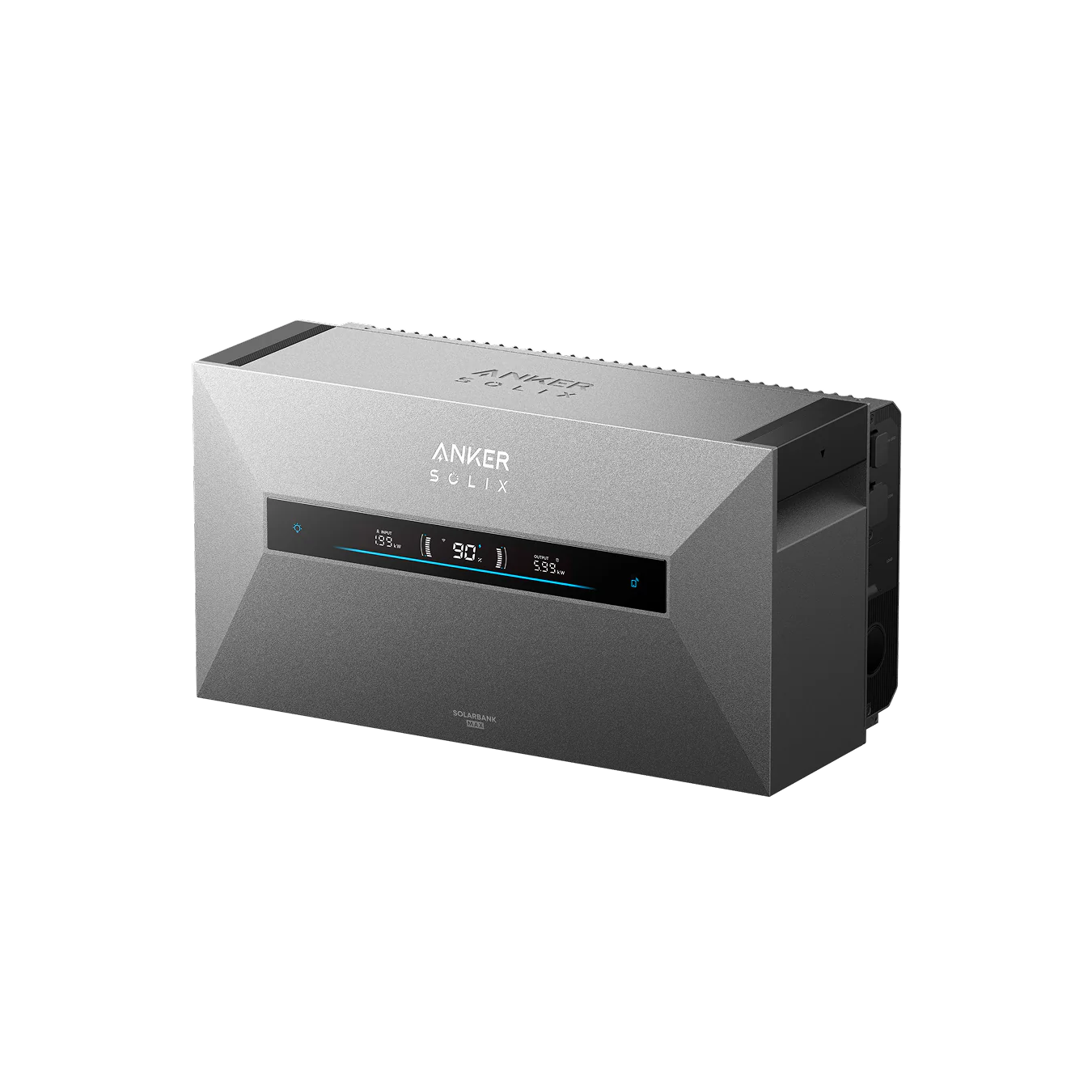
Anker SOLIX Solarbank Max AC
Product description
This model is especially logical if you have a dynamic contract, use a lot of electricity during expensive hours, consider emergency power important or want to start small with room to expand later. Extra control is necessary when your consumption is low, your price differences are limited or your meter cupboard and separate group do not properly support higher powers.
Conclusion
A home battery without solar panels can help save money, but especially under clear conditions: a dynamic energy contract, enough difference between cheap and expensive hours and a household that uses a lot of electricity at times when electricity is expensive. Without that combination, financial space often remains limited and careful calculation is more important than purchasing in bulk.
For those who value flexibility, high power, emergency power and expandability, the Anker SOLIX Solarbank Max AC is a logical candidate for early comparison. Now specifically check your evening consumption, the actual price difference in your contract, the space in your meter cupboard, the required separate group and the official specifications of storage, power and expansion. This way you can see more quickly whether this home battery without solar panels really suits your situation.