The Best Home Battery for Small Homes is rarely the largest battery on the market. In a compact home in the US, it is mainly about the right balance between daily consumption, available space, ease of installation and budget. With a suitable system you can store power for the evening, make better use of your own solar power and in some cases cope with a short power outage, without paying for capacity that you hardly use.
Anyone who wants to make a smart choice should therefore look beyond just the number of kWh. Dimensions, usable capacity, peak power, safety, installation requirements and compatibility with your electrical panel or inverter also play a major role. First look at the average power consumption of a small home to get a realistic idea of your needs. For many small households, a compact or modular system often makes more sense than a large package that mainly takes up space.
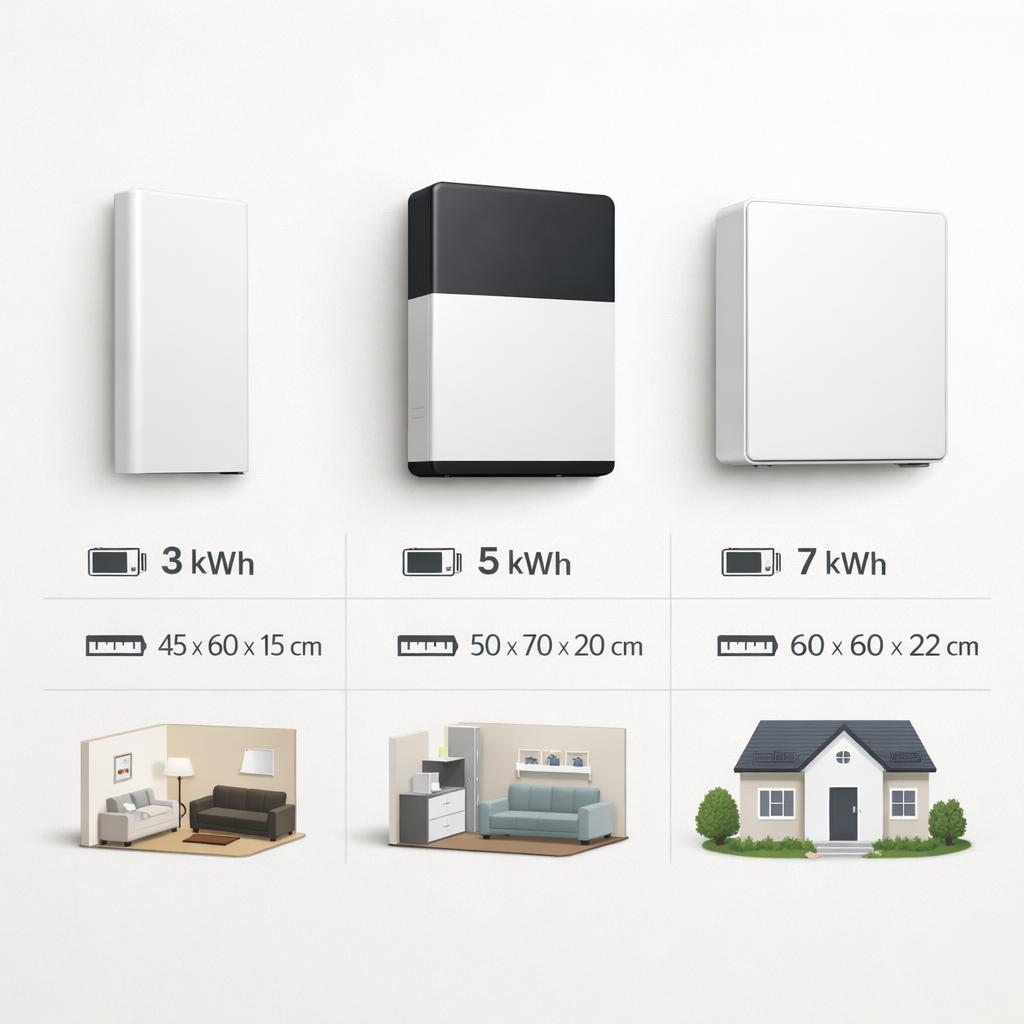
In this article you can read what you should really pay attention to, which battery types are usually suitable for small homes and how to soberly assess costs and payback time. This way you avoid choosing a system that sounds impressive on paper, but in practice does not fit well with your home or consumption. Comparative infographic with compact home batteries, example capacity in kWh, dimensions and suitable home type.
What to look for in a home battery for a small home
When choosing the best home battery for a small home, the ratio between capacity and actual use is the most important. A small home uses less electricity on average, but often has short peaks, for example when the microwave, washing machine, air conditioning or hob are running at the same time. Therefore, not only the storage capacity is relevant, but also the peak power. A battery must be able to provide sufficient power when you need multiple devices at the same time.
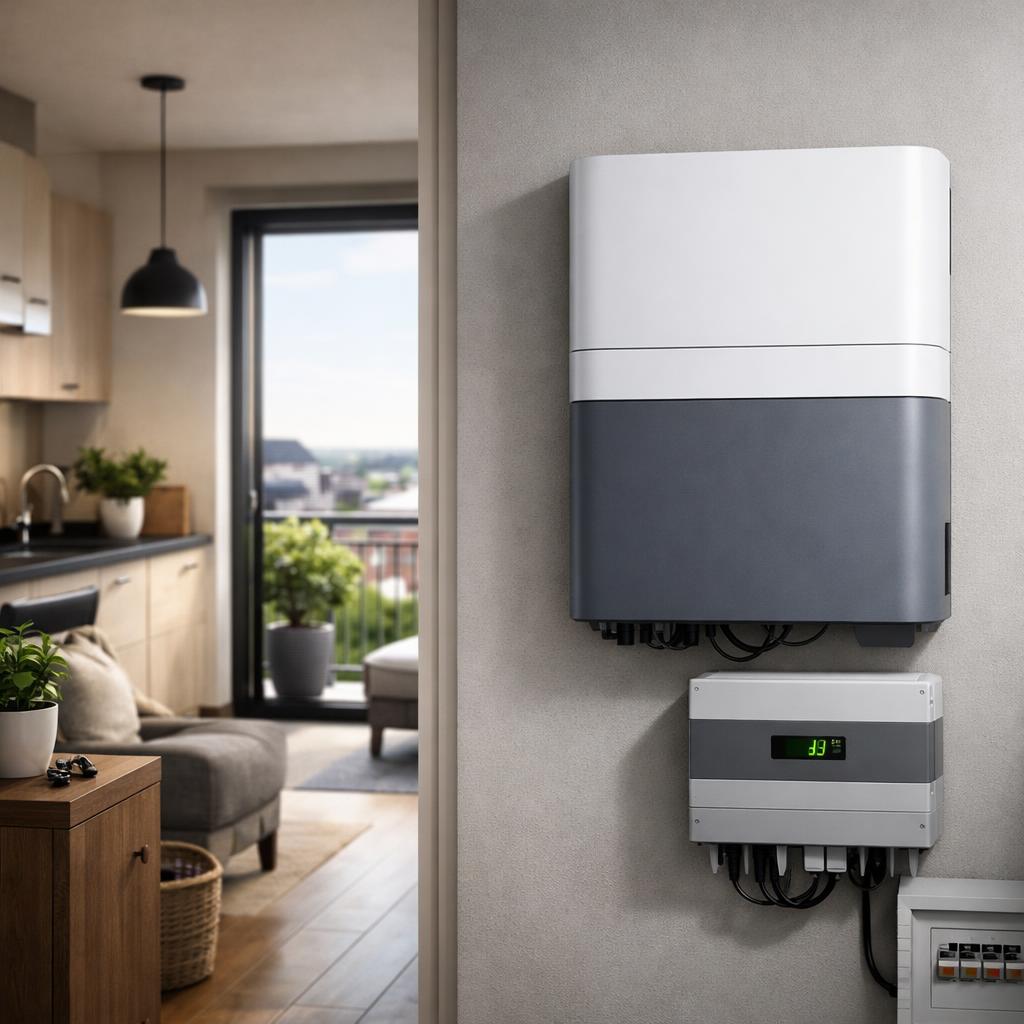
In addition, the available space counts heavily. A compact home battery for an apartment or small home must be able to be safely installed in a permitted location with adequate ventilation and good access for installation and maintenance. Pay attention to dimensions, weight, wall load and the distance to the meter cupboard or electrical panel. In small homes, that practical part can be decisive.
Smartly consider capacity, peak power and available space
Don't automatically choose the largest battery within your budget. In many cases, a smaller system is more efficient, more affordable and easier to install. Look at your power consumption in the evening and early morning: that is often the core of your storage needs. If you mainly want to store solar energy for later use, a modest capacity is often enough. If you also want emergency power for essential devices, you must pay extra attention to backup functionality and power.
Always check whether the battery fits your existing installation. Not every system works smoothly with every inverter, solar panel installation or grid connection. Local installation requirements in the US may also vary by state or municipality. Therefore, do not only look at the price, but also at the technical feasibility in your home.
Which types of home batteries are most suitable for compact households
For compact households, smaller or modular lithium-based systems are usually the most interesting. They take up relatively little space, often have a favorable energy density and in many cases can be expanded later. That's attractive if you want to start small and first see how much storage really makes sense. The Best home battery for small homes is often a system that fulfills one task very well: saving solar power for later, reducing evening consumption or supporting some important devices during a breakdown.
A large system is not automatically better. With low and predictable consumption, a battery that is too large often remains partly unused, making the investment more difficult to recoup. In a terraced house or apartment, a more compact model may also be more practical due to limited wall or floor space and stricter placement rules. Anyone who already has solar panels would do well to also look at the way in which the battery and inverter work together. Read more about combining home batteries with solar panels to better determine which design makes sense.
When a smaller battery works better than a larger system
A smaller battery often works better when you mainly want to shift energy from daytime to evening. Consider a household that generates solar power during the day, but mainly uses electricity after working hours for lighting, cooling, internet and cooking. In such a situation, a well-tuned battery is usually more useful than a large package that is rarely fully utilized.
Installation is also often easier with a more compact system. Less weight, less space taken up and sometimes lower adjustment costs to the electrical panel make the step more practical. For residents of small homes, this is often just as important as the battery performance itself.
Assess costs, installation and payback time realistically
The cost of a home battery for a small home consists of more than just the battery module. Assembly, cabling, labor costs, any upgrades to the electrical panel, permits and safety features also count. In the US, these costs can vary greatly by state, home type and installer. A system that seems affordable online may have a completely different price tag once installed.
Therefore, always ask for a clear, itemized quote. This must include at least the storage capacity, usable capacity, peak power, the warranty, the installation conditions and any additional work. This is the only way you can compare quotes fairly. Also pay attention to what exactly you expect from the battery. If your power consumption is low, the value is sometimes more in comfort, lower grid dependence and limited backup than in a quick financial payback.
Practical checklist for a safe and appropriate choice
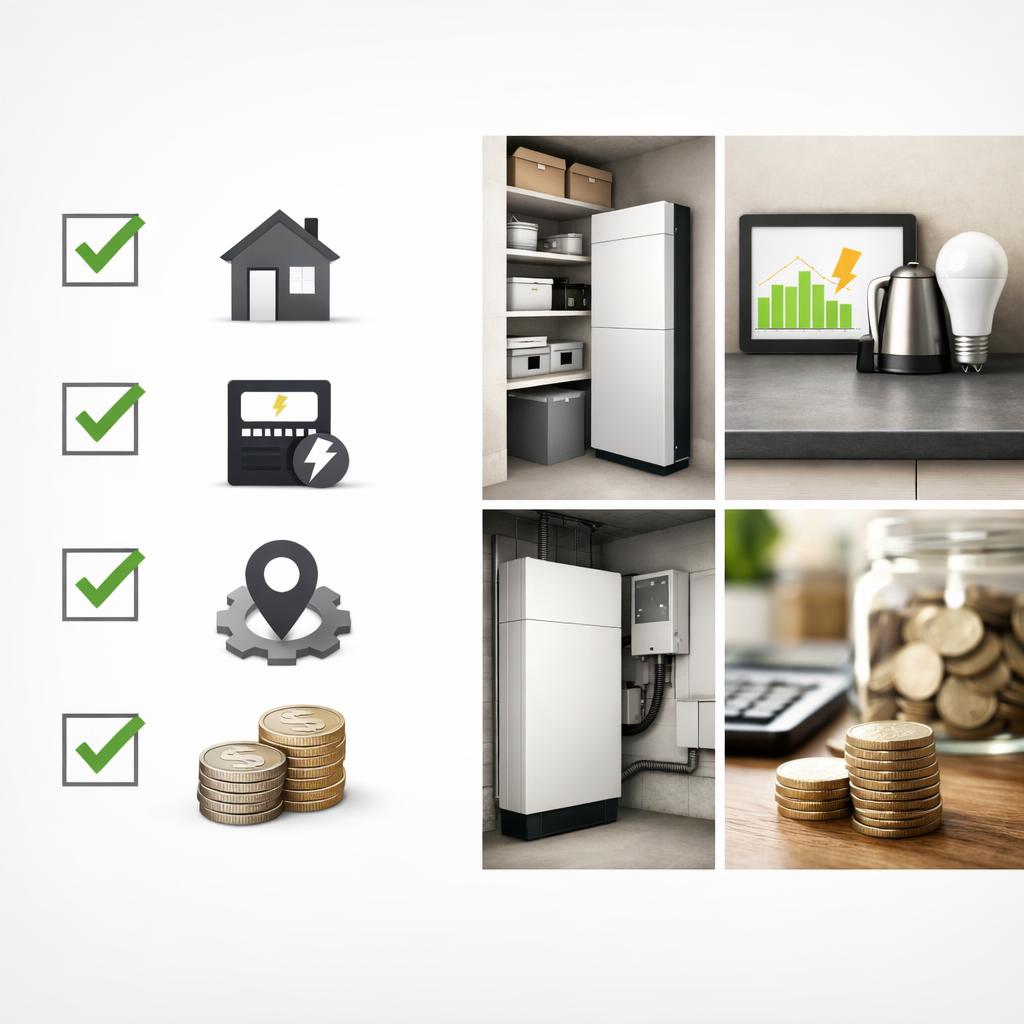
A short checklist helps to prevent bad purchases. First measure the space where the battery may be placed. Then view your monthly electricity consumption and note which devices you want to support during peak times or an outage. Then check the compatibility with your inverter, solar panels and grid connection. Also check whether installation is permitted in your type of home, especially in apartments, rental properties or homes with an association or building management.
Calculate the payback period consciously conservatively. Don't assume perfect conditions or maximum savings in every month. For many small homes, a slightly smaller investment with clear benefits is wiser than an expensive system with uncertain returns. Practical checklist visual with points of interest such as space, consumption, installation location and budget.
Conclusion:
The best home battery for small homes is usually a compact, safe and well-fitting system, not necessarily the highest capacity model. If you pay attention to daily consumption, peak load, available space, compatibility and total installation costs, you will make a much stronger choice. For many small households in the US, a modest battery with enough usable storage and appropriate power is the most logical solution. Always take local rules, your grid connection and the connection with existing solar panels or inverters into account. This way you choose a system that not only fits technically, but also really adds value in daily use.
FAQ
How much capacity does a home battery usually need for a small home?
That depends on your consumption pattern, but many small homes require limited storage capacity for evening use or basic backup. Pay particular attention to how much electricity you use after sunset. If you only want to shift your own solar power to later in the day, less capacity is required than if you want to provide several devices with emergency power for hours.
Is a home battery always possible in an apartment or terraced house?
No, not always. The installation depends on local rules, fire safety, available space, load-bearing capacity of the wall or floor and any permission from the landlord or building management. In addition, the system must match your electrical installation, grid connection, inverter and solar panels. A technical check in advance is strongly recommended, especially in compact homes.